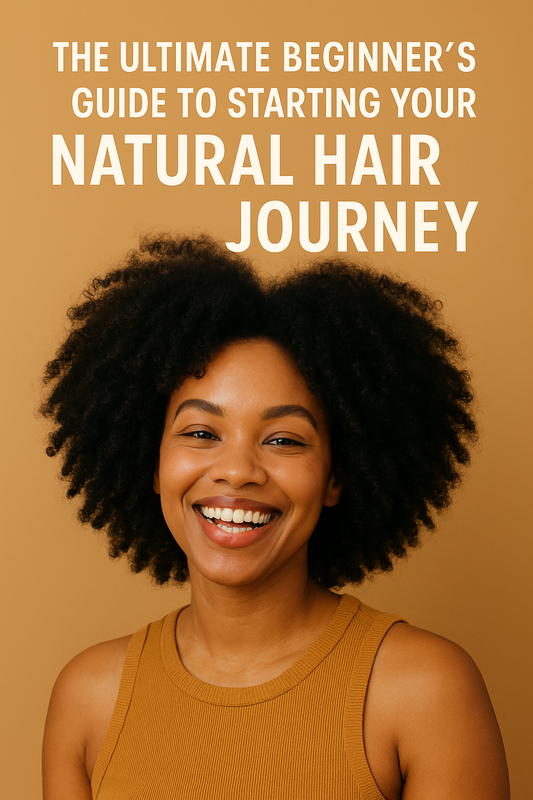
Deciding to embrace your natural hair is one of the most empowering and rewarding choices you can make. Whether you’re transitioning from chemically treated hair, starting fresh with a big chop, or simply wanting to better care for your curls, coils, and kinks, the natural hair journey is about more than just hair—it’s about self-love, patience, and discovery.
If you’re a beginner, this guide will walk you through everything you need to know to start your natural hair journey with confidence and excitement.
1. Understanding the Natural Hair Journey
The natural hair journey is the process of caring for your hair without chemical relaxers or straighteners. Instead, you embrace your natural curl pattern, which could range from loose waves to tight coils.
This journey looks different for everyone. Some choose the big chop—cutting off all chemically treated hair to start fresh—while others transition slowly by growing out their natural hair while trimming the relaxed ends over time. No matter your approach, the key is commitment and patience.
2. Knowing Your Hair Type and Texture
Before you dive into products and styles, it’s important to understand your hair type. Natural hair is generally categorized using the Andre Walker Hair Typing System:
-
Type 2 (Wavy): Loose waves (2A) to deeper S-pattern waves (2C).
-
Type 3 (Curly): Spirals and curls ranging from loose ringlets (3A) to tight corkscrews (3C).
-
Type 4 (Coily/Kinky): Densely packed coils, ranging from tight S-shaped patterns (4A) to zig-zag kinks with little visible curl definition (4C).
Knowing your type helps you choose the right products and techniques. However, keep in mind that many people have more than one texture on their head—so flexibility is key.
3. Transitioning vs. Big Chop
When starting your journey, you’ll need to decide how to return to your natural texture:
-
Big Chop: This is the quickest method. You cut off all your relaxed or chemically treated hair and start fresh with your natural texture. While bold, it eliminates dealing with two textures at once and allows you to learn your hair from the beginning.
-
Transitioning: This method allows you to gradually grow out your natural hair while trimming off the relaxed ends little by little. This is ideal if you don’t want short hair immediately, but it requires extra care since you’ll be managing two different textures.
4. Building a Healthy Hair Care Routine
A consistent routine is the foundation of your natural hair journey. Here’s a beginner-friendly breakdown:
Cleanse
Wash your hair with a gentle, sulfate-free shampoo or cleansing conditioner every 1–2 weeks. Natural hair thrives when it’s clean but not stripped of its natural oils.
Condition
Follow up with a moisturizing conditioner after every wash. This helps replenish hydration and makes detangling easier.
Deep Condition
At least once a week (or bi-weekly), use a deep conditioner or hair mask. Deep conditioning strengthens and moisturizes your strands, reducing breakage.
Moisturize and Seal
Moisture is everything for natural hair. Use a leave-in conditioner or water-based moisturizer, then “seal” the moisture with a natural oil or butter (like coconut oil, jojoba oil, or shea butter).
Detangle Carefully
Always detangle your hair gently with a wide-tooth comb or your fingers while it’s damp and coated with conditioner. This reduces breakage and makes styling easier.
5. Choosing the Right Products
The hair care aisle can be overwhelming. Start simple with these essentials:
-
Sulfate-free shampoo (gentle cleanser)
-
Moisturizing conditioner
-
Leave-in conditioner
-
Deep conditioner
-
Natural oils (coconut, jojoba, olive, castor, or argan)
-
Styling products (curl creams, gels, or butters depending on your hair type)
Remember: expensive doesn’t always mean better. Pay attention to how your hair feels and reacts.
6. Protective Styling
Protective styles minimize manipulation and protect your ends, which helps with length retention. Popular protective styles include:
-
Braids (box braids, knotless braids, cornrows)
-
Twists or flat twists
-
Bantu knots
-
Wigs and weaves (make sure your natural hair is moisturized underneath)
Protective styles don’t just help your hair grow—they also give you styling flexibility while reducing daily stress on your strands.
7. Patience and Consistency Are Key
One of the biggest lessons you’ll learn is that natural hair doesn’t transform overnight. It takes patience. You may experience trial and error with products, styles, and techniques before finding what works best for you.
Consistency in your routine is what yields results. Keep your hair moisturized, protect it at night (with a satin bonnet, scarf, or pillowcase), and avoid excessive heat or harsh chemicals.
8. Common Mistakes to Avoid
Here are a few pitfalls beginners often face:
-
Skipping trims – Regular trims prevent split ends from traveling up the hair shaft.
-
Product hopping – Stick with products long enough to see results before switching.
-
Over-manipulation – Constantly combing, brushing, or styling can cause breakage.
-
Ignoring your scalp – A healthy scalp = healthy hair. Keep it clean and moisturized.
-
Comparing your journey – Everyone’s hair grows and thrives differently. Focus on your own progress.
9. Embracing the Emotional Side
Going natural is about more than hair—it’s about identity, self-confidence, and self-expression. At times, you may feel frustrated, especially if you’re used to straight hair. But over time, you’ll learn to love your unique curls, coils, and kinks.
Celebrate small wins like mastering a twist-out or noticing new growth. Document your journey with photos to remind yourself how far you’ve come.
10. Inspiring Tips to Stay Motivated
-
Follow natural hair influencers for style inspiration and product tips.
-
Join communities (online forums, social media groups, or local meetups) where you can share experiences and get support.
-
Experiment with styles—don’t be afraid to try new looks, from wash-and-gos to updos.
-
Practice self-care—your natural hair journey is an extension of loving and taking care of yourself.
Final Thoughts
Starting your natural hair journey is a beautiful step toward embracing your authentic self. While it requires time, effort, and patience, the rewards are unmatched—healthy, strong, and versatile hair that truly represents you.
Remember, there is no one-size-fits-all approach. Experiment, learn, and grow with your hair. Whether you choose the big chop or a slow transition, the most important part is to enjoy the process and celebrate your progress.
Your natural hair is a crown—wear it proudly!