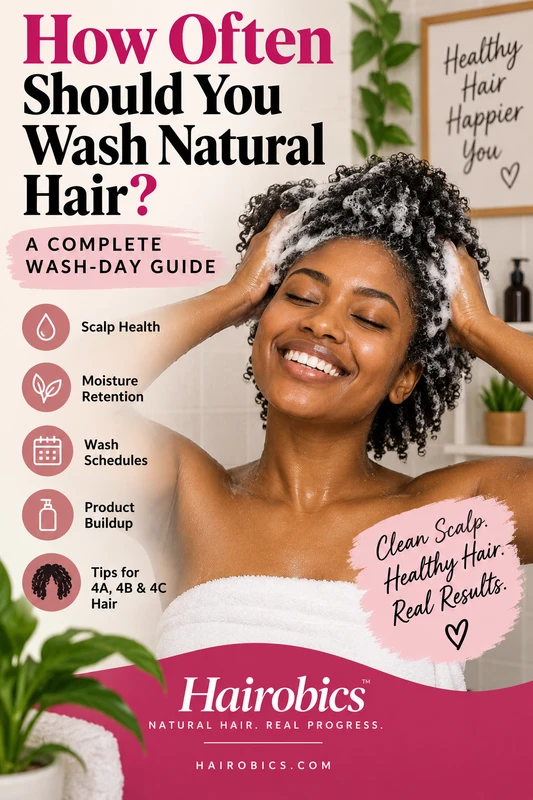
If you have natural hair, figuring out how often to wash it can be surprisingly complicated. Wash too frequently and your hair may begin to feel dry, rough, or difficult to manage. Wait too long between washes and your scalp may become oily, itchy, flaky, or covered with product buildup.
So, how often should you wash natural hair?
For many people with natural hair, washing approximately once every 7 to 14 days is a practical starting point. However, there isn't one perfect schedule for everyone. Your ideal wash frequency depends on your scalp, hair texture, hairstyle, lifestyle, product use, exercise habits, and how quickly buildup develops.
Someone who exercises several times per week and uses styling products regularly may need to cleanse more often than someone wearing a low-maintenance protective style. Likewise, a person with an oily or flaky scalp may need a different routine from someone whose scalp tends to stay dry.
The goal isn't simply to go as long as possible without shampooing. The goal is to keep your hair and scalp clean while maintaining enough moisture to prevent excessive dryness and breakage.
In this guide, we'll explain how often to wash natural hair, how washing frequency can differ for 4A, 4B, and 4C hair, signs you're washing too much or not enough, and how to build a healthy natural hair wash-day routine.
How Often Should You Wash Natural Hair?
A good general starting point for many people with natural hair is:
Wash your natural hair every 7 to 14 days.
Some people may prefer washing every 5 to 7 days, while others can comfortably go two weeks or occasionally longer.
Rather than treating the calendar as a strict rule, pay attention to what your scalp and hair are telling you.
You may need to wash sooner if you notice:
- Significant product buildup
- Persistent scalp itching
- Excessive oiliness
- Sweat accumulation
- An unpleasant scalp odor
- Flaking
- Hair that feels coated or unusually heavy
- Curls that no longer respond to water or styling products
- Styling products sitting on top of the hair
On the other hand, if your hair becomes extremely dry, tangled, brittle, or difficult to manage shortly after washing, you may be shampooing too frequently or using a cleanser that is too harsh for your hair.
The ideal routine keeps your scalp clean without leaving your strands chronically dry.
Why Natural Hair Often Needs a Different Washing Schedule
Natural Black hair frequently has tightly curled, coiled, or zigzag-shaped strands.
These bends and curves affect how easily natural oils produced by the scalp can travel down the hair shaft.
With straighter hair, scalp oils may spread through the strands relatively easily. With tightly coiled hair, the journey from the scalp to the ends is more complicated.
This is one reason natural hair can have dry ends even when the scalp itself doesn't feel dry.
Frequent shampooing—especially with strong cleansers—can make that dryness more noticeable.
At the same time, avoiding shampoo completely isn't necessarily the answer.
Your scalp still accumulates:
- Sebum
- Sweat
- Dead skin cells
- Styling products
- Oils
- Butters
- Gels
- Environmental debris
A healthy natural hair routine therefore requires balance.
You want enough cleansing to maintain a comfortable scalp and remove buildup, while also using conditioning and moisturizing practices that support your strands.
How Often Should You Wash 4C Hair?
People with 4C hair often wonder whether they should wash their hair less frequently because 4C hair can be particularly prone to dryness, shrinkage, tangling, and breakage.
For many people, washing every 7 to 14 days can work well as a starting schedule for 4C hair.
However, scalp condition should still take priority over curl pattern.
You may benefit from washing weekly if you:
- Exercise frequently
- Sweat heavily
- Use gel regularly
- Apply multiple styling products
- Experience scalp buildup quickly
- Have persistent flaking
- Wear wash-and-go styles
- Frequently refresh your hair with products
Someone who uses very few products and keeps their hair in a low-manipulation style may prefer a longer interval.
The key is not assuming that 4C hair should remain unwashed for several weeks simply because it is prone to dryness.
Instead, focus on gentle cleansing followed by effective conditioning and moisture retention.
How Often Should You Wash 4B Hair?
Many people with 4B natural hair can begin with a weekly or biweekly wash schedule.
Because 4B hair often has tight bends and coils, maintaining moisture is important.
If weekly shampooing makes your hair feel excessively dry, consider adjusting your cleansing method rather than immediately extending your wash schedule.
For example, you might try:
- A gentler shampoo
- Concentrating shampoo primarily on the scalp
- Pre-shampoo treatments
- Deep conditioning
- Applying conditioner generously to the lengths
- Reducing the amount of heavy styling products used between washes
Sometimes the problem isn't how often you're washing—it's what you're washing with and what you're doing afterward.
How Often Should You Wash 4A Hair?
Type 4A hair generally has defined coils and may respond well to washing every 5 to 10 days, although individual needs vary considerably.
People who wear defined curl styles may wash more frequently because water and conditioning can help reset the curl pattern.
Again, curl type shouldn't be your only consideration.
Your scalp, styling routine, density, strand thickness, exercise habits, and product use all matter.
Should You Wash Natural Hair Every Week?
Yes. Weekly washing can be an excellent routine for many people with natural hair.
A seven-day schedule is particularly convenient because it creates a predictable wash day.
For example:
Sunday: Shampoo, condition, detangle and style.
Then repeat the following Sunday.
Weekly washing may be especially useful for people who:
- Exercise regularly
- Sweat frequently
- Have an active lifestyle
- Use styling products throughout the week
- Develop buildup quickly
- Experience scalp itching after several days
- Prefer wash-and-go styles
- Want a consistent detangling schedule
Weekly washing also gives you an opportunity to regularly remove shed hairs.
Humans naturally shed hair, and curly strands can trap those shed hairs within the hairstyle instead of allowing them to fall away immediately.
During detangling, you may therefore see a noticeable amount of shed hair.
If you wait longer between detangling sessions, you may see more accumulated shed hair at once.
Is Washing Natural Hair Every Two Weeks Okay?
For many people, yes.
A two-week wash schedule is popular because it reduces the amount of manipulation involved in wash day while still providing relatively regular cleansing.
This schedule may work especially well if:
- Your scalp remains comfortable
- You don't sweat heavily
- You use minimal styling products
- Your hairstyle lasts approximately two weeks
- Your hair doesn't develop significant buildup
- You aren't experiencing persistent itching or flaking
However, don't force yourself to wait 14 days if your scalp becomes uncomfortable after eight or nine days.
Your scalp doesn't know that you're following a calendar.
If it needs cleansing, wash it.
Is It Okay to Wash Natural Hair Once a Month?
For some people, going several weeks between full wash days may happen occasionally, especially when wearing certain protective styles.
However, once-a-month washing isn't ideal for everyone.
Four weeks provides plenty of time for sweat, oil, dead skin cells, styling products, and environmental debris to accumulate.
If you're experiencing itching, visible buildup, odor, heavy flaking, or scalp discomfort before the month is over, that's a sign you may need to cleanse more frequently.
Long wash intervals can also make detangling more challenging because shed hairs have had additional time to become trapped within the rest of your hair.
Rather than deciding that natural hair "should" only be washed once per month, determine whether your scalp actually remains comfortable and clean for that long.
Can You Wash Natural Hair Too Often?
Yes.
Natural hair can potentially become excessively dry when it is repeatedly cleansed with harsh products, particularly if conditioning and moisturizing practices aren't keeping up.
Signs that your routine may be too aggressive include:
- Hair that feels rough immediately after shampooing
- Excessive tangling
- Brittle-feeling ends
- Increased snapping during styling
- Hair that feels stripped or squeaky
- Persistent dryness despite moisturizing
- Difficulty retaining length
However, washing frequently isn't automatically damaging.
A person using a gentle cleanser and excellent conditioning routine may comfortably wash weekly or even more frequently depending on their needs.
The entire routine matters.
Can You Go Too Long Without Washing Natural Hair?
Yes.
The idea that natural hair should be washed as little as possible can sometimes create problems.
Your scalp is skin.
It produces oil and sweat and continually sheds skin cells.
Meanwhile, natural hair routines may involve substantial amounts of:
- Leave-in conditioner
- Curl cream
- Edge control
- Gel
- Hair butter
- Styling foam
- Oils
- Pomades
- Sprays
Layering these products repeatedly without cleansing can eventually create buildup.
At some point, adding another moisturizer may not solve the problem.
Your hair may simply need to be washed.
10 Signs Your Natural Hair Needs to Be Washed
Instead of relying entirely on a calendar, learn to recognize the signals that wash day is approaching.
1. Your Scalp Is Itchy
Occasional itching doesn't automatically mean your hair is dirty.
But persistent itching—particularly when combined with sweat, flakes, or buildup—can indicate that it's time to cleanse your scalp.
Avoid repeatedly scratching with fingernails because aggressive scratching can irritate the scalp.
2. Your Hair Has Heavy Product Buildup
Natural hair products can accumulate over time.
You might notice a waxy or coated feeling on your strands.
Your curls may also stop responding normally to water.
When products continue piling up, washing provides a fresh foundation for your next style.
3. Your Scalp Smells Different
Sweat, oil and product residue can produce an unpleasant odor over time.
If your scalp no longer smells fresh, consider washing rather than simply covering the odor with another scented product.
4. Your Hair Feels Heavy
Product buildup can make natural hair feel heavier than usual.
Your curls may lose movement and definition.
A proper cleansing session can help remove excess residue.
5. Your Scalp Is Very Oily
Natural hair can be dry while the scalp is oily.
These are two different things.
If your scalp develops substantial oiliness, you may need to shampoo even if the ends of your hair still need moisture.
Apply conditioner to the lengths afterward.
6. You're Seeing Significant Flaking
Flakes can have several causes, so washing alone isn't always the solution.
However, if flakes are associated with obvious product accumulation or an overdue wash day, cleansing may help remove residue.
Persistent or severe scalp problems should be evaluated by a dermatologist or other qualified healthcare professional.
7. Your Hair Isn't Absorbing Products Normally
You spray water onto your hair.
It sits there.
You add leave-in conditioner.
That sits there too.
You add oil.
Now everything feels greasy.
This can sometimes happen when the strands are heavily coated with product.
Instead of adding more layers, consider washing your hair.
8. Your Curls Won't Refresh
There comes a point when refreshing an old hairstyle stops working.
Your curls may look dull, limp, frizzy, or undefined no matter how much product you apply.
Sometimes your hair doesn't need another styling product.
It needs water, cleansing and conditioning.
9. You've Been Sweating Heavily
Exercise can significantly influence wash frequency.
If you're working out five days per week, your ideal schedule may look very different from someone who rarely sweats.
Sweat can accumulate around the scalp and roots.
Frequent exercisers may therefore prefer weekly or more frequent scalp cleansing depending on comfort and buildup.
10. Your Scalp Simply Feels Dirty
Sometimes you don't need a complicated explanation.
If your scalp feels dirty, uncomfortable, coated, or overdue for cleansing, wash it.
How Often Should You Wash Natural Hair If You Exercise?
People who exercise regularly often need to adjust traditional natural hair wash schedules.
If you're sweating heavily several times per week, waiting two or three weeks may leave your scalp uncomfortable.
You don't necessarily need an intense clarifying shampoo after every workout.
Instead, you might use a combination of:
- Regular shampoo days
- Gentle cleansing when needed
- Scalp rinsing when appropriate
- Lightweight products between washes
- Keeping the scalp accessible
- Thoroughly drying the hair after sweating
For many active people, weekly cleansing is a practical starting point.
Adjust according to your scalp.
How Often Should You Wash Natural Hair in Protective Styles?
Protective styles don't make your scalp stop producing sweat and oil.
If you're wearing:
- Box braids
- Knotless braids
- Twists
- Cornrows
- Crochet styles
your scalp may still need cleansing.
Depending on the style and your scalp, you may cleanse approximately every one to two weeks or as needed.
The biggest concern is technique.
You don't want to aggressively scrub braided hair and create unnecessary frizz.
Instead:
- Dilute or carefully apply shampoo to the scalp.
- Massage gently with your fingertips.
- Allow the cleanser and water to move through the style.
- Rinse thoroughly.
- Avoid rough rubbing.
- Allow the style and scalp to dry completely.
Leaving thick braids damp for extended periods isn't ideal, so give your hair adequate drying time.
How Often Should You Wash Natural Hair With Locs?
Locs also require regular cleansing.
A common starting schedule is approximately every 1 to 2 weeks, although some people wash more or less frequently depending on their scalp, lifestyle, maturity of their locs, and maintenance routine.
People with locs should pay particular attention to product buildup.
Heavy creams, waxes and thick butters may become difficult to remove from locs.
Using lightweight products and thoroughly rinsing shampoo can help reduce residue.
Shampoo vs. Co-Washing Natural Hair
Co-washing means cleansing the hair with a conditioner or conditioning cleanser rather than traditional shampoo.
It became popular in natural hair routines because it can leave hair feeling softer than some shampoos.
However, co-washing doesn't always replace shampoo.
If you regularly use:
- Heavy oils
- Butters
- Silicone-containing products
- Edge control
- Strong-hold gel
- Pomades
- Thick styling creams
you may eventually need shampoo to thoroughly remove buildup.
A balanced routine might include gentle shampoo regularly and clarifying shampoo periodically when buildup warrants it.
How Often Should You Clarify Natural Hair?
Clarifying shampoos are designed to provide deeper cleansing than many everyday shampoos.
How often you need one depends heavily on your products and routine.
Some people may clarify approximately once every 3 to 6 weeks, while others may need it less frequently.
Consider clarifying when your hair:
- Feels unusually coated
- Remains greasy after regular shampoo
- Won't absorb moisture normally
- Looks dull despite conditioning
- Has persistent styling-product residue
Clarifying too frequently can leave some natural hair feeling dry, so follow with conditioner and pay attention to how your hair responds.
Should You Shampoo Natural Hair Twice?
Sometimes.
If your hair hasn't been washed for an extended period or contains significant buildup, one shampoo application may not be enough.
The first cleanse may loosen:
- Oils
- Sweat
- Dirt
- Styling products
- Scalp residue
A second gentle cleanse can finish the job.
However, you don't automatically need to shampoo twice every wash day.
If your scalp and hair feel clean after one application, a second round may be unnecessary.
Should You Wash Natural Hair With Hot or Cold Water?
Extremely hot water isn't necessary.
Lukewarm water is usually comfortable for cleansing and rinsing.
The important thing is making sure shampoo and conditioner are thoroughly rinsed out.
Some people enjoy finishing with cooler water, but you don't need freezing-cold water to maintain healthy natural hair.
The Best Way to Wash Natural Hair
Technique matters almost as much as frequency.
Here's a simple wash-day routine.
Step 1: Section Your Hair
Divide your hair into approximately four to eight sections.
Sectioning can make thick natural hair significantly easier to manage.
It may also reduce tangling during shampooing.
Step 2: Saturate Your Hair
Make sure your hair is thoroughly wet before applying shampoo.
Don't rush this step.
Dense natural hair may require additional time for water to reach every section.
Step 3: Apply Shampoo Mainly to Your Scalp
Your scalp is usually where the greatest amount of oil, sweat and residue accumulates.
Apply shampoo to the scalp and gently massage using your fingertips.
Avoid aggressively scratching with your nails.
As you rinse, shampoo will travel through the lengths of your hair.
Step 4: Rinse Thoroughly
Incomplete rinsing can leave residue behind.
Take enough time to make sure cleanser is fully removed, particularly if your hair is extremely dense.
Step 5: Condition
Apply conditioner generously through your lengths and ends.
The oldest portion of your hair—the ends—often needs the most attention.
Step 6: Detangle Carefully
Detangle while your hair has adequate slip.
Depending on your preference, use:
- Fingers
- Wide-tooth comb
- Detangling brush
Begin near the ends and gradually work upward.
Avoid ripping through knots.
Step 7: Deep Condition When Needed
Not everyone needs to deep condition during every wash.
However, deep conditioning can be useful when your hair feels particularly dry, tangled, or difficult to manage.
Follow the instructions on your chosen product.
Step 8: Rinse
Rinse the conditioner thoroughly unless the product instructions specifically say otherwise.
Step 9: Apply Leave-In Products
After washing, apply your preferred leave-in or moisturizing products.
Work in sections to make sure products are distributed evenly.
Step 10: Style Gently
Wash day doesn't need to end with a high-manipulation hairstyle.
Low-manipulation options include:
- Two-strand twists
- Braids
- Bantu knots
- Wash-and-go styles
- Twist-outs
- Braid-outs
- Buns
Choose styles that work with your lifestyle and hair goals.
What Should a Weekly Natural Hair Wash Schedule Look Like?
Here's a simple example.
Day 1 — Wash Day
Shampoo your scalp and hair.
Condition and detangle.
Apply leave-in products.
Style.
Days 2–3 — Maintain
Protect your hairstyle at night using satin or silk accessories.
Avoid unnecessary manipulation.
Days 4–5 — Refresh if Needed
Lightly refresh areas that need moisture rather than automatically coating your entire head with multiple products.
Days 6–7 — Evaluate
Ask yourself:
Does my scalp itch?
Is there buildup?
Did I sweat heavily?
Does my hair feel coated?
If yes, wash.
If everything still feels clean and comfortable, you may decide to extend the routine several more days.
What Should a Two-Week Natural Hair Wash Schedule Look Like?
A two-week routine can work well for people whose scalp doesn't develop buildup quickly.
Week One
Wash, condition, detangle and style.
Maintain the hairstyle throughout the week.
Week Two
Refresh lightly as needed.
Avoid continuously layering heavy creams, oils and gels.
Monitor your scalp.
At approximately Day 14, wash again.
If your scalp becomes itchy, oily or uncomfortable before Day 14, move wash day forward.
How Product Use Affects Your Wash Schedule
One overlooked factor is the amount of product you're applying.
Imagine two people with nearly identical 4C hair.
Person A uses:
- Water
- Lightweight leave-in
- Small amount of oil
Person B uses:
- Leave-in conditioner
- Curl cream
- Butter
- Gel
- Edge control
- Oil
- Refreshing spray every morning
Person B may experience buildup significantly faster.
That means they may need to wash more frequently.
Sometimes reducing product layering can extend the time your hair feels fresh.
Does Washing Natural Hair Help It Grow?
Shampoo doesn't magically make hair grow faster.
Hair growth occurs from the follicle.
However, maintaining a clean, comfortable scalp is an important part of an overall healthy hair-care routine.
Length retention also matters.
Your hair can be growing normally while breaking at the ends, making it appear as though growth has stopped.
A good routine therefore combines scalp care with:
- Gentle detangling
- Moisture
- Conditioning
- Reduced breakage
- Minimal excessive tension
- Careful styling
- Regular trimming when needed
Don't judge your progress based solely on how quickly your roots grow.
Pay attention to how much length you're retaining.
Does Dirty Hair Grow Faster?
No reliable hair-care strategy should be based on intentionally keeping the scalp dirty.
The belief that dirty hair grows faster may come from people noticing new growth after wearing a protective style for several weeks.
But the hair was growing during that time regardless of whether the scalp was dirty.
You don't need excessive oil, sweat, dirt, or product buildup to grow natural hair.
Should You Oil Your Scalp After Washing?
This depends on your scalp and personal routine.
Not everyone needs scalp oil.
If you use oil, a small amount may be sufficient.
Pouring large quantities of oil directly onto your scalp can create unnecessary buildup and may shorten the amount of time your scalp feels fresh.
More oil does not automatically equal more moisture.
Oil and water serve different purposes.
How to Keep Natural Hair Moisturized Between Washes
One reason people avoid washing natural hair is fear of dryness.
But you can build a routine that keeps your hair moisturized between wash days.
Use a Leave-In Conditioner
Apply an appropriate amount after washing.
Focus on Your Ends
Your ends are the oldest part of your hair and may require extra care.
Reduce Excessive Manipulation
Constant combing, brushing and restyling can contribute to breakage.
Sleep With Satin or Silk
A satin bonnet, scarf, or pillowcase can help reduce friction while you sleep.
Avoid Overloading Your Hair
Applying more product isn't always the solution to dryness.
If your hair feels coated but still dry, consider whether buildup is interfering with your routine.
Sometimes the answer is washing—not another layer of oil.
Common Natural Hair Washing Mistakes
Waiting Until Your Scalp Is Extremely Dirty
You don't receive a prize for making it four weeks without shampoo.
Wash according to your scalp's needs.
Using Too Much Shampoo
More shampoo doesn't necessarily produce cleaner hair.
Use enough to cleanse effectively without wasting product.
Scratching the Scalp Aggressively
Use your fingertips instead of digging your nails into your scalp.
Washing Loose Hair Without Sections
For thick or long natural hair, sections can dramatically improve manageability.
Piling Hair on Top of Your Head
Aggressively rubbing curls together can create tangles.
Work in the natural direction of your hair whenever possible.
Skipping Conditioner
Conditioning helps restore softness and slip after shampooing.
Detangling Too Aggressively
Rushing through tangles can cause unnecessary breakage.
Using Heavy Products Immediately After Washing
Freshly washed hair doesn't necessarily need five or six styling products.
Start with what your hair actually needs.
How Often Should Kids' Natural Hair Be Washed?
Children's natural hair routines should also be individualized.
For many kids, washing approximately every 1 to 2 weeks can be a reasonable starting point.
However, children who swim, play sports, sweat heavily, or get sand and dirt in their hair may need more frequent washing.
Keep wash day gentle.
Focus on:
- Mild cleansing
- Plenty of conditioner
- Gentle detangling
- Manageable sections
- Low-tension hairstyles
Most importantly, avoid turning wash day into an unnecessarily painful experience.
How Often Should Men Wash Natural Hair?
Black men with natural hair may need to wash more frequently depending on hair length, exercise habits and styling products.
Someone with short hair who works out daily may prefer washing several times per week.
Someone with longer twists or locs may use a different schedule.
Men who use pomades, wave products, gels, oils, or styling creams should also consider buildup.
Again, scalp condition matters more than gender.
Does the Season Change How Often You Should Wash Natural Hair?
Possibly.
Your routine doesn't have to remain identical throughout the year.
Summer
Heat and physical activity may cause more sweating.
You may prefer washing more frequently.
Winter
Some people experience greater dryness during colder months and may need to focus more heavily on conditioning and moisture retention.
Instead of following the exact same routine year-round, adjust according to how your scalp and hair respond.
What If Your Hair Feels Dry Immediately After Washing?
If your natural hair feels extremely dry after every wash, don't automatically assume you're washing too often.
Look at your entire routine.
Ask:
Is my shampoo too harsh?
Am I using conditioner?
Am I detangling aggressively?
Am I shampooing the lengths repeatedly when the scalp needs most of the cleansing?
Am I using extremely hot water?
Am I applying a leave-in afterward?
Changing your shampoo or conditioning routine may solve the problem without requiring you to dramatically reduce cleansing frequency.
When Should You See a Dermatologist?
Not every scalp problem is caused by an incorrect wash schedule.
Consider speaking with a dermatologist or qualified healthcare professional if you're experiencing persistent or severe:
- Scalp inflammation
- Pain
- Burning
- Intense itching
- Heavy flaking
- Sores
- Scabs
- Unexplained hair loss
- Bald patches
- Significant thinning
Changing shampoo schedules isn't a substitute for medical evaluation when symptoms are persistent or concerning.
Frequently Asked Questions
How often should Black women wash natural hair?
Many Black women with natural hair find that washing approximately every 7 to 14 days works well. However, exercise, scalp condition, hairstyle, product buildup, and individual hair needs should determine the final schedule.
How often should you wash 4C natural hair?
A common starting point is every one to two weeks, although some people with 4C hair need more frequent cleansing.
Is washing natural hair once a week too much?
Not necessarily. Weekly washing works very well for many people, particularly when using a gentle shampoo and following with conditioner.
Is washing natural hair every two weeks bad?
No. A two-week schedule may work well if your scalp remains clean and comfortable and you're not developing significant buildup.
Can I wash natural hair every three days?
You can if your scalp and lifestyle require frequent cleansing, but choose gentle products and monitor your strands for dryness.
How long can natural hair go without washing?
There isn't a universal maximum. Rather than trying to set a record, wash when your scalp develops noticeable buildup, oiliness, itching, odor, or discomfort.
Should I wash my hair if my scalp itches?
Persistent itching can be a sign that cleansing is needed, particularly when combined with sweat or product buildup. However, recurring or severe itching can have other causes and may warrant professional evaluation.
Should I wash my natural hair after sweating?
You don't necessarily need a full shampoo session after every small amount of sweat. If you exercise heavily and your scalp remains sweaty, oily, itchy, or uncomfortable, you may benefit from more frequent cleansing.
Is co-washing enough for natural hair?
Sometimes, but not always. People who use heavy styling products may still need shampoo periodically to remove buildup effectively.
How do I know if my natural hair is clean?
Your scalp should feel comfortable and refreshed rather than coated or greasy. Your hair shouldn't have obvious residue, and products and water should interact with your strands normally.
The Bottom Line: How Often Should You Wash Natural Hair?
For many people, washing natural hair every 7 to 14 days is an excellent place to start.
But don't turn that recommendation into a rigid rule.
Your perfect wash schedule might be every five days.
It might be every seven days.
It might be every ten days.
It might be every two weeks.
The best schedule is the one that keeps your scalp clean and comfortable while allowing your natural hair to remain conditioned, moisturized, manageable, and protected from unnecessary breakage.
Pay attention to buildup, sweat, oiliness, itching, styling products, exercise, and how your hair behaves after washing.
Most importantly, don't be afraid of water and shampoo simply because you have natural hair.
Healthy natural hair care isn't about washing as little as possible.
It's about cleansing when necessary and replacing moisture afterward.
Once you find that balance, wash day becomes less about following someone else's rules and more about understanding exactly what your own hair needs.