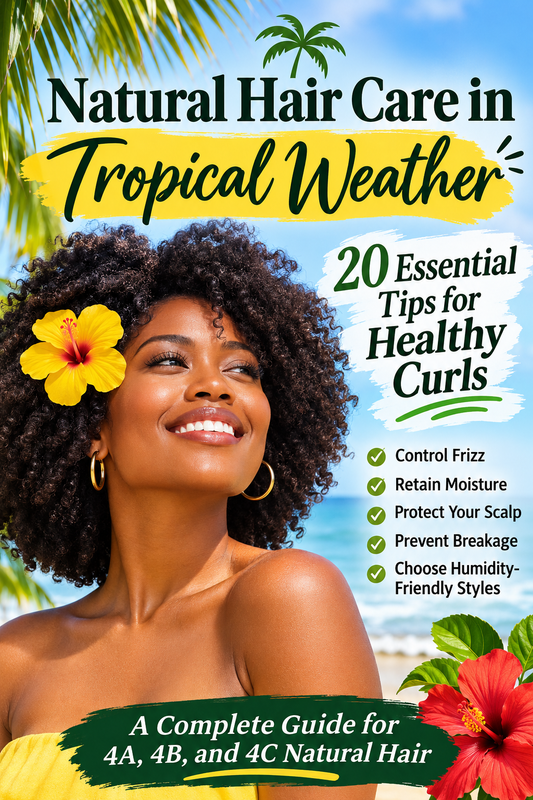
Tropical weather can be beautiful, but maintaining healthy natural hair in hot, humid climates comes with unique challenges. Whether you live in Florida, Hawaii, Jamaica, the Bahamas, Puerto Rico, or another tropical destination, high humidity, intense sunshine, frequent sweating, and sudden rainstorms can affect how your natural hair looks and feels.
For women with 4A, 4B, and 4C natural hair, tropical conditions can create frustrating changes in curl definition, shrinkage, scalp comfort, and hairstyle longevity.
You might leave home with a perfectly defined twist-out, only to discover that your hair has doubled in volume by lunchtime. Your scalp may feel sweaty after spending just a few minutes outdoors. Even freshly moisturized hair can become tangled or difficult to manage.
Fortunately, tropical weather does not have to prevent you from maintaining beautiful, healthy natural hair.
The secret is understanding how heat and humidity affect textured hair and adjusting your routine accordingly.
In this comprehensive guide, you'll discover 20 essential natural hair care tips for tropical weather, including how to control frizz, maintain moisture, prevent unnecessary breakage, protect your scalp, and choose hairstyles that work with the climate instead of against it.
How Does Tropical Weather Affect Natural Hair?
Tropical climates typically experience warm temperatures, elevated humidity, strong sunlight, and frequent rainfall.
These environmental conditions influence natural hair differently than dry or temperate climates.
High Humidity Changes Curl Definition
Human hair naturally interacts with moisture in the surrounding air.
When humidity rises, hair fibers absorb water vapor. This can temporarily change the hydrogen bonds that help maintain a hairstyle.
As a result, natural hair may experience:
-
Increased shrinkage
-
Frizz and flyaways
-
Loss of twist-out definition
-
Curl expansion
-
Changes in volume
-
Additional tangling
-
Shorter hairstyle longevity
High humidity does not automatically mean your hair is unhealthy. It simply changes how your strands respond to their environment.
For a deeper explanation, read our guide on how humidity affects Black natural hair.
Heat and Sweating Affect the Scalp
Tropical temperatures often increase perspiration.
Sweat contains water and dissolved salts. When combined with scalp oils, dirt, and styling products, it can leave the scalp feeling uncomfortable.
People who exercise outdoors, spend time at the beach, or work in hot environments may notice that their scalp needs more frequent cleansing.
Sunshine Can Contribute to Hair Weathering
Extended exposure to ultraviolet radiation can affect the hair fiber, particularly hair that has already experienced coloring, bleaching, or heat damage.
Sun exposure can contribute to dryness, changes in color, and weakening of the hair's outer protective structure over time.
Protective headwear and gentle conditioning are useful parts of a tropical hair care routine.
20 Essential Natural Hair Care Tips for Tropical Weather
1. Start With a Lightweight Moisturizing Routine
One of the biggest mistakes people make in tropical weather is assuming that high humidity means their natural hair does not need moisturizing.
Humidity and properly conditioned hair are not the same thing.
Although hair can absorb water from humid air, it may still feel rough, tangled, or poorly conditioned.
Start with a water-based moisturizing product that helps improve softness and manageability.
Avoid automatically applying several thick creams, oils, and butters at once.
In hot weather, excessive layering may leave hair feeling greasy or coated.
A simple routine can include cleansing, conditioning, applying a leave-in treatment, and using a small amount of oil-based product where necessary.
The Hairobics Leave-In Treatment provides a convenient water-based conditioning step for natural hair.
Its botanical formula includes aloe vera, jojoba oil, avocado oil, and other ingredients used in hair conditioning.
Use an appropriate amount and adjust according to your hair's thickness, density, and response.
2. Understand Your Hair Porosity
Hair porosity describes how readily hair absorbs and releases water.
Understanding your hair's behavior can help you select products for tropical conditions.
Low-porosity natural hair
Low-porosity hair may resist becoming fully saturated and can develop noticeable product buildup when heavy formulas are repeatedly applied.
In tropical weather, lightweight conditioning products may be more comfortable.
Medium-porosity natural hair
Medium-porosity hair often responds well to a balanced routine of cleansing, conditioning, and moderate styling-product application.
High-porosity natural hair
High-porosity hair may absorb water quickly and become especially reactive to changing humidity.
Damaged or weathered strands can also experience more tangling and frizz.
These categories are general descriptions, not rigid rules. Hair density, strand diameter, damage, and styling habits also influence how your hair behaves.
Learn more in our article on how to determine your natural hair porosity.
3. Avoid Applying Too Much Heavy Hair Grease
Thick hair grease and oil-based conditioners can be useful for certain natural hair routines.
However, tropical weather often makes heavy product application less comfortable.
When temperatures rise, your scalp may already feel warm and sweaty.
Applying large amounts of grease can contribute to residue and make cleansing more difficult.
Instead, use oil-based conditioning products strategically.
The Hairobics Hair & Scalp Booster contains botanical ingredients including coconut oil, jojoba oil, olive oil, aloe vera, rosemary oil, and vitamin E oil.
It can help condition dry-feeling hair and scalp areas.
In humid weather, begin with a small amount and apply more only when necessary.
Remember that oil-based conditioning products complement water-based moisture rather than replacing it.
4. Wash Your Hair According to Your Scalp's Needs
Tropical weather may require changes to your regular shampoo schedule.
Sweating, swimming, and increased outdoor activity can cause the scalp to feel dirty sooner than usual.
For some people, cleansing every seven to fourteen days works well.
Others may need to shampoo more frequently, especially when they exercise regularly or experience significant buildup.
The goal is to maintain a clean, comfortable scalp without repeatedly stripping the hair of conditioning.
When shampooing:
-
Concentrate on the scalp.
-
Massage gently with your fingertips.
-
Avoid scratching with your nails.
-
Allow shampoo to flow through the lengths.
-
Rinse thoroughly.
-
Follow with an appropriate conditioner.
If your scalp feels itchy or develops an unpleasant odor, investigate the cause rather than repeatedly applying more oil.
Read our complete guide on how often to wash natural hair.
5. Deep Condition When Your Hair Needs Extra Care
Natural hair can benefit from periodic deep conditioning, particularly when it experiences frequent sun exposure, swimming, detangling, or styling.
Deep conditioners are formulated to improve the feel and manageability of hair.
Some contain fatty alcohols, conditioning agents, oils, proteins, and other ingredients that temporarily improve the hair's surface.
Choose a formula that matches your hair's condition.
If your hair feels rough or difficult to detangle, a moisturizing deep conditioner may help.
If your hair has significant chemical or heat damage, a suitable strengthening treatment may be useful.
Follow the product's recommended processing time.
Leaving conditioner on for hours is not automatically better than following the directions.
In tropical climates, focus on effective conditioning rather than unnecessarily complicated treatments.
6. Protect Natural Hair From Intense Sunshine
Tropical sunshine can be strong throughout the year.
Although natural hair provides some protection to the scalp, exposed parts and thinning areas can still experience sunburn.
When spending extended periods outdoors, consider wearing a breathable, wide-brimmed hat or using a scarf that protects your hair and scalp.
Choose headwear that does not pull tightly around your edges.
If your scalp is exposed, apply a suitable sunscreen according to its directions.
Avoid relying on ordinary hair oils as sunscreen.
For long beach days, protective headwear is especially helpful.
Sun protection can also reduce prolonged ultraviolet exposure to color-treated or fragile strands.
7. Choose Humidity-Friendly Natural Hairstyles
Some hairstyles maintain their appearance more easily in tropical weather than others.
The best choices often reduce unnecessary manipulation while allowing comfortable scalp maintenance.
Consider:
-
Two-strand twists
-
Loose flat twists
-
Medium-sized braids
-
Low-tension cornrows
-
Natural puffs
-
Loose buns
-
Short tapered natural hairstyles
-
Wash-and-go curls
-
Comfortable protective updos
The right hairstyle depends on your texture, lifestyle, and personal preferences.
A hairstyle is not truly protective if it causes pain, pulls your edges, or makes cleansing difficult.
Choose styles that remain comfortable when your scalp becomes warm or sweaty.
8. Prevent Frizz Without Fighting Your Natural Texture
Frizz is one of the most common concerns in tropical weather.
However, frizz does not always indicate dryness or damage.
Humidity can temporarily change the shape of hair fibers, causing individual strands to separate from an established curl pattern.
To improve definition, begin with clean, conditioned hair.
Apply a compatible leave-in treatment and styling product that provides sufficient hold.
Allow the hairstyle to dry completely before repeatedly touching or separating curls.
If your twist-out becomes larger in humidity, consider embracing a fuller hairstyle rather than constantly restyling it.
For more styling advice, explore our guide on reducing frizz in humid weather.
9. Keep Your Scalp Clean and Comfortable
Scalp maintenance becomes especially important when temperatures remain high.
A sweaty scalp does not necessarily require daily shampooing, but persistent buildup should not be ignored.
Avoid applying thick layers of scalp oil without cleansing.
If you enjoy oil-based scalp conditioning, use small amounts on intact skin.
The Hairobics Scalp Rejuvenator contains a botanical oil blend featuring rosemary, peppermint, lavender, tea tree, and other aromatic ingredients.
It can be incorporated into a gentle scalp-conditioning routine.
Patch-test before use and discontinue application if irritation develops.
Persistent itching, thick flakes, redness, sores, or unexplained hair loss should be evaluated by a healthcare professional.
10. Protect Your Hair When Swimming
Swimming is a popular activity in tropical destinations, but chlorine and saltwater exposure can affect natural hair.
Chlorinated pool water may leave hair feeling rough or dry, especially with frequent exposure.
Saltwater can also change the way hair feels after drying.
Before swimming, thoroughly wet your hair with clean water.
Consider using a comfortable swim cap to reduce exposure.
After swimming, rinse your hair promptly.
Use an appropriate shampoo when needed to remove chlorine, salt, and accumulated residue.
Follow with conditioner to improve softness and manageability.
If you swim frequently, pay particular attention to your ends and avoid aggressive detangling immediately after leaving the water.
11. Keep Your Hair Stretched When Necessary
Tropical humidity can increase shrinkage, particularly in tightly coiled natural hair.
Shrinkage is a normal characteristic of curly and coily textures.
However, some people experience additional tangling when their hair repeatedly shrinks and expands.
Low-tension stretching methods can make maintenance easier.
Try loose braids, chunky twists, banding, or other gentle heat-free techniques.
Avoid pulling the hair excessively tight.
If you prefer wearing a stretched twist-out, remember that humidity may gradually reduce the stretched appearance.
This does not mean your hair has stopped growing or that the hairstyle has failed.
It simply reflects how textured hair responds to moisture.
12. Protect Your Edges From Sweat and Tension
The hairline is often exposed to repeated styling, brushing, and tension.
In tropical weather, sweat may encourage people to brush their edges more frequently or apply additional edge-control products.
Unfortunately, repeated manipulation can contribute to breakage.
Avoid tight ponytails, braids, and headbands that pull around the temples.
When refreshing your hairstyle, use a gentle approach.
Do not repeatedly scrape the hairline with a stiff brush.
If you use an edge-control product, cleanse accumulated residue as needed.
Hairline conditioning can improve softness, but products cannot compensate for continued excessive tension.
13. Avoid Excessive Heat Styling
Flat irons and blow-dryers can temporarily change the appearance of natural hair.
However, frequent high-temperature styling can contribute to cuticle damage and weakened strands.
In tropical climates, humidity can also cause straightened hair to revert toward its natural curl pattern.
Repeatedly flat-ironing reverted sections increases heat exposure.
If you choose to straighten your hair, use an appropriate heat protectant and controlled temperatures.
Avoid applying heat repeatedly throughout the day.
Consider reserving silk presses for occasions when maintaining a straight style is practical.
Natural curls, twists, and braids may require less maintenance during particularly humid periods.
14. Use Lightweight Products for Braids and Locs
Braids and locs are popular in tropical climates because they can reduce daily styling.
However, they still require regular scalp care and appropriate cleansing.
Sweat and product residue can accumulate around braid bases and within locs.
Use moisturizing products sparingly and avoid repeatedly coating the hair with thick oils.
The Hairobics Locs & Braids Moisturizer Spray is designed for conditioning braids, locs, extensions, and natural hair.
Its formula includes water, botanical oils, and other conditioning ingredients.
Apply according to the product directions, adjusting the amount to avoid unnecessary buildup.
Most importantly, dry braids and locs thoroughly after washing or swimming.
Prolonged dampness inside dense hairstyles can create unpleasant odors and contribute to scalp problems.
15. Reduce Friction During Sleep
Warm tropical nights can make nighttime hair protection uncomfortable.
However, reducing friction while sleeping remains helpful for maintaining natural hairstyles.
Cotton pillowcases can create friction as hair moves across the fabric.
A satin or silk pillowcase may help reduce rubbing and tangling.
You can also use a comfortable satin bonnet or scarf.
Choose breathable, loose-fitting options that do not trap excessive heat or pull against the hairline.
If your scalp sweats heavily at night, prioritize comfort and keep your nighttime accessories clean.
Avoid going to bed with soaking-wet hair tightly covered.
Allow your hair and scalp to dry adequately before sleeping whenever possible.
16. Refresh Your Hair Without Overloading It
Tropical weather may cause natural hairstyles to lose definition sooner than expected.
It can be tempting to reapply leave-in conditioner, oils, creams, and gels every morning.
However, excessive product layering can create buildup.
Instead, assess what your hair actually needs.
If your hair feels soft but looks frizzy, additional moisturizer may not be necessary.
You might simply reshape a few curls or retwist selected sections.
If your ends feel dry, apply a small amount of suitable conditioning product.
If your scalp feels coated, cleansing may be more useful than adding another oil.
For additional advice, read why natural hair won't stay moisturized.
17. Pay Special Attention to Your Ends
The ends are the oldest portions of your hair.
They have experienced more washing, styling, environmental exposure, and mechanical wear than newer growth.
In tropical climates, frequent swimming, sun exposure, and detangling can increase this wear.
Protect your ends by handling them gently.
Use conditioner with sufficient slip during detangling.
Avoid repeatedly pulling through knots with a fine-tooth comb.
Keep your ends tucked away occasionally if that makes your hair easier to maintain.
Trim visibly split or severely damaged ends when necessary.
Conditioning products can temporarily improve the feel of rough ends, but they cannot permanently reconnect a split hair shaft.
Consistent end care can help reduce avoidable breakage and support length retention.
18. Adapt Your Routine for 4C Hair
4C natural hair is known for its tightly coiled structure, beautiful volume, and versatility.
In tropical weather, 4C hair may experience significant shrinkage and increased tangling.
The key is maintaining softness while reducing unnecessary manipulation.
Consider washing and conditioning in sections.
Detangle with a slippery conditioner and work from the ends toward the roots.
Use a water-based leave-in treatment when appropriate.
Choose low-tension hairstyles that allow comfortable scalp access.
If you prefer stretched styles, try chunky twists or loose braids.
Avoid assuming that 4C hair must remain perfectly defined or stretched to be healthy.
Your natural texture can thrive in tropical conditions with consistent, gentle care.
19. Adjust Your Routine During Rainy Season
Tropical rainy seasons can bring frequent downpours and sudden changes in humidity.
Natural hairstyles may become damp unexpectedly.
If your hair gets wet, avoid aggressively brushing or pulling it back into a tight style.
Gently blot excess moisture with a soft towel.
Allow the hair and scalp to dry thoroughly.
If your hairstyle loses definition, consider refreshing it with a simple twist or braid set.
Avoid repeatedly applying heavy products every time it rains.
For people wearing locs or dense braids, drying is especially important.
Keeping a small scarf, hair tie, or other gentle styling accessory in your bag can make unexpected weather easier to manage.
20. Build a Consistent Tropical Hair Care Routine
The most effective natural hair routine is one you can maintain.
Tropical weather does not require purchasing dozens of different products.
Instead, focus on a few essential habits:
Cleanse your scalp when necessary.
Condition your hair appropriately.
Use water-based moisture and oil-based products according to your hair's needs.
Protect your strands from unnecessary friction, tension, and heat.
Choose hairstyles that remain comfortable in warm weather.
Adjust your routine when swimming, sweating, or spending extended periods outdoors.
Consistency is more valuable than constantly switching products.
The Best Weekly Natural Hair Routine for Tropical Weather
A practical routine can help you maintain your natural hair without spending hours styling it every day.
Wash Day
Begin by dividing your hair into manageable sections.
Gently detangle with conditioner, removing shed hairs and knots without excessive pulling.
Cleanse your scalp using a suitable shampoo.
Rinse thoroughly and apply a rinse-out conditioner.
Deep condition if your hair needs additional care.
After rinsing, apply an appropriate amount of leave-in treatment.
Use a small amount of oil-based conditioner on dry-feeling areas if desired.
Finish with a low-manipulation hairstyle.
Midweek Maintenance
Check your scalp for sweat, residue, or discomfort.
Refresh dry-feeling strands with a suitable conditioning product when necessary.
Avoid repeatedly adding heavy oils to hair that already feels coated.
If your hairstyle has become frizzy, restyle only the sections that need attention.
Nighttime Maintenance
Protect your hair with a comfortable satin bonnet, scarf, or pillowcase.
Avoid tight nighttime hairstyles.
Make sure your scalp and dense protective styles are adequately dry.
Weekend Assessment
Evaluate how your hair feels.
Does it need cleansing?
Are your ends tangling?
Is your scalp comfortable?
Has your hairstyle become too tight?
Use these observations to decide what your hair needs next.
Best Natural Hairstyles for Tropical Vacations
If you're traveling to a tropical destination, choosing a manageable hairstyle can make your vacation more enjoyable.
Two-strand twists: A versatile option that can be worn loose, pinned up, or unraveled for a twist-out.
Knotless braids: Can reduce daily styling, provided they are installed without excessive tension.
Natural afro: Allows you to embrace your texture without trying to maintain a perfectly stretched appearance.
Wash-and-go: A practical option for people who enjoy their natural curl pattern and have styling products that provide suitable hold.
Loose buns: Convenient for warm weather, provided they do not pull against the hairline.
Loc styles: Can be manageable during travel when properly cleansed and thoroughly dried.
Choose a style that matches your planned activities.
Someone spending several hours swimming may need a different routine than someone attending outdoor events or relaxing at a resort.
Common Natural Hair Mistakes in Tropical Weather
Even with a good routine, certain habits can make tropical hair maintenance more difficult.
Applying too much oil: Oil-based products can condition hair, but excessive application may contribute to buildup.
Ignoring scalp cleansing: Sweat and styling residue should be removed according to your scalp's needs.
Using tight protective styles: Excessive tension can damage fragile hairline areas.
Constantly fighting shrinkage: Repeated brushing and stretching may cause more damage than accepting some natural volume.
Skipping conditioning after swimming: Pool and ocean exposure may leave hair feeling rough or difficult to manage.
Covering damp locs: Dense hairstyles need sufficient drying time after washing.
Overusing heat tools: Repeated straightening can increase the risk of heat damage.
Changing products too frequently: Constant experimentation makes it difficult to determine which products work best.
A simple, consistent routine can help you avoid these problems.
Best Hairobics All Natural Products for Tropical Hair Care
Maintaining natural hair in tropical weather becomes easier when you choose products that complement your hair's needs.
Hairobics All Natural offers botanical-based products for hair conditioning, scalp maintenance, and protective-style care.
Hairobics Leave-In Treatment
The Hairobics Leave-In Treatment is a water-based conditioning formula containing aloe vera, jojoba oil, avocado oil, and other botanical ingredients.
It can be incorporated into a routine focused on softness and manageability.
Apply according to the product directions and adjust the amount to suit your hair.
Hairobics Hair & Scalp Booster
The Hairobics Hair & Scalp Booster is an oil-based conditioning product featuring coconut oil, jojoba oil, rosemary oil, peppermint oil, aloe vera, and vitamin E oil.
It can be used sparingly to condition dry-feeling hair and scalp areas.
For tropical weather, avoid unnecessary heavy application.
Hairobics Scalp Rejuvenator
The Hairobics Scalp Rejuvenator contains a botanical oil blend that can complement occasional scalp conditioning and gentle massage.
Use according to directions and patch-test before applying widely.
Hairobics Hair Growth Bundle
For a convenient combination of hair and scalp conditioning products, explore the Hairobics Hair Growth Bundle.
The bundle includes:
-
Hair & Scalp Booster
-
Leave-In Treatment
-
Scalp Rejuvenator Oil
These products can complement a routine focused on softness, scalp care, and reducing avoidable breakage.
Although conditioning and gentle handling can support length retention, cosmetic hair products are not guaranteed treatments for hair loss or accelerated growth.
Frequently Asked Questions About Natural Hair in Tropical Weather
Is tropical weather good for natural hair growth?
Tropical weather does not automatically make natural hair grow faster.
Hair growth occurs within follicles and is influenced by genetics, health, age, nutrition, and other factors.
However, maintaining a comfortable scalp and protecting existing strands from breakage can help you retain more visible length.
Why does my 4C hair shrink so much in humidity?
4C hair has a tightly coiled structure.
When humidity changes the water content of the hair fiber, stretched hairstyles can gradually return toward their natural curl pattern.
This is normal and does not mean your hair is damaged.
Should I moisturize natural hair every day in tropical weather?
Not necessarily.
Some people benefit from frequent lightweight conditioning, while others find that daily application causes buildup.
Pay attention to how your hair feels rather than following a rigid schedule.
Is coconut oil good for natural hair in humid climates?
Coconut oil can be a useful conditioning ingredient for some hair types.
However, it does not replace water-based moisture, and excessive application may leave some hair feeling coated.
Use it according to your hair's response.
What is the best hairstyle for tropical humidity?
Twists, braids, loose buns, natural afros, and wash-and-go styles can all work well.
The best option depends on your hair texture, activity level, styling preferences, and tolerance for shrinkage.
How often should I wash natural hair in hot weather?
Your ideal wash frequency depends on sweating, scalp condition, swimming, product use, and hairstyle.
Some people can maintain their regular schedule, while others need more frequent cleansing.
Can tropical humidity damage natural hair?
Humidity itself is not necessarily damaging.
However, repeated swelling and drying, rough detangling, excessive heat styling, and other environmental stresses can contribute to wear over time.
Gentle handling helps reduce avoidable damage.
How can I keep a twist-out defined in tropical weather?
Use suitable conditioning and styling products, allow the style to dry thoroughly, and avoid excessive touching.
A humidity-resistant styling gel or mousse may improve hold.
Even with careful styling, some expansion and shrinkage are normal.
Final Thoughts: Keep Natural Hair Healthy and Beautiful in Tropical Weather
Tropical weather creates unique challenges for natural hair, but high humidity, warm temperatures, and frequent rain do not have to interfere with your healthy hair routine.
The key is balancing moisture, scalp cleanliness, protective styling, and gentle handling.
Instead of fighting every bit of frizz or shrinkage, learn how your natural hair responds to the environment.
Use lightweight conditioning products when appropriate, avoid excessive buildup, protect your ends, and maintain hairstyles that fit your lifestyle.
Whether you have 4A curls, 4B coils, 4C natural hair, braids, twists, or locs, a consistent routine can help keep your hair soft, manageable, and healthy-looking throughout the tropical season.
For botanical-based hair and scalp conditioning products, explore Hairobics All Natural.
Healthy natural hair begins with consistent care, gentle styling, and understanding what your hair needs in every climate.
HairobicsAllNatural.com