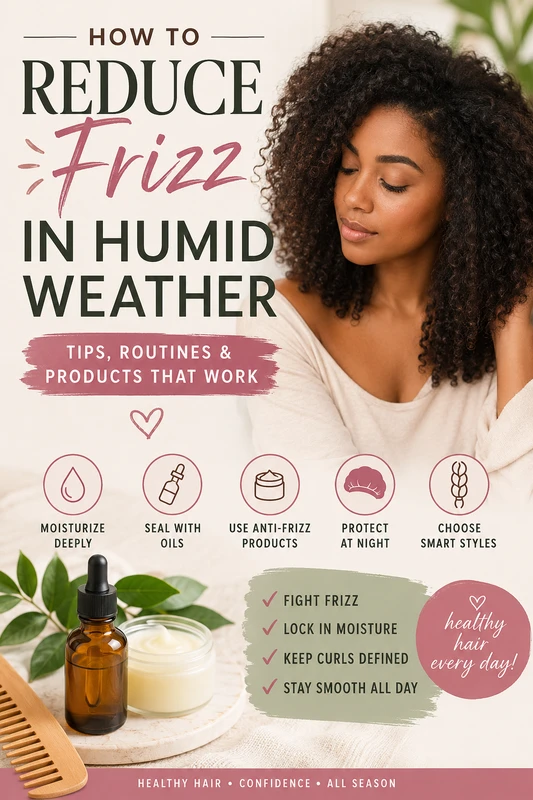
Humidity can turn a perfect hair day into a frizzy mess within minutes. Whether you have curls, coils, waves, locs, braids, relaxed hair, or straight hair, excess moisture in the air can cause swelling, dryness, puffiness, and loss of definition.
The good news is that frizz is manageable when you understand what causes it and how to protect your hair properly.
In this complete guide, you’ll learn:
- Why humidity causes frizz
- The science behind moisture imbalance
- The best anti-frizz routines
- Ingredients that actually work
- Mistakes making your hair puffier
- The best hairstyles for humid weather
- How to keep curls, braids, and locs smooth
- Natural remedies for frizz control
- Long-term strategies for healthier hair
If you’re tired of fighting your hair every summer or during rainy weather, this guide will help you finally take control.
What Causes Frizz in Humid Weather?
Frizz happens when your hair absorbs excess moisture from the air.
Hair fibers naturally try to maintain balance with the environment around them. When humidity levels are high, water molecules enter the hair shaft, causing strands to swell unevenly.
This leads to:
- Puffiness
- Flyaways
- Curl disruption
- Loss of shine
- Tangling
- Rough texture
The drier your hair is, the more moisture it tries to absorb from humid air.
That’s why damaged hair frizzes faster than healthy hair.
Why Some Hair Types Frizz More Than Others
Curly Hair
Curly hair naturally has raised cuticles, making it easier for humidity to penetrate the strand.
This is why curls often expand dramatically in humid weather.
Coily Hair
Coily hair tends to be naturally dry because scalp oils struggle to travel down tight bends in the hair strand.
Dryness increases frizz vulnerability.
High Porosity Hair
High porosity hair absorbs moisture extremely quickly.
Signs include:
- Hair dries fast
- Products absorb instantly
- Hair feels rough
- Frizz appears easily
- Ends become puffy
High porosity hair is especially vulnerable in humid climates.
Chemically Processed Hair
Relaxers, bleach, and color treatments weaken the cuticle layer.
Damaged cuticles allow humidity to enter more easily.
The Science of Hair and Humidity
Hair contains hydrogen bonds.
When humidity rises, these bonds temporarily break and reform unpredictably.
This changes the shape of the hair strand.
That’s why:
- Straight hair becomes wavy
- Defined curls lose shape
- Silk presses puff up
- Blowouts fail
- Braids become fuzzy
The goal of anti-frizz care is to create a protective barrier that limits excess moisture absorption.
The Biggest Mistakes That Make Frizz Worse
1. Overwashing Hair
Frequent shampooing strips protective oils.
Without natural oils, hair becomes dry and desperate for moisture from the air.
Try washing:
- Once weekly for coily hair
- 1–2 times weekly for curly hair
- 2–3 times weekly for straight hair
2. Using Harsh Sulfates
Strong sulfates remove too much moisture.
This leaves hair rough and vulnerable to humidity.
Choose sulfate-free cleansers whenever possible.
3. Skipping Conditioner
Conditioner seals and smooths the cuticle.
Without it, hair absorbs moisture faster.
Always follow shampoo with conditioner.
4. Heat Damage
Damaged cuticles cannot properly regulate moisture.
Excessive flat ironing and blow drying increase frizz long term.
5. Towel Drying Aggressively
Rubbing hair with towels roughens the cuticle.
Use:
- Microfiber towels
- Cotton T-shirts
- Gentle squeezing motions
6. Applying Products Incorrectly
Applying products to dry hair often creates uneven coating.
For best results:
- Apply leave-ins to damp hair
- Seal immediately afterward
Best Ingredients for Fighting Frizz
1. Jamaican Black Castor Oil
Benefits:
- Seals moisture
- Reduces dryness
- Adds weight to puffiness
- Helps smooth cuticles
Excellent for:
- Natural hair
- Locs
- Braids
- Thick curls
Jamaican Black Castor Oil
2. Argan Oil
Argan oil contains fatty acids and antioxidants that smooth the hair shaft.
Best for:
- Shine
- Softness
- Silk presses
- Blowout protection
Argan Oil
3. Aloe Vera
Aloe hydrates without heaviness.
It also helps curls clump together for smoother definition.
Aloe Vera Gel
4. Shea Butter
Shea butter forms a protective barrier against humidity.
Great for:
- Thick hair
- Dry hair
- Protective styles
Shea Butter
5. Coconut Oil
Coconut oil penetrates deeply into hair strands.
This helps reduce moisture loss and swelling.
Coconut Oil
The Best Anti-Frizz Hair Routine
Step 1: Cleanse Properly
Use a gentle sulfate-free shampoo.
Focus on:
- Scalp cleansing
- Removing buildup
- Preserving moisture
Avoid shampoos that leave hair squeaky clean.
That usually means over-stripping.
Step 2: Deep Condition Weekly
Deep conditioning strengthens the cuticle layer.
Look for masks containing:
- Shea butter
- Honey
- Protein
- Avocado oil
- Keratin
Leave on for 20–30 minutes.
Step 3: Apply Leave-In Conditioner
Leave-ins create moisture balance.
Apply while hair is damp.
Focus heavily on:
- Ends
- Midshaft
- Dry sections
Step 4: Seal With Oil
Sealing oils reduce humidity penetration.
Best oils:
- Castor oil
- Argan oil
- Grapeseed oil
- Jojoba oil
Do not overapply.
Too much oil can attract dirt and weigh hair down.
Step 5: Use Anti-Humidity Stylers
Look for:
- Curl creams
- Gels
- Mousses
- Anti-frizz serums
These help create hold and protection.
Best Hairstyles for Humid Weather
1. Braids
Braids reduce exposure to humidity.
Great options:
- Knotless braids
- Cornrows
- Box braids
Braids also minimize manipulation.
Knotless Braids
2. Buns
Sleek buns keep hair compact and protected.
Humidity affects loose hair more than secured styles.
3. Twist Outs
Well-moisturized twist outs often survive humidity better than wash-and-gos.
Twists encourage controlled curl grouping.
4. Loc Styles
Locs handle humidity well when properly maintained.
Palm rolling and lightweight oils help reduce fuzziness.
Locs
5. Wash-and-Go With Strong Hold Gel
Using humidity-resistant gel helps curls stay defined longer.
Layer:
- Leave-in
- Curl cream
- Gel
This creates better frizz protection.
How to Protect Straightened Hair From Humidity
Silk presses and blowouts are especially vulnerable.
Tips:
Use Heat Protectant
Heat protectants smooth the cuticle before styling.
Flat Iron at the Right Temperature
Too much heat damages hair.
Too little heat fails to seal properly.
Wrap Hair at Night
Use:
- Silk scarves
- Satin wraps
- Satin bonnets
Avoid Steam and Excess Sweating
Steam breaks down straight styles quickly.
Use Anti-Humidity Sprays
These create a lightweight barrier against moisture.
Best Night Routine for Frizz Prevention
Night protection is critical.
Use Satin or Silk
Cotton absorbs moisture and creates friction.
Choose:
- Satin pillowcases
- Silk bonnets
- Satin scarves
Silk Bonnet
Pineapple Curly Hair
Gather curls loosely on top of the head.
This preserves curl definition overnight.
Moisturize Ends Before Bed
Dry ends frizz first.
Apply lightweight oil before sleeping.
How to Reduce Frizz Naturally
Apple Cider Vinegar Rinse
ACV helps flatten the cuticle.
Mix:
- 1 part ACV
- 3 parts water
Use after shampooing occasionally.
Apple Cider Vinegar
Rice Water Treatments
Rice water may strengthen weak hair strands.
Stronger strands resist breakage and frizz better.
Aloe Vera Masks
Aloe hydrates and smooths simultaneously.
Mix with:
- Honey
- Coconut oil
- Conditioner
The Role of Porosity in Frizz
Porosity determines how easily moisture enters and exits hair.
High Porosity Hair
Needs:
- Heavy sealing
- Protein treatments
- Humidity barriers
Low Porosity Hair
Needs:
- Lightweight products
- Clarifying occasionally
- Avoiding heavy buildup
Understanding your porosity changes everything about frizz control.
How Protein Helps Reduce Frizz
Weak hair strands frizz more easily.
Protein temporarily strengthens damaged areas.
Good proteins include:
- Keratin
- Silk protein
- Rice protein
- Wheat protein
Too much protein, however, can make hair stiff.
Balance is important.
Why Hydration Matters
Many people confuse moisture with oil.
Oil seals.
Water hydrates.
Hair that lacks hydration becomes frizz-prone.
Always moisturize before sealing.
Seasonal Tips for Humid Weather
Summer
Focus on:
- Lightweight moisture
- UV protection
- Sweat management
Rainy Weather
Choose:
- Protective styles
- Strong hold products
- Minimal manipulation
Tropical Climates
Use anti-humidity products consistently.
Hair absorbs moisture rapidly in tropical environments.
Best Foods for Healthier Hair
Healthy hair resists frizz better.
Focus on:
Omega-3 Foods
- Salmon
- Walnuts
- Chia seeds
Protein
- Eggs
- Chicken
- Lentils
Iron
- Spinach
- Red meat
- Pumpkin seeds
Vitamin C
- Oranges
- Strawberries
- Kiwi
How Stress Can Increase Frizz
Stress affects:
- Hormones
- Oil production
- Hair shedding
- Scalp inflammation
Unhealthy hair becomes more difficult to manage.
Stress management supports overall hair quality.
Best Hair Tools for Frizz Reduction
Wide-Tooth Combs
Reduce breakage and disruption.
Wide-Tooth Comb
Diffusers
Diffuse drying minimizes rough airflow.
Great for curly hair.
Ionic Blow Dryers
Ionic technology helps smooth the cuticle faster.
Microfiber Towels
Reduce friction dramatically.
Microfiber Hair Towel
How to Keep Braids From Frizzing Quickly
Wrap Hair Every Night
Night friction causes fuzziness.
Use Lightweight Spray Moisturizers
Hydrate without buildup.
Avoid Excessive Touching
Constant manipulation loosens braids faster.
Control Edge Product Usage
Too much gel buildup creates messy roots.
How to Keep Locs Smooth in Humidity
Palm Roll Carefully
Over-twisting causes breakage.
Use Lightweight Oils
Heavy oils attract lint and buildup.
Protect Locs While Sleeping
Always use satin protection.
Wash Properly
Dirty locs frizz more easily.
Buildup attracts moisture unevenly.
Common Myths About Frizz
Myth: Oil Moisturizes Hair
Oil seals moisture but does not hydrate hair alone.
Myth: Frizz Means Damaged Hair
Healthy curly hair can still frizz in humidity.
Myth: More Product Fixes Frizz
Too much product often worsens buildup and puffiness.
Myth: Humidity Is Always Bad
Some humidity can actually benefit dry hair temporarily.
Signs Your Hair Needs More Moisture
- Rough texture
- Dullness
- Tangling
- Excess puffiness
- Brittle ends
- Poor curl definition
Signs Your Hair Has Too Much Moisture
- Mushy feeling
- Limp curls
- Lack of hold
- Constant swelling
- Sticky texture
Balancing moisture and protein is critical.
Quick Anti-Frizz Emergency Tips
If your hair frizzes during the day:
Use a Tiny Amount of Oil
Smooth lightly over the surface.
Carry a Satin Scrunchie
Quick protective styles help immediately.
Refresh Curls With Water + Leave-In
Light misting can reactivate products.
Avoid Brushing Dry Hair
Dry brushing causes expansion and puffiness.
The Best Wash Day Routine for Humid Weather
- Shampoo gently
- Deep condition
- Apply leave-in conditioner
- Use curl cream or moisturizer
- Seal with oil
- Apply gel for hold
- Air dry or diffuse carefully
- Protect hair overnight
Consistency matters more than perfection.
Long-Term Strategies to Reduce Frizz Permanently
Trim Split Ends
Split ends spread damage upward.
Regular trims improve smoothness.
Reduce Heat Damage
Healthier cuticles resist humidity better.
Improve Overall Hair Health
Healthy hair:
- Holds moisture better
- Breaks less
- Stays smoother
- Retains styles longer
Use Protective Styles Strategically
Protective styles minimize environmental stress.
Final Thoughts
Humidity may be unavoidable, but uncontrollable frizz doesn’t have to be.
The secret to smoother hair is understanding balance:
- Hydration without overload
- Moisture with sealing
- Protection without buildup
- Strength without stiffness
When your hair is healthy, moisturized, and protected correctly, humid weather becomes much easier to manage.
Whether you wear curls, coils, locs, braids, or straight styles, the right routine can dramatically reduce frizz while helping your hair stay soft, shiny, and healthy year-round.
For best results, stay consistent with:
- Moisture
- Gentle handling
- Protective styling
- Deep conditioning
- Satin protection
- Humidity-resistant products
Healthy hair always performs better in every season.