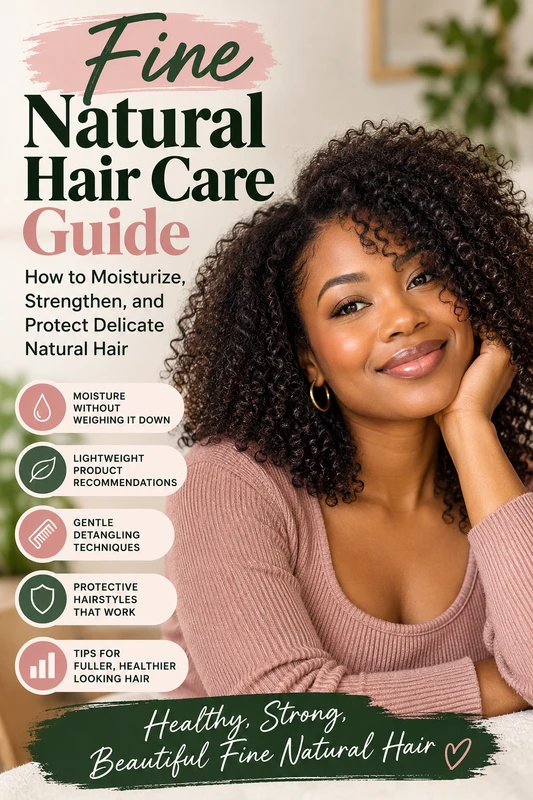
Fine natural hair can be beautiful, soft, full of movement, and surprisingly versatile. However, caring for fine natural hair requires understanding how delicate individual strands behave, how different products affect volume, and how to prevent unnecessary breakage.
If your natural hair becomes weighed down easily, struggles to hold certain hairstyles, tangles frequently, or breaks during detangling, your routine may need a few adjustments.
The secret to maintaining healthy fine natural hair isn't necessarily using more products. In many cases, it's about choosing lightweight formulas, maintaining a healthy scalp, protecting your ends, and minimizing unnecessary manipulation.
Whether you have fine 3C curls, fine 4A coils, fine 4B hair, or fine 4C natural hair, this complete guide will help you develop a routine that supports moisture retention, softness, strength, and healthier-looking length.
We'll explore the best products for fine natural hair, effective washing and conditioning techniques, protective hairstyles, common mistakes, and practical ways to make fine strands appear fuller.
What Is Fine Natural Hair?
Fine natural hair refers to hair strands that have a relatively small diameter.
Hair strands are generally categorized into three groups:
-
Fine hair: Individual strands have a smaller diameter.
-
Medium hair: Individual strands have an intermediate diameter.
-
Coarse hair: Individual strands have a larger diameter.
Fine hair is not necessarily thin hair.
This distinction is important because many people confuse strand thickness with overall hair density.
Someone with fine natural hair can have thousands of closely packed strands, creating a thick-looking Afro.
Another person might have coarse strands but relatively low hair density, making their hair appear less full.
Understanding these differences can help you select the right hair-care products and styling techniques.
For a more detailed explanation, read our guide on Fine Hair vs Thin Hair: What's the Difference and How Should You Care for Each?.
How to Tell If You Have Fine Natural Hair
Identifying fine natural hair can help you avoid using products and techniques that may be better suited to thicker strands.
1. Your Individual Strands Are Difficult to Feel
Take a naturally shed hair strand and gently roll it between your fingers.
Fine strands may be harder to feel than coarse strands.
This isn't a perfect scientific test, but it can provide a general indication of strand diameter.
2. Your Hair Gets Weighed Down Easily
If a small amount of thick cream or butter makes your curls appear flat, your strands may be fine.
Fine hair can become coated quickly when too many styling products are applied.
3. Your Hair Breaks During Rough Detangling
Fine strands may be more vulnerable to mechanical stress because of their smaller diameter.
If you frequently notice short broken pieces of hair after combing, your detangling technique may need improvement.
4. Your Hairstyles Lose Volume
Heavy gels, creams, oils, and butters may reduce the natural movement of fine hair.
You may notice that your twist-outs or braid-outs look full immediately after styling but become flat after applying additional products.
5. Your Hair Feels Soft but Delicate
Fine natural hair often feels silky or lightweight, although texture varies considerably.
Remember that fine hair can also feel dry, rough, or coarse to the touch when the cuticle is damaged or product buildup is present.
Why Fine Natural Hair Needs Special Care
Fine natural hair has different styling and handling needs from medium or coarse natural hair.
Because each strand has a smaller diameter, aggressive brushing, excessive tension, repeated heat styling, and rough manipulation may contribute to breakage.
Fine strands can also become overloaded with products.
A routine involving thick leave-in conditioner, heavy cream, shea butter, castor oil, and styling gel may work for some natural hair types but leave fine strands feeling coated.
This doesn't mean fine hair should avoid moisturizing products.
Instead, the goal is to provide enough conditioning and lubrication without excessive weight.
A successful fine natural hair routine should focus on four priorities:
-
Maintaining a clean, comfortable scalp.
-
Keeping strands conditioned and manageable.
-
Reducing breakage during styling and detangling.
-
Protecting fragile ends to support length retention.
When these habits become consistent, fine natural hair can remain healthy without sacrificing its natural volume.
1. How Often Should You Wash Fine Natural Hair?
Washing is an important part of maintaining healthy fine natural hair.
Because fine strands can become coated with styling products, oils, and scalp sebum, regular cleansing helps prevent buildup.
However, washing too frequently with a harsh cleanser may leave your hair feeling dry.
For many people, washing approximately every 7–10 days is a reasonable starting point.
Some people may prefer washing more frequently, especially if they exercise regularly, sweat heavily, or use multiple styling products.
Others may comfortably go longer between washes.
The ideal schedule depends on your scalp condition, styling habits, and product use.
Signs Your Fine Hair Needs Washing
You may need to cleanse your hair when:
-
Your scalp feels oily or uncomfortable.
-
Your roots appear unusually flat.
-
Your hair feels sticky or coated.
-
Styling products stop performing well.
-
Your curls lose movement.
-
You notice visible product buildup.
Don't assume that avoiding shampoo automatically protects natural hair.
Clean hair can respond better to conditioning products and styling treatments.
How to Shampoo Fine Natural Hair
Begin by thoroughly wetting your hair with lukewarm water.
Apply shampoo primarily to the scalp and gently massage with your fingertips.
Avoid aggressively scratching with your nails.
Allow the shampoo to move through your lengths as you rinse.
If your hair contains significant buildup, a second gentle cleanse may be useful.
After shampooing, follow with conditioner to improve softness and manageability.
2. Choose Lightweight Conditioners for Fine Natural Hair
Conditioning is essential for helping fine natural hair remain manageable.
However, heavier isn't always better.
Very thick conditioners can leave some fine strands feeling coated, especially when combined with several leave-in products.
Look for conditioners that provide slip, softness, and easy rinsing.
Ingredients commonly found in effective conditioning formulas include:
-
Behentrimonium methosulfate
-
Cetrimonium chloride
-
Panthenol
-
Fatty alcohols such as cetyl alcohol
-
Glycerin
-
Hydrolyzed proteins
-
Lightweight conditioning polymers
These ingredients serve different purposes, including reducing friction, improving manageability, and supporting softness.
The overall formula matters more than any single ingredient.
Should Fine Natural Hair Be Deep Conditioned?
Yes, fine natural hair can benefit from deep conditioning, particularly when it feels dry, rough, or difficult to detangle.
However, deep conditioning does not have to happen every wash day.
Try using a treatment when your hair needs additional conditioning.
Follow the manufacturer's recommended application time.
Leaving a treatment on for several hours doesn't necessarily provide better results.
If your hair feels unusually heavy or limp after deep conditioning, experiment with a lighter treatment or less frequent use.
3. How to Moisturize Fine Natural Hair Without Weighing It Down
Moisture management is one of the biggest challenges for people with fine natural hair.
You want your curls to remain soft and flexible without looking greasy or flat.
The solution is to focus on water-based conditioning and controlled product application.
Start With Water-Based Moisture
Water is important for hair hydration.
If your hair feels dry, lightly dampening it or applying a water-based leave-in conditioner may help restore manageability.
Look for moisturizing products that spread easily and don't leave a thick coating.
Apply Leave-In Conditioner Sparingly
Divide your hair into sections.
Apply a small amount of lightweight leave-in conditioner to each section.
Distribute it with your fingers or a suitable detangling tool.
Avoid immediately applying several layers of cream and butter.
Start with one product and evaluate how your hair responds.
Seal When Necessary
A small amount of oil can help lubricate the hair surface, reduce friction, and slow moisture loss.
However, oil alone does not hydrate dry strands.
For many people with fine hair, a simple routine works well:
Water or water-based leave-in conditioner → small amount of lightweight oil → styling product if needed.
You don't necessarily need to use every step each day.
If your hair remains soft and manageable, avoid adding products simply because your routine says it's time.
4. Best Oils for Fine Natural Hair
Choosing the right oil can make a noticeable difference in how fine natural hair looks and feels.
Some oils spread easily and create a lighter finish.
Others are thicker and may feel heavy when applied generously.
Grapeseed Oil
Grapeseed oil is a popular option for fine natural hair because it has a relatively lightweight feel.
It can help improve shine and reduce friction without necessarily creating a thick coating.
Try applying a few drops to your palms before smoothing them over your ends.
Jojoba Oil
Jojoba oil is technically a liquid wax.
It spreads easily and can provide lubrication and shine.
It may be particularly useful for protecting ends or finishing a twist-out.
Argan Oil
Argan oil is often used in lightweight hair serums.
A small amount can help smooth the appearance of frizz and add shine.
It may work well for stretched hairstyles, roller sets, and twist-outs.
Sweet Almond Oil
Sweet almond oil can provide lubrication and help soften the feel of hair.
Use small quantities and adjust according to your hair's response.
Avoid it if you have a relevant allergy unless a healthcare professional confirms the product is appropriate.
Should You Avoid Castor Oil?
Castor oil is thicker than many other commonly used hair oils.
Some people with fine natural hair find that generous applications make their strands feel heavy.
However, this doesn't mean castor oil must be avoided completely.
A small amount may work well in certain formulations or when applied selectively.
For more information about choosing oils, read Lightweight Oils for Fine Natural Hair: The Complete Guide.
5. How to Detangle Fine Natural Hair Without Breakage
Detangling is one of the most important parts of a fine natural hair routine.
Fine strands can break when pulled aggressively through knots.
Proper technique helps preserve length and reduce unnecessary damage.
Step 1: Divide Hair Into Sections
Separate your hair into four to eight manageable sections, depending on its length and density.
Smaller sections can make detangling easier.
Step 2: Apply Conditioner With Slip
Use a rinse-out conditioner or detangling product that allows strands to slide past one another.
Avoid aggressively combing dry, tightly tangled hair.
Step 3: Begin at the Ends
Start by gently separating knots near the ends.
Gradually work upward toward the roots.
If you encounter resistance, stop and carefully loosen the tangle.
Step 4: Use Appropriate Tools
A wide-tooth comb or flexible detangling brush may work well.
Some people prefer finger detangling.
Choose the method that creates the least pulling and breakage for your hair.
Step 5: Keep Detangled Sections Organized
After detangling, loosely twist or braid each section.
This helps prevent the hair from tangling again before styling.
Remember that detangling should be gentle, not a test of how quickly you can pull a comb through your curls.
6. Best Protective Hairstyles for Fine Natural Hair
Protective styling can help reduce daily manipulation, but the wrong hairstyle may create unnecessary tension.
Fine strands may be especially vulnerable to tight braids, heavy extensions, and repeated pulling.
The best protective hairstyles should feel comfortable and place minimal stress on the scalp.
Loose Two-Strand Twists
Two-strand twists are versatile and relatively easy to maintain.
They can help keep ends organized while reducing daily combing.
Avoid twisting too tightly at the roots.
Mini Twists
Mini twists can be an attractive option for fine natural hair.
They allow you to wear your natural texture without daily restyling.
However, extremely tiny twists may be difficult to remove without tangling.
Choose a size that allows comfortable installation and removal.
Loose Flat Twists
Flat twists can provide a polished appearance without requiring heavy extensions.
They may work well for fine strands when installed with minimal tension.
Low-Tension Buns
A loose bun can help protect ends from friction.
Avoid pulling the hairline tightly or placing the bun in the same position every day.
Lightweight Braids
Braids can work for fine natural hair when the sections, extension weight, and tension are appropriate.
Avoid oversized extensions attached to very small sections of natural hair.
A protective style should never cause persistent pain, bumps, or scalp soreness.
7. How to Make Fine Natural Hair Look Fuller
Fine natural hair can have beautiful volume, even when individual strands are delicate.
The key is choosing techniques that create fullness without excessive manipulation.
Try Twist-Outs
Twist-outs can create definition and volume.
For a fuller appearance, use a lightweight mousse or styling product.
Allow your twists to dry completely before separating them.
Gently fluff the roots without pulling aggressively through the ends.
Experiment With Braid-Outs
Braid-outs can create a stretched, textured appearance.
They may be especially useful if you want to reduce shrinkage temporarily.
Avoid making braids unnecessarily tight.
Use Root Fluffing Carefully
A hair pick can help lift roots and create volume.
Insert the pick near the roots and lift gently.
Avoid dragging it through the full length of your hair.
Choose a Flattering Shape
Haircuts with thoughtful shaping can make fine natural hair appear fuller.
A rounded Afro, tapered cut, or layered curly style may create a more balanced silhouette.
Reduce Heavy Product Layering
Sometimes the easiest way to achieve more volume is simply to use less product.
If your hair looks flat after styling, experiment with reducing the amount of cream, butter, or oil.
For additional tips, explore How to Thicken Fine Natural Hair: The Complete Guide to Fuller, Healthier Hair.
Keep in mind that cosmetic products and styling methods may improve fullness and reduce breakage, but they generally cannot permanently change the genetically determined diameter of healthy hair strands.
8. Fine Natural Hair and Protein Treatments
Protein treatments are frequently recommended for fine natural hair.
Some protein-containing products can temporarily improve the feel and manageability of damaged strands.
Hydrolyzed proteins may help form a conditioning film on the hair surface.
However, not every person with fine hair needs frequent protein treatments.
If your hair is healthy, manageable, and not experiencing unusual breakage, additional treatments may be unnecessary.
Signs Your Hair May Benefit From a Strengthening Treatment
You might consider an appropriately formulated treatment if your hair:
-
Has experienced repeated chemical processing.
-
Has noticeable heat damage.
-
Feels unusually weak when wet.
-
Breaks frequently despite gentle handling.
-
Has become difficult to manage after damage.
These symptoms can have multiple causes, so protein isn't automatically the solution.
Can You Use Too Much Protein?
Repeated use of protein-heavy products may leave some hair feeling stiff or rough.
If this happens, reduce the frequency and focus on regular conditioning.
Remember that protein treatments do not permanently rebuild severely damaged hair.
Sometimes trimming damaged ends is necessary.
9. How to Protect Fine Natural Hair at Night
Nighttime protection can make a significant difference in reducing friction and tangling.
When your hair repeatedly rubs against cotton bedding, friction may contribute to knots, frizz, and breakage.
Use a Satin or Silk Bonnet
A comfortable bonnet can help protect your hairstyle while sleeping.
Choose one that fits securely without creating excessive tension around your hairline.
Try a Satin Pillowcase
A satin pillowcase is another option, especially if you don't enjoy sleeping with a bonnet.
Loosely Secure Longer Hair
If your fine natural hair is long enough, consider loose twists, braids, or a comfortable pineapple hairstyle.
Avoid tight elastics and excessive pulling.
Don't Sleep With Heavily Saturated Hair
If you've washed your hair at night, allow it to dry sufficiently before covering it for an extended period.
A constantly damp scalp may become uncomfortable and can contribute to scalp problems in susceptible individuals.
The goal is to protect your strands while keeping your scalp comfortable.
10. How to Prevent Breakage and Retain Length
Fine natural hair can grow long, but maintaining length requires reducing damage.
Hair growth happens at the follicle.
Length retention depends on how much of that growth remains intact instead of breaking away.
Protect Your Ends
The ends are the oldest part of your hair.
They've experienced repeated washing, styling, detangling, and environmental exposure.
Keep them conditioned and minimize unnecessary friction.
Avoid Excessive Heat
Frequent high-temperature styling can damage the hair cuticle and internal structure.
When using heat, choose appropriate temperature settings and a heat protectant.
Avoid repeatedly passing a hot tool over the same section.
Limit Tight Hairstyles
Constant pulling can contribute to breakage and traction-related hair loss.
Rotate styles and avoid tension around the edges.
Trim When Necessary
Trimming does not make hair grow faster from the scalp.
However, removing split or severely damaged ends can help prevent further splitting and improve manageability.
Reduce Daily Manipulation
You don't have to restyle fine natural hair every morning.
Low-manipulation hairstyles can help reduce unnecessary pulling and friction.
The objective is to preserve the healthy hair you've already grown.
11. Fine Natural Hair and Hair Density
Fine natural hair can be low density, medium density, or high density.
This affects how much product you need and which hairstyles may work best.
Fine, Low-Density Natural Hair
If your hair is fine and low density, your scalp may be more visible.
You may prefer lightweight products and hairstyles that create visual fullness.
Avoid heavy extensions that place unnecessary tension on smaller sections of hair.
Learn more in our Guide to Caring for Low-Density Natural Hair.
Fine, High-Density Natural Hair
Fine, high-density natural hair contains many individual strands.
Your hair may appear extremely full even though each strand is delicate.
Sectioning becomes particularly important during washing and detangling.
You may need more total conditioner than someone with low-density hair, but that doesn't mean you need heavier formulas.
Understanding both density and strand diameter helps you create a more personalized routine.
12. Fine Natural Hair and Porosity
Hair porosity describes how readily hair absorbs and releases water.
Fine hair can have low, medium, or high porosity.
Fine Low-Porosity Hair
Low-porosity hair may resist wetting and can become coated when multiple heavy products are applied.
Try lightweight conditioners, thorough rinsing, and smaller product quantities.
Fine High-Porosity Hair
High-porosity hair may absorb water readily but lose it relatively quickly.
Damage can contribute to increased porosity.
Focus on conditioning, gentle handling, and protecting vulnerable ends.
Some people benefit from slightly richer conditioners or film-forming products, applied sparingly.
Fine Medium-Porosity Hair
Medium-porosity hair may respond well to a balanced routine involving regular cleansing, conditioning, and lightweight styling products.
Porosity tests performed at home are not always reliable.
Instead of relying entirely on a floating-hair test, observe how your hair behaves during washing, drying, and styling.
13. Common Mistakes to Avoid With Fine Natural Hair
Several common habits can make fine natural hair harder to manage.
Mistake 1: Applying Too Much Product
Using large quantities of cream, butter, oil, and gel can make fine strands appear limp.
Start with smaller amounts.
Mistake 2: Avoiding Shampoo
Allowing buildup to accumulate may make hair feel sticky or coated.
Maintain a cleansing schedule appropriate for your scalp.
Mistake 3: Detangling Aggressively
Rushing through knots can cause unnecessary breakage.
Use conditioner, work in sections, and detangle gently.
Mistake 4: Wearing Heavy Extensions
Heavy braids and tightly installed extensions may place excessive stress on delicate strands.
Choose lightweight, comfortable styles.
Mistake 5: Using Heat Too Frequently
Repeated high-temperature styling may weaken hair over time.
Reduce unnecessary heat exposure.
Mistake 6: Ignoring Scalp Health
A healthy hair-care routine includes regular scalp cleansing and attention to irritation.
Persistent itching, flaking, or inflammation should not be ignored.
Mistake 7: Comparing Your Hair to Coarse Hair
Fine natural hair has its own characteristics.
You don't need to force it to behave like someone else's thicker strands.
Build a routine around your own hair's needs.
14. A Simple Weekly Fine Natural Hair Care Routine
A consistent routine doesn't have to involve numerous products.
Here's an example you can adjust to your hair's needs.
Wash Day
-
Thoroughly wet your hair.
-
Shampoo your scalp gently.
-
Apply conditioner.
-
Detangle in sections, starting at the ends.
-
Rinse thoroughly.
-
Apply a lightweight leave-in conditioner.
-
Use a small amount of oil if needed.
-
Style with minimal tension.
Midweek
Check how your hair feels before adding more products.
If your strands remain soft, you may not need to do anything.
If your ends feel dry, lightly refresh them with a water-based product.
Avoid saturating your roots with heavy oil.
Nighttime
Protect your hairstyle with satin or silk.
Keep your hair loosely secured and avoid unnecessary friction.
Next Wash Day
Assess your scalp and product buildup.
Cleanse and condition as needed.
For more ideas on keeping your routine manageable, read How to Build a Simple Natural Hair Routine for Healthy, Moisturized Hair.
15. Best Ingredients to Look for in Fine Natural Hair Products
The best ingredients depend on your hair's condition and the overall product formulation.
However, several categories may be helpful.
Humectants: Ingredients such as glycerin and panthenol can help support hydration.
Conditioning agents: Ingredients such as behentrimonium methosulfate and cetrimonium chloride can improve slip and reduce friction.
Lightweight oils: Grapeseed, jojoba, and argan oils can provide lubrication and shine when used sparingly.
Hydrolyzed proteins: These may temporarily improve the feel of damaged hair in suitable formulas.
Film-forming ingredients: Certain conditioning polymers can help improve smoothness and manageability.
Don't assume that every natural ingredient is automatically better for fine hair.
Similarly, don't reject a product simply because it contains scientifically formulated conditioning ingredients.
Pay attention to how the complete formula performs on your strands.
16. When Fine Hair Becomes Noticeably Thinner
Naturally fine hair is different from progressive hair thinning.
If your hair has always had fine strands, that may simply be your natural hair characteristic.
However, noticeable changes in density deserve attention.
Consider consulting a dermatologist if you experience:
-
A widening part.
-
Rapidly increasing scalp visibility.
-
Sudden or excessive shedding.
-
Patchy hair loss.
-
Persistent scalp pain or burning.
-
Receding edges.
-
Thinning around the crown.
-
Scarring or significant inflammation.
Hair thinning may involve genetics, traction, medical conditions, medications, or nutritional factors.
Hair products alone cannot address every cause.
Early evaluation is particularly important when a condition could cause permanent follicle damage.
Frequently Asked Questions About Fine Natural Hair
Can fine natural hair grow long?
Yes. Fine natural hair can grow long. Protecting your ends, reducing breakage, and using gentle styling techniques can help you retain more length.
Should fine natural hair be moisturized every day?
Not necessarily. Moisturize when your hair needs it. Daily product layering can cause buildup and reduce volume.
Is coconut oil good for fine natural hair?
Some people enjoy coconut oil, while others find it too heavy or dislike how their hair feels after using it. Product quantity, formulation, and individual hair response matter.
What is the best hairstyle for fine natural hair?
Loose twists, twist-outs, braid-outs, low-tension buns, and lightweight braids can work well. The best hairstyle depends on your length, density, and styling preferences.
Does fine natural hair need protein?
Not automatically. Protein-containing treatments may help some damaged hair, but healthy fine hair doesn't necessarily require frequent strengthening treatments.
How can I make fine 4C hair look thicker?
Try lightweight styling products, low-tension twist-outs, gentle root fluffing, and a haircut that creates visual fullness. Avoid excessive product layering.
Should fine natural hair use shea butter?
Shea butter can work for some fine hair types, especially in lighter formulations. However, generous amounts of pure shea butter may weigh down certain strands.
How do I keep fine natural hair from breaking?
Condition regularly, detangle gently, minimize heat, avoid tight hairstyles, protect your ends, and reduce unnecessary manipulation.
Can fine natural hair become coarse?
Hair strand diameter is strongly influenced by genetics and biology. Some medical or hormonal changes may affect hair characteristics, but ordinary conditioning products do not permanently transform genetically fine strands into coarse strands.
Final Thoughts: Healthy Fine Natural Hair Starts With the Right Routine
Fine natural hair doesn't have to be difficult to maintain.
The most important step is understanding what your individual strands need.
Rather than copying routines designed for coarse or extremely dense natural hair, focus on products and techniques that support your own texture.
Keep your scalp clean, condition regularly, use lightweight moisturizing products, detangle gently, and protect your ends from unnecessary damage.
Avoid heavy product layering when it leaves your hair flat or coated.
Choose comfortable protective hairstyles that don't pull on your edges.
Most importantly, remember that fine natural hair can be healthy, strong, beautiful, and capable of retaining impressive length.
You don't need the thickest strands to have a beautiful head of natural hair.
With patience, consistency, and the right techniques, you can maintain fine natural hair that feels soft, looks fuller, and remains manageable throughout your natural hair journey.
Discover Hairobics All Natural
At Hairobics All Natural, we believe every natural hair texture deserves thoughtful care.
Explore our collection of hair and scalp care products at Hairobics All Natural and build a routine that supports your natural hair's unique needs.