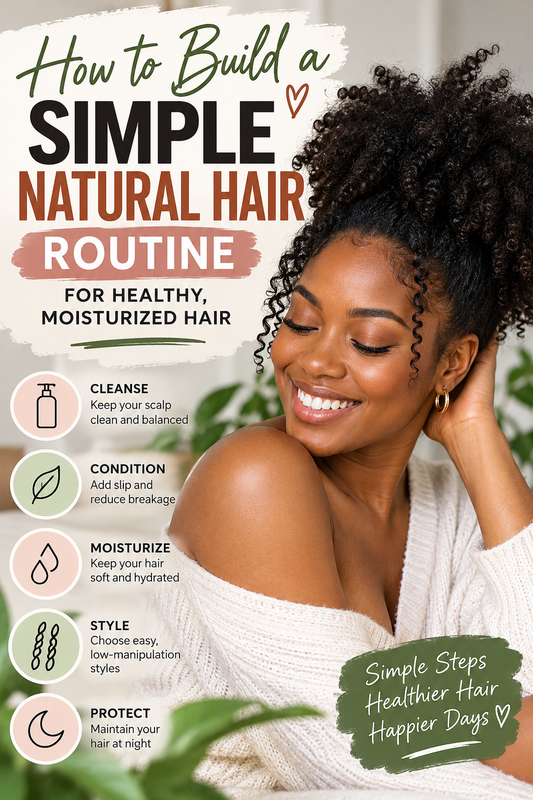
Taking care of natural hair doesn't have to be complicated, expensive, or time-consuming. Whether you have 3C curls, 4A coils, 4B hair, or tightly coiled 4C natural hair, building a simple natural hair routine can help you maintain moisture, reduce breakage, protect your ends, and make your hair easier to manage.
One of the biggest challenges people face when caring for natural hair is figuring out which products and techniques are actually necessary.
With so many shampoos, conditioners, oils, creams, hair masks, styling gels, and treatments available, it's easy to believe that healthy natural hair requires an extensive collection of products.
Fortunately, that isn't true.
A consistent routine built around cleansing, conditioning, moisturizing, gentle styling, and nighttime protection can provide a strong foundation for healthy natural hair.
The key is understanding what your hair needs and avoiding unnecessary steps that waste time and money.
In this guide, you'll learn how to build a simple natural hair routine, which products are worth keeping, how often to wash and moisturize your hair, and how to create an easy weekly schedule that fits your lifestyle.
Why You Need a Simple Natural Hair Routine
Natural hair requires regular care, but that doesn't mean you need to spend hours working on it every day.
A simple routine makes it easier to stay consistent.
When your routine becomes overly complicated, you may find yourself skipping wash days, neglecting your scalp, or applying too many products.
Over time, inconsistent maintenance can contribute to dryness, tangling, buildup, and unnecessary breakage.
A manageable natural hair routine can help you:
-
Maintain soft, moisturized hair.
-
Reduce unnecessary manipulation.
-
Prevent excessive tangling.
-
Minimize breakage during styling.
-
Keep your scalp clean and comfortable.
-
Protect fragile ends.
-
Improve length retention.
-
Save money on unnecessary products.
-
Make wash day faster and easier.
Remember that natural hair grows from the scalp, while the visible length of your hair depends partly on how well you protect existing strands from damage.
You cannot prevent every split end or broken strand, but gentle, consistent care can help reduce avoidable damage.
The goal isn't to create a perfect routine.
The goal is to create one you can realistically follow.
Step 1: Understand What Your Natural Hair Actually Needs
Before buying products or choosing a weekly schedule, take a few minutes to evaluate your hair.
Not everyone with natural hair needs the same routine.
Someone with fine, low-density curls may need lightweight products, while someone with thick, coarse coils may prefer richer conditioners and styling creams.
Your hair's needs can also change depending on the weather, hairstyle, product buildup, and how frequently you wash it.
Pay Attention to Your Hair's Moisture Level
Does your hair feel soft after washing but become dry two days later?
Does it feel rough even after applying moisturizer?
Does it become greasy or coated when you use creams and oils?
These observations can help you determine whether your routine needs more conditioning, lighter products, or better cleansing.
If dryness is your biggest concern, our guide on how to keep natural hair moisturized explains how to improve moisture retention without excessive product layering.
Consider Your Hair Density
Hair density refers to how many strands grow within a given area of your scalp.
High-density natural hair may require smaller sections during washing and detangling.
Low-density hair may become weighed down by heavy creams and butters.
Consider Your Strand Thickness
Fine strands are often more vulnerable to damage from rough handling and heavy tension.
Coarse strands may tolerate different styling techniques and often respond well to products that improve slip and manageability.
However, coarse hair doesn't automatically need heavy products.
Evaluate Your Scalp
Your scalp is an important part of your hair-care routine.
Pay attention to itching, flakes, excessive oiliness, tenderness, or product buildup.
A healthy routine should keep your scalp clean without causing irritation.
Persistent itching, inflammation, scaling, or hair loss deserves professional evaluation rather than repeated experimentation with products.
Step 2: Keep Your Natural Hair Products Simple
You don't need fifteen different products to care for natural hair.
Most people can begin with four essential product categories.
1. Shampoo
A shampoo helps remove sweat, dirt, excess sebum, and styling-product residue from the scalp and hair.
Choose a cleanser that leaves your scalp feeling clean without making your hair excessively rough or tangled.
2. Rinse-Out Conditioner
Conditioner improves slip, reduces friction, and makes detangling easier.
A good conditioner should help your strands feel smoother and more manageable.
3. Leave-In Conditioner or Moisturizer
A leave-in conditioner provides additional conditioning after washing.
It can help reduce friction, improve softness, and prepare your hair for styling.
4. Styling Product
Depending on your hairstyle, you may want a cream, mousse, gel, or lightweight oil.
You don't necessarily need all four.
For example, someone wearing simple twists might use a leave-in conditioner and a small amount of styling cream.
Someone wearing a wash-and-go might prefer a leave-in and gel.
The important thing is choosing products that serve a specific purpose.
If you're unsure what ingredients to look for, begin by considering your hair's texture, scalp needs, and how products feel after they dry.
Step 3: Create a Consistent Wash-Day Schedule
Washing your natural hair is one of the most important parts of your routine.
A clean scalp provides a comfortable foundation for healthy hair maintenance.
However, washing too frequently with an unsuitable cleanser may leave your strands feeling dry.
Going too long without washing can also contribute to buildup and scalp discomfort.
How Often Should You Wash Natural Hair?
For many people, washing approximately every 7–14 days is a reasonable starting point.
Your ideal frequency may differ.
You may need to wash more frequently if you:
-
Exercise regularly and sweat heavily.
-
Use large amounts of styling products.
-
Have an oily scalp.
-
Experience noticeable buildup.
-
Spend time in dusty environments.
You may prefer a different schedule if your hair is extremely dry, styled in braids, or difficult to detangle.
The goal is to keep your scalp clean while maintaining manageable hair.
A Simple Natural Hair Wash-Day Routine
Follow these steps:
Step 1: Divide your hair into sections.
Separate your hair into four to eight manageable sections.
This helps reduce tangling and makes washing easier.
Step 2: Wet your hair thoroughly.
Allow warm water to saturate your strands before applying shampoo.
Step 3: Cleanse your scalp.
Apply shampoo primarily to your scalp and gently massage with your fingertips.
Avoid aggressively scratching with your nails.
Step 4: Rinse completely.
Allow the shampoo to rinse through your hair, gently cleansing the lengths.
Step 5: Apply conditioner.
Distribute conditioner through your hair, paying attention to the middle and ends.
Step 6: Detangle gently.
Use your fingers or a suitable detangling tool while your hair has enough slip.
Step 7: Rinse and moisturize.
Rinse according to the product directions, then apply leave-in conditioner to damp hair.
Step 8: Style your hair.
Choose a hairstyle that minimizes unnecessary manipulation.
For additional time-saving techniques, read our guide on how to reduce wash day time.
Step 4: Moisturize Your Natural Hair Without Overdoing It
Moisture is an essential part of maintaining soft, flexible natural hair.
However, one common mistake is assuming that applying more products automatically creates healthier hair.
That isn't necessarily true.
Sometimes adding too many products makes hair feel sticky, heavy, or coated.
A better approach is to use enough moisturizer to maintain softness without leaving excessive residue.
Start With Damp Hair
After washing, gently remove excess water with a microfiber towel or soft T-shirt.
Your hair should remain slightly damp when applying your leave-in conditioner.
Distribute the product evenly, working in sections if necessary.
Focus on Your Ends
Your ends are the oldest part of your hair.
They've experienced more washing, styling, friction, and environmental exposure than the hair closer to your scalp.
Pay special attention to keeping them conditioned and protected.
Should You Use Oil?
Oil is optional.
Some people find that a small amount of oil helps improve shine, reduce friction, or slow moisture loss.
Others discover that oil makes their hair feel heavy.
Remember that oil doesn't replace water or conditioner.
If your hair already feels moisturized, you may not need additional oil.
How Often Should You Moisturize?
Start by checking your hair every two or three days.
If it feels soft and manageable, leave it alone.
If it feels dry, apply a small amount of a suitable water-based moisturizer or leave-in product.
Avoid automatically applying multiple layers of product every day.
For more detailed instructions, explore our article on how to moisturize natural hair the right way.
Step 5: Choose One Easy, Low-Manipulation Hairstyle
Your hairstyle can determine how much daily maintenance your natural hair requires.
If your goal is to simplify your routine, consider choosing styles that don't require constant brushing, combing, or restyling.
Some convenient natural hairstyles include:
-
Two-strand twists.
-
Loose flat twists.
-
Simple cornrows.
-
Low-tension buns.
-
Loose braids.
-
Wash-and-go styles.
-
Short natural afros.
The best hairstyle is one that works with your hair's length, density, texture, and daily schedule.
Two-Strand Twists
Two-strand twists are especially convenient because they can remain styled for several days.
They can also make it easier to protect your ends and reduce daily detangling.
Loose Braids
Braids can reduce daily manipulation when installed and maintained properly.
However, braids that pull tightly around your edges may cause unnecessary tension.
Avoid painful styles or hairstyles that leave bumps and soreness around your hairline.
Wash-and-Go Styles
A wash-and-go can be convenient for people who enjoy wearing their natural curl pattern.
However, some textures may require additional attention to detangling and preventing knots.
Simple Buns
A loose bun can keep your ends tucked away.
Avoid repeatedly pulling your hair tightly into the same position.
The important principle is reducing unnecessary stress on your strands.
Protective styling should protect your hair, not create additional damage.
Step 6: Build a Five-Minute Morning Hair Routine
Your morning routine doesn't need to involve completely restyling your hair.
For many natural hairstyles, a few minutes of maintenance is enough.
Minute 1: Remove Your Nighttime Protection
Take off your satin bonnet or scarf.
Avoid pulling or snagging your hair.
Minute 2: Check Your Hair
Look for flattened sections, dryness, or areas that need minor adjustments.
Minute 3: Refresh Only When Necessary
If your hair feels dry, apply a small amount of moisturizer.
If it already feels soft, skip this step.
Minute 4: Adjust Your Style
Use your fingers to reshape twists, fluff your afro, or smooth loose sections.
Avoid unnecessary combing.
Minute 5: Check Your Ends and Edges
Make sure your hairstyle isn't pulling tightly around your hairline.
Gently tuck away exposed ends if desired.
That's it.
A simple morning routine should help maintain your hairstyle without creating additional work.
Step 7: Protect Your Natural Hair Every Night
Nighttime protection is one of the easiest ways to reduce unnecessary friction and maintain your hairstyle.
As you move during sleep, your hair rubs against your pillowcase.
Repeated friction can contribute to tangling, frizz, and mechanical damage.
Use a Satin or Silk Bonnet
A properly fitting bonnet can help reduce friction and keep your hairstyle contained.
Choose one that doesn't pull tightly around your edges.
Try a Satin Pillowcase
If you dislike sleeping in a bonnet, a satin or silk pillowcase can be a useful alternative.
Keep Your Hair Loosely Secured
If you have long natural hair, consider loosely twisting or gathering it before sleeping.
Avoid tight elastics or hairstyles that pull against your scalp.
Don't Sleep With Soaking-Wet Hair
Allow your hair to dry sufficiently before covering it for the night.
Hair that stays damp for extended periods may contribute to scalp discomfort, especially under tightly covered styles.
The goal is to wake up with hair that requires minimal manipulation.
Step 8: Make Scalp Care Part of Your Routine
Healthy-looking hair starts with consistent scalp maintenance.
Your scalp naturally produces sebum, which helps lubricate the skin and hair.
However, sweat, excess oil, dead skin cells, and styling products can accumulate.
Regular cleansing helps remove this buildup.
Keep Your Scalp Clean
Use shampoo as needed based on your scalp condition and lifestyle.
Pay attention to areas where products collect, especially around the hairline and crown.
Avoid Excessive Scratching
If your scalp itches, resist the urge to scratch aggressively.
Scratching may irritate the skin and worsen discomfort.
Use Scalp Oil Only When Appropriate
Scalp oil isn't necessary for everyone.
If your scalp feels comfortable and balanced, you may not need additional oil.
If you choose to use one, start with a small amount and watch for irritation.
Don't Ignore Persistent Scalp Problems
Recurring flakes, redness, tenderness, sores, or noticeable hair loss may indicate a condition requiring treatment.
A dermatologist can help determine the cause.
Remember that a scalp-care routine should be gentle and consistent, not complicated.
Step 9: Learn When to Deep Condition
Deep conditioning can be helpful when natural hair feels particularly dry, rough, or difficult to manage.
However, you don't necessarily need to deep condition every time you wash.
A regular rinse-out conditioner may be sufficient for many wash days.
When Deep Conditioning May Help
Consider adding a deep conditioner when:
-
Your hair feels unusually dry.
-
Your strands are difficult to detangle.
-
Your hair has experienced frequent heat styling.
-
Your hair is color-treated.
-
Your regular conditioner isn't providing enough softness.
Follow the product's recommended application time.
Leaving a deep conditioner on for several hours doesn't automatically provide better results.
Can You Deep Condition Too Often?
Using rich treatments more frequently than your hair needs can leave some hair types feeling coated or weighed down.
If your hair feels soft and manageable with a regular conditioner, there's no need to add extra steps simply because someone online recommends them.
A simple natural hair routine should be flexible.
Use treatments when they serve a purpose.
Step 10: Prevent Breakage Through Gentle Handling
One of the most important goals of a natural hair routine is reducing avoidable breakage.
Natural hair can be especially vulnerable to damage during detangling, tight styling, and excessive manipulation.
Detangle in Sections
Working in smaller sections helps prevent unnecessary pulling.
Start at the Ends
When detangling, begin near the ends and gradually work upward toward the roots.
Use Enough Slip
Conditioner or a suitable detangling product can reduce friction between strands.
Avoid Rushing
Trying to detangle quickly may lead to unnecessary snapping and breakage.
Limit Excessive Heat
Frequent high-temperature styling can damage the hair cuticle.
Use appropriate heat settings and heat protection when styling with hot tools.
Handle Your Ends Carefully
Avoid repeatedly brushing, pulling, or twisting fragile ends.
Healthy length retention depends partly on preserving the hair you've already grown.
A Simple Weekly Natural Hair Routine You Can Follow
You don't need to perform every hair-care step every day.
Instead, divide your routine into daily maintenance and periodic cleansing.
Sunday: Wash and Style
-
Shampoo your scalp and hair.
-
Apply conditioner.
-
Detangle gently.
-
Rinse thoroughly.
-
Apply leave-in conditioner.
-
Style your hair.
-
Protect it before bed.
Monday: Minimal Maintenance
Check your hair for dryness.
Adjust your hairstyle only when necessary.
Avoid unnecessary combing.
Tuesday: Moisture Check
Feel your ends and assess your hair's softness.
Apply a little moisturizer if needed.
Wednesday: Scalp and Style Check
Look for buildup, scalp irritation, or tight areas around your hairline.
Make minor styling adjustments.
Thursday: Refresh If Necessary
Lightly refresh dry sections.
Avoid layering products over hair that already feels coated.
Friday: Low-Manipulation Maintenance
Keep your hairstyle simple.
Protect your ends and avoid excessive handling.
Saturday: Prepare for Wash Day
Check for tangles and product buildup.
If needed, gently separate sections before washing.
This schedule is an example, not a strict rule.
If your hair remains clean and manageable longer, adjust your wash-day frequency.
If you sweat heavily or experience buildup sooner, wash more frequently.
The best routine is one that responds to your hair rather than following a calendar without flexibility.
How to Simplify Your Routine for 4C Natural Hair
Type 4C hair is known for its tightly coiled texture and significant shrinkage.
While 4C hair can be strong and versatile, it may benefit from additional care during detangling and styling.
Fortunately, a simple 4C hair routine doesn't require dozens of products.
Focus on three priorities.
1. Work in Sections
Sectioning helps reduce tangling and makes product application more manageable.
2. Prioritize Conditioning
Choose a conditioner that provides enough slip for comfortable detangling.
3. Reduce Daily Manipulation
Consider twists, loose braids, or other low-manipulation styles.
You don't have to stretch, straighten, or constantly redefine your coils to maintain healthy hair.
Shrinkage is a normal characteristic of tightly coiled hair.
The goal is to care for your natural texture, not fight against it.
How to Simplify Your Routine for Fine Natural Hair
Fine natural hair often becomes weighed down by heavy products.
If your strands are fine, you may prefer lightweight leave-in conditioners, small amounts of styling product, and less frequent use of thick butters.
Start with a modest amount of product and add more only when needed.
Avoid assuming that fine hair needs less conditioning.
It still benefits from gentle cleansing, adequate slip, and protection against friction.
The difference is often the amount and weight of the products used.
How to Maintain a Simple Routine With Braids or Locs
Protective styles can make daily maintenance easier, but they don't eliminate the need for hair and scalp care.
Your natural hair still needs appropriate cleansing and conditioning.
If you wear braids or locs, consider using a lightweight moisturizer that distributes easily without leaving excessive residue.
The Hairobics Raaw Roots Locs & Braids Moisturizer Spray is formulated with water, botanical ingredients, and conditioning oils for use on braids, locs, and natural hair.
Apply according to the product directions and your hair's needs, avoiding excessive saturation and buildup.
Allow your hairstyle to dry thoroughly after washing.
For additional tips, explore our guide on how to keep natural hair moisturized in braids.
Common Mistakes That Make Natural Hair Routines Too Complicated
Even with good intentions, certain habits can make natural hair maintenance more difficult.
Buying Too Many Products
Constantly switching products makes it difficult to determine what works.
Start with a small collection of reliable products.
Following Every Social Media Trend
Not every technique is appropriate for your hair.
A routine that works for someone with high-density curls may not work for someone with fine, low-density hair.
Moisturizing Too Frequently
Adding product when your hair doesn't need it can lead to buildup.
Learn to recognize when your strands actually feel dry.
Avoiding Shampoo
Skipping cleansing indefinitely can allow sweat, sebum, and styling products to accumulate.
Constantly Changing Hairstyles
Repeated combing, pulling, and restyling can increase mechanical stress.
Using Too Much Oil
Oil may improve lubrication and shine, but it doesn't replace regular cleansing or conditioning.
Ignoring Your Ends
Fragile ends may split or break if they're repeatedly exposed to friction and rough handling.
Expecting Overnight Results
Improving hair-care habits takes time.
You may notice easier detangling and improved manageability relatively quickly, but meaningful changes in length retention usually require months of consistent care.
How to Tell if Your Simple Natural Hair Routine Is Working
You don't need complicated measurements to evaluate your routine.
Pay attention to how your hair behaves over time.
Your Hair Feels More Manageable
Detangling becomes easier, and styling requires less effort.
You Experience Less Unnecessary Breakage
Some shedding is normal, but frequent short broken pieces may indicate mechanical damage.
Your Hair Maintains Softness
Your strands feel reasonably flexible and conditioned without constant product application.
Your Scalp Feels Comfortable
You experience less buildup and avoid irritation from excessive product use.
Your Ends Look Healthier
Your ends are easier to manage and show fewer signs of excessive splitting.
Your Routine Becomes Easier
You spend less time trying to correct dryness, tangles, or product buildup.
Remember that healthy natural hair doesn't have to look perfectly defined, shiny, or frizz-free.
Different textures naturally have different appearances.
For more guidance, read our article on how to make natural hair softer.
Frequently Asked Questions About Simple Natural Hair Routines
What Is the Simplest Natural Hair Routine?
A basic natural hair routine includes shampooing, conditioning, gentle detangling, applying a leave-in moisturizer, choosing a manageable hairstyle, and protecting your hair at night.
Additional treatments are optional and should be based on your hair's needs.
How Many Products Do I Need for Natural Hair?
Many people can start with four products: shampoo, rinse-out conditioner, leave-in conditioner, and one styling product.
Some hairstyles require fewer products, while others benefit from additional treatments.
Should I Moisturize My Natural Hair Every Day?
Not necessarily.
Some people benefit from frequent moisturizing, while others maintain softness for several days.
Apply moisturizer based on how your hair feels rather than automatically following a daily schedule.
Is It Okay to Wash Natural Hair Once a Week?
Yes. Weekly washing works well for many people.
Others prefer a different frequency depending on scalp oiliness, sweating, product use, and hairstyle.
Can I Grow Long Natural Hair With a Simple Routine?
A simple routine can support length retention by helping reduce breakage and mechanical damage.
However, hair growth rates vary based on genetics, health, age, and other factors.
No routine can guarantee a particular growth rate or length.
Do I Need to Use Hair Oil?
No.
Oil is optional and may be useful for improving lubrication, shine, or moisture retention.
It isn't a substitute for shampoo, conditioner, or a suitable moisturizer.
What Is the Best Hairstyle for a Simple Routine?
Two-strand twists, loose braids, low-tension buns, short afros, and other low-manipulation styles can all be convenient.
Choose a style that works with your hair and doesn't create painful tension.
How Long Does It Take to See Results?
You may notice improved softness and easier detangling within a few wash cycles.
Changes in breakage and length retention usually take longer to evaluate.
Give your routine time to work before making unnecessary changes.
Final Thoughts: Healthy Natural Hair Doesn't Have to Be Complicated
Building a simple natural hair routine is about consistency, not perfection.
You don't need expensive products, complicated techniques, or hours of daily styling to care for your curls and coils.
Start with the essentials: cleanse your scalp, condition your hair, moisturize when needed, detangle gently, protect your ends, and maintain a comfortable hairstyle.
As you learn more about your hair, make small adjustments based on its response.
If your hair feels soft, your scalp is comfortable, and your routine is manageable, you're moving in the right direction.
At Hairobics All Natural, we believe natural hair care should be practical, enjoyable, and accessible. Explore our hair-care collection to find products that complement your routine without making it unnecessarily complicated.
Remember: The best natural hair routine isn't the one with the most steps. It's the one you can consistently maintain.