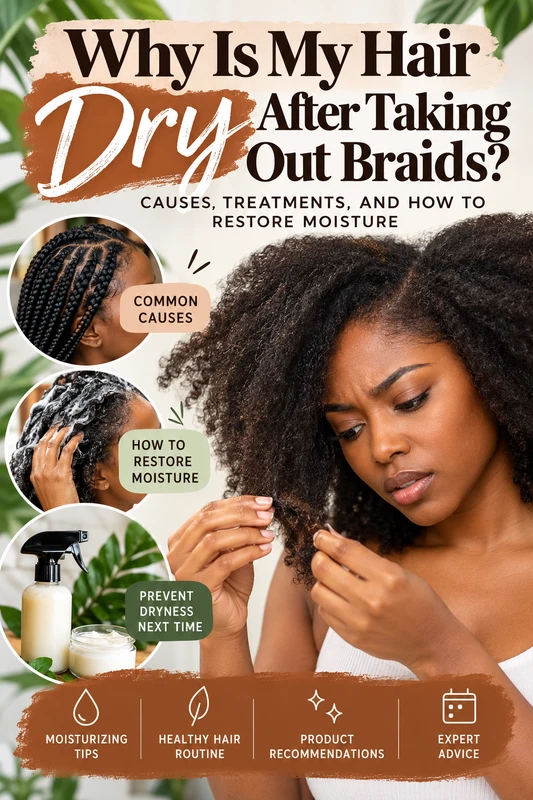
Taking down your braids should feel like a fresh start for your natural hair. After spending several weeks wearing box braids, knotless braids, cornrows, or another protective hairstyle, you may look forward to seeing your curls, checking your length, and enjoying your natural texture again.
But sometimes, removing your braids reveals something unexpected: your hair feels extremely dry, rough, brittle, tangled, or difficult to manage.
You might notice that your curls lack definition, your ends feel crunchy, or your hair seems to absorb moisturizer without becoming soft. Some people also experience excessive tangling, scalp flaking, and noticeable shedding during the takedown process.
If you've been wondering, "Why is my hair so dry after taking out braids?" you're certainly not alone.
Protective hairstyles can help reduce daily manipulation, but they don't automatically keep your hair moisturized. Your natural hair still needs hydration, conditioning, gentle cleansing, and regular maintenance while it's braided.
The good news is that post-braid dryness is often manageable with the right hair care routine.
In this guide, we'll explain why your hair feels dry after removing braids, how to restore moisture, which mistakes to avoid, and how to prepare your natural hair before installing your next protective hairstyle.
1. Why Does Natural Hair Become Dry After Taking Out Braids?

Natural hair can become dry after braids for several reasons, including inadequate moisturizing, accumulated product residue, environmental exposure, and reduced access to individual strands.
When your hair is braided, especially with added extensions, moisturizing every strand becomes more challenging.
You may spray your scalp or apply oil to your braids, but the hair tucked inside the extensions might not receive enough conditioning.
Over several weeks, this can leave your natural hair feeling dehydrated and rough when the braids are removed.
It's also important to understand that natural hair produces sebum, an oil released by the scalp. However, the bends and curves of tightly curled hair make it harder for this oil to travel down the entire hair shaft.
Consequently, curly and coily textures may require additional conditioning to maintain softness and manageability.
Dryness after braids doesn't necessarily mean your protective hairstyle damaged your hair. However, it can indicate that your moisturizing routine needs adjustment.
2. Ten Common Reasons Your Hair Feels Dry After Braids
1. You Didn't Moisturize Your Hair Enough While Braided
One of the most common causes of post-braid dryness is inconsistent moisturizing.
Many people assume that once their hair is installed in a protective hairstyle, they can leave it alone until takedown day.
Unfortunately, protective styling doesn't eliminate your hair's need for moisture.
Your natural strands can gradually become dry when they go several weeks without sufficient conditioning.
How to prevent it: Use a lightweight moisturizing spray when needed, paying attention to accessible natural hair and the lengths of your braids.
Avoid saturating your scalp with heavy products that create unnecessary buildup.
2. You Used Oil Without Adding Moisture
Applying oil to dry hair is a common mistake.
Although certain oils can help lubricate the hair shaft and reduce friction, they don't replace the conditioning benefits of water-based products.
If your hair is already dry, repeatedly applying oil without moisturizing may leave it feeling greasy without improving softness.
For a more effective routine, apply a water-based leave-in conditioner first and use a small amount of oil afterward if your hair benefits from it.
3. Your Braids Were Installed for Too Long
Keeping braids installed for extended periods can make cleansing, conditioning, and detangling more difficult.
As shed hairs accumulate around the roots, they can intertwine with neighboring strands.
This can contribute to matting, tangling, and breakage during removal.
Many people choose to remove their braids after approximately four to eight weeks, although the appropriate duration depends on hair condition, installation method, tension, and maintenance.
Don't leave braids installed simply because they still look neat.
4. Product Buildup Prevented Effective Conditioning
During several weeks of protective styling, your hair may accumulate:
-
Oils and styling products.
-
Sweat and environmental debris.
-
Dead skin cells.
-
Residue from moisturizing sprays.
-
Conditioner and styling cream buildup.
This residue can make your hair feel coated, stiff, or difficult to moisturize effectively.
A gentle cleansing session after removing braids helps eliminate buildup and prepares your hair for conditioning.
5. Your Hair Experienced Mechanical Damage
Braids that are installed too tightly can place unnecessary tension on your strands and scalp.
Additionally, rough takedown techniques may damage the hair cuticle.
When the cuticle becomes damaged, your hair may experience increased friction, tangling, and difficulty retaining softness.
If your hair feels especially rough around the hairline, crown, or ends, examine these areas carefully for signs of breakage.
6. Your Hair Wasn't Properly Conditioned Before Installation
Healthy post-braid hair care actually begins before your protective hairstyle is installed.
Installing braids on hair that is already dry, tangled, or damaged can make the condition worse.
Before getting braids, thoroughly cleanse your hair, condition it, detangle gently, and address any noticeably damaged ends.
7. Your Ends Became Dry and Fragile
The ends of your hair are the oldest portions of each strand.
They've experienced more washing, styling, environmental exposure, and friction than newer growth near your scalp.
After removing braids, your ends may feel noticeably rougher than the rest of your hair.
If conditioning doesn't improve their appearance and you notice splitting or persistent tangling, a trim may be necessary.
8. You Didn't Cleanse Your Scalp Regularly
An unhealthy scalp-care routine can contribute to discomfort, flaking, and accumulated residue.
While braids can make washing more complicated, your scalp still needs appropriate cleansing.
Choose a cleansing frequency based on your scalp condition, activity level, and product use.
9. Your Hair Has High Porosity or Existing Cuticle Damage
Hair porosity describes how readily hair absorbs and releases water.
Highly porous hair may become wet quickly but can also lose moisture relatively quickly, particularly when its cuticle is damaged.
If your hair repeatedly becomes dry soon after conditioning, consider whether your routine provides enough conditioning and protection.
Porosity isn't the only factor affecting dryness, so avoid relying exclusively on at-home porosity tests.
10. You Removed Your Braids Too Aggressively
Taking down braids quickly without proper preparation can create unnecessary friction and breakage.
Pulling apart tangled sections, combing dry knots, or using excessive force may leave your hair feeling rough and damaged.
A patient takedown process helps preserve the condition of your natural strands.
3. How to Restore Moisture After Taking Out Braids

Restoring softness after removing braids requires more than applying oil or spraying water onto tangled hair.
The best approach combines careful detangling, cleansing, conditioning, moisturizing, and low-manipulation styling.
Follow these steps to give your natural hair the attention it needs.
Step 1: Remove Your Braids Carefully
Start by separating your braids into manageable sections.
If you're wearing extensions, identify where your natural hair ends before cutting the added hair. Always leave a generous margin to avoid accidentally cutting your own strands.
Unravel each braid gently.
Once removed, carefully separate your natural hair with your fingers.
Avoid pulling through knots or immediately brushing the entire section.
Step 2: Remove Accumulated Shed Hair
It's normal to notice considerable shedding after removing braids.
Hair naturally sheds every day, but braided hairstyles can trap these loose strands.
Consequently, several weeks of accumulated shedding may appear all at once.
Remove loose hairs gently before shampooing.
This helps prevent shed strands from tangling around the remaining hair during washing.
Step 3: Detangle Before Washing
One of the biggest post-braid mistakes is immediately shampooing severely tangled hair.
Water and friction can make existing tangles more difficult to manage.
Instead, apply a detangling product with adequate slip, separate your hair into sections, and gently work from the ends toward the roots.
Use your fingers or a suitable wide-tooth comb.
If you encounter a stubborn knot, apply additional detangling product rather than pulling harder.
Step 4: Cleanse Your Hair and Scalp
After removing your braids, your hair may need a thorough wash to remove accumulated oils, sweat, and styling products.
Choose a shampoo appropriate for your hair and scalp.
If your strands feel heavily coated, a clarifying shampoo may be useful. However, you don't automatically need an aggressive clarifying treatment every time you remove braids.
Concentrate on your scalp and gently distribute the cleanser through your hair.
For additional guidance, read our complete guide to how often you should wash natural hair .
Step 5: Apply a Deep Conditioner
Deep conditioning is especially useful when your hair feels rough or difficult to detangle after protective styling.
Choose a conditioner formulated to improve softness and manageability.
Apply it evenly throughout your hair, paying particular attention to the mid-lengths and ends.
Follow the manufacturer's instructions regarding application time and whether heat is appropriate.
Deep conditioners aren't permanent repairs for split or severely damaged strands, but they can improve the way dry hair feels and behaves.
Step 6: Apply a Water-Based Leave-In Treatment
Once you've rinsed out your conditioner, gently remove excess water with a microfiber towel or soft cotton T-shirt.
While your hair is still damp, apply a suitable leave-in conditioner.
This helps maintain softness between washes and makes styling easier.
For additional moisture-maintenance advice, explore our complete guide to keeping natural hair moisturized .
Step 7: Use Oil Only When Necessary
After moisturizing, some hair types benefit from a small amount of oil.
Apply it mainly to your lengths and ends rather than saturating your scalp.
Remember that oil alone won't replace proper cleansing and conditioning.
If your hair feels greasy but remains rough, you may be applying too much oil.
Step 8: Choose a Gentle Hairstyle
Immediately after removing braids, consider wearing your hair in a low-manipulation style.
Good options include loose two-strand twists, a comfortable wash-and-go, or a low-tension bun.
Avoid hairstyles that pull tightly on your roots or edges.
Give yourself time to evaluate the condition of your natural hair before installing another long-term protective style.
4. Hairobics Products to Include in Your Post-Braid Hair Care Routine
Your post-braid routine doesn't need dozens of products. Concentrate on cleansing, conditioning, and maintaining softness.

Hairobics All Natural Leave-In Hair & Scalp Treatment
A convenient addition to your post-wash moisturizing routine. Apply an appropriate amount to clean, damp hair, concentrating on sections that need additional conditioning.
Explore the Hairobics All Natural website for product information.

Raaw Roots Moisturizer Spray
For your next protective hairstyle, incorporate a lightweight moisturizing spray into your maintenance routine rather than waiting until takedown day to address dryness.
Product photography should use your original uploaded Hairobics bottle images in the published BigCommerce article, rather than substitute images.
5. Should You Deep Condition Immediately After Removing Braids?
Yes, deep conditioning after braid removal can be beneficial, particularly when your hair feels rough, tangled, or difficult to manage.
However, remember that your hair may need cleansing first.
Applying conditioner directly over weeks of accumulated residue isn't always the most effective approach.
A practical sequence is:
Detangle → Shampoo → Condition → Leave-In → Style.
If your hair feels relatively healthy, a regular rinse-out conditioner may be sufficient. You don't necessarily need an intensive treatment after every protective style.
6. How Long Does It Take for Hair to Feel Moisturized Again?
There isn't one universal recovery timeline.
If your hair is simply dry because of inadequate conditioning or accumulated buildup, you may notice improved softness after your first thorough wash and conditioning session.
However, if your hair has significant cuticle damage, splitting, or breakage, conditioning products won't permanently reverse that damage.
You may need ongoing gentle care and selective trimming.
Focus on how your hair behaves rather than expecting every strand to return to its previous condition overnight.
7. How to Prevent Dry Hair Before Your Next Braided Hairstyle

Preventing dryness is easier than attempting to restore severely dry hair after several weeks of protective styling.
Your next braid installation should begin with a proper hair care routine.
Moisturize Before Installing Braids
Wash, condition, and thoroughly detangle your hair before your appointment.
Avoid installing extensions over excessively dry or heavily tangled natural hair.
Starting with conditioned strands helps create a better foundation for your protective hairstyle.
Maintain Moisture Throughout the Hairstyle
Don't wait until your braids look frizzy before moisturizing.
Check your natural hair regularly and use an appropriate lightweight moisturizing product when needed.
For detailed instructions, visit our guide to keeping natural hair moisturized in braids .
Avoid Excessive Product Layering
Using multiple oils, creams, sprays, and styling products every day can create unnecessary residue.
A simple routine often works better than constantly adding new products.
Cleanse when necessary and apply products according to your hair's needs.
Protect Your Hair at Night
Sleeping on cotton pillowcases can increase friction and contribute to tangling.
Consider using a satin bonnet, scarf, or pillowcase to help minimize unnecessary friction.
Ensure your braids aren't pulled tightly while sleeping.
Don't Ignore Your Ends
The ends of your natural hair deserve particular attention.
Moisturize the portions of your braids containing your natural hair rather than concentrating exclusively on your scalp.
After takedown, examine your ends for splitting, excessive roughness, and tangling.
Remove Braids Before Significant Matting Develops
Avoid extending the life of your protective hairstyle simply because it still looks presentable.
If you notice excessive buildup, root matting, persistent discomfort, or significant tension, consider removing the style sooner.
8. Should You Take a Break Between Braids?
Taking a break between braided hairstyles can give you an opportunity to assess your hair and scalp.
This is especially important if your previous installation caused pulling, tenderness, breakage, or thinning around your hairline.
There isn't a medically established waiting period that everyone must follow. The appropriate amount of time depends on your hair's condition and whether the previous hairstyle caused damage.
During your break, concentrate on cleansing, conditioning, gentle detangling, and low-tension styling.
If your hair remains unusually dry, our article on why natural hair feels so dry explores additional causes and moisturizing techniques.
If you notice persistent scalp pain, bald patches, or progressive thinning, consult a dermatologist before reinstalling braids.
9. A Simple Seven-Day Post-Braid Moisture Routine
Your first week after braid removal
Takedown and wash day
Carefully remove your braids, separate accumulated shed hair, detangle, shampoo, condition, and apply a leave-in treatment.
Low-manipulation styling
Wear loose twists or another comfortable hairstyle. Avoid excessive combing and tight ponytails.
Moisture check
Check your ends and mid-lengths. Apply a small amount of water-based moisturizer if needed.
Protect your hair
Continue wearing a low-tension style and use satin protection while sleeping.
Evaluate your ends
Examine your ends for excessive tangling, splitting, or roughness. Schedule a trim if necessary.
Gentle maintenance
Refresh your hairstyle if necessary. Avoid applying additional products when your hair already feels soft.
Review your hair's condition
Assess your scalp, moisture levels, ends, and overall manageability. Wash again when your scalp and hair need it.
This routine is a starting point, not a rigid schedule. Adjust it according to your individual hair and scalp needs.
10. Frequently Asked Questions About Dry Hair After Braids
Why is my 4C hair extremely dry after taking out braids?
Tightly coiled 4C hair may experience dryness because natural scalp oils have difficulty traveling down the hair shaft. Limited moisturizing while braided, product buildup, and friction can make dryness more noticeable after takedown.
Thorough conditioning and a consistent moisturizing routine can help improve softness and manageability.
Should I wash my hair immediately after taking down braids?
You can wash your hair after removing braids, but detangle carefully first. Removing accumulated shed hair and major tangles before shampooing can help prevent unnecessary matting.
Is it normal for hair to feel rough after braids?
Some roughness is common, especially if your hair hasn't received adequate conditioning for several weeks. However, severe brittleness, persistent tangling, or excessive breakage may indicate damage that needs additional attention.
Can I put oil on my hair immediately after removing braids?
You can use oil, but it shouldn't replace cleansing and conditioning. Applying oil over accumulated buildup may leave your hair feeling coated rather than moisturized.
Why does my hair feel dry even after deep conditioning?
Possible explanations include existing damage, insufficient product distribution, an unsuitable conditioner, accumulated buildup, or environmental factors.
If your hair repeatedly feels rough after conditioning, evaluate your entire wash-day routine rather than automatically applying more oil.
Does dry hair after braids mean my hair is damaged?
Not necessarily. Temporary dryness can improve with cleansing and conditioning.
However, splitting, snapping strands, persistent roughness, and significant thinning may indicate actual damage.
Should I trim my hair after taking down braids?
A trim isn't automatically necessary after every protective hairstyle.
Examine your ends and consider trimming when you notice splitting, persistent tangling, or visibly damaged sections.
Can I reinstall braids if my hair is still dry?
It's generally preferable to address significant dryness and tangling before installing another long-term protective style.
If your hairline is thinning or your scalp is irritated, avoid additional tension and seek professional guidance when necessary.
How often should I moisturize my hair between braids?
There isn't a universal schedule. Some people benefit from moisturizing every few days, while others need less frequent applications.
Pay attention to your hair's softness, flexibility, and manageability.
What is the biggest mistake people make after removing braids?
One of the most damaging mistakes is aggressively detangling dry, matted hair.
Take your time, work in sections, use sufficient slip, and remove accumulated shed strands before washing.
Final Thoughts: Restore Your Natural Hair After Braids
Discovering that your hair feels dry after taking out braids can be frustrating, especially when you've been wearing a protective hairstyle to maintain healthy hair and retain length.
However, dryness doesn't automatically mean your protective styling routine has failed.
Your hair may simply need thorough cleansing, conditioning, and a more consistent moisture-maintenance routine.
The most important things to remember are to detangle gently, remove buildup, condition thoroughly, moisturize your natural strands, protect your ends, and avoid excessive tension.
Most importantly, don't wait until your braids come down to begin caring for the hair underneath.
A successful protective hairstyle should help you maintain the natural hair you've already grown—not leave you struggling with preventable dryness and breakage.
For more natural hair care tips and products, visit Hairobics All Natural .