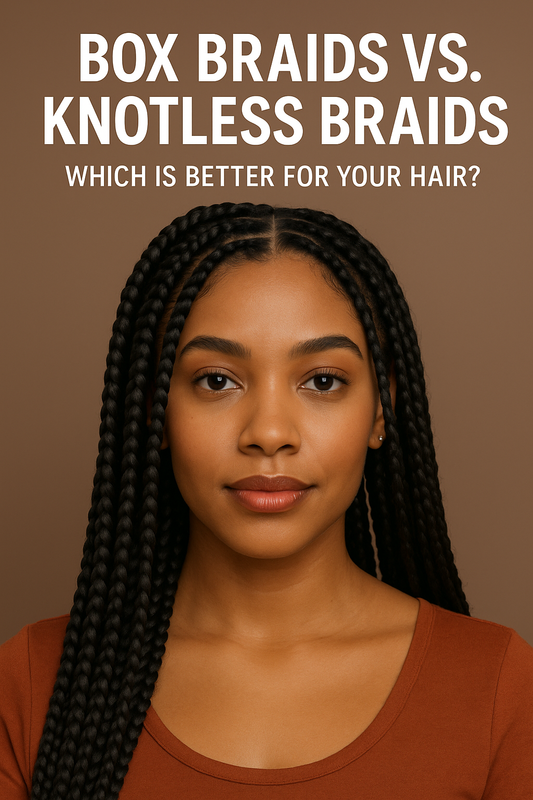
When it comes to protective styles, few options are as timeless and versatile as braids. Among the most popular styles today are box braids and knotless braids. Both look stunning, last for weeks, and help protect your natural hair from daily manipulation. But if you’ve ever wondered which one is better for your hair—especially when it comes to tension, longevity, and maintenance—this article breaks it all down for you.
Let’s dive into the pros, cons, and key differences between box braids and knotless braids so you can make the best choice for your hair health and lifestyle.
What Are Box Braids?
Box braids have been around for decades and remain a go-to protective style for many. They’re created by sectioning the hair into small “boxes” (hence the name) and adding extensions from the root using a knot to secure them. This knot gives the braids a firm anchor, allowing them to last a long time—often 6 to 8 weeks or more with proper care.
Pros of Box Braids
-
Long-Lasting Style
Box braids can withstand weeks of wear, making them ideal for vacations, busy schedules, or anyone who wants a low-maintenance look. -
Strong Hold
Because of the knot at the root, box braids stay secure even during activities like swimming, working out, or sleeping without a scarf. -
Full and Defined Look
Box braids tend to give a fuller appearance and can easily be styled in buns, ponytails, or intricate updos.
Cons of Box Braids
-
Tension at the Roots
The knot used to start each braid can sometimes pull tightly on the scalp, causing discomfort, headaches, or even traction alopecia (hair loss from excessive tension). -
Heavier Feel
Especially with longer or thicker braids, box braids can feel heavy on your scalp, particularly in the first few days. -
Less Natural Look
Because the braid starts with a visible knot, it can look less seamless compared to newer techniques like knotless braids.
What Are Knotless Braids?
Knotless braids are the modern evolution of traditional box braids. Instead of starting with a knot, stylists begin by braiding your natural hair and gradually feeding in extensions as they go. This technique eliminates the bulky knot at the base and reduces tension on your scalp.
Pros of Knotless Braids
-
Gentler on the Scalp
Without that tight knot pulling at the root, knotless braids are much lighter and more comfortable to wear. -
More Natural Appearance
Knotless braids blend seamlessly with your natural hair, giving a softer, more effortless look. -
Less Breakage
Because there’s less tension, you’re less likely to experience breakage or hair loss around your edges and scalp. -
Easier to Wash and Maintain
Since the base of each braid is flatter and looser, it’s easier to cleanse your scalp and moisturize your hair while wearing them.
Cons of Knotless Braids
-
Takes Longer to Install
The feed-in method requires more time and precision, meaning you could spend several hours longer in the chair compared to box braids. -
Shorter Lifespan
Knotless braids tend to last about 4 to 6 weeks, as the looser roots can start to show frizz sooner. -
Slightly Higher Cost
Because of the additional time and skill required, stylists often charge more for knotless braids.
Box Braids vs. Knotless Braids: Side-by-Side Comparison
| Feature | Box Braids | Knotless Braids |
|---|---|---|
| Installation Method | Extensions added from the root with a knot | Extensions fed in gradually without a knot |
| Comfort Level | Can feel tight and heavy initially | Lightweight and gentle on scalp |
| Natural Look | Noticeable knot at the base | Seamless, natural appearance |
| Maintenance | Harder to access scalp | Easier to clean and moisturize |
| Longevity | 6–8 weeks | 4–6 weeks |
| Installation Time | Quicker | Longer (due to feed-in process) |
| Hair Health | Can cause tension or breakage | Lower risk of scalp damage |
Which Style Is Better for Hair Growth?
Here’s the truth: both box braids and knotless braids can help with hair retention—but neither directly causes hair growth. The real benefit comes from protecting your natural hair from heat, friction, and manipulation.
However, knotless braids have the edge when it comes to maintaining healthy hair and scalp because they:
-
Allow your scalp to breathe.
-
Put less stress on your hairline.
-
Make it easier to moisturize your natural hair.
So, if you’re trying to retain length and keep your edges intact, knotless braids are generally the safer choice.
Best Situations for Each Style
Choose Box Braids If:
-
You want a long-lasting protective style.
-
You’re going on vacation or have limited time for hair maintenance.
-
You prefer a more structured, bold look.
Choose Knotless Braids If:
-
You have a sensitive scalp or are recovering from breakage.
-
You prefer a lightweight, natural look.
-
You like to frequently moisturize or wash your scalp.
How to Care for Braids (Box or Knotless)
No matter which style you choose, proper maintenance is key to keeping your hair healthy while braided:
-
Cleanse Your Scalp
Use a diluted shampoo or scalp cleanser every 1–2 weeks to remove buildup and sweat. -
Moisturize Regularly
Apply a lightweight leave-in conditioner or oil (like jojoba, batana, or argan oil) to keep your hair hydrated. -
Protect at Night
Always wear a satin or silk scarf or bonnet to reduce friction and preserve your style. -
Avoid Over-Styling
Constantly pulling your braids into tight buns or ponytails can cause tension on your roots. -
Don’t Keep Them In Too Long
Whether box or knotless, keeping braids longer than 8 weeks can lead to buildup, matting, or breakage.
Final Verdict: Which Is Better?
While box braids are classic and durable, knotless braids offer a healthier, more comfortable alternative that’s kinder to your scalp.
If your main goal is hair health, growth retention, and comfort, go for knotless braids. But if you need a style that can last longer through travel or busy schedules, box braids might be the better fit.
Ultimately, both are beautiful ways to express your style while protecting your natural hair—the key is choosing what best suits your needs, lifestyle, and hair goals.
Pro Tip:
No matter which braid style you choose, always start with clean, detangled, and moisturized hair. Using a natural scalp oil or pomade like Hairobics Raaw Roots Soft Pomade can help nourish your hair during and after braiding for the best results.