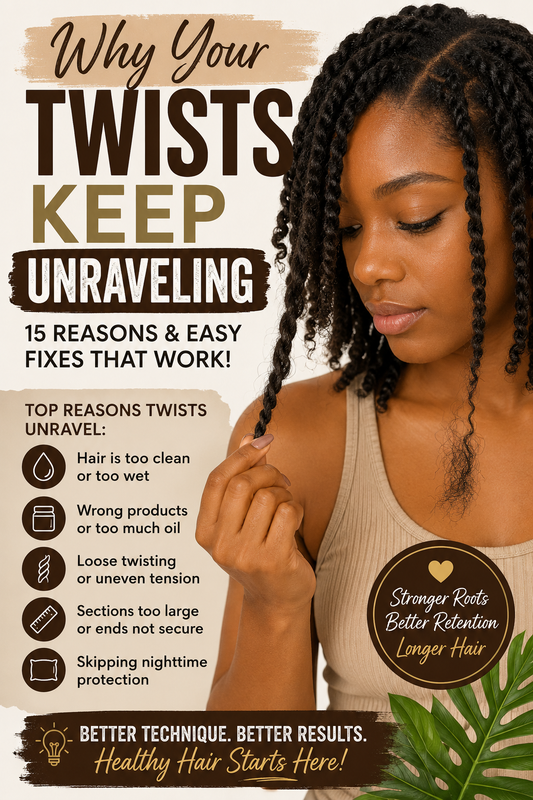
Two-strand twists are one of the most popular protective styles for natural hair. They are versatile, low-maintenance, and beautiful on every curl pattern. Whether you wear mini twists, chunky twists, flat twists, or twists with extensions, they can protect your hair while encouraging length retention.
But there's one frustrating problem almost everyone experiences:
Your twists start unraveling only hours—or days—after you finish them.
You spend hours twisting your hair, only to wake up with puffy roots, loose ends, and twists that seem to be falling apart.
The good news?
Twists don't unravel randomly.
There are specific reasons why it happens, and every one of them has a solution.
In this complete guide, you'll learn:
- Why twists unravel
- The biggest mistakes people make
- How hair texture affects twists
- Products that improve hold
- Styling techniques professionals use
- Nighttime routines that preserve twists
- Long-term habits for longer-lasting protective styles
By the end, you'll know exactly how to create twists that stay neat for weeks instead of days.
Understanding Why Twists Unravel
Unlike braids, twists depend on tension between two sections of hair.
Braids lock together because three sections continuously overlap.
Twists rely on friction.
When that friction disappears, the twist begins to loosen.
That means anything that reduces grip can cause unraveling:
- Hair that's too soft
- Hair that's too slippery
- Loose twisting
- Incorrect section size
- Moisture
- Constant touching
- Sleeping without protection
Understanding this simple concept makes troubleshooting much easier.
1. Your Hair Is Too Clean
Freshly washed hair often feels silky and slippery.
While clean hair is healthy, overly smooth hair doesn't grip well.
Signs:
- Twists slide apart immediately
- Ends won't stay twisted
- Roots puff quickly
Solution:
Allow hair to dry completely after washing.
Apply a light leave-in conditioner followed by a twisting cream before styling.
Hair with slight texture usually twists better than ultra-soft hair.
2. Your Hair Isn't Completely Dry
Twisting damp hair may seem easier, but wet strands shrink while drying.
As the hair shrinks, tension changes.
The twist loosens.
Result:
- Puffy twists
- Loose roots
- Frizzy sections
- Unraveling ends
Always let your hair reach about 90–100% dry before installing twists if longevity is your goal.
3. You're Using the Wrong Products
Heavy oils make hair slippery.
Slippery hair struggles to stay twisted.
Products that can reduce grip include:
- Heavy coconut oil
- Excess olive oil
- Thick silicone serums
- Greasy pomades
Instead, use:
- Twisting butter
- Curl cream
- Light styling cream
- Moisturizing leave-in
Finish with only a small amount of oil after the twists are complete.
4. You Aren't Twisting Tight Enough
Many beginners twist loosely because they're afraid of causing tension.
While avoiding excessive pulling is important, twists still need consistent tension.
Professional stylists maintain firm—but comfortable—tension from roots to ends.
If one section becomes loose halfway down, the entire twist weakens.
Practice maintaining even pressure throughout the twist.
5. Your Sections Are Too Large
Large twists are beautiful.
However, bigger twists have less friction inside.
This makes them easier to unravel.
Smaller twists:
- Stay longer
- Hold shape better
- Resist frizz
- Maintain definition
If your twists unravel quickly, reduce your section size.
6. Your Hair Texture Naturally Loosens
Some textures naturally hold twists better.
Generally:
- 4C hair holds twists longest
- 4B holds well
- 4A moderate
- 3C moderate
- 3B and looser curls unravel fastest
This doesn't mean looser curls can't wear twists.
They simply need more preparation and product support.
7. You're Not Twisting the Hair Around Itself
One common mistake is simply wrapping hair together.
Instead:
Each individual section should first be gently twisted in one direction.
Then wrap both sections together in the opposite direction.
This creates tension that locks the twist together.
This professional technique dramatically improves longevity.
8. Your Ends Aren't Secure
Most unraveling starts at the ends.
If the tips aren't secure, the twist slowly unwinds upward.
Solutions include:
- Finger coiling
- Small perm rods
- Curl rods
- Flexi rods
- Natural coil wrapping
Many natural hair enthusiasts coil the last inch of each twist.
9. You're Touching Your Hair Too Much
Constant manipulation breaks down twists.
Examples include:
- Pulling twists apart
- Playing with hair
- Constant selfies and restyling
- Running fingers through twists
The less you touch your twists, the longer they'll last.
10. Humidity Is Working Against You
Humidity causes hair to absorb moisture from the air.
As hair expands:
- Twists swell
- Hair frizzes
- Definition softens
- Ends loosen
Use lightweight anti-humidity styling products if you live in humid climates.
11. You Skip Night Protection
One night on cotton sheets can undo hours of work.
Cotton:
- Pulls moisture away
- Creates friction
- Roughens cuticles
- Loosens twists
Instead:
- Satin bonnet
- Silk scarf
- Satin pillowcase
This single habit can add one to two weeks to your style.
12. Your Hair Needs Better Moisture Balance
Hair that's too dry becomes brittle.
Hair that's too moisturized becomes slippery.
Healthy twists require balance.
Aim for hair that feels:
- Soft
- Flexible
- Moisturized
- Not greasy
13. You're Retwisting Too Often
Many people constantly redo loose twists.
Ironically, repeated manipulation causes:
- Frizz
- Breakage
- Weak roots
Instead:
Retwist only the few sections that truly need attention.
14. Product Buildup Reduces Grip
Old styling products accumulate over time.
Buildup prevents products from gripping the hair properly.
Clarify your hair occasionally before installing a fresh set of twists.
15. You're Sleeping With Wet Hair
Never moisturize heavily right before bed.
Wet twists rub against your bonnet.
The movement weakens the pattern.
If moisturizing at night, use a light mist rather than soaking the twists.
How Long Should Twists Last?
With proper care:
- Mini twists: 4–8 weeks
- Medium twists: 3–6 weeks
- Large twists: 2–4 weeks
- Flat twists: 1–3 weeks
- Twists with extensions: 4–8 weeks
Longevity depends on your hair texture, maintenance routine, and activity level.
Best Daily Routine for Long-Lasting Twists
Morning:
- Shake out twists gently.
- Smooth flyaways with clean hands.
- Avoid excessive styling.
Evening:
- Lightly mist if needed.
- Gather twists loosely.
- Wear a satin bonnet or silk scarf.
- Sleep on a satin pillowcase for extra protection.
Weekly:
- Cleanse your scalp if needed.
- Apply lightweight moisture.
- Refresh only loose twists.
Common Mistakes That Cause Twists to Fail
Avoid these habits:
- Twisting soaking wet hair
- Using too much oil
- Skipping sectioning
- Uneven tension
- Oversized twists
- Sleeping without protection
- Constant manipulation
- Ignoring loose ends
- Wearing twists too long
- Forgetting regular scalp care
Can Twists Help Hair Growth?
Twists don't make hair grow faster.
However, they help retain the length your hair naturally grows by:
- Reducing breakage
- Protecting ends
- Limiting tangles
- Decreasing daily manipulation
- Preserving moisture
When combined with a healthy hair care routine and consistent scalp maintenance, twists can make your hair appear to grow longer because you're losing less length to breakage.
Keeping Your Scalp Healthy While Wearing Twists
A healthy scalp supports healthy hair.
While wearing twists:
- Keep your scalp clean.
- Massage gently to encourage circulation.
- Avoid scratching with sharp objects.
- Use lightweight scalp oils sparingly to prevent buildup.
- If your scalp becomes itchy, cleanse rather than applying more product on top of old residue.
Frequently Asked Questions
Why do my twists unravel after one day?
This usually happens because your hair is too smooth, your twists are too loose, or your ends aren't secured properly.
Are twists better on dirty hair?
Slightly lived-in hair often provides more grip than freshly washed, silky hair. However, avoid installing twists on hair with heavy buildup.
Should I twist wet or dry hair?
For the longest-lasting results, twist hair that is mostly or completely dry with the right styling products.
Why do only my roots unravel?
Loose tension at the scalp, new hair growth, or frequent manipulation can cause roots to loosen first.
Do thicker twists unravel faster?
Yes. Larger twists generally have less internal friction, making them more likely to loosen than smaller twists.
Final Thoughts
Twists are one of the best protective styles for natural hair, but they perform best when installed with the right technique and maintained consistently. If your twists keep unraveling, it's often due to factors like overly slippery hair, loose tension, damp styling, unsecured ends, or inadequate nighttime protection.
Focus on creating even sections, twisting with consistent tension, using products that provide light hold rather than excess slip, and protecting your style while you sleep. Small adjustments to your routine can dramatically improve how long your twists stay neat and help reduce frizz, breakage, and unnecessary manipulation.
With the right approach, your twists can remain defined, comfortable, and beautiful for weeks while supporting healthier, stronger hair over time.