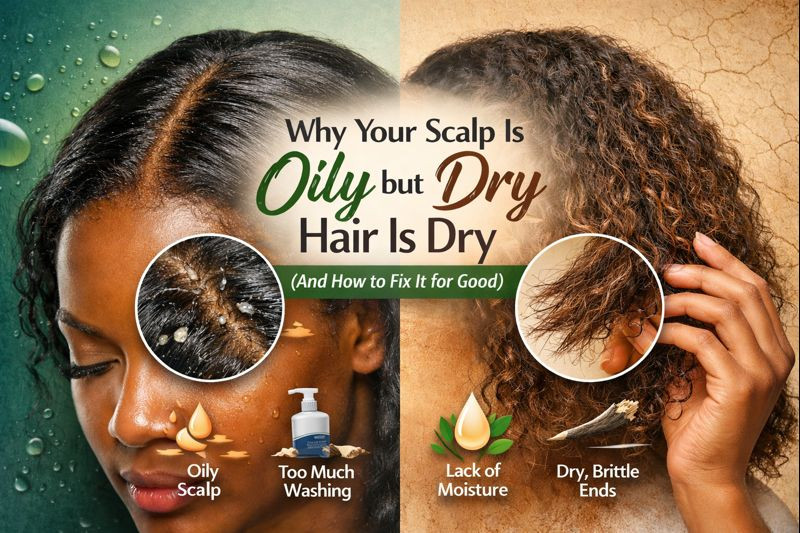
If your scalp gets oily fast but your hair still feels dry, brittle, or rough, you’re not imagining things—and you’re definitely not alone. This frustrating combination is one of the most common (and misunderstood) hair issues, especially for people with natural, curly, coily, or textured hair.
Here’s the truth: an oily scalp and dry hair usually mean your scalp and strands are out of balance. The scalp is overproducing oil to compensate for stress, irritation, or dehydration, while the hair itself isn’t getting (or keeping) the moisture it needs.
Let’s break down exactly why this happens, what most people get wrong, and how to finally fix it—without greasy roots or crunchy ends.
Understanding the Scalp vs. the Hair Shaft
Before fixing the issue, you have to understand this key difference:
-
Your scalp is living skin with oil glands (sebaceous glands).
-
Your hair strands are dead—they cannot produce oil or moisture on their own.
Oil (sebum) is made at the scalp. Moisture, however, comes from water and is retained through proper hair care practices. When oil stays trapped at the scalp and never travels down the hair shaft, you end up oily at the roots and dry everywhere else.
The #1 Reason: Your Scalp Is Overcompensating
An oily scalp is often a reaction, not the original problem.
When your scalp feels:
-
Stripped
-
Dehydrated
-
Irritated
-
Inflamed
…it responds by producing more oil to protect itself.
Common triggers include:
-
Harsh shampoos
-
Washing too often
-
Scratching or over-brushing
-
Alcohol-heavy products
-
Essential oils applied without dilution
So while your scalp is working overtime, your hair strands—especially the ends—are left dry, rough, and thirsty.
Sebum Isn’t Moisture (This Is Where Most People Get Confused)
Oil and moisture are not the same thing.
-
Oil = lubrication
-
Moisture = water
Sebum can make hair shiny, but it does not hydrate the hair. In fact, oil can sometimes block moisture from entering the hair shaft if applied incorrectly.
This is why:
-
Your scalp can feel greasy
-
Your hair can still snap, frizz, or feel dry to the touch
Why This Problem Is Extra Common in Natural Hair
If you have curly, coily, or kinky hair, sebum has a much harder time traveling down the strands.
Straight hair = smooth path for oil
Curly/coily hair = twists, bends, and coils that stop oil in its tracks
That means:
-
Oil builds up at the scalp
-
Ends stay dry and fragile
-
Breakage increases over time
This isn’t a flaw—it’s just physics.
Hidden Causes You Might Not Expect
1. Product Buildup on the Scalp
Heavy butters, pomades, and thick oils can clog follicles and sit on the scalp without actually nourishing it. This buildup can confuse your scalp into producing more oil while blocking real hydration.
2. Skipping Clarifying Washes
If you never clarify, layers of oil, sweat, and product coat the scalp. The scalp feels oily—but underneath, it’s actually stressed and congested.
3. Applying Oil to Dry Hair
Oil seals. If you apply oil to hair that’s already dry (without water), you lock dryness in.
4. Hard Water Exposure
Minerals from hard water coat the hair, making it feel dry and resistant to moisture—while the scalp continues producing oil normally.
5. Heat Damage or Cuticle Damage
When the hair cuticle is lifted or damaged, moisture escapes easily. Even if your scalp is healthy, the hair can’t hold hydration.
Signs Your Scalp Is Oily but Your Hair Is Dehydrated
-
Scalp smells oily quickly after washing
-
Hair feels dry right after shampooing
-
Ends snap easily
-
Hair looks dull despite oil use
-
Scalp itches but flakes aren’t dry
-
Products “sit” on the hair instead of absorbing
If this sounds familiar, keep reading—because the fix is simpler than you think.
The Real Fix: Balance, Not More Oil
Step 1: Clean the Scalp Gently—but Thoroughly
Use a gentle, sulfate-free cleanser that removes buildup without stripping. You want the scalp clean enough to breathe, not squeaky-dry.
Aim for:
-
1–2 washes per week
-
Monthly clarifying wash if you use oils or butters regularly
Step 2: Hydrate the Hair With Water First
Water is non-negotiable.
After washing:
-
Apply a water-based leave-in or mist
-
Focus on mid-lengths and ends
-
Detangle gently while hair is damp
If your hair doesn’t feel softer after this step, it’s not hydrated yet.
Step 3: Seal Moisture—Don’t Smother
Once the hair is hydrated, then you seal lightly.
Use:
-
Lightweight oils
-
Small amounts
-
Focus on ends, not scalp
Your scalp already produces oil—it usually doesn’t need extra.
Step 4: Treat the Scalp Like Skin
Healthy scalp = balanced oil production.
Best practices:
-
Massage gently to improve circulation
-
Avoid scratching
-
Don’t pile heavy oils directly on the scalp
-
Use scalp treatments sparingly and intentionally
A calm scalp produces less excess oil, not more.
Step 5: Adjust Styling Habits
Certain styles worsen the problem:
-
Tight styles trap oil and sweat
-
Constant ponytails concentrate oil at roots
-
Leaving hair uncovered at night dries ends out
Do this instead:
-
Looser protective styles
-
Satin bonnet or pillowcase
-
Occasional scalp exposure to air
The Biggest Mistake People Make
Trying to “dry out” an oily scalp.
This backfires every time.
When you:
-
Wash too often
-
Use harsh shampoos
-
Skip conditioner
-
Avoid moisture
…the scalp responds by producing even more oil, and the hair gets drier and weaker.
Balance beats control.
How Long Does It Take to Fix?
Most people notice:
-
Less scalp oil in 2–3 weeks
-
Softer hair within 1–2 washes
-
Reduced breakage in 30–60 days
Consistency matters more than products.
Final Thoughts: Oily Scalp + Dry Hair Is a Signal, Not a Curse
Your scalp and hair are telling you something—and it’s not that you need more oil.
They’re asking for:
-
Gentle cleansing
-
Real hydration
-
Less buildup
-
Smarter sealing
-
A calmer scalp environment
Once you stop fighting oil and start restoring balance, the greasy roots + dry ends cycle finally breaks.