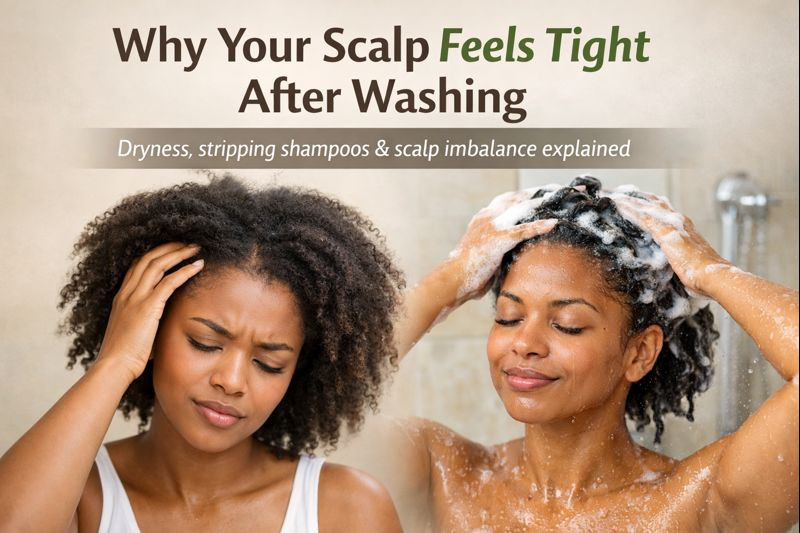
If your scalp feels tight, dry, itchy, or uncomfortable after washing your hair, you’re not alone. Many people assume this tight feeling is “normal” or just part of having dry or natural hair—but it’s actually a sign your scalp barrier is compromised.
A tight scalp after washing isn’t just annoying. It’s your scalp’s way of telling you that something in your routine—your shampoo, water temperature, washing frequency, or even your styling habits—is stripping away what your scalp needs to stay healthy.
And here’s the truth most hair blogs won’t tell you:
A tight scalp is often the first warning sign of future hair shedding, breakage, flakes, and slow growth.
In this guide, we’ll break down:
-
What a tight scalp really means
-
The most common reasons your scalp feels tight after washing
-
How tight scalp differs from dry scalp and dehydrated scalp
-
The long-term damage this issue can cause if ignored
-
And most importantly, how to fix it permanently with a scalp-first routine
Whether you wear your hair natural, relaxed, in braids, locs, waves, or wigs—this guide will help you understand what your scalp is asking for and how to respond.
What Does It Mean When Your Scalp Feels Tight After Washing?
A tight scalp feels:
-
Stretched
-
Dry or squeaky
-
Slightly sore or uncomfortable
-
Like your skin is being pulled
-
Sometimes itchy or flaky within hours of washing
This sensation usually shows up immediately after shampooing or once your hair begins to dry.
The Root Cause: A Disrupted Scalp Barrier
Your scalp has a protective moisture barrier made up of:
-
Natural oils (sebum)
-
Beneficial microorganisms
-
Lipids and proteins that regulate hydration
When this barrier is stripped or damaged, your scalp loses water rapidly. The result? Tightness, dryness, irritation, and inflammation.
Think of it like washing your hands with dish soap 10 times a day—eventually, your skin will feel tight, cracked, and uncomfortable. Your scalp reacts the same way.
The #1 Reason Your Scalp Feels Tight After Washing: Harsh Shampoos
Most shampoos on the market are designed to remove oil aggressively—not protect your scalp.
Ingredients That Strip Your Scalp
If your shampoo contains:
-
Sulfates (SLS, SLES)
-
Strong detergents
-
Alcohol-heavy formulas
-
Synthetic fragrance blends
…it may be cleaning your hair but damaging your scalp.
These ingredients:
-
Strip natural oils completely
-
Disrupt the scalp microbiome
-
Leave the scalp exposed and dehydrated
Why “Squeaky Clean” Is a Red Flag
Many people associate a squeaky feeling with cleanliness—but for your scalp, that squeak means all protective oils are gone.
A healthy scalp should feel:
-
Clean but comfortable
-
Calm, not tight
-
Soft, not dry
If your scalp feels tight after every wash, your shampoo is doing too much.
Hot Water Is Quietly Wrecking Your Scalp
Hot showers feel amazing—but they are brutal on your scalp.
What Hot Water Does to Your Scalp
Hot water:
-
Opens the cuticle aggressively
-
Strips oils faster
-
Increases moisture evaporation
-
Triggers scalp inflammation
This combination leaves your scalp raw and unprotected once the water stops running.
Signs Hot Water Is the Problem
-
Tightness starts immediately after rinsing
-
Scalp feels fine before washing but uncomfortable after
-
Increased flakes in colder months
Switching to lukewarm water can drastically reduce post-wash tightness in just a few washes.
Overwashing: When “Clean” Becomes Too Much
Washing too often is one of the most overlooked causes of scalp tightness.
How Often Is Too Often?
For most people:
-
Natural hair: 1x every 7–10 days
-
Braids/locs: 1x every 2–3 weeks (with scalp cleansing in between)
-
Waves/short cuts: 1–2x weekly
Washing more frequently than your scalp can recover from leads to:
-
Oil imbalance
-
Increased dryness
-
Tight, itchy skin
Your scalp needs time to rebalance, not constant resetting.
You’re Skipping the Most Important Step: Post-Wash Scalp Hydration
Many routines focus on moisturizing hair—but completely ignore the scalp.
Shampoo Opens the Door—You Must Seal It
After washing:
-
The scalp is exposed
-
Moisture escapes quickly
-
Tightness sets in as skin dries
If you don’t replace moisture immediately, your scalp will feel uncomfortable no matter how gentle your shampoo is.
What Your Scalp Needs After Washing
-
Lightweight hydration (water-based)
-
Oils that mimic natural sebum
-
Ingredients that calm inflammation
This is why scalp serums, oils, and botanical sprays matter—especially within 5–10 minutes after washing.
Dry Scalp vs Dehydrated Scalp vs Tight Scalp
These terms are often used interchangeably—but they are not the same.
Dry Scalp
-
Lacks oil
-
Often flaky and itchy
-
Feels tight consistently
-
Usually worsened by harsh shampoos
Dehydrated Scalp
-
Lacks water (not oil)
-
Feels tight after washing but oily later
-
Often caused by product buildup or water imbalance
Tight Scalp
-
A symptom, not a condition
-
Can result from dryness, dehydration, or inflammation
-
Indicates barrier damage
Understanding the difference helps you treat the cause, not just the feeling.
Product Buildup Can Make Tightness Worse (Yes, Really)
It sounds counterintuitive—but buildup can actually dry your scalp out.
How Buildup Causes Tightness
Heavy creams, gels, and oils can:
-
Block moisture from entering the scalp
-
Trap dryness underneath
-
Require harsher shampoos to remove
This creates a cycle:
Buildup → Strong shampoo → Tight scalp → More product → More buildup
Breaking this cycle requires:
-
Gentle clarifying when needed
-
Lighter scalp-friendly formulas
-
Balanced cleansing—not aggressive stripping
Tight Scalp After Washing in Braids, Locs, and Protective Styles
Protective styles can hide scalp issues—but they don’t prevent them.
Why Tightness Feels Worse in Styles
-
Less airflow
-
Product trapped longer
-
Shampoo harder to rinse fully
If your scalp feels tight after washing braids or locs, it’s often due to:
-
Residue left behind
-
No post-wash scalp hydration
-
Overuse of drying sprays
Your scalp still needs moisture—even when your hair is tucked away.
Can a Tight Scalp Affect Hair Growth?
Absolutely—and this is where things get serious.
Chronic Tightness Leads To:
-
Inflammation around follicles
-
Reduced blood flow
-
Increased shedding
-
Slower growth cycles
-
Thinning edges and crown areas
Healthy hair cannot grow from an unhealthy scalp.
If your scalp feels tight after every wash, your growth potential is being limited—even if your hair looks fine on the surface.
How to Fix a Tight Scalp After Washing (Step-by-Step)
Here’s how to restore balance and comfort—without overcomplicating your routine.
Step 1: Switch to a Gentle, Scalp-Friendly Cleanser
Look for shampoos that:
-
Are sulfate-free or low-sudsing
-
Contain botanical extracts
-
Clean without stripping
Your scalp should feel calm—not squeaky.
Step 2: Lower the Water Temperature
Use lukewarm water to wash and rinse. Save hot water for your body.
Step 3: Clean Less, Not More
Allow your scalp time to regulate itself between washes.
Step 4: Hydrate Your Scalp Immediately After Washing
Within minutes of towel-drying:
-
Apply a lightweight scalp oil or serum
-
Massage gently to stimulate circulation
-
Focus on comfort, not shine
Step 5: Maintain Moisture Between Washes
Use refreshing scalp sprays or oils between washes—especially in dry climates or winter months.
Ingredients That Calm a Tight Scalp
If you’re scanning labels, look for:
-
Aloe vera
-
Tea tree (low concentration)
-
Rosemary
-
Peppermint
-
Castor oil
-
Jojoba oil
-
Vitamin E
These ingredients support hydration, circulation, and barrier repair.
How Long Until the Tight Feeling Goes Away?
Most people notice:
-
Less tightness after 1–2 washes
-
Significant improvement in 2–3 weeks
-
Full scalp balance within 30–60 days
Consistency matters more than perfection.
When Tight Scalp Is a Sign of Something More
If tightness is accompanied by:
-
Burning
-
Redness
-
Excessive shedding
-
Painful flakes
…it may indicate a scalp condition that needs professional attention.
But in most cases, tight scalp after washing is a routine issue—not a medical one.
Final Thoughts: Your Scalp Isn’t “Sensitive”—It’s Stripped
A tight scalp after washing is not normal, inevitable, or harmless.
It’s a sign that your scalp:
-
Is losing moisture too fast
-
Is being cleaned too aggressively
-
Needs support—not stronger products
Once you shift your mindset from “clean hair” to “balanced scalp,” everything changes:
-
Comfort improves
-
Flakes decrease
-
Shedding slows
-
Growth becomes easier
Your scalp will tell you exactly what it needs—if you listen.