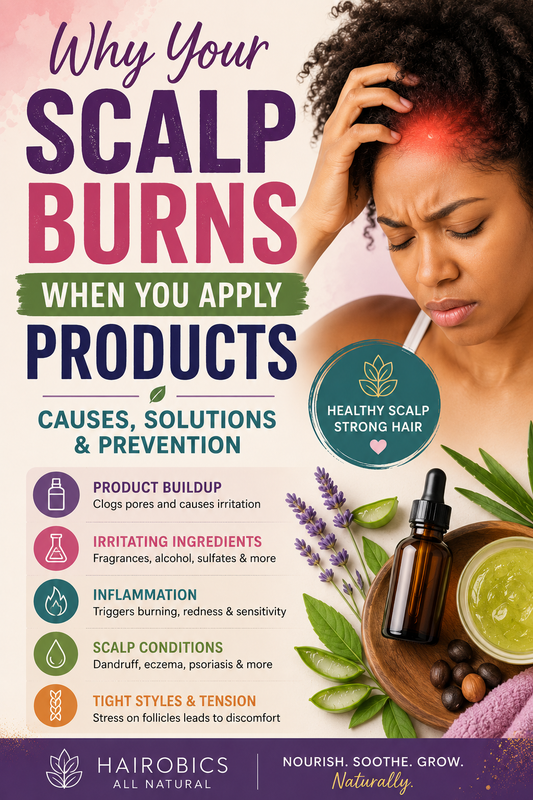
Have you ever applied a hair oil, leave-in conditioner, braid spray, growth treatment, or shampoo only to feel an uncomfortable burning sensation on your scalp? If so, you're not alone.
Many people with natural hair, locs, braids, curls, and protective styles experience scalp burning after applying certain products. Sometimes the sensation is mild and temporary. Other times it can be intense enough to make you wash the product out immediately.
A burning scalp is your body's way of signaling that something isn't right. While many people assume burning automatically means a product is "working," that's often not the case. In reality, scalp burning may indicate irritation, inflammation, allergic reactions, product buildup, scalp damage, or underlying scalp conditions.
Understanding why your scalp burns when you apply products can help you prevent long-term damage, improve scalp health, and create a healthier environment for hair growth.
In this comprehensive guide, we'll explore:
- Why your scalp burns after applying products
- Common ingredients that trigger irritation
- Scalp conditions that increase sensitivity
- How product buildup affects the scalp
- How braids and locs contribute to burning sensations
- How to soothe an irritated scalp
- Prevention tips for healthy hair growth
Understanding the Scalp
Before discussing scalp burning, it's important to understand what your scalp actually is.
Your scalp contains:
- Hair follicles
- Oil glands
- Sweat glands
- Blood vessels
- Nerve endings
- Skin cells
Because the scalp contains thousands of nerve endings, it's extremely sensitive to irritation.
When something disrupts the scalp's protective barrier, those nerve endings can react with:
- Burning
- Stinging
- Tingling
- Itching
- Tenderness
- Redness
The burning sensation you feel is often an inflammatory response.
Common Reasons Your Scalp Burns When You Apply Products
1. Product Irritation
One of the most common causes of scalp burning is simple irritation.
Certain ingredients can irritate sensitive skin even if you're not allergic to them.
Common irritants include:
- Strong fragrances
- Alcohols
- Sulfates
- Artificial dyes
- Preservatives
- Menthol
- Camphor
These ingredients can disrupt the scalp barrier and create inflammation.
Symptoms include:
- Immediate burning
- Redness
- Mild itching
- Tender scalp
The sensation often appears within minutes of application.
2. Allergic Reactions
An allergic reaction differs from simple irritation.
With allergies, your immune system identifies a substance as harmful and launches a response.
Common hair product allergens include:
- Fragrance blends
- Essential oils
- Preservatives
- Botanical extracts
- Certain proteins
Signs of an allergic reaction include:
- Burning
- Intense itching
- Swelling
- Redness
- Rash
- Flaking
Some reactions occur immediately.
Others may develop over several hours or even days.
3. Product Buildup
Product buildup is a major but often overlooked cause of scalp burning.
Over time, products accumulate on the scalp.
Common buildup sources include:
- Hair oils
- Pomades
- Edge controls
- Gels
- Dry shampoos
- Heavy creams
As buildup accumulates:
- Follicles become clogged
- The scalp struggles to breathe
- Irritation increases
- Bacteria and yeast may multiply
When you apply a new product on top of buildup, the scalp may react with burning or itching.
4. Damaged Scalp Barrier
Your scalp has a protective barrier designed to keep moisture in and irritants out.
When this barrier becomes damaged:
- Water escapes
- Irritants enter more easily
- Inflammation increases
A compromised barrier makes products feel much harsher.
Even gentle products may suddenly burn.
Common causes include:
- Overwashing
- Harsh shampoos
- Excessive scratching
- Chemical treatments
- Heat damage
- Environmental stress
5. Scalp Inflammation
Inflammation is one of the leading causes of scalp discomfort.
Inflamed scalps are highly sensitive.
Symptoms include:
- Burning
- Tenderness
- Redness
- Soreness
- Hair shedding
Inflammation may be triggered by:
- Stress
- Poor diet
- Product irritation
- Tight hairstyles
- Underlying scalp conditions
Scalp Conditions That Cause Burning
Seborrheic Dermatitis
Seborrheic dermatitis is a common scalp condition.
Symptoms include:
- Burning
- Itching
- Flaking
- Greasy scales
People often mistake it for simple dandruff.
Products may burn because the scalp is already inflamed.
Scalp Psoriasis
Psoriasis creates thick patches of inflamed skin.
Symptoms include:
- Burning
- Cracking
- Scaling
- Pain
Applying products can intensify discomfort.
Eczema
Eczema weakens the skin barrier.
This increases sensitivity dramatically.
Even mild ingredients may trigger burning.
Folliculitis
Folliculitis occurs when hair follicles become inflamed or infected.
Symptoms include:
- Burning
- Tender bumps
- Redness
- Pain
Applying products may worsen symptoms.
Why Hair Growth Products Sometimes Burn
Many people assume scalp burning means hair growth products are working.
This isn't necessarily true.
Growth products often contain stimulating ingredients like:
- Peppermint oil
- Rosemary oil
- Tea tree oil
- Menthol
These ingredients increase circulation and create tingling sensations.
A mild tingling feeling can be normal.
However:
- Intense burning
- Pain
- Redness
- Swelling
are not signs of effectiveness.
They are signs of irritation.
Why Braids Can Make Product Burning Worse
Protective styles can increase scalp sensitivity.
Tight braids create:
- Tension
- Inflammation
- Micro-damage
When products are applied to already stressed follicles, burning often occurs.
Signs your braids are too tight include:
- Tender scalp
- Small bumps
- Headaches
- Burning sensation
The scalp must heal before applying additional products.
Why Locs Can Increase Scalp Sensitivity
Loc wearers often experience scalp irritation from buildup.
Locs tend to trap:
- Oils
- Dirt
- Sweat
- Styling products
Over time, scalp congestion develops.
Adding more products without proper cleansing can cause:
- Burning
- Itching
- Inflammation
Regular scalp cleansing is essential for healthy loc maintenance.
Essential Oils and Scalp Burning
Natural ingredients aren't always gentle.
Many people assume natural means safe.
In reality, essential oils are highly concentrated.
Common offenders include:
- Peppermint oil
- Cinnamon oil
- Clove oil
- Tea tree oil
- Eucalyptus oil
Using these oils improperly may cause:
- Burning
- Redness
- Skin damage
Always dilute essential oils appropriately.
Signs You Should Stop Using a Product Immediately
Discontinue use if you experience:
- Severe burning
- Swelling
- Rash
- Blisters
- Difficulty breathing
- Excessive redness
These symptoms may indicate a serious reaction.
How to Soothe a Burning Scalp
Rinse Immediately
Remove the product as soon as possible.
Use lukewarm water.
Avoid hot water because it can worsen inflammation.
Use a Gentle Cleanser
Choose a mild shampoo free of harsh detergents.
Gentle cleansing helps remove irritants without stripping the scalp.
Apply Aloe Vera
Aloe vera provides cooling relief.
Benefits include:
- Reduced inflammation
- Improved hydration
- Soothing irritation
Pure aloe vera gel works best.
Keep the Scalp Moisturized
A dry scalp becomes more irritated.
Hydrating products help restore balance.
A lightweight scalp moisturizer can help calm discomfort while supporting scalp health.
Avoid Scratching
Scratching worsens inflammation.
It may also:
- Damage follicles
- Increase infection risk
- Cause hair breakage
How Product Buildup Contributes to Burning
Buildup acts like a barrier.
It traps:
- Sweat
- Dirt
- Bacteria
- Dead skin cells
When new products are applied, ingredients become trapped against the scalp.
This often causes:
- Burning
- Itching
- Tenderness
Regular scalp cleansing helps prevent this issue.
The Connection Between Scalp Health and Hair Growth
Healthy hair begins with a healthy scalp.
A burning scalp often indicates inflammation.
Chronic inflammation can:
- Disrupt growth cycles
- Weaken follicles
- Increase shedding
- Slow hair growth
Maintaining scalp health is one of the most important steps in achieving stronger, fuller hair.
Prevention Tips
Patch Test New Products
Always test products before full application.
Apply a small amount behind the ear.
Wait 24 to 48 hours.
This can help identify reactions before they affect the entire scalp.
Avoid Harsh Ingredients
Choose products with gentle formulas.
Look for:
- Plant-based ingredients
- Natural moisturizers
- Minimal fragrances
Keep Your Scalp Clean
A clean scalp reduces:
- Buildup
- Irritation
- Inflammation
Consistency matters more than over-washing.
Moisturize Regularly
Hydrated scalps are more resilient.
Proper moisture supports:
- Barrier function
- Elasticity
- Hair growth
Support Scalp Health Naturally
Many people find success using natural scalp-supporting products that focus on:
- Hydration
- Nourishment
- Reduced inflammation
The Hairobics All Natural collection is designed to support healthy scalp conditions while helping maintain moisture and overall scalp comfort.
Best Ingredients for a Healthy Scalp
Look for ingredients such as:
- Aloe Vera
- Jojoba Oil
- Jamaican Black Castor Oil
- Rosemary
- Coconut Oil
- Avocado Oil
- Vitamin E
These ingredients help nourish the scalp while supporting healthy hair growth.
Frequently Asked Questions
Is burning normal when using hair growth products?
A mild tingling sensation may occur with certain stimulating ingredients.
Intense burning is not normal.
Why does my scalp burn after washing?
You may have:
- Dry scalp
- Product sensitivity
- A damaged scalp barrier
- Underlying scalp inflammation
Can product buildup cause scalp burning?
Yes.
Buildup traps irritants and increases inflammation.
Should I continue using a product if it burns?
No.
Stop use immediately and monitor symptoms.
Can scalp burning cause hair loss?
Chronic inflammation can weaken follicles and contribute to shedding and thinning.
Final Thoughts
If your scalp burns when you apply products, don't ignore it. Burning is often a warning sign that your scalp is irritated, inflamed, overloaded with buildup, or reacting negatively to ingredients.
Healthy hair growth starts with a healthy scalp. By identifying triggers, choosing gentle products, maintaining a clean scalp, and supporting moisture balance, you can reduce irritation and create the ideal environment for stronger, healthier hair.
When your scalp feels calm, hydrated, and balanced, your hair has a much better chance of thriving.