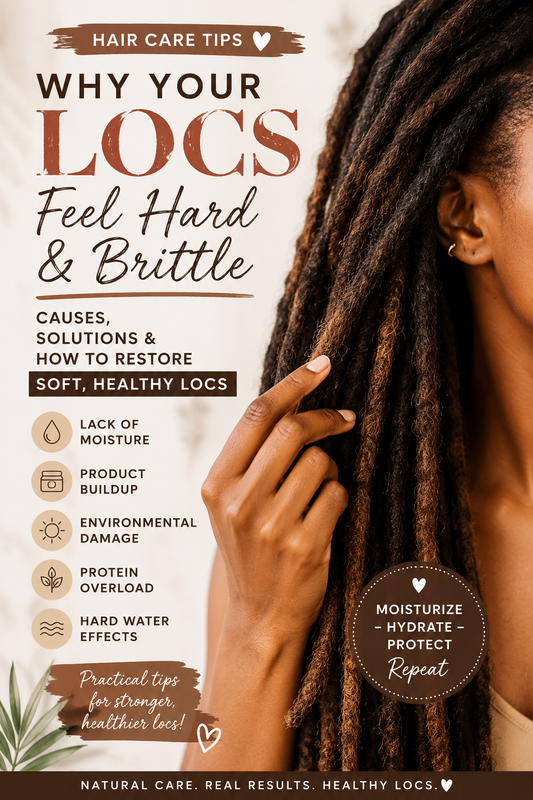
Locs are often admired for their beauty, versatility, and low-maintenance nature. Healthy locs should feel strong, resilient, and moisturized—not hard, stiff, crunchy, or brittle. Yet many people with locs eventually notice that their hair starts feeling dry, rough, and inflexible.
If your locs feel hard and brittle, you're not alone.
Many people mistakenly assume that hard locs are healthy locs because they appear firm and mature. In reality, excessively hard locs are often a sign that something is wrong. Dryness, product buildup, lack of moisture, protein overload, environmental damage, and poor hair care habits can all contribute to brittle locs.
The good news is that hard, brittle locs can usually be restored with the right approach.
In this comprehensive guide, you'll learn:
- Why locs become hard and brittle
- Common mistakes that damage locs
- Signs your locs need moisture
- How to soften dry locs naturally
- The best ingredients for healthy loc maintenance
- A complete loc recovery routine
- How to prevent brittleness permanently
Let's dive in.
What Healthy Locs Should Feel Like
Healthy locs are:
- Flexible
- Strong
- Moisturized
- Smooth
- Resilient
A healthy loc can bend without snapping.
It shouldn't feel:
- Crunchy
- Straw-like
- Rough
- Rigid
- Sharp at the ends
Many people mistake dryness for maturity.
Mature locs naturally become more compact, but they should still retain flexibility.
Why Locs Become Hard and Brittle
1. Lack of Moisture
The number one reason locs become brittle is moisture deprivation.
Locs naturally struggle to retain moisture because:
- Hair strands are tightly woven together
- Water has difficulty penetrating dense locs
- Moisture evaporates quickly
Without consistent hydration, locs gradually become:
- Dry
- Rigid
- Fragile
Over time, severe dryness leads to breakage.
Signs of Moisture Deficiency
- Locs feel rough
- Hair looks dull
- Excessive frizz
- Itchy scalp
- Weak ends
2. Product Buildup
One of the biggest hidden causes of hard locs is product buildup.
Many products contain:
- Heavy waxes
- Petroleum
- Silicones
- Thick oils
These ingredients coat locs and create a hardened layer.
Over time:
- Moisture can't enter the hair
- Locs become stiff
- Hair loses flexibility
Signs of Buildup
- White residue
- Sticky texture
- Heavy feeling
- Dull appearance
- Stiff locs after washing
3. Hard Water Damage
Hard water contains high levels of:
- Calcium
- Magnesium
- Iron
Mineral deposits accumulate on locs over time.
This causes:
- Dryness
- Brittleness
- Dullness
- Tangling
Many people spend years moisturizing without realizing hard water is the problem.
4. Overusing Protein Treatments
Protein strengthens hair.
However, too much protein creates the opposite effect.
Protein overload can make locs feel:
- Hard
- Stiff
- Dry
- Brittle
Hair needs balance between:
- Protein
- Moisture
Without enough moisture, protein-treated locs become rigid.
Common Sources of Excess Protein
- Protein conditioners
- Rice water treatments
- Keratin products
- Strengthening treatments
5. Excessive Sun Exposure
The sun damages hair similarly to how it damages skin.
UV rays break down:
- Hair proteins
- Natural oils
- Protective cuticles
Over time, sun damage causes:
- Fading
- Dryness
- Weakness
- Brittleness
This is especially common among people who:
- Work outdoors
- Exercise outside frequently
- Live in hot climates
6. Not Covering Locs at Night
Cotton pillowcases absorb moisture.
Every night your locs rub against cotton, they lose hydration.
This repeated moisture loss eventually leads to:
- Dryness
- Friction damage
- Frizz
- Breakage
Sleeping without protection is one of the fastest ways to dry out locs.
7. Overwashing Without Rehydrating
Clean locs are healthy.
However, shampoo removes:
- Dirt
- Oil
- Sweat
It also removes moisture.
Without replacing hydration afterward, locs gradually become brittle.
Common Mistake
Washing hair and applying nothing afterward.
Locs need moisture after every wash.
8. Environmental Stress
Environmental factors constantly attack your hair.
Examples include:
- Wind
- Air pollution
- Smoke
- Dry air
- Indoor heating
These conditions strip moisture from locs.
Over time they become rough and dehydrated.
How Dry Locs Become Brittle
Hair is made primarily of keratin protein.
Healthy hair contains water within its structure.
When moisture levels drop:
- Hair loses elasticity.
- Hair becomes rigid.
- Fibers weaken.
- Breakage increases.
Think of a dry tree branch.
A fresh branch bends.
A dry branch snaps.
Your locs behave the same way.
Signs Your Locs Are Becoming Brittle
Watch for these warning signs:
Crunchy Texture
Locs feel stiff when squeezed.
Dull Appearance
Healthy locs reflect light.
Dry locs appear lifeless.
Increased Breakage
Hair snaps easily during maintenance.
Thin Ends
The ends begin looking weak and sparse.
Excessive Frizz
Dry hair seeks moisture from the environment.
Itchy Scalp
Dry scalp often accompanies brittle locs.
How to Soften Hard Locs Naturally
Step 1: Increase Water-Based Moisture
Water is the best moisturizer.
Not oil.
Not butter.
Not grease.
Water.
Mist locs regularly using:
- Distilled water
- Aloe vera juice
- Rose water
Hydration should come before oils.
Step 2: Use Lightweight Moisturizers
After water, apply a lightweight moisturizer.
Look for ingredients such as:
- Aloe vera
- Vegetable glycerin
- Marshmallow root
- Slippery elm
These ingredients help retain moisture.
Step 3: Seal Moisture Properly
Once moisture is applied, seal it in.
Good sealing oils include:
- Jojoba oil
- Grapeseed oil
- Sweet almond oil
Avoid extremely heavy oils that may create buildup.
Step 4: Deep Hydrate Weekly
Weekly hydration treatments help restore flexibility.
Focus on moisture rather than heavy protein treatments.
Benefits include:
- Softer locs
- Improved elasticity
- Reduced breakage
The Best Ingredients for Soft Locs
Aloe Vera
Benefits:
- Hydrates hair
- Soothes scalp
- Adds softness
Jojoba Oil
Benefits:
- Mimics scalp oils
- Lightweight
- Non-greasy
Rose Water
Benefits:
- Refreshes locs
- Improves softness
- Reduces dryness
Glycerin
Benefits:
- Attracts moisture
- Improves hydration retention
Jamaican Black Castor Oil
Benefits:
- Seals moisture
- Strengthens strands
- Supports healthy growth
Use sparingly to avoid buildup.
Ingredients That May Make Locs Harder
Avoid excessive use of:
- Wax
- Petroleum
- Mineral oil
- Heavy grease
- Thick pomades
These products can trap debris and harden locs.
How Product Buildup Causes Brittle Locs
Buildup acts like armor around the hair shaft.
While that may sound protective, it actually:
- Blocks moisture
- Traps dirt
- Prevents hydration
As buildup thickens:
- Hair dries internally
- Locs become stiff
- Breakage increases
Detoxing Locs Safely
A periodic detox can help remove buildup.
Benefits include:
- Improved softness
- Better moisture absorption
- Cleaner scalp
- Less stiffness
Signs you may need a detox:
- Persistent dryness
- White residue
- Heavy feeling
- Slow drying after washing
How Often Should You Moisturize Locs?
Most locs benefit from moisture:
Dry Climate
4–7 times weekly
Moderate Climate
3–5 times weekly
Humid Climate
2–4 times weekly
Pay attention to your hair rather than following rigid schedules.
The Best Night Routine for Preventing Brittleness
Every night:
- Lightly mist locs.
- Cover with satin or silk.
- Avoid sleeping on cotton.
This simple routine dramatically reduces moisture loss.
Seasonal Loc Care
Summer
Focus on:
- UV protection
- Increased hydration
Winter
Focus on:
- Indoor heating damage
- Dry air prevention
Winter is often when locs become most brittle.
Nutrition and Loc Health
Hair health starts internally.
Important nutrients include:
Protein
Supports structure.
Iron
Supports circulation.
Zinc
Supports growth.
Omega-3 Fatty Acids
Improve moisture retention.
Water
Hydrates hair from within.
Aim for consistent daily hydration.
Common Mistakes That Make Locs Hard
Using Too Much Oil
Oil does not moisturize.
It seals moisture.
Applying oil to dry locs often makes dryness worse.
Ignoring Water
Many people apply oil daily but rarely hydrate.
This leads to brittle hair.
Retwisting Too Frequently
Over-retwisting stresses locs.
It can weaken roots and increase breakage.
Using Wax
Wax buildup is difficult to remove and often contributes to hardness.
Skipping Maintenance
Neglected locs may accumulate debris and dryness.
Emergency Treatment for Extremely Brittle Locs
If your locs feel extremely hard:
Week 1
- Clarify hair
- Remove buildup
- Begin daily hydration
Week 2
- Continue moisturizing
- Use lightweight oils
Week 3
- Increase hydration treatments
Week 4
- Assess softness and elasticity
Many people notice significant improvement within 30 days.
Long-Term Loc Care Routine
Daily
- Hydrate with water-based spray
- Protect at night
Weekly
- Clean scalp
- Moisturize thoroughly
Monthly
- Assess buildup
- Deep hydrate
Quarterly
- Detox if necessary
Consistency is the secret.
Frequently Asked Questions
Are Hard Locs Healthy?
Not necessarily.
Healthy locs should be firm yet flexible.
Can Brittle Locs Recover?
Yes.
Most brittle locs improve with proper hydration and maintenance.
Does Oil Moisturize Locs?
No.
Oil seals moisture but does not provide hydration.
Can Hard Water Cause Dry Locs?
Absolutely.
Mineral buildup is a common cause of stiffness.
How Long Does It Take to Soften Locs?
Most people notice improvement within 2–4 weeks.
Severely dry locs may take longer.
Conclusion
If your locs feel hard and brittle, your hair is likely asking for moisture, balance, and better maintenance—not more heavy products.
The most common causes include:
- Lack of hydration
- Product buildup
- Hard water
- Excess protein
- Environmental damage
- Poor nighttime protection
Fortunately, restoring healthy locs is possible.
Focus on:
- Water-based hydration
- Lightweight moisturizing products
- Consistent maintenance
- Proper scalp care
- Buildup prevention
Over time, your locs can become softer, healthier, stronger, and more resilient.
Healthy locs aren't supposed to feel like dry rope. They should feel strong, flexible, and alive. With the right care routine, you can bring your locs back to their healthiest state and enjoy beautiful, thriving hair for years to come.