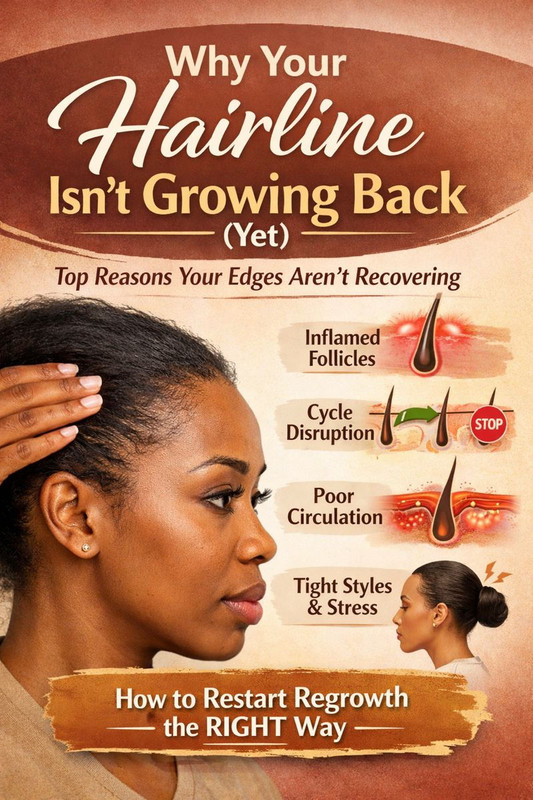
If your hairline hasn’t grown back — even though you’ve stopped tight styles, started oiling, and “do everything right” — you’re not alone.
Edges are the most fragile hairs on your head, and they’re often the last to recover.
The truth is: hairline regrowth is slower, more complex, and more sensitive than hair growth anywhere else. Many people unknowingly keep repeating the same habits that stall regrowth — even while using good products.
This article breaks down why your hairline isn’t growing back yet, what’s actually happening beneath the scalp, and how to restart growth the right way.
Why Hairline Regrowth Is So Difficult
Your hairline (edges, temples, nape) grows from smaller, weaker follicles than the rest of your scalp. These follicles:
-
Have shorter growth cycles
-
Are more vulnerable to tension and friction
-
Receive less blood flow than the crown
-
React faster to inflammation and stress
Once damaged, they don’t “bounce back” quickly — and in some cases, they go dormant.
That doesn’t mean they’re dead.
It means they need specific conditions to re-activate.
1. Your Hairline Is Still Inflamed (Even If It Doesn’t Hurt)
One of the biggest reasons edges don’t grow back is silent inflammation.
You may not feel pain, itching, or burning — but inflammation can still exist beneath the skin. When the scalp stays inflamed:
-
Follicles remain stuck in the resting (telogen) phase
-
Blood flow to the hairline decreases
-
New growth can’t push through
Common inflammation triggers:
-
Tight ponytails, buns, braids, wigs, or headbands
-
Edge control with drying alcohols
-
Heavy oils clogging the follicle opening
-
Scratching or over-brushing edges
-
Chronic stress (yes, really)
Key point:
If inflammation isn’t addressed first, no oil or serum will grow your edges.
2. You Stopped the Damage — But Didn’t Repair the Follicle
Many people stop tight styles and expect regrowth to start automatically.
But follicles don’t regenerate just because tension stopped.
Think of it like a sprained ankle:
Stopping the injury doesn’t heal it — rehab does.
Your hairline follicles may still be:
-
Weakened
-
Collapsed
-
Low in oxygen and nutrients
They need:
-
Increased circulation
-
Oxygen delivery
-
A clean, unclogged scalp environment
-
Consistent stimulation (not harsh rubbing)
3. Your Growth Cycle Was Interrupted
Hair grows in cycles, not continuously.
The hairline is especially sensitive to cycle disruption caused by:
-
Traction alopecia
-
Postpartum shedding
-
Hormonal shifts
-
Extreme stress
-
Sudden weight loss
-
Illness or medication
When disrupted, follicles can stay in the resting phase for months before restarting.
This is why:
-
You see baby hairs that never thicken
-
One side grows, the other doesn’t
-
Growth looks “stuck”
Important:
Hairline regrowth often lags 3–6 months behind the rest of your hair.
4. Your Scalp Is Clean — But Not Balanced
A clean scalp isn’t always a healthy scalp.
Hairlines fail to grow when the scalp is:
-
Too dry
-
Too oily
-
pH-imbalanced
-
Coated with product residue
Common mistakes:
-
Over-washing edges
-
Using harsh shampoos on fragile hairlines
-
Applying oils daily without cleansing
-
Skipping scalp massage
Follicles need:
-
Light hydration
-
Oxygen exposure
-
Clear follicle openings
Not heavy grease sitting on the skin.
5. You’re Using Growth Products — But Inconsistently
Hairline regrowth requires discipline, not product hopping.
Edges respond best to:
-
Small, consistent stimulation
-
Lightweight nourishing formulas
-
Daily or near-daily use
-
Gentle massage
What doesn’t work:
-
Applying oil once a week
-
Using 5 products at once
-
Scrubbing aggressively
-
Switching products every 2 weeks
Consistency beats potency. Every time.
6. Your Hairline Needs Blood Flow — Not Just Oil
Hair grows where blood flows.
If circulation is poor, follicles starve — no matter how “natural” the product is.
Signs of low circulation:
-
Cold scalp around temples
-
Slow or uneven growth
-
One edge thinner than the other
-
Minimal baby hairs after months
What helps:
-
Daily fingertip massage (not nails)
-
Warm (not hot) water rinses
-
Scalp stimulation before bed
-
Light oils that absorb — not sit
7. Your Protective Styles Are Still Too Aggressive
Even “protective” styles can block regrowth if done wrong.
Common edge-killing styles:
-
Slicked-back buns
-
Tight wigs with no leave-out breaks
-
Braids or twists starting at the hairline
-
Edge control used daily
Protection without tension is the goal.
Your edges need:
-
Looseness
-
Breathability
-
Breaks from manipulation
-
Minimal styling
8. Your Hairline Needs Time — More Than You Think
This part is hard to hear.
Hairline regrowth is slow.
Typical timeline:
-
Weeks 1–6: Reduced shedding, less breakage
-
Months 2–3: Soft baby hairs appear
-
Months 4–6: Baby hairs thicken
-
Months 6–9: Visible density improvement
If you quit at month 2, you restart the cycle.
9. Stress Is Quietly Blocking Your Progress
Chronic stress raises cortisol, which:
-
Shrinks hair follicles
-
Shortens growth cycles
-
Triggers shedding at the hairline
This is why:
-
Edges thin during burnout
-
Regrowth stalls during emotional stress
-
Hair improves during calmer periods
Sleep, hydration, and mental health are hair growth tools, not side notes.
How to Actually Get Your Hairline Growing Again
Here’s what works — consistently.
Step 1: Calm the Scalp
-
Stop tight styles immediately
-
Reduce edge control use
-
Clean gently 1–2x weekly
Step 2: Stimulate Gently
-
Massage edges daily (1–2 minutes)
-
Use fingertips, not nails
-
Focus on circulation
Step 3: Nourish Lightly
-
Use lightweight oils or serums
-
Apply sparingly
-
Avoid heavy buildup
Step 4: Protect Without Tension
-
Loose styles
-
Satin scarves and pillowcases
-
No daily brushing
Step 5: Commit for 90 Days Minimum
-
Take progress photos
-
Stay consistent
-
Resist switching products
Why Your Hairline Isn’t Growing Back Yet
The keyword here is yet.
Most hairlines don’t fail to grow back because follicles are dead — they fail because the environment is wrong.
Fix the environment, and growth follows.
Final Truth About Hairline Regrowth
Your hairline:
-
Grows slower
-
Needs more patience
-
Requires gentler care
-
Responds best to consistency
If you’ve been blaming yourself, your genetics, or your age — stop.
Hairlines can recover.
They just don’t respond to shortcuts.