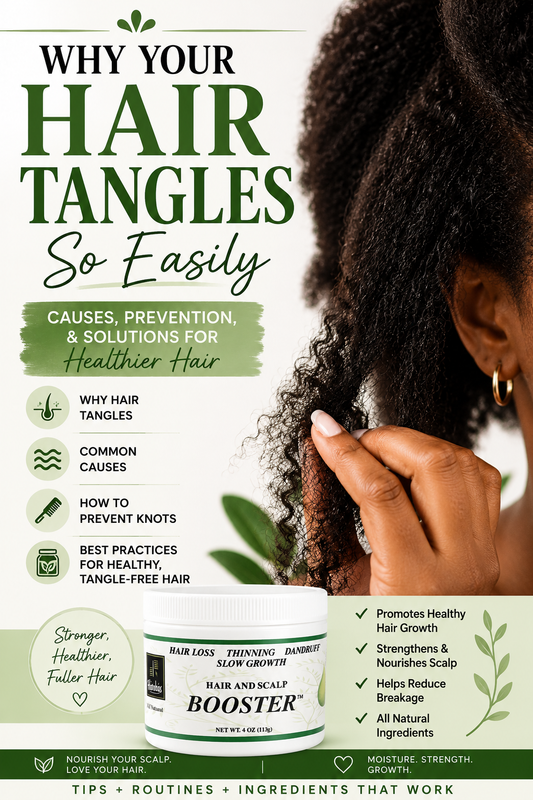
Have you ever finished washing your hair only to spend an hour fighting through knots and tangles? Do your fingers constantly get stuck when trying to style your hair? If so, you're not alone.
Hair tangles are one of the most frustrating challenges for people with natural hair, curly hair, coily hair, braids, and locs. While occasional tangles are normal, excessive tangling can lead to breakage, thinning edges, split ends, and slower length retention.
Many people believe tangled hair is simply something they must live with. The truth is that excessive tangling is usually a sign that something is happening beneath the surface.
Understanding why your hair tangles so easily is the first step toward smoother, healthier, and easier-to-manage hair.
In this guide, we'll explore:
- Why hair tangles happen
- Common causes of excessive tangling
- How texture affects tangling
- Best practices to reduce knots
- Mistakes that make tangles worse
- How to build a tangle-free hair routine
By the end of this article, you'll know exactly what your hair needs to stay soft, manageable, and healthy.
What Causes Hair to Tangle?
Hair tangles occur when strands wrap around one another and become interlocked.
Every strand of hair contains an outer protective layer called the cuticle.
When cuticles lie flat, hair remains smooth.
When cuticles become raised, rough, or damaged, neighboring strands catch onto each other.
This creates:
- Knots
- Mats
- Single-strand knots
- Fairy knots
- Tangles
The rougher the hair shaft becomes, the more likely it is to snag on nearby strands.
For people with curly and coily hair, the natural bends and twists of each strand create more opportunities for strands to intertwine.
Dry Hair Is the Biggest Cause of Tangling
One of the most common reasons hair tangles excessively is dryness.
Dry hair lacks lubrication.
Without moisture, strands rub against one another and create friction.
This friction causes:
- Knotting
- Snagging
- Breakage
- Split ends
Signs your hair is too dry include:
- Dull appearance
- Rough texture
- Excessive shedding
- Frizz
- Difficulty detangling
When hair remains moisturized, strands glide past one another more easily.
This is why hydration is essential for reducing tangles.
Split Ends Make Tangles Worse
Split ends are another major contributor to chronic tangling.
When the ends of your hair split, the damaged pieces catch onto neighboring strands.
This creates:
- Knots
- Snags
- Matting
- Breakage
Split ends are especially common when:
- Hair is overdue for trimming
- Heat damage exists
- Hair is chemically processed
- Moisture levels are low
Many people blame tangles on their hair type when damaged ends are actually the culprit.
Curly and Coily Hair Naturally Tangles More
People with Type 3 and Type 4 hair often experience more tangles than those with straight hair.
This is completely normal.
Each bend and coil creates opportunities for strands to loop around one another.
Hair textures most prone to tangling include:
- 3C curls
- 4A curls
- 4B coils
- 4C coils
This doesn't mean your hair is unhealthy.
It simply means your routine should focus more heavily on moisture and gentle detangling.
Product Buildup Can Create Tangles
Many people are surprised to learn that too much product can increase tangling.
When products accumulate on the hair shaft, they create a sticky coating.
This coating attracts:
- Dirt
- Lint
- Dust
- Dead skin cells
Over time, buildup causes strands to stick together.
Common buildup-causing products include:
- Heavy oils
- Waxes
- Butters
- Gels
- Pomades
Clarifying occasionally can help restore smoothness and reduce knots.
Sleeping Without Protection Causes Knots
Your nighttime routine significantly impacts tangling.
Cotton pillowcases absorb moisture and create friction.
As you move during sleep, hair rubs against rough fibers.
This leads to:
- Knots
- Frizz
- Breakage
- Dryness
Protective nighttime options include:
- Satin bonnets
- Silk scarves
- Satin pillowcases
These materials allow hair to glide smoothly while retaining moisture.
Wind Damage and Environmental Exposure
The environment can wreak havoc on your hair.
Wind causes strands to whip around and intertwine.
This is especially problematic for:
- Natural hair
- Curly hair
- Long hair
- Loose styles
Environmental factors that increase tangling include:
- Wind
- Humidity
- Dry air
- Sun exposure
Protective styles can help minimize environmental tangling.
Washing Hair Incorrectly Creates Tangles
Many people accidentally create tangles during wash day.
Common mistakes include:
Piling Hair on Top of the Head
This causes strands to intertwine and knot.
Scrubbing Aggressively
Rough scrubbing lifts cuticles and creates friction.
Skipping Sectioning
Washing hair in sections helps keep strands organized.
For best results:
- Detangle before washing
- Wash in sections
- Use gentle downward motions
Not Detangling Often Enough
Waiting too long between detangling sessions can cause serious knots.
Shed hairs naturally fall out daily.
If those shed hairs remain trapped, they wrap around neighboring strands.
This eventually creates:
- Mats
- Tangles
- Dreaded knots
A consistent detangling schedule is crucial.
Single-Strand Knots Explained
Single-strand knots are tiny knots that form at the ends of individual strands.
They are extremely common in curly and coily hair.
These knots form because curls naturally loop back onto themselves.
Factors that increase single-strand knots include:
- Dryness
- Lack of stretching
- Damaged ends
- Excessive manipulation
Regular moisturizing and protective styling can reduce their occurrence.
Heat Damage and Tangling
Heat damage changes the structure of hair.
Damaged strands lose elasticity and become rough.
This rough texture increases friction and snagging.
Signs heat damage may be causing tangles:
- Straight pieces among curls
- Excessive breakage
- Dry texture
- Split ends
Limiting heat usage helps preserve smoother strands.
High Porosity Hair Tangles Faster
Porosity affects how hair absorbs and retains moisture.
High porosity hair often:
- Loses moisture quickly
- Feels rough
- Tangles easily
Causes of high porosity include:
- Heat damage
- Chemical processing
- Environmental damage
Managing porosity with moisture-rich products can significantly reduce tangling.
Low Porosity Hair Can Tangle Too
Low porosity hair resists moisture absorption.
When hydration struggles to penetrate the hair shaft, dryness can develop.
Dryness then leads to tangles.
Lightweight moisturizers often work best for low-porosity hair.
Why Protective Styles Help Prevent Tangles
Protective styles reduce daily manipulation.
Examples include:
- Twists
- Braids
- Buns
- Updos
Benefits include:
- Reduced friction
- Less shedding accumulation
- Better moisture retention
Protective styles help keep strands aligned and organized.
How Often Should You Detangle?
There is no universal answer.
Most natural hair thrives with detangling:
- Weekly
- Every wash day
- Every 7–14 days
Waiting too long increases the likelihood of severe knotting.
Best Tools for Detangling
The right tools make a huge difference.
Popular options include:
Wide-Tooth Comb
Ideal for gently removing knots.
Detangling Brush
Helps distribute conditioner while removing tangles.
Fingers
Finger detangling allows maximum control.
Many natural hair experts combine all three methods.
Finger Detangling Benefits
Finger detangling helps you:
- Feel knots before they worsen
- Reduce breakage
- Preserve curl patterns
While slower, it is often gentler than aggressive combing.
Why Conditioner Makes Detangling Easier
Conditioner creates slip.
Slip allows strands to glide apart instead of catching.
Ingredients that improve slip include:
- Aloe vera
- Marshmallow root
- Slippery elm
- Glycerin
Never attempt to detangle severely tangled hair while completely dry.
Common Detangling Mistakes
Avoid these mistakes:
Starting at the Roots
Always begin at the ends.
Using Tiny Combs
Small-tooth combs increase breakage.
Rushing
Patience prevents unnecessary damage.
Detangling Dry Hair
Moisturized hair is easier to manage.
The Connection Between Breakage and Tangles
Tangling and breakage often form a vicious cycle.
Tangles cause breakage.
Breakage creates rough ends.
Rough ends create more tangles.
Breaking this cycle requires:
- Moisture
- Gentle handling
- Protective styling
Why Locs and Braids Still Need Moisture
Many people neglect moisture while wearing protective styles.
Dry braided or loc'd hair becomes rough and more prone to tangling internally.
Maintaining hydration helps preserve:
- Strength
- Elasticity
- Smoothness
Regular moisturizing is essential.
Ingredients That Help Reduce Tangles
Look for ingredients such as:
- Aloe Vera
- Jamaican Black Castor Oil
- Jojoba Oil
- Coconut Oil
- Marshmallow Root
- Slippery Elm
- Avocado Oil
These ingredients support softness and manageability.
Building a Tangle-Free Hair Routine
Step 1: Cleanse Regularly
Remove buildup before it creates problems.
Step 2: Deep Condition Weekly
Hydration improves elasticity.
Step 3: Moisturize Frequently
Keep strands lubricated.
Step 4: Protective Style
Reduce daily manipulation.
Step 5: Sleep With Satin
Prevent friction overnight.
Step 6: Trim Damaged Ends
Reduce snagging.
Best Habits for Preventing Tangles
Daily habits matter.
Successful length retainers typically:
- Moisturize consistently
- Wear protective styles
- Sleep with satin
- Avoid excessive heat
- Detangle gently
- Trim when necessary
Small improvements create major long-term results.
When Tangling May Signal a Bigger Problem
Occasionally, excessive tangling can indicate:
- Severe damage
- Protein overload
- Chemical damage
- Nutritional deficiencies
If tangling suddenly increases, evaluate recent changes to your routine.
The Truth About Tangles and Hair Growth
Tangling doesn't stop hair from growing.
Hair grows from the scalp.
However, tangles contribute to breakage.
Breakage prevents length retention.
This makes it appear as though hair has stopped growing.
Reducing tangles helps preserve the growth you already have.
How Hairobics Can Help Support Healthier, Easier-to-Manage Hair
Healthy hair starts with proper moisture and scalp care.
Products formulated with natural ingredients can help:
- Improve softness
- Reduce dryness
- Support moisture retention
- Minimize breakage
- Enhance manageability
A consistent routine using moisturizing treatments and scalp-supporting products can help keep hair healthier and easier to detangle.
Final Thoughts
If your hair tangles easily, don't assume it's simply because of your texture.
Excessive tangling is often caused by dryness, damage, buildup, friction, poor detangling habits, or lack of moisture.
The good news is that most tangling issues can be dramatically improved with the right routine.
Focus on:
- Moisture
- Gentle detangling
- Protective styling
- Regular cleansing
- Healthy ends
Over time, you'll notice smoother hair, fewer knots, less breakage, and better length retention.
Remember: healthy hair doesn't necessarily avoid tangles completely—but it should not feel like a constant battle every time you touch it.
When you address the root causes of tangling, managing your hair becomes easier, healthier, and far more enjoyable.