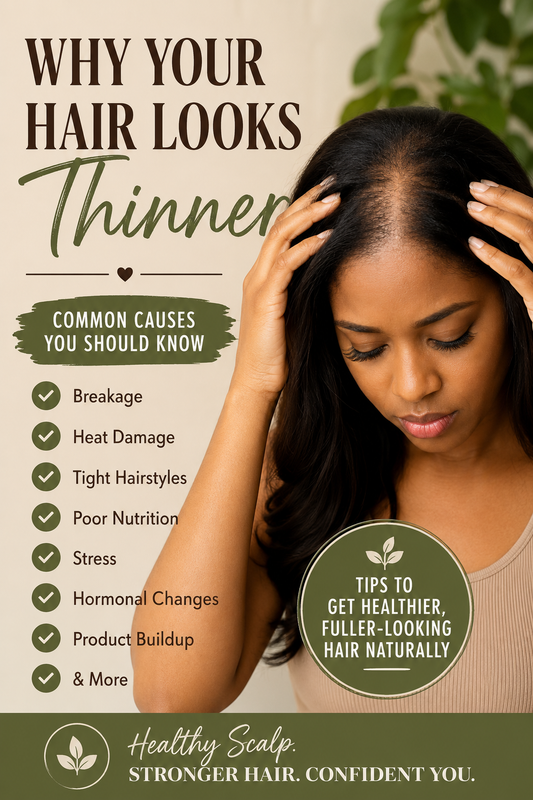
Have you noticed your ponytail feels smaller, your scalp is becoming more visible, or your hair simply doesn't have the volume it once had? If so, you're not alone.
Many people experience hair that appears thinner over time, even if they aren't completely losing their hair. Hair thinning can happen gradually, making it difficult to recognize until the change becomes noticeable.
The good news is that thinner-looking hair isn't always permanent. In many cases, identifying the cause and following the right hair care routine can significantly improve your hair's thickness, density, and overall health.
In this comprehensive guide, we'll explain why your hair looks thinner, what causes it, and how to naturally encourage fuller, stronger hair.
What Does Thin Hair Actually Mean?
People often confuse thin hair with fine hair, but they're very different.
Fine hair refers to the diameter of each individual strand.
Thin hair refers to the number of hairs growing on your scalp.
You can have:
- Thick fine hair
- Thick coarse hair
- Thin coarse hair
- Thin fine hair
When people say their hair looks thinner, they usually mean they have fewer hairs growing or increased scalp visibility.
Signs Your Hair Is Becoming Thinner
Some warning signs include:
- Wider part line
- More scalp showing
- Smaller ponytail
- Less volume
- Hair breaks easily
- Increased shedding
- Edges becoming sparse
- Slower hair growth
- Flat hairstyles
- Less curl definition
The earlier you recognize these signs, the easier it may be to improve hair density.
1. Natural Aging
As we age, our hair naturally changes.
Hair follicles gradually produce:
- Smaller hairs
- Shorter growth cycles
- Less pigment
- Slower growth
Many people notice these changes beginning in their 30s or 40s.
Healthy scalp care becomes even more important with age.
2. Hair Breakage
Sometimes your hair isn't actually thinning.
It's simply breaking faster than it grows.
Breakage commonly occurs from:
- Heat styling
- Tight hairstyles
- Dry hair
- Chemical treatments
- Rough detangling
- Over-brushing
Broken hair creates uneven density that mimics hair loss.
3. Excessive Heat Styling
Flat irons, curling irons, and blow dryers can weaken hair over time.
High temperatures damage the hair cuticle, making strands:
- Fragile
- Dry
- Split
- Easy to break
Repeated heat damage can make your entire hairstyle appear much thinner.
4. Tight Hairstyles
Protective styles should protect—not damage.
Styles that are too tight may cause traction alopecia.
Common culprits include:
- Tight braids
- Tight ponytails
- Tight buns
- Sew-ins
- Heavy extensions
- Tight loc retwists
Constant tension stresses the follicles and may eventually reduce hair density.
5. Product Buildup
Heavy oils, gels, and styling products can clog the scalp.
A neglected scalp may experience:
- Poor circulation
- Inflammation
- Excess flakes
- Slower follicle function
Healthy hair begins with a clean scalp.
Regular cleansing supports healthy hair growth.
6. Poor Nutrition
Hair requires nutrients to grow.
A diet lacking protein, vitamins, and minerals can lead to thinner hair.
Important nutrients include:
- Protein
- Iron
- Zinc
- Vitamin D
- Vitamin C
- Omega-3 fatty acids
- Biotin
- B vitamins
Your hair is often one of the first places your body shows nutritional deficiencies.
7. Stress
Physical and emotional stress can push hair follicles into the resting phase.
Several months later, increased shedding may occur.
Common stress triggers include:
- Illness
- Surgery
- Divorce
- Job changes
- Lack of sleep
- Financial stress
Managing stress supports healthier hair growth.
8. Hormonal Changes
Hormones play a major role in hair growth.
Hair may appear thinner during:
- Pregnancy
- Postpartum recovery
- Menopause
- Thyroid disorders
- Hormonal imbalances
These changes affect the growth cycle of hair follicles.
9. Overwashing
Washing too frequently with harsh shampoos may strip away natural oils.
Without adequate moisture, hair becomes:
- Brittle
- Dry
- Frizzy
- Prone to breakage
Balance is key.
Clean hair is healthy—but overly stripped hair becomes fragile.
10. Underwashing
On the other hand, waiting too long between washes can also cause problems.
Excess buildup can:
- Block follicles
- Cause itching
- Increase dandruff
- Slow healthy scalp function
Finding the right wash schedule for your hair type is essential.
11. Chemical Damage
Relaxers, bleach, perms, and excessive coloring weaken the hair shaft.
Repeated chemical exposure often causes:
- Breakage
- Split ends
- Dryness
- Reduced elasticity
Hair may look significantly thinner simply because damaged strands continue breaking.
12. Seasonal Shedding
Many people naturally shed slightly more hair during late summer and fall.
This temporary increase in shedding usually resolves on its own.
Maintaining healthy scalp habits during seasonal changes can minimize noticeable thinning.
13. Hard Water
Minerals found in hard water can coat the hair shaft.
This buildup leaves hair looking:
- Flat
- Dry
- Lifeless
- Less voluminous
Using a clarifying shampoo occasionally may help remove mineral deposits.
14. Poor Scalp Circulation
Healthy follicles require nutrients and oxygen delivered through blood circulation.
Improving circulation may support healthier hair.
Simple methods include:
- Gentle scalp massage
- Regular cleansing
- Light exercise
- Scalp oils
- Avoiding excessive buildup
15. Genetics
Sometimes thinning hair simply runs in families.
Genetic hair thinning often develops gradually over many years.
Although genetics cannot be changed, healthy hair care can help maximize the growth potential of existing follicles.
Daily Habits That Make Hair Look Fuller
Small daily improvements can make a noticeable difference.
Focus on:
- Staying hydrated
- Eating enough protein
- Moisturizing regularly
- Protecting hair at night
- Sleeping on satin pillowcases
- Avoiding excessive heat
- Reducing tight styles
- Massaging your scalp
- Trimming split ends
- Limiting harsh chemicals
Consistency produces better results than occasional treatments.
The Best Hair Care Routine for Fuller Hair
Step 1: Cleanse
Wash the scalp regularly using a gentle shampoo.
A clean scalp creates a better environment for healthy hair growth.
Step 2: Condition
Condition every wash day.
Conditioners restore moisture and reduce breakage.
Step 3: Moisturize
Hydrated hair remains flexible and resists breakage.
Moisturize based on your hair's needs, especially if you have textured, curly, coily, or loc'd hair.
Step 4: Seal Moisture
Use lightweight natural oils to help lock moisture into the hair shaft.
Step 5: Protect
Protective styles should reduce manipulation without creating excessive tension.
Loose, comfortable styles are ideal.
Step 6: Massage the Scalp
A few minutes of gentle scalp massage each day may help support healthy circulation and create a relaxing self-care routine.
Hair Care Tips for Natural Hair
Natural curls require extra moisture because natural oils travel more slowly down curly strands.
For healthier-looking natural hair:
- Deep condition regularly
- Avoid excessive manipulation
- Moisturize consistently
- Finger detangle when possible
- Sleep with satin protection
- Keep the scalp clean
Healthy curls naturally appear fuller.
Hair Care Tips for Locs
Healthy locs begin with a healthy scalp.
Avoid:
- Excessively tight retwists
- Heavy product buildup
- Dry scalp
- Over-retwisting
Instead:
- Moisturize locs regularly
- Cleanse consistently
- Protect while sleeping
- Massage the scalp
- Stay hydrated
Hair Care Tips for Braids
Braids should never cause pain.
To protect your natural hair:
- Keep the scalp moisturized
- Avoid heavy extensions
- Don't wear braids too long
- Wash the scalp carefully
- Remove styles if excessive tension develops
Healthy hair underneath leads to fuller hair after braid removal.
Foods That Support Healthy Hair
A balanced diet supports strong hair growth.
Include foods such as:
- Eggs
- Salmon
- Spinach
- Sweet potatoes
- Avocados
- Greek yogurt
- Beans
- Nuts
- Seeds
- Lean poultry
These provide protein, healthy fats, vitamins, and minerals that support healthy hair.
Common Myths About Thin Hair
Myth: Cutting hair makes it thicker.
False.
Haircuts improve appearance but do not increase the number of follicles.
Myth: Oiling your hair overnight guarantees growth.
Not necessarily.
Scalp oils can help reduce dryness and improve hair care, but they cannot guarantee faster growth.
Myth: Washing causes hair loss.
False.
Washing removes hairs that have already completed their natural growth cycle.
Myth: Brushing 100 strokes daily improves thickness.
False.
Excessive brushing may increase breakage.
Frequently Asked Questions
Can thin hair become thick again?
It depends on the cause. Hair affected by breakage, poor nutrition, stress, or improper care often improves with consistent healthy habits. Hair thinning caused by certain medical conditions or genetics may require evaluation by a healthcare professional.
How long does it take to notice fuller-looking hair?
Hair grows slowly—about half an inch (1.25 cm) per month on average. Many people notice healthier-looking hair after several months of consistent care.
Does stress really make hair thinner?
Yes. Significant physical or emotional stress can increase shedding a few months after the stressful event.
Should I oil my scalp every day?
Not necessarily. Over-oiling may contribute to buildup. Choose a routine that keeps your scalp comfortable and clean.
When should I see a doctor?
Consult a healthcare professional if you experience sudden, severe, or patchy hair loss, scalp pain, scarring, or persistent shedding that doesn't improve.
Final Thoughts
If your hair looks thinner than it used to, don't panic. Hair appearance can change for many reasons, including breakage, aging, stress, nutrition, styling habits, hormonal shifts, and genetics. The encouraging news is that many causes are manageable with a consistent hair care routine focused on scalp health, moisture, gentle handling, and balanced nutrition.
Healthy hair doesn't happen overnight—but daily habits add up. By caring for your scalp, minimizing breakage, and protecting your strands, you can help your hair look fuller, stronger, and healthier over time.
For even better results, pair your routine with high-quality, natural hair care products designed to nourish the scalp and support healthier-looking hair from root to tip. Consistency is the foundation of long-term hair health.