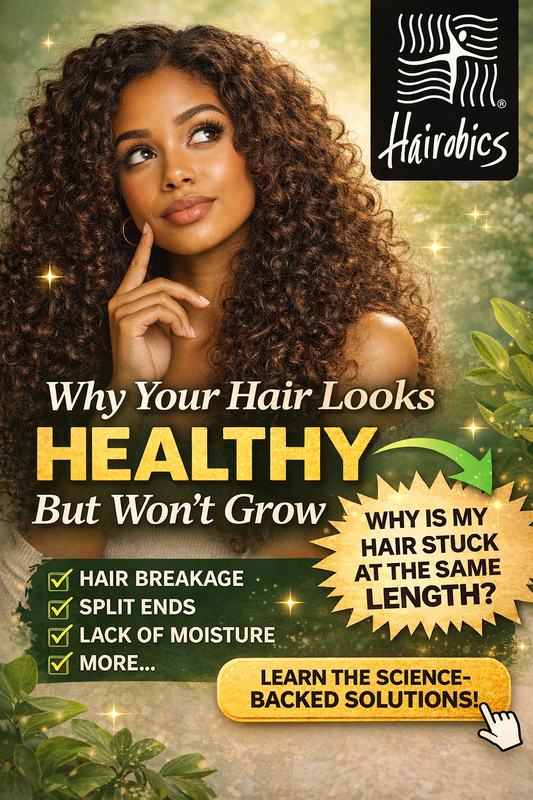
The Complete Science-Backed Guide to Hair Growth Plateaus
If you’ve ever thought “My hair looks healthy, but it just won’t grow longer,” you’re not alone. Many people—especially those with curly, coily, or natural hair—experience what feels like a hair growth plateau.
Your hair may look shiny, moisturized, and thick, yet it seems stuck at the same length for months or even years.
The reality is this:
Your hair is probably growing.
But something is preventing you from retaining the length.
This guide will explain:
-
The science of hair growth
-
Why hair can appear healthy but still fail to get longer
-
The hidden reasons natural hair stalls
-
The biggest length retention mistakes
-
Proven strategies to finally break through growth plateaus
If you're trying to grow longer natural hair, locs, braids, or curls, understanding these factors can completely change your results.
Understanding How Hair Actually Grows
Before fixing the problem, we must understand how hair growth works.
Hair grows from follicles located in the scalp, not from the hair strands themselves.
Every strand of hair goes through a repeating cycle called the hair growth cycle.
The Four Stages of Hair Growth
1. Anagen Phase (Growth Phase)
This is when hair actively grows from the follicle.
-
Lasts 2–7 years
-
Hair grows about ½ inch per month
-
Longer anagen phases = longer potential hair
The majority of hair on your head (about 85–90%) is in this phase.
2. Catagen Phase (Transition Phase)
Hair stops growing and the follicle shrinks.
-
Lasts about 2–3 weeks
-
Only about 1% of hair is here
3. Telogen Phase (Resting Phase)
Hair rests in the follicle before eventually shedding.
-
Lasts 3–4 months
-
About 10–15% of hair is in this phase
4. Exogen Phase (Shedding Phase)
Hair sheds to make room for new growth.
Normal shedding:
-
50–100 hairs per day
Why This Matters
Your hair may be growing normally, but if breakage happens at the same rate, your hair length stays the same.
This is called zero net length retention.
Example:
Hair grows: 6 inches per year
Breakage removes: 6 inches per year
Result:
Hair appears stuck at the same length.
Healthy Hair vs Growing Hair
Many people assume that healthy hair automatically grows longer, but this is not always true.
Hair can look:
-
Moisturized
-
Shiny
-
Thick
-
Defined
Yet still struggle with length retention.
This happens because hair health and hair retention are different things.
Healthy hair = good condition
Length retention = preventing breakage
Even slightly fragile hair can stop growth progress.
The 10 Biggest Reasons Hair Looks Healthy But Won’t Grow
1. Breakage at the Ends
The #1 reason hair appears stuck at a certain length is breakage.
Hair ends are the oldest part of the strand.
They have experienced:
-
Sun exposure
-
Friction
-
Heat styling
-
Manipulation
-
Weather damage
Eventually, ends weaken and break.
Signs of breakage:
-
Short pieces of hair on sink or floor
-
Uneven ends
-
Split ends
-
Hair thinning toward the bottom
Why Breakage Is Worse for Natural Hair
Curly and coily hair bends at multiple angles.
Each bend is a potential weak point where breakage can occur.
This makes Type 3 and Type 4 hair more fragile than straight hair.
2. Excessive Manipulation
Manipulation refers to how often hair is touched, styled, or handled.
Common manipulation habits include:
-
Constant combing
-
Frequent detangling
-
Tight hairstyles
-
Daily styling
Every time hair is manipulated, it experiences mechanical stress.
Over time this leads to:
-
Micro-damage
-
Strand weakening
-
Breakage
3. Dry Hair
Moisture is essential for hair elasticity.
Dry hair becomes:
-
brittle
-
stiff
-
prone to snapping
Natural hair struggles with dryness because scalp oils have difficulty traveling down curly strands.
Without moisture, even healthy-looking hair eventually breaks before gaining length.
4. Protective Styles Done Incorrectly
Protective styles can help retain length—but only if done correctly.
Common mistakes include:
-
Braids that are too tight
-
Styles kept too long
-
Lack of scalp care
-
Hair not moisturized during styling
Protective styles that cause tension can lead to:
-
Breakage
-
Thinning edges
-
Hair loss
5. Split Ends
Split ends are one of the biggest hidden causes of growth stagnation.
Once a strand splits, the damage travels upward.
This leads to:
-
thinning hair
-
fragile ends
-
breakage
Regular trims stop splits before they worsen.
6. Hair Growth Plateaus
Many people experience natural growth plateaus.
Hair tends to stall at certain lengths:
-
Shoulder length
-
Bra strap length
-
Mid-back length
These plateaus happen when damage equals growth.
Breaking through them requires improving length retention strategies.
7. Scalp Health Problems
Hair grows from the scalp.
If the scalp environment is unhealthy, growth slows.
Common scalp issues include:
-
buildup
-
clogged follicles
-
inflammation
-
dandruff
-
poor circulation
Healthy follicles produce stronger hair strands.
8. Overwashing or Underwashing
Both extremes hurt hair growth.
Overwashing:
-
strips natural oils
-
causes dryness
Underwashing:
-
creates buildup
-
clogs follicles
The ideal washing frequency varies but most natural hair thrives with weekly cleansing.
9. Heat Damage
Frequent heat styling weakens the hair protein structure.
Repeated heat use leads to:
-
dryness
-
split ends
-
fragile strands
Over time this leads to major length loss.
10. Genetics
Genetics determines your maximum hair length potential.
Some people have:
-
longer anagen phases
-
faster growth rates
However, most people never reach their full potential because breakage prevents it.
Why Natural Hair Often Gets “Stuck” at Shoulder Length
Shoulder length is a common plateau for natural hair.
Why?
Hair begins rubbing against:
-
clothing
-
shoulders
-
collars
This creates constant friction.
Friction causes:
-
tangling
-
dryness
-
breakage
Without proper protection, hair breaks as fast as it grows.
The Science of Length Retention
Hair growth is about two key factors:
-
Growth rate
-
Length retention
Growth rate is largely genetic.
Retention is fully controllable.
People who grow long natural hair master:
-
moisture balance
-
gentle styling
-
protective routines
-
scalp health
The Role of Moisture in Hair Growth
Moisture keeps hair flexible.
Flexible hair resists breakage.
The best approach for natural hair is layered moisture.
A common method is the LOC method.
LOC Method
L = Liquid (water-based moisturizer)
O = Oil (seal moisture)
C = Cream (lock hydration)
This combination helps maintain moisture longer.
The Importance of Scalp Circulation
Healthy follicles require:
-
oxygen
-
nutrients
-
blood flow
Scalp massage increases circulation.
Benefits include:
-
improved follicle stimulation
-
nutrient delivery
-
healthier hair growth environment
Massaging the scalp for 3–5 minutes daily can improve hair health.
Diet and Hair Growth
Hair is made primarily of keratin protein.
Without proper nutrition, hair weakens.
Important nutrients include:
Protein
Hair structure.
Iron
Prevents hair thinning.
Biotin
Supports keratin production.
Omega-3 Fatty Acids
Improve scalp health.
Vitamin D
Supports follicle function.
The Truth About Hair Growth Oils
Many oils claim to grow hair faster.
In reality, oils do not increase growth speed dramatically.
What oils do:
-
reduce breakage
-
seal moisture
-
improve scalp environment
This indirectly helps hair grow longer.
The Role of Low Manipulation Styles
Low manipulation styles protect hair from damage.
Examples include:
-
twists
-
braids
-
buns
-
wigs
-
locs
These styles reduce daily handling.
Less manipulation means less breakage.
Nighttime Hair Protection
Night care is critical for length retention.
Cotton pillowcases absorb moisture and create friction.
Better alternatives:
-
satin bonnets
-
silk scarves
-
satin pillowcases
These protect hair while sleeping.
How Often Should You Trim Hair?
Many people avoid trims thinking it stops growth.
The opposite is true.
Regular trims prevent split ends from spreading.
Most hair benefits from trims every:
8–12 weeks
Signs Your Hair Is Actually Growing
Sometimes hair is growing, but it’s hard to notice.
Signs include:
-
thicker roots
-
increased density
-
new growth near scalp
-
shrinkage hiding length
Curly hair shrinks significantly.
For example:
10 inches of curly hair may appear only 4–5 inches long.
The Truth About Shrinkage
Shrinkage is a sign of healthy elasticity.
Type 4 hair can shrink up to 75%.
This can make hair seem shorter than it really is.
Stretching methods like:
-
twist outs
-
braid outs
-
banding
can reveal hidden length.
How to Break Through a Hair Growth Plateau
If your hair seems stuck, focus on these strategies.
Reduce Breakage
-
detangle gently
-
avoid tight styles
-
minimize heat
Moisturize Consistently
Hydrated hair is stronger and more flexible.
Protect Ends
Ends are the oldest and weakest part of hair.
Protect them using:
-
buns
-
twists
-
braids
Improve Scalp Health
Healthy follicles produce stronger hair.
Use Gentle Hair Tools
Avoid rough brushes or tight elastics.
A Sample Hair Growth Routine
Weekly
-
Wash hair
-
Deep condition
-
Moisturize
-
Protective style
Daily
-
light moisture
-
scalp massage
-
low manipulation
Monthly
-
check ends
-
trim if necessary
The Biggest Hair Growth Myths
Myth 1: Hair Stops Growing
Hair rarely stops growing completely.
It usually breaks before length shows.
Myth 2: Oils Make Hair Grow Faster
Oils help retention, not growth speed.
Myth 3: Trims Prevent Growth
Trims prevent damage that causes breakage.
Myth 4: Protective Styles Always Help
Poorly done styles cause more damage.
Long Hair Is Mostly About Retention
People with long natural hair don’t necessarily grow hair faster.
They simply retain more of what grows.
Hair grows around:
6 inches per year
Over 5 years that equals 30 inches.
But only if breakage is controlled.
Final Thoughts
If your hair looks healthy but refuses to grow longer, the problem is rarely growth itself.
The real issue is usually length retention.
Once you reduce breakage, improve scalp health, and maintain moisture, your hair can finally show its true length potential.
Hair growth is a long-term process, but with the right habits, plateaus can be broken.
Consistency, patience, and proper care make the biggest difference.