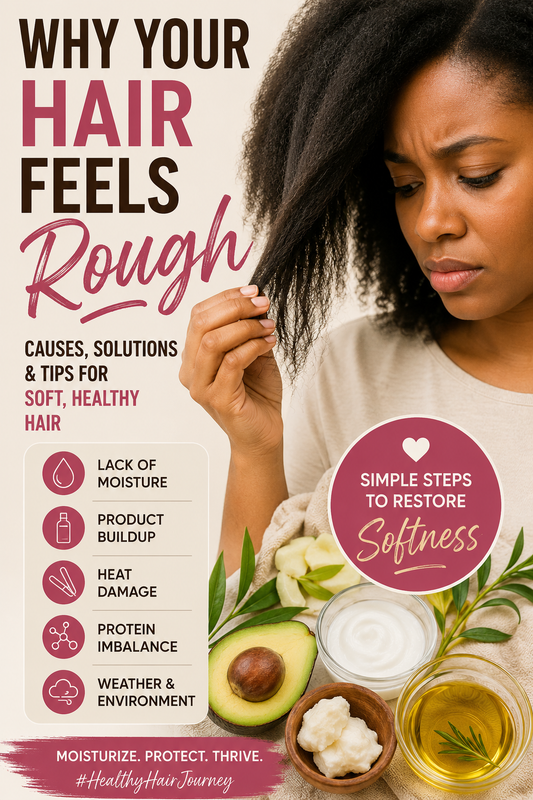
Have you ever run your fingers through your hair only to notice that it feels rough instead of soft and smooth? Whether your hair is natural, relaxed, curly, braided, loc'd, or color-treated, rough hair is one of the most common complaints among people trying to grow healthier hair.
Hair that feels rough isn't just a cosmetic issue. It's often your hair's way of telling you that something is missing. In many cases, roughness is caused by dryness, damaged cuticles, protein imbalance, heat styling, environmental stress, or poor hair care habits.
The good news is that rough hair can often be improved without cutting it all off. Once you understand what's causing the problem, you can create a routine that restores moisture, improves elasticity, and leaves your hair noticeably softer over time.
In this guide, you'll learn exactly why your hair feels rough, what causes it, how to fix it naturally, and how to prevent it from happening again.
What Does Rough Hair Feel Like?
Healthy hair should feel smooth when you slide your fingers from your roots to your ends. Rough hair often feels:
- Dry and coarse
- Brittle when touched
- Hard to comb through
- Tangled easily
- Frizzy
- Dull instead of shiny
- Stiff after washing
- Crunchy after products dry
You may notice roughness only on your ends or throughout your entire head.
Understanding the Hair Cuticle
Every strand of hair is protected by tiny overlapping layers called the cuticle.
Think of the cuticle like shingles on a roof.
When the cuticle lies flat:
- Hair feels smooth.
- Moisture stays inside.
- Hair reflects light.
- Hair is easier to detangle.
- Breakage is reduced.
When the cuticle becomes lifted or damaged:
- Moisture escapes.
- Hair becomes rough.
- Hair tangles more.
- Ends split faster.
- Breakage increases.
Most causes of rough hair involve damage to this protective outer layer.
1. Your Hair Needs More Moisture
The number one reason hair feels rough is simple:
It's dry.
Dry hair lacks the moisture needed to remain flexible and smooth.
Without enough water inside the hair shaft, strands become stiff and rough.
Signs include:
- Hair feels dry after one day.
- Ends snap easily.
- Frizz increases.
- Hair loses shine.
Adding moisture consistently—not just occasionally—is one of the fastest ways to improve hair texture.
2. Product Buildup
Hair products don't completely disappear after styling.
Over time, oils, creams, gels, sprays, and leave-in conditioners can build up on the hair shaft.
Instead of making hair softer, buildup often causes hair to feel:
- Waxy
- Sticky
- Rough
- Heavy
- Lifeless
Even moisturizing products can create buildup if they're never fully removed.
3. Hard Water Damage
Many people don't realize their water affects their hair.
Hard water contains minerals like calcium and magnesium that cling to hair strands.
Over time these minerals create a coating that prevents moisture from entering the hair.
Common symptoms include:
- Hair feels rough after washing.
- Shampoo doesn't lather well.
- Hair appears dull.
- Conditioner seems ineffective.
A clarifying shampoo or chelating treatment every few weeks can help remove mineral deposits.
4. Heat Damage
Flat irons, curling irons, hot combs, and blow dryers remove moisture every time they're used.
Repeated heat exposure slowly weakens the cuticle.
Eventually hair begins feeling:
- Straw-like
- Rough
- Dry
- Fragile
- Thin
Using high temperatures every week significantly increases the risk of permanent cuticle damage.
5. Overwashing
Shampoo removes dirt and oil.
But washing too often can strip away the scalp's natural protective oils before they have a chance to nourish the hair.
Without those oils:
- Hair becomes rough.
- Moisture escapes quickly.
- Frizz increases.
- Ends dry out faster.
Many people with textured hair benefit from washing less frequently while keeping the scalp clean.
6. Protein Overload
Protein treatments strengthen damaged hair.
However, too much protein can make hair stiff instead of soft.
Signs of protein overload include:
- Hair feels hard.
- Hair snaps instead of stretches.
- Rough texture.
- Loss of flexibility.
- Increased breakage.
Healthy hair needs both protein and moisture.
Too much of either can create problems.
7. Split Ends
Split ends don't stay at the bottom forever.
Once an end splits, the damage gradually travels upward.
This creates:
- Rough tips
- Tangles
- Snags
- Frizz
- Breakage
Regular trims help prevent split ends from spreading.
8. Weather Damage
Your environment constantly affects your hair.
Winter often causes:
- Dryness
- Static
- Rough texture
Summer may lead to:
- UV damage
- Sweat buildup
- Salt water exposure
- Chlorine damage
Wind also lifts the cuticle, increasing tangles and roughness.
Protective hairstyles and satin scarves can reduce environmental damage.
9. Chemical Processing
Hair coloring, bleaching, relaxing, and texturizing all alter the hair structure.
Although these treatments can create beautiful styles, they also weaken the cuticle.
Processed hair usually requires:
- More moisture
- More conditioning
- Less heat
- Gentler detangling
Without proper care, chemically treated hair often becomes rough faster than virgin hair.
10. Sleeping Without Protection
Cotton pillowcases absorb moisture from hair every night.
They also create friction.
That friction roughens the cuticle while increasing tangles.
Sleeping on satin or silk helps preserve moisture while reducing breakage and frizz.
11. Using the Wrong Shampoo
Not every shampoo works for every hair type.
Some shampoos contain harsh cleansing ingredients that remove too much natural oil.
If your hair feels rough immediately after shampooing, your cleanser may be too strong.
Look for moisturizing shampoos that cleanse without leaving hair stripped.
12. Lack of Deep Conditioning
Regular conditioner works on the surface.
Deep conditioners penetrate more deeply and provide lasting hydration.
Skipping deep conditioning for weeks or months often leads to:
- Roughness
- Dry ends
- Increased tangles
- Loss of elasticity
A weekly deep conditioning session can dramatically improve softness over time.
13. You're Not Sealing Moisture Into Your Hair
One of the biggest misconceptions in hair care is that applying oil moisturizes your hair.
In reality, water is moisture. Oils primarily help seal moisture in and reduce water loss.
If you only apply oil to dry hair, your strands may still feel rough because there wasn't enough moisture to begin with.
A better routine is:
- Start with freshly washed or lightly damp hair.
- Apply a water-based leave-in conditioner or moisturizing spray.
- Seal with a lightweight oil or butter.
- Style as desired.
This layering method helps your hair stay softer for longer.
14. Your Hair Has High Porosity
Hair porosity describes how easily your hair absorbs and loses moisture.
High-porosity hair often has raised cuticles, meaning it:
- Absorbs water quickly
- Dries very fast
- Feels rough after a day or two
- Frizzes easily
- Breaks more often
Signs of high-porosity hair include:
- Products disappear quickly.
- Hair dries within minutes.
- Hair tangles frequently.
- Ends always feel dry.
High-porosity hair benefits from:
- Deep conditioning weekly
- Protein treatments occasionally
- Moisturizing regularly
- Sealing moisture after every wash
15. Low Porosity Hair Can Feel Rough Too
Low-porosity hair has tightly closed cuticles.
While it holds moisture well once hydrated, it can be difficult for water and conditioners to penetrate.
This often causes:
- Product sitting on top of hair
- Heavy buildup
- Hair feeling rough despite using products
- Difficulty absorbing conditioners
Using warm water, steam, or heat during deep conditioning can help products penetrate more effectively.
16. Friction Is Damaging Your Hair
Hair experiences friction throughout the day.
Common sources include:
- Hoodies
- Jackets
- Car headrests
- Hats
- Tight ponytails
- Rough towels
- Cotton pillowcases
Repeated friction slowly lifts the cuticle, causing the hair to feel rough over time.
Instead:
- Use microfiber towels.
- Sleep on satin or silk.
- Wear satin-lined hats.
- Avoid rough fabrics rubbing against your hair.
17. Poor Nutrition
Healthy hair starts inside your body.
A diet lacking essential nutrients can affect the quality of new hair growth.
Hair benefits from:
- Protein
- Iron
- Zinc
- Vitamin D
- Omega-3 fatty acids
- Biotin (when deficient)
- Vitamins A, C, and E
Eating a balanced diet supports stronger, healthier strands that are less likely to feel coarse or brittle.
18. Not Drinking Enough Water
Hydration matters for overall health, including your scalp and hair.
While drinking more water won't instantly transform dry hair, chronic dehydration can contribute to a dry scalp and make it harder for your body to support healthy hair growth.
Pair good hydration with a consistent moisturizing routine for the best results.
How to Make Rough Hair Soft Again
Restoring softness doesn't happen overnight, but consistency makes a big difference.
Wash With a Gentle Shampoo
Choose a sulfate-free or moisturizing shampoo that cleanses without stripping your natural oils.
Avoid washing more often than your hair type requires.
Deep Condition Every Week
A weekly deep-conditioning treatment replenishes moisture and improves manageability.
Focus on:
- Mid-lengths
- Ends
- Areas prone to dryness
Leave the treatment on according to the product directions, and consider using gentle heat for better penetration.
Moisturize Regularly
Between wash days, refresh your hair with a water-based moisturizer or leave-in conditioner.
Seal that moisture with a light oil or butter if your hair benefits from it.
Reduce Heat Styling
Limit flat irons, curling irons, and blow dryers.
When you do use heat:
- Apply a heat protectant.
- Use the lowest effective temperature.
- Avoid repeated passes over the same section.
Trim Damaged Ends
Split ends cannot be permanently repaired.
Regular trims help prevent splits from traveling up the hair shaft and keep hair feeling smoother.
Clarify Occasionally
If your hair suddenly feels rough even after conditioning, product buildup may be the cause.
Use a clarifying shampoo every few weeks—or as needed—to remove residue and allow moisture to penetrate more effectively.
Hair Care Routine for Soft, Healthy Hair
Step 1: Cleanse
Wash your scalp thoroughly to remove dirt, oil, sweat, and buildup.
Healthy hair starts with a clean scalp.
Step 2: Condition
Apply conditioner generously, paying extra attention to the mid-lengths and ends.
Use a wide-tooth comb to gently detangle while the conditioner is in your hair.
Step 3: Deep Condition
Once a week, replace your regular conditioner with a deep-conditioning treatment to restore moisture and elasticity.
Step 4: Leave-In Moisture
After rinsing, apply a leave-in conditioner to damp hair to lock in hydration.
Step 5: Seal
If your hair tends to lose moisture quickly, seal it with a lightweight oil or butter.
Step 6: Protect
Protect your hair while sleeping with:
- A satin bonnet
- A satin scarf
- A satin pillowcase
Reducing friction helps maintain softness and minimizes breakage.
Common Mistakes That Keep Hair Rough
Avoid these habits if you're trying to improve hair texture:
- Using excessive heat
- Skipping deep conditioning
- Detangling dry hair
- Using harsh shampoos too often
- Ignoring split ends
- Sleeping on cotton pillowcases
- Applying oil without first moisturizing
- Letting product buildup accumulate
- Brushing aggressively
- Wearing tight hairstyles constantly
Small changes in your routine can lead to noticeable improvements over time.
Frequently Asked Questions
Why does my hair feel rough even after conditioning?
Possible reasons include product buildup, hard water, protein overload, heat damage, or a conditioner that isn't well suited to your hair type.
Can rough hair become soft again?
In many cases, yes. While severely damaged hair can't be fully repaired, consistent moisturizing, conditioning, gentle handling, and trimming damaged ends can greatly improve softness and manageability.
Is rough hair always damaged?
Not necessarily. Roughness can result from temporary dryness, mineral buildup, or environmental factors. Persistent roughness may indicate cuticle damage that requires extra care.
Why do my ends feel rough?
The ends of your hair are the oldest and most exposed to wear and tear. They naturally lose moisture faster and are more prone to split ends and breakage.
Does oil make rough hair softer?
Oil helps reduce moisture loss and can make hair feel smoother, but it works best when applied after a water-based moisturizer or leave-in conditioner.
Final Thoughts
If your hair feels rough, don't assume it's beyond repair. In many cases, roughness is a sign that your hair needs better moisture balance, gentler care, or a change in routine—not necessarily a dramatic haircut.
Focus on keeping your scalp clean, moisturizing consistently, deep conditioning weekly, minimizing heat, and protecting your hair from friction and environmental stress. Over time, these habits can help restore softness, improve manageability, and reduce breakage.
Healthy hair is built through consistency. By listening to what your hair is telling you and adjusting your routine accordingly, you can enjoy strands that feel smoother, look shinier, and stay stronger from root to tip.