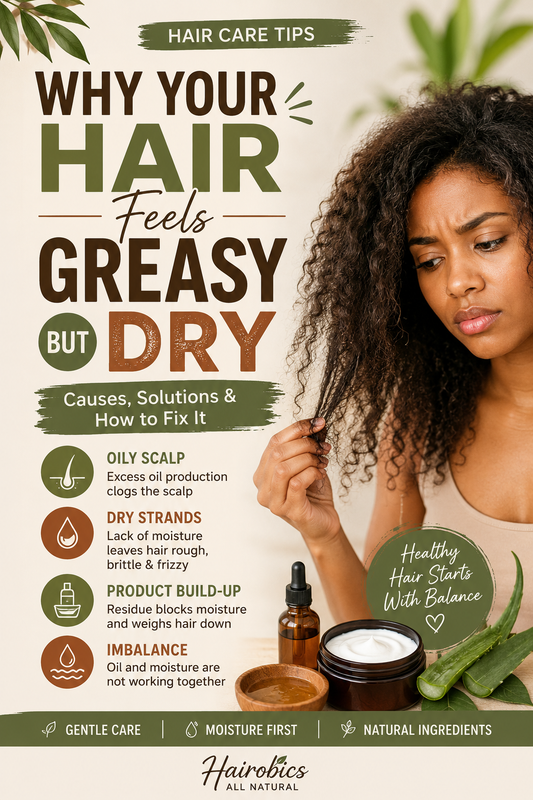
One of the most confusing hair problems is when your hair feels greasy and dry at the same time. Your scalp may become oily only a day after washing, yet your strands still feel rough, brittle, frizzy, or thirsty. Many people assume they need more shampoo because of the oil, while others believe they need heavier conditioners because of the dryness. Unfortunately, both approaches can make the problem worse.
The truth is that greasy roots and dry hair often happen together. They are usually signs that your scalp and hair have become unbalanced. Your scalp may be producing excess oil while your hair shaft struggles to hold onto moisture.
Whether you have natural hair, curly hair, coily hair, locs, braids, or relaxed hair, understanding why this happens is the first step toward fixing it.
In this guide, you'll learn:
- Why hair feels greasy but dry
- The most common causes
- Mistakes that make it worse
- How to restore moisture without increasing oil
- The best routine for healthy hair
Is It Normal for Hair to Feel Oily and Dry?
Yes.
Many people experience oily roots and dry ends.
Your scalp contains sebaceous glands that naturally produce sebum, an oil designed to protect your scalp and hair. When these glands become overactive, your scalp becomes greasy.
However, your hair strands may still lose moisture because:
- The cuticle is damaged.
- Hair is porous.
- Products build up on the surface.
- Heat damage weakens the hair.
- Chemical processing strips moisture.
This creates the frustrating feeling of hair that's oily on top but dry everywhere else.
Signs Your Hair Is Greasy but Dry
You may notice:
- Hair looks shiny but feels rough
- Oily scalp within 24 hours
- Dry, crunchy ends
- Frizz despite using oils
- Hair feels coated
- Tangles easily
- Split ends
- Breakage
- Flat roots
- Puffy ends
Many people mistake oil for moisture.
Oil adds lubrication.
Moisture comes from water.
Hair can have plenty of oil but still be dehydrated.
Why Your Hair Feels Greasy but Dry
1. Product Build-Up
One of the biggest causes is product buildup.
Hair products contain:
- Silicones
- Heavy oils
- Waxes
- Butters
- Polymers
Over time these ingredients coat the hair.
This coating makes hair appear shiny and greasy while actually preventing water from entering the hair shaft.
As a result:
- Hair feels dry
- Conditioner doesn't work well
- Moisture can't penetrate
- Hair feels sticky
Signs of buildup
- Hair feels waxy
- Products sit on top
- Water beads off hair
- Shampoo doesn't lather well
- Hair feels heavy
2. Overwashing
Many people wash more frequently when hair feels greasy.
Ironically, this often increases oil production.
Strong shampoos strip away natural oils.
Your scalp responds by producing even more oil.
Meanwhile the hair shaft loses moisture.
Eventually you end up with:
- Oilier scalp
- Drier hair
- More frizz
- More breakage
3. Damaged Hair Cuticles
Healthy hair has tightly sealed cuticles.
When damaged by:
- Heat
- Bleach
- Coloring
- Relaxers
- Sun exposure
the cuticles lift.
Raised cuticles allow moisture to escape quickly.
Even though your scalp continues producing oil, your strands stay dry.
4. High-Porosity Hair
High-porosity hair absorbs moisture quickly.
Unfortunately, it loses moisture just as fast.
This means:
- Hair dries rapidly
- Ends feel rough
- Hair constantly feels thirsty
- Products seem to stop working
Your scalp can still become oily while the strands remain dry.
5. Using Too Much Oil
Many people apply more oils when hair feels dry.
But oil isn't the same as hydration.
Hair first needs water.
Then oil helps slow moisture loss.
Adding layer after layer of oil without moisture creates greasy buildup while the inside of the hair remains dry.
6. Hard Water
Minerals found in hard water can build up on hair.
These minerals block moisture absorption.
Hair becomes:
- Dull
- Dry
- Rough
- Heavy
- Greasy-looking
Many people don't realize the water itself is contributing to the problem.
7. Heat Damage
Flat irons, curling irons, and blow dryers weaken the hair cuticle.
Once damaged, hair cannot retain moisture effectively.
The scalp still produces oil, but damaged strands continue feeling dry.
Signs include:
- Rough texture
- Split ends
- Frizz
- Breakage
- Lack of elasticity
8. Curly and Coily Hair
Natural curls often experience oily scalp with dry lengths.
Sebum has difficulty traveling down twists and curls.
As a result:
- Roots become oily.
- Mid-lengths stay dry.
- Ends become brittle.
This is completely normal for many people with textured hair.
Why Oils Alone Don't Fix Dry Hair
This is one of the biggest misconceptions in hair care.
Oil is not moisture.
Think of your hair like a sponge.
A dry sponge coated in cooking oil is still dry.
Hair works similarly.
First:
- Add water.
Then:
- Seal with lightweight oils or moisturizing products.
Without hydration, oils simply coat the outside.
The Difference Between Dry Hair and Dehydrated Hair
Many people use these terms interchangeably.
They aren't exactly the same.
Dry Hair
Dry hair lacks natural oils.
It often feels:
- Brittle
- Coarse
- Dull
Dehydrated Hair
Dehydrated hair lacks water.
It may feel:
- Rough
- Puffy
- Frizzy
- Difficult to style
Hair can actually be oily and dehydrated simultaneously.
Hair Care Mistakes That Make the Problem Worse
Washing With Harsh Shampoos
Strong detergents remove too much oil.
Your scalp produces even more.
Applying Heavy Oils Every Day
Too much oil creates buildup.
Moisture still cannot enter.
Skipping Clarifying Washes
Without occasional clarifying:
- Silicone builds up
- Oils accumulate
- Conditioners stop working
Using Too Much Dry Shampoo
Dry shampoo absorbs oil temporarily.
But repeated use leaves residue that blocks moisture.
Sleeping Without Protection
Cotton pillowcases absorb moisture from hair.
Consider using a satin bonnet or satin pillowcase to help reduce friction and moisture loss overnight.
How to Fix Hair That Feels Greasy but Dry
The good news is that this problem is usually reversible. The goal is to rebalance your scalp while helping your hair retain moisture. Instead of focusing only on removing oil or adding more products, follow a routine that addresses both the scalp and the hair shaft.
Step 1: Clarify Your Hair
If your hair feels greasy even after washing, product buildup may be preventing your shampoo from cleaning effectively.
A clarifying shampoo removes:
- Excess oils
- Silicone buildup
- Heavy butters
- Mineral deposits
- Styling product residue
Most people only need to clarify every 3–4 weeks. If you regularly use heavy styling products or oils, clarifying every 2–3 weeks may be helpful.
Avoid clarifying too often, as it can strip natural oils and trigger even more oil production.
Step 2: Use a Moisturizing Shampoo
After clarifying, return to a gentle, sulfate-free moisturizing shampoo.
Look for ingredients such as:
- Aloe vera
- Glycerin
- Coconut-derived cleansers
- Marshmallow root
- Slippery elm
- Panthenol
A gentle shampoo cleans the scalp without removing all of its protective oils.
Step 3: Condition the Right Way
Many people either don't use enough conditioner or apply it incorrectly.
Conditioner belongs on:
- Mid-lengths
- Ends
Avoid applying heavy conditioner directly to your scalp unless the product is specifically designed for scalp hydration.
Let conditioner sit for 3–5 minutes before rinsing so it has time to soften the cuticle.
Step 4: Deep Condition Weekly
Deep conditioning is essential for restoring moisture.
A quality deep conditioner helps:
- Reduce breakage
- Improve elasticity
- Smooth the cuticle
- Increase softness
- Improve shine
Weekly treatments are especially beneficial for:
- Natural hair
- Curly hair
- Coily hair
- Color-treated hair
- Relaxed hair
- Heat-damaged hair
Step 5: Moisturize Before Oiling
One of the biggest mistakes people make is applying oil to dry hair.
Instead, use this order:
- Water or water-based leave-in conditioner
- Moisturizer or leave-in
- Lightweight oil to seal
This method helps lock hydration into the hair instead of trapping dryness underneath a layer of oil.
Step 6: Reduce Heat Styling
Frequent heat styling weakens the hair cuticle, allowing moisture to escape.
If you use:
- Flat irons
- Curling irons
- Blow dryers
Always apply a heat protectant and keep temperatures as low as possible.
Limiting heat styling can dramatically improve moisture retention over time.
Step 7: Trim Damaged Ends
Split ends cannot be repaired permanently.
Damaged ends:
- Lose moisture faster
- Tangle easily
- Travel upward if left untreated
Regular trims every 8–12 weeks help keep your hair healthier and reduce breakage.
Step 8: Sleep With Hair Protected
Nighttime friction contributes to dryness.
Protect your hair by using:
- Satin bonnet
- Silk scarf
- Satin pillowcase
These reduce friction, help retain moisture, and minimize breakage while you sleep.
Ingredients That Can Make Hair Feel Greasy but Dry
Some products contain ingredients that coat the hair without truly moisturizing it.
Common culprits include:
- Heavy mineral oil
- Petrolatum
- Thick waxes
- Excessive silicones
- Heavy synthetic polymers
These ingredients are not always harmful, but when they build up over time, they can block moisture from reaching the hair shaft.
Ingredients That Help Restore Moisture
Instead of relying only on oils, choose products that contain moisturizing ingredients.
Beneficial ingredients include:
- Aloe vera
- Vegetable glycerin
- Panthenol (Vitamin B5)
- Honey
- Marshmallow root
- Slippery elm
- Coconut water
- Hydrolyzed proteins (used occasionally)
- Jojoba oil
- Argan oil
These ingredients support hydration while helping improve softness and manageability.
Hair Care Routine for Greasy Roots and Dry Ends
Wash Day
- Clarify when needed (every few weeks)
- Use a gentle moisturizing shampoo
- Apply conditioner to the mid-lengths and ends
- Rinse thoroughly
After Washing
- Apply a water-based leave-in conditioner
- Seal with a lightweight oil
- Allow hair to air dry when possible
During the Week
- Mist hair lightly with water if it feels dry
- Reapply leave-in conditioner as needed
- Avoid layering heavy oils daily
- Massage the scalp gently to distribute natural oils
Why Natural Hair Often Experiences This Problem
Natural hair textures are especially prone to greasy roots and dry ends because the scalp's natural oil has difficulty traveling along curls and coils.
The tighter the curl pattern, the harder it is for sebum to reach the ends.
This means:
- The scalp may feel oily.
- The mid-lengths may feel dry.
- The ends often become the driest part of the hair.
Consistent moisturizing and gentle handling help minimize this imbalance.
Why Protective Styles Can Cause Greasy but Dry Hair
Braids, twists, and locs reduce daily manipulation, but they can also make it easier for oil and product to build up on the scalp.
Meanwhile, the hair inside the style may not receive enough moisture.
To prevent this:
- Cleanse the scalp regularly.
- Use lightweight moisturizing sprays.
- Avoid applying excessive grease to the scalp.
- Keep the lengths hydrated with water-based products.
Can Stress Cause Oily Scalp and Dry Hair?
Yes.
Stress can influence hormone levels, which may increase oil production in the scalp.
At the same time, stress may contribute to:
- Poor sleep
- Reduced water intake
- Nutritional deficiencies
- Increased shedding
Managing stress through exercise, adequate sleep, hydration, and balanced nutrition supports healthier hair over time.
Can Diet Affect Hair Oiliness?
Your diet plays an important role in scalp and hair health.
A balanced diet rich in:
- Lean proteins
- Healthy fats
- Fruits
- Vegetables
- Whole grains
provides nutrients needed for healthy hair growth and scalp function.
Staying hydrated also helps maintain healthy-looking hair, although drinking more water alone won't instantly correct dry hair.
Frequently Asked Questions
1. Why is my scalp oily but my hair feels dry?
This usually happens when your scalp produces excess sebum while your hair strands struggle to retain moisture. Curly, coily, and textured hair are especially prone to this because natural oils have a harder time traveling from the scalp to the ends.
2. Can oily hair still be dehydrated?
Absolutely. Oil and moisture are not the same thing. Hair can have plenty of oil on the surface while lacking water inside the hair shaft.
3. Should I wash greasy hair every day?
Not usually. Daily washing can strip your scalp of its natural oils, causing it to produce even more oil. Most people benefit from washing every 2–4 days, depending on their hair type and lifestyle.
4. Why do my ends stay dry no matter what I use?
Dry ends are often caused by:
- Split ends
- Heat damage
- High-porosity hair
- Chemical processing
- Product buildup
Regular trims and moisturizing treatments can help improve their condition.
5. Is it okay to apply oil every day?
Applying heavy oils daily can lead to buildup and make hair feel greasy without improving moisture. Instead, moisturize first with a water-based product, then seal lightly with oil if needed.
6. How often should I clarify my hair?
Most people should clarify every 3–4 weeks. If you use heavy styling products, oils, or live in an area with hard water, clarifying every 2–3 weeks may be beneficial.
7. Can hard water make hair greasy and dry?
Yes. Hard water minerals can leave deposits on the hair, making it feel rough, dull, and difficult to moisturize while also contributing to buildup.
8. Does sleeping on cotton dry out hair?
Cotton absorbs moisture and creates friction, which can contribute to dryness and breakage. Satin or silk pillowcases and bonnets help reduce moisture loss.
9. Can hormones affect oily hair?
Yes. Hormonal changes during puberty, pregnancy, menopause, or periods of stress can increase sebum production, making the scalp oilier than usual.
10. Is greasy but dry hair a sign of damage?
It can be. Heat styling, bleaching, coloring, relaxers, and environmental exposure can damage the hair cuticle, causing strands to lose moisture even when the scalp remains oily.
11. Are silicones bad for hair?
Not necessarily. Some silicones help reduce frizz and protect hair. However, frequent use without occasional clarifying can lead to buildup that blocks moisture from reaching the hair shaft.
12. Why does my hair feel greasy after I wash it?
Possible causes include:
- Shampoo not cleansing thoroughly
- Product buildup
- Over-conditioning
- Using water that isn't warm enough to remove oils
- Touching your hair frequently
13. Does brushing distribute natural oils?
Yes. Gentle brushing can help move scalp oils through straight or wavy hair. Curly and coily hair should be handled more carefully, as excessive brushing can disrupt curl patterns and increase breakage.
14. Can dehydration affect hair?
General hydration supports overall health, including healthy hair. However, external moisturizing practices are still essential because drinking water alone won't moisturize the hair shaft.
15. How long does it take to fix greasy but dry hair?
Many people notice improvements within 2–6 weeks after following a balanced routine that includes gentle cleansing, moisturizing, and reducing product buildup. Severely damaged hair may take several months to recover.
Common Myths About Greasy but Dry Hair
Myth 1: Oily Hair Doesn't Need Conditioner
Truth: Conditioner helps replenish moisture in the hair shaft. Apply it mainly to the mid-lengths and ends rather than the scalp.
Myth 2: More Oil Equals More Moisture
Truth: Oil helps seal moisture but doesn't replace it. Water-based hydration should come first.
Myth 3: Shampoo Is Damaging
Truth: A gentle shampoo removes dirt, excess oil, and buildup without harming healthy hair when used appropriately.
Myth 4: Dry Hair Means You Should Never Clarify
Truth: Clarifying occasionally removes residue that can prevent moisturizing products from working effectively.
Myth 5: Greasy Hair Means Your Hair Is Healthy
Truth: Excess oil doesn't necessarily indicate healthy hair. It's possible to have an oily scalp alongside dry, damaged strands.
Long-Term Prevention Tips
To keep your hair balanced and healthy:
- Wash consistently without over-cleansing.
- Clarify periodically to remove buildup.
- Use lightweight, water-based moisturizers.
- Seal moisture with a small amount of oil.
- Deep condition weekly.
- Minimize excessive heat styling.
- Trim damaged ends regularly.
- Protect your hair while sleeping.
- Eat a balanced diet and stay hydrated.
- Be patient—healthy hair habits produce lasting results over time.
When Should You See a Dermatologist?
If greasy but dry hair is accompanied by:
- Persistent scalp irritation
- Severe itching
- Pain
- Excessive shedding
- Bald patches
- Thick scalp scaling
- Symptoms that don't improve after several weeks of proper care
consult a dermatologist. These symptoms may indicate an underlying scalp condition that requires professional evaluation.
The Bottom Line
Hair that feels greasy but dry is a common problem, but it doesn't have to be permanent. The key is understanding that oil and moisture are different. An oily scalp doesn't automatically mean your hair is hydrated, and adding more oil isn't always the answer.
By using a balanced routine that gently cleanses the scalp, removes buildup when needed, replenishes moisture with water-based products, and seals that hydration appropriately, you can restore softness, shine, and manageability without making your hair feel weighed down.
Consistency is the secret. Healthy hair develops through regular care—not quick fixes.
Give Your Hair the Moisture It Really Needs
If your hair feels greasy at the roots but dry through the lengths, focus on restoring moisture instead of simply adding more oil.
At Hairobics All Natural, we believe healthy hair starts with a healthy scalp and a balanced routine. Our collection of natural hair care products is formulated to help nourish the scalp, support moisture retention, and keep natural hair, curls, braids, and locs looking and feeling their best.
Whether you're working to reduce dryness, improve softness, or maintain healthy hair growth, choosing gentle, moisture-focused products can make all the difference.
Healthy hair isn't about eliminating oil—it's about creating the right balance.