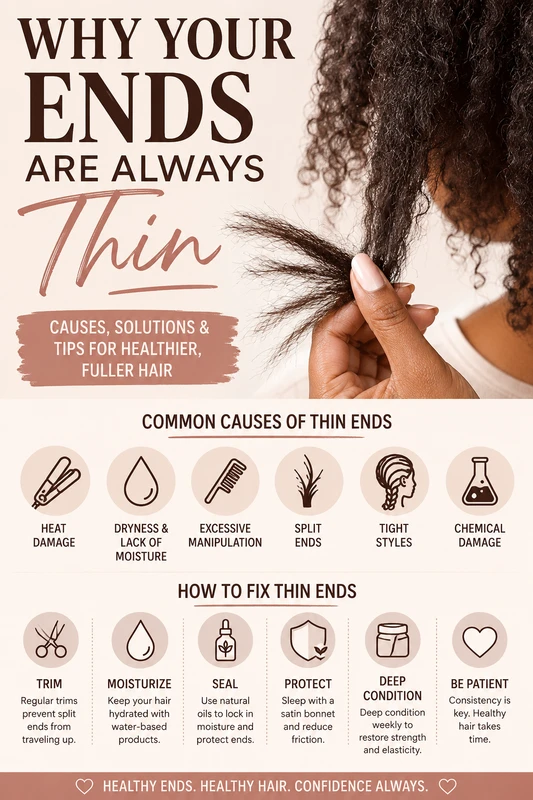
Healthy, thick hair from root to tip is the goal for many people with natural hair, curly hair, locs, braids, relaxed hair, and protective styles. But one of the most frustrating problems people deal with is thin ends. Your roots may look full, your hair may seem healthy overall, yet the ends appear wispy, uneven, dry, weak, or transparent.
Thin ends can make hair look shorter, damaged, and unhealthy — even when you’re trying your best to grow it out.
The good news is that thin ends are usually caused by a combination of breakage, poor moisture retention, mechanical damage, scalp issues, styling habits, and hair growth cycles. Once you understand why your ends keep thinning, you can start rebuilding stronger, fuller hair over time.
In this guide, you’ll learn:
- Why your hair ends are always thin
- The biggest causes of thinning ends
- How breakage affects thickness
- Why protective styles can sometimes make it worse
- How to rebuild fuller ends naturally
- The best routine for thicker healthier hair
- Mistakes that secretly destroy your ends
- How to maintain thickness long-term
What Are Thin Hair Ends?
Thin ends happen when the bottom portion of your hair becomes less dense than the roots or middle section. This creates a see-through appearance where the ends look weak, sparse, uneven, stringy, or fragile.
Common signs include:
- Hair looks thick at the roots but thin at the bottom
- Ends look frizzy no matter what
- Split ends constantly return
- Hair tangles heavily near the ends
- Protective styles expose weak ends
- Ponytails look skinny at the bottom
- Hair refuses to retain length
- Ends feel rough or crunchy
- Hair breaks when detangling
For many people, thin ends are actually a sign that the oldest part of the hair strand is damaged beyond repair.
Why Hair Ends Become Thin
Hair ends are the oldest part of your hair. Some of your ends may be 2–8 years old depending on your hair length and growth rate.
Over time, your ends go through:
- Heat exposure
- Dryness
- Friction
- Manipulation
- Tension
- Chemical processing
- Weather damage
- Protein loss
- Breakage
- Split ends
Every little bit of damage accumulates over time.
Eventually the ends become weaker and thinner than the rest of the strand.
The Biggest Causes of Thin Hair Ends
1. Split Ends
Split ends are one of the most common reasons hair becomes thin.
When the protective outer layer of the hair strand weakens, the strand begins unraveling upward.
This causes:
- Fraying
- Weakness
- Tangling
- Snapping
- Uneven thickness
Once split ends begin traveling upward, hair becomes thinner over time.
Signs of Split Ends
- White dots on ends
- Hair catches on itself
- Excessive tangles
- Rough texture
- Feathered ends
- Tiny broken pieces everywhere
Ignoring split ends allows damage to spread higher up the shaft.
2. Excessive Breakage
Breakage creates uneven lengths throughout the hair.
When some strands snap early while others continue growing, your ends start looking thin and sparse.
Common causes of breakage:
- Dry hair
- Over-manipulation
- Heat styling
- Tight styles
- Harsh detangling
- Chemical damage
- Lack of moisture
- Protein overload
- Sleeping without protection
Hair can technically “grow” while still appearing stuck because the ends keep breaking off.
3. Dry Hair
Dryness is a major cause of thin ends.
Hair ends naturally receive less oil from the scalp because natural oils struggle traveling down curly, coily, kinky, and textured hair strands.
This leaves the ends vulnerable.
Dry ends become:
- Brittle
- Fragile
- Rough
- Weak
- Easy to snap
Without moisture, hair loses elasticity and begins breaking under normal handling.
4. Heat Damage
Flat irons, blow dryers, curling irons, and hot combs weaken the protein structure of the hair strand.
Excessive heat causes:
- Protein breakdown
- Cuticle damage
- Moisture loss
- Split ends
- Weak spots
- Permanent thinning
Even “safe” heat can gradually thin ends over time if used too often.
Signs Heat Is Destroying Your Ends
- Straight pieces that won’t curl back
- Crunchy ends
- Increased shedding
- Hair snapping easily
- Thin transparent ends
- Reduced elasticity
5. Protective Styles Done Incorrectly
Protective styles can help retain length — but only if done properly.
Braids, wigs, sew-ins, and loc styles become harmful when:
- They’re too tight
- Left in too long
- Installed repeatedly without breaks
- Hair isn’t moisturized underneath
- Ends rub against clothing
- Extensions create excessive tension
Protective styles should protect the ends — not stress them.
6. Over-Manipulation
Every time you touch your hair, you create friction.
Constant:
- Brushing
- Combing
- Styling
- Finger detangling
- Retwisting
- Pulling
- Tight ponytails
can slowly wear away the ends.
The older the hair, the more fragile it becomes.
7. Lack of Trims
Damaged ends rarely repair themselves completely.
If split ends continue traveling upward, thinning becomes worse.
Strategic trimming prevents:
- Splitting
- Fraying
- Severe tangling
- Mid-shaft splits
- Single-strand knots
Avoiding trims for years often leads to extremely thin ends.
8. Tight Hairstyles
Tight buns, ponytails, braids, and slick styles create mechanical stress on the hair shaft.
Constant tension weakens:
- Hair fibers
- Follicles
- Hair elasticity
Over time, repeated tension causes thinning and breakage at the ends.
9. Chemical Damage
Relaxers, bleach, permanent color, and harsh chemicals weaken the structural integrity of hair.
Chemically processed hair becomes:
- More porous
- More fragile
- Easier to break
- More prone to split ends
Repeated chemical exposure can permanently reduce hair density.
10. High Porosity Hair
High porosity hair loses moisture quickly.
When hair cannot retain hydration, the ends dry out first.
This leads to:
- Constant breakage
- Rough texture
- Thin appearance
- Split ends
High porosity hair requires consistent moisture sealing.
11. Protein Imbalance
Hair needs both protein and moisture.
Too much protein can make hair:
- Hard
- Brittle
- Snappy
Too little protein can make hair:
- Mushy
- Weak
- Overly stretchy
Both imbalances contribute to thinning ends.
12. Poor Detangling Habits
Aggressive detangling destroys ends quickly.
Common mistakes:
- Detangling dry hair
- Using tiny combs
- Ripping through knots
- Starting from roots first
- Not using slip
Proper detangling protects hair density.
13. Cotton Pillowcases
Cotton absorbs moisture and creates friction while sleeping.
This causes:
- Dryness
- Snags
- Breakage
- Split ends
Switching to satin or silk can significantly reduce damage.
14. Weather Damage
Extreme weather weakens hair.
Cold Weather
- Dry air removes moisture
- Wind causes tangling
- Indoor heat dries hair out
Hot Weather
- UV rays damage protein
- Sweat buildup weakens strands
- Chlorine and saltwater dry hair
Your ends suffer the most because they’re the oldest part of the strand.
15. Nutritional Deficiencies
Hair health reflects internal health.
Deficiencies in:
- Iron
- Zinc
- Protein
- Vitamin D
- Omega-3s
- Biotin
can weaken hair structure over time.
Weak strands break easier and create thin ends.
Why Curly and Coily Hair Often Has Thin Ends
Curly and coily hair naturally struggles retaining moisture because scalp oils travel slowly down bends and coils.
This means:
- Ends dry faster
- Hair tangles easier
- Knots form more often
- Breakage occurs more easily
Natural hair also shrinks heavily, causing strands to intertwine and snap if not handled carefully.
Why Thin Ends Make Hair Look Shorter
Hair retention matters more than growth rate.
Most people grow about half an inch per month.
But if the ends keep breaking, you never see progress.
This creates the illusion that:
- Hair stopped growing
- Products don’t work
- Genetics are bad
In reality, the hair may be growing normally while the ends constantly break away.
How to Fix Thin Hair Ends Naturally
1. Trim Damaged Ends
You cannot permanently repair severely split ends.
A trim helps stop damage from spreading upward.
You don’t always need a huge cut.
Small dusting trims every few months can dramatically improve thickness over time.
2. Moisturize Consistently
Hydrated hair is more elastic and resistant to breakage.
Focus on:
- Water-based leave-ins
- Cream moisturizers
- Oils to seal moisture
- Deep conditioning
Consistency matters more than using dozens of products.
3. Seal Your Ends
The ends need extra protection.
Natural oils help lock in moisture and reduce friction.
Popular sealing oils include:
- Jamaican black castor oil
- Jojoba oil
- Avocado oil
- Argan oil
- Olive oil
Pay extra attention to the bottom few inches of your hair.
4. Reduce Heat Usage
Limiting heat allows damaged hair to recover.
If using heat:
- Use heat protectant
- Lower temperature settings
- Avoid daily styling
- Deep condition regularly
Air drying whenever possible reduces cumulative damage.
5. Protective Style Correctly
Healthy protective styling includes:
- Low tension
- Moisturized hair underneath
- Proper scalp care
- Reasonable wear times
- Satin protection at night
The style should reduce manipulation — not damage the hairline and ends.
6. Deep Condition Weekly
Deep conditioners restore softness and elasticity.
Look for ingredients like:
- Aloe vera
- Honey
- Shea butter
- Coconut oil
- Hydrolyzed proteins
- Panthenol
Healthy elasticity reduces snapping.
7. Detangle Gently
Always detangle:
- From ends upward
- With conditioner or slip
- Using patience
- In sections
Never rip through knots aggressively.
8. Sleep With Protection
Protecting hair at night prevents friction damage.
Use:
- Satin bonnet
- Silk scarf
- Satin pillowcase
Night protection alone can drastically reduce breakage.
9. Avoid Constant Styling
Minimal manipulation helps preserve thickness.
Try:
- Simple low-manipulation styles
- Loose buns
- Twists
- Gentle braid styles
Constant restyling weakens hair fibers.
10. Maintain a Healthy Diet
Hair requires nutrients to remain strong.
Focus on:
- Protein
- Healthy fats
- Iron-rich foods
- Hydration
- Leafy greens
- Fruits
- Omega-3 sources
Internal health affects hair strength.
Best Oils for Thin Hair Ends
Certain oils help improve softness, flexibility, and moisture retention.
Jamaican Black Castor Oil
Popular for thickening routines and scalp nourishment.
Argan Oil
Lightweight and smooths frizz.
Jojoba Oil
Mimics scalp sebum well.
Avocado Oil
Rich in vitamins and penetrates effectively.
Coconut Oil
Helps reduce protein loss in some hair types.
How Long Does It Take to Thicken Thin Ends?
Hair recovery takes patience.
Visible improvement may take:
- 4–8 weeks for reduced breakage
- 3–6 months for noticeable fullness
- 1+ year for major length retention improvements
Consistency matters more than quick fixes.
Mistakes That Keep Your Ends Thin
Ignoring Split Ends
Damage continues traveling upward.
Overusing Heat
Repeated heat weakens strands.
Tight Protective Styles
Excess tension damages hair.
Sleeping Without Protection
Friction destroys ends nightly.
Excessive Product Buildup
Heavy buildup blocks moisture absorption.
Washing Too Roughly
Aggressive shampooing creates tangles.
Skipping Moisture
Dry hair breaks easier.
The Best Routine for Fuller Hair Ends
Weekly Routine
Wash Day
- Gentle sulfate-free shampoo
- Deep condition
- Detangle carefully
- Apply leave-in moisturizer
- Seal ends with oil
Midweek
- Lightly mist hair with water
- Reapply moisturizer if needed
- Protect hair at night
Monthly
- Clarify buildup
- Assess split ends
- Dust damaged areas if necessary
Why Some People Naturally Have Thin Ends
Genetics also play a role.
Some people naturally have:
- Fine strands
- Lower density
- Slower retention
- Fragile hair structure
However, even genetically fine hair can appear healthier and fuller with proper care.
Can Thin Ends Become Thick Again?
Sometimes yes — depending on the damage level.
If thinning comes from:
- Dryness
- Minor breakage
- Lack of moisture
- Styling damage
then improving your routine may help restore thickness.
But severely split or damaged ends often need trimming first.
The Connection Between Hair Porosity and Thin Ends
Hair porosity affects moisture retention.
Low Porosity Hair
- Moisture resistant
- Product buildup prone
- Benefits from heat during conditioning
High Porosity Hair
- Loses moisture quickly
- Frizzes easily
- Breaks faster
- Needs sealing oils
Understanding porosity helps create a better routine.
Why Braids Sometimes Cause Thin Ends
Braids themselves aren’t always the problem.
Problems happen when:
- Hair is too dry underneath
- Extensions are too heavy
- Styles remain installed too long
- Hairline tension exists
- Ends rub against clothing
Healthy braid maintenance matters.
How Stress Can Cause Thin Hair Ends
Stress affects:
- Hormones
- Hair growth cycles
- Cortisol levels
- Scalp health
Chronic stress can increase shedding and weaken strands over time.
Why Your Hair Looks Thick Wet But Thin Dry
Water temporarily clumps strands together, making hair appear fuller.
Once dry:
- Breakage becomes visible
- Split ends separate
- Density differences appear
This often signals damage or uneven retention.
Signs Your Hair Ends Are Improving
You’ll notice:
- Less breakage
- Reduced tangling
- Softer texture
- Fuller ponytails
- Better curl definition
- Increased length retention
- Less shedding during wash day
Progress takes time but consistency works.
The Truth About “Instant Hair Growth” Products
No oil or product can magically transform thin ends overnight.
Healthy hair growth depends on:
- Retention
- Scalp health
- Moisture balance
- Low breakage
- Consistent care
Products support healthy hair — but routines create long-term results.
Natural Ingredients That Support Healthier Ends
Popular ingredients include:
- Rosemary oil
- Peppermint oil
- Aloe vera
- Jamaican black castor oil
- Shea butter
- Rice water
- Fenugreek
- Avocado oil
- Tea tree oil
- Hibiscus
These ingredients may help improve softness, moisture retention, and scalp health when used consistently.
How Often Should You Trim Thin Ends?
This varies by damage level.
General guidelines:
- Every 8–12 weeks for damaged hair
- Every 3–6 months for healthy maintenance
- Dusting as needed
Avoid excessive trimming while still removing severe damage.
The Best Hairstyles to Protect Thin Ends
Low-manipulation styles help reduce breakage.
Good options:
- Loose twists
- Low buns
- Satin-lined styles
- Gentle braid styles
- Wigs with proper care
- Loose protective styles
Avoid styles causing excessive tension.
Can Oils Alone Fix Thin Ends?
Oils help — but they’re not magic.
Hair also needs:
- Moisture
- Protein balance
- Gentle handling
- Proper cleansing
- Protection from damage
Healthy routines matter more than one product.
Final Thoughts on Thin Hair Ends
Thin ends are extremely common, especially with textured hair, natural hair, locs, braids, and chemically processed hair.
The key to fuller ends is reducing breakage while improving moisture retention and overall hair health.
Remember:
- Hair growth and hair retention are different
- Thin ends usually signal accumulated damage
- Consistency beats quick fixes
- Healthy habits restore thickness over time
- Gentle care is essential
With patience, proper moisture, protective styling, trims, and scalp care, your hair can gradually become fuller, healthier, and stronger from root to tip.
For long-term success, focus less on overnight miracles and more on creating a routine that protects your oldest and most fragile hair — your ends.