Introduction
Few hair problems are as frustrating as watching your edges slowly disappear. You spend time moisturizing, oiling, protecting your hair, and avoiding obvious damage, yet the delicate hairs around your hairline continue to thin, break, or refuse to grow.
For many women and men with natural hair, braids, locs, curls, and protective styles, edge breakage is one of the most common hair concerns. Because the hair around the perimeter of the scalp is naturally finer and more fragile than the rest of your hair, it often shows signs of damage first.
The good news is that most edge breakage is not permanent. Once you understand what is causing your edges to break, you can make simple changes that encourage healthier growth and stronger hair retention.
In this guide, we'll explore the most common reasons your edges keep breaking, how to stop further damage, and natural ways to restore a fuller, healthier hairline.
What Are Edges?
Edges refer to the short, delicate hairs that grow around the perimeter of your scalp, including:
- Forehead hairline
- Temples
- Sideburn area
- Nape of the neck
These hairs tend to be:
- Finer than the rest of your hair
- More fragile
- More prone to dryness
- More susceptible to tension
Because edges are naturally delicate, they often suffer damage before the rest of your hair shows signs of trouble.
Signs Your Edges Are Breaking
Many people confuse edge breakage with hair loss. While both can lead to thinning, breakage occurs when the hair shaft snaps.
Common signs include:
- Short uneven hairs around the hairline
- Thin temples
- Hair that never seems to get longer
- Frayed or split ends near the edges
- Sparse areas after removing braids
- Hairline that appears thinner over time
Recognizing these signs early can help prevent long-term damage.
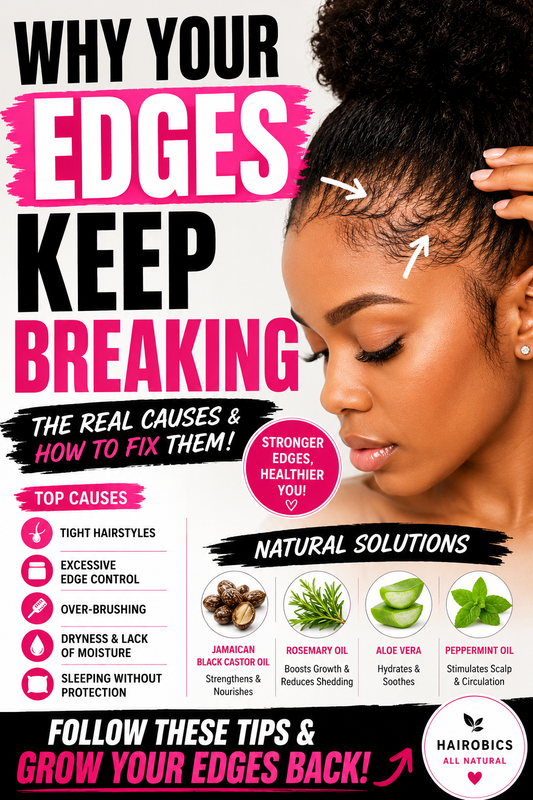
Reason #1: Tight Protective Styles
One of the biggest causes of edge breakage is excessive tension.
Styles that commonly damage edges include:
- Tight braids
- Tight ponytails
- Sleek buns
- Tight loc retwists
- Sew-ins
- Wigs with glued edges
- Tight cornrows
When hair is pulled tightly for extended periods, constant tension weakens the follicles and hair shaft.
Over time this can cause:
- Breakage
- Thinning
- Receding hairline
- Traction alopecia
If your scalp hurts after styling, the style is too tight.
Reason #2: Excessive Edge Control Usage
Many edge controls contain ingredients that can dry out delicate hairs.
Common issues include:
- Alcohol-based formulas
- Heavy wax buildup
- Daily brushing
- Repeated manipulation
Constantly slicking edges down may make them look neat temporarily but can weaken them over time.
Try limiting edge control use and focus on moisturizing your hairline instead.
Reason #3: Over-Brushing
Many people brush their edges several times a day.
Unfortunately, edges cannot withstand constant friction.
Frequent brushing can:
- Weaken strands
- Cause breakage
- Create split ends
- Increase shedding
Use a soft brush and avoid repeatedly laying your edges throughout the day.
Reason #4: Dryness
Dry hair breaks.
Because edges are often exposed to:
- Sun
- Wind
- Weather
- Friction from hats
They lose moisture faster than protected hair.
Signs of dry edges include:
- Rough texture
- Dull appearance
- Increased snapping
- Frizz
Moisturized hair is more elastic and resistant to breakage.
Reason #5: Sleeping Without Protection
Cotton pillowcases create friction while you sleep.
This friction can:
- Pull fragile hairs
- Remove moisture
- Cause breakage
Many people unknowingly damage their edges every night.
Protect your hair with:
- Satin bonnet
- Silk scarf
- Satin pillowcase
These simple tools dramatically reduce friction.
Reason #6: Frequent Wig Use
Wigs themselves aren't the problem.
The issue often comes from:
- Tight wig straps
- Adhesives
- Wig grips
- Constant rubbing
Glue-on wigs are particularly harsh on edges.
Repeated application and removal can weaken the hairline significantly.
Reason #7: Chemical Damage
Relaxers, dyes, and bleaching treatments can compromise hair strength.
Chemicals weaken:
- Hair protein structure
- Moisture balance
- Elasticity
Edges are often the first area affected because they are naturally thinner.
If you use chemicals, pay special attention to edge care.
Reason #8: Heat Damage
Flat irons, hot combs, and blow dryers can contribute to edge breakage.
Excessive heat:
- Dries the hair shaft
- Weakens protein bonds
- Creates brittleness
Repeated heat exposure makes delicate edge hairs vulnerable to snapping.
Always use a heat protectant when styling.
Reason #9: Stress
Stress can affect the hair growth cycle.
During periods of high stress, many people experience:
- Increased shedding
- Slower growth
- Hairline thinning
Stress hormones can push follicles into a resting phase, causing more hair to fall out than normal.
Managing stress is an important part of maintaining healthy edges.
Reason #10: Nutritional Deficiencies
Hair requires proper nutrition to grow.
Low levels of:
- Iron
- Protein
- Vitamin D
- Zinc
- Biotin
can contribute to weaker hair.
Healthy hair growth starts from within.
Focus on nutrient-rich foods and adequate hydration.
Reason #11: Product Buildup
Heavy products can clog the scalp and interfere with healthy growth.
Common culprits include:
- Excessive gels
- Heavy pomades
- Thick waxes
Buildup can make edges appear thinner and prevent moisture from reaching the hair shaft.
Regular cleansing helps maintain a healthy scalp environment.
Reason #12: Hormonal Changes
Hormones influence hair growth patterns.
Changes related to:
- Pregnancy
- Menopause
- Birth control
- Thyroid conditions
can contribute to edge thinning.
If edge loss seems sudden or severe, consult a healthcare professional.
How to Stop Edge Breakage Immediately
If your edges are already breaking, start with these steps:
Reduce Tension
Choose looser styles.
Avoid:
- Tight braids
- Tight buns
- Tight ponytails
Moisturize Daily
Apply a lightweight moisturizer to your hairline.
Hydrated hair is less likely to snap.
Protect at Night
Wear a satin bonnet or scarf.
This simple habit can dramatically improve edge retention.
Avoid Daily Manipulation
Stop brushing and styling your edges multiple times a day.
Leave them alone whenever possible.
Best Natural Ingredients for Edge Health
Jamaican Black Castor Oil
Known for:
- Moisture retention
- Scalp nourishment
- Strengthening fragile strands
Many natural hair enthusiasts use it to support healthy hair growth.
Rosemary Oil
Research suggests rosemary may support healthy circulation around hair follicles.
Benefits include:
- Improved scalp health
- Reduced shedding
- Stronger strands
Peppermint Oil
Peppermint creates a stimulating sensation that may help support scalp health.
Aloe Vera
Aloe helps:
- Hydrate hair
- Soothe irritation
- Reduce dryness
Tea Tree Oil
Tea tree helps maintain a healthy scalp environment.
Edge Recovery Routine
Morning
- Lightly mist hairline.
- Apply moisturizer.
- Seal with natural oil.
- Avoid tight styling.
Evening
- Massage scalp gently.
- Apply nourishing oil blend.
- Cover hair with satin scarf.
Consistency is key.
Foods That Support Stronger Edges
Eat foods rich in:
Protein
Examples:
- Eggs
- Fish
- Chicken
- Beans
Iron
Examples:
- Spinach
- Lentils
- Lean meats
Omega-3 Fatty Acids
Examples:
- Salmon
- Walnuts
- Flaxseeds
Vitamin C
Examples:
- Oranges
- Strawberries
- Bell peppers
Zinc
Examples:
- Pumpkin seeds
- Nuts
- Seafood
How Long Does It Take for Edges to Grow Back?
Recovery depends on the cause.
Typical timelines:
Mild Breakage
2–3 months
Moderate Damage
3–6 months
Severe Damage
6–12 months
Consistency matters more than quick fixes.
Mistakes to Avoid
Avoid:
- Tight hairstyles
- Daily edge control use
- Excessive brushing
- Sleeping without protection
- Heat overuse
- Harsh chemicals
- Ignoring scalp health
These habits can delay recovery.
When to See a Professional
Consult a dermatologist if you notice:
- Sudden hairline loss
- Bald patches
- Scalp pain
- Persistent itching
- Rapid thinning
Early intervention can improve outcomes.
The Truth About Edge Growth
There is no miracle product that instantly regrows edges.
Healthy edges require:
- Consistent care
- Moisture
- Gentle styling
- Proper nutrition
- Patience
Most people see the best results when they focus on protecting the hair they already have while creating an environment that supports healthy growth.
Conclusion
If your edges keep breaking, the cause is usually not a mystery. Tight hairstyles, excessive manipulation, dryness, friction, chemical treatments, and poor hair care habits are often the biggest contributors.
The good news is that edge breakage can often be reversed with consistent care. By reducing tension, moisturizing regularly, protecting your hair at night, nourishing your body, and using gentle natural products, you can help restore stronger, healthier edges over time.
Remember, hair growth is only part of the equation. Retaining the hair you grow is what ultimately creates a fuller, healthier hairline. Treat your edges with patience and care, and they will have the best opportunity to thrive.