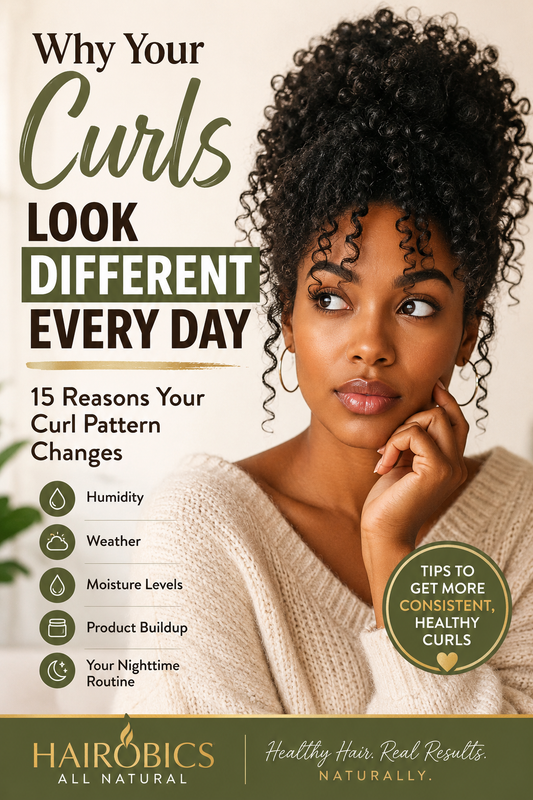
Have you ever looked in the mirror and wondered why your curls looked absolutely perfect yesterday but seem flat, frizzy, stretched, or undefined today? You're not imagining things. One of the most common frustrations among people with curly, coily, and natural hair is that their curls rarely look exactly the same from one day to the next.
The good news is that this is completely normal.
Natural curls are constantly responding to changes in humidity, moisture, product buildup, weather, sleep habits, styling techniques, and even your body's health. Unlike straight hair, every curl is highly reactive to its environment.
Understanding why your curls change daily is the first step toward creating a routine that delivers more predictable results.
In this complete guide, you'll learn:
- Why curl patterns change daily
- The science behind curly hair
- Common mistakes that cause inconsistent curls
- How weather affects your curls
- Morning habits that improve definition
- Products that help maintain consistent curls
- Tips for healthy, hydrated curls year-round
Why Curly Hair Is Naturally Unpredictable
Every strand of curly hair contains bends, twists, and curves.
These curves make it harder for your scalp's natural oils to travel from the roots to the ends. As a result, curly hair loses moisture much faster than straight hair.
Because moisture levels constantly change, curls naturally change too.
One day your curls may feel:
- Soft
- Bouncy
- Defined
- Moisturized
The next day they may appear:
- Puffy
- Dry
- Limp
- Frizzy
- Flat
This doesn't necessarily mean something is wrong.
1. Humidity Changes Everything
Humidity is one of the biggest reasons curls behave differently every day.
When the air contains a lot of moisture, hair absorbs water from the atmosphere.
This causes:
- Swelling
- Frizz
- Less definition
- Curl expansion
Low humidity does the opposite.
Hair loses moisture to the environment, causing:
- Dryness
- Shrinkage
- Brittleness
- Static
How to Fight Humidity
- Use moisturizing leave-ins
- Seal with lightweight oils
- Apply anti-humidity gels
- Avoid touching curls while drying
2. Your Hair Is Losing Moisture Overnight
During sleep your curls experience:
- Friction
- Moisture loss
- Compression
- Tangles
Even beautiful wash-day curls can flatten overnight.
Protect Your Hair
- Satin pillowcases
- Satin bonnets
- Silk scarves
- Pineapple hairstyle
- Loose twists
Morning curls always start the night before.
3. Product Buildup Is Hiding Your Curl Pattern
Too much product weighs curls down.
Common buildup comes from:
- Heavy butters
- Oils
- Waxes
- Styling creams
- Hard water minerals
Symptoms include:
- Flat roots
- Dull hair
- Sticky curls
- Weak definition
Clarify every few weeks to restore bounce.
4. Your Hair Needs More Water
Many people think curls need oil.
Actually, curls need water first.
Water hydrates the hair.
Oil helps lock that hydration inside.
A proper routine follows this order:
- Water
- Leave-in conditioner
- Cream (optional)
- Gel
- Oil if needed
5. You Styled Your Hair Differently
Tiny styling changes create major differences.
Examples include:
- Finger coiling
- Raking
- Shingling
- Praying hands
- Brush styling
Even changing the direction you style can completely alter curl formation.
6. Weather Affects Curl Definition
Rain
Adds moisture and frizz.
Wind
Separates curl clumps.
Heat
Evaporates moisture.
Cold
Creates dryness.
Seasonal changes explain why curls often behave differently throughout the year.
7. Your Hair Isn't Fully Dry
Touching curls before they're completely dry causes:
- Frizz
- Loss of definition
- Broken curl clumps
Allow curls to dry fully before fluffing.
8. Protein and Moisture Balance Changes
Healthy curls need both moisture and protein.
Too much moisture can cause:
- Mushy hair
- Weak curls
- Poor definition
Too much protein may lead to:
- Stiff hair
- Breakage
- Rough texture
Finding the right balance helps maintain consistent curl patterns.
9. Hair Length Changes Curl Appearance
As curls grow longer, gravity stretches them.
Longer curls may appear:
- Looser
- Less springy
- Less voluminous
This doesn't mean your curl pattern has changed permanently.
10. Heat Damage Can Alter Curl Pattern
Frequent heat styling can permanently loosen curls.
Signs include:
- Straight ends
- Uneven curl pattern
- Reduced elasticity
- Increased breakage
Always use heat protectant and avoid excessive temperatures.
11. Chemical Treatments Affect Curl Structure
Relaxers, bleach, permanent color, and some chemical services can weaken curl bonds.
Damaged sections often refuse to curl like healthy hair.
Deep conditioning and trimming damaged ends help restore appearance.
12. Hormones Can Change Hair
Hormonal shifts can affect:
- Curl pattern
- Density
- Thickness
- Oil production
Changes may occur during:
- Pregnancy
- Menopause
- Puberty
- Certain medical treatments
13. Hard Water Changes Curl Behavior
Minerals from hard water coat the hair.
This causes:
- Dullness
- Dryness
- Reduced curl definition
Installing a shower filter may improve curl consistency.
14. You Need Regular Trims
Split ends prevent curls from clumping properly.
Fresh trims encourage:
- Better curl formation
- Less tangling
- Improved shape
- Fuller appearance
15. Every Curl Has Its Own Personality
Most people naturally have multiple curl patterns.
For example:
- Loose curls near the front
- Tight coils underneath
- Medium curls on the crown
This is completely normal.
Trying to force every curl to look identical often leads to frustration.
Instead, learn to work with your natural pattern.
How to Make Your Curls More Consistent
Develop a consistent routine.
Wash Regularly
Remove buildup before it affects definition.
Deep Condition Weekly
Hydrated curls perform better.
Avoid Over-Manipulation
Constant touching increases frizz.
Protect Hair Overnight
Healthy curls begin while you sleep.
Use Lightweight Products
Avoid layering too many products.
Dry Carefully
Diffuse or air dry without disturbing curl clumps.
Ingredients That Help Curly Hair Thrive
Look for products containing:
- Aloe vera
- Shea butter
- Coconut oil
- Jojoba oil
- Avocado oil
- Jamaican black castor oil
- Argan oil
- Glycerin (adjust based on humidity)
- Panthenol
- Vitamin E
Natural botanical ingredients help improve softness and shine without stripping moisture.
Daily Curl Refresh Routine
Morning:
- Lightly mist hair with water.
- Apply a small amount of leave-in conditioner.
- Smooth frizzy areas.
- Scrunch curls upward.
- Let hair dry before fluffing.
Evening:
- Pineapple hair loosely.
- Wear a satin bonnet.
- Sleep on a satin pillowcase.
Common Mistakes
Avoid these habits:
- Using too much product
- Brushing dry curls
- Skipping deep conditioning
- Overwashing
- Using cotton pillowcases
- Touching hair while drying
- Ignoring protein balance
- Applying oil to dry hair without water
- Using excessive heat
- Waiting too long between trims
Frequently Asked Questions
Is it normal for curls to look different every day?
Yes. Humidity, moisture levels, sleep, products, and weather all influence curl appearance.
Can my curl pattern permanently change?
Yes. Heat damage, chemical treatments, aging, and hormonal changes can permanently alter curls.
Why are my curls flat one day and bouncy the next?
Small differences in moisture, styling, product buildup, and environmental conditions can dramatically affect volume and definition.
How often should I clarify curly hair?
Most people benefit from clarifying every 3–6 weeks, depending on product use and water quality.
Should I use oil every day?
Not necessarily. Water provides hydration. Oil is best used sparingly to seal in moisture rather than replace it.
Healthy Habits for Beautiful Curls
Healthy curls are built through consistency, not perfection. Focus on hydration, gentle handling, regular cleansing, and protective nighttime care. Pay attention to how your hair responds to changes in weather and products, and don't be afraid to adjust your routine as the seasons change.
Remember that curls are dynamic by nature. A little variation from day to day is completely normal and often a sign that your hair is responding to its environment—not that something is wrong.
With a balanced routine, quality ingredients, and realistic expectations, you'll enjoy curls that are softer, healthier, shinier, and far more predictable over time.
Final Thoughts
If you've ever felt frustrated because your curls never seem to look the same twice, you're certainly not alone. Curly hair is beautifully unique, and its shape is influenced by moisture, climate, styling methods, and overall hair health.
Instead of chasing perfect consistency, focus on creating the healthiest environment for your curls. Prioritize hydration, cleanse away buildup regularly, protect your hair while you sleep, and use products that nourish rather than weigh your curls down. Over time, these simple habits can lead to stronger, more defined curls with less frizz and more confidence.
Every curl has its own personality—and that's part of what makes natural hair so beautiful. Embrace the uniqueness of your texture, learn what your curls love, and enjoy the journey toward healthier, happier hair.