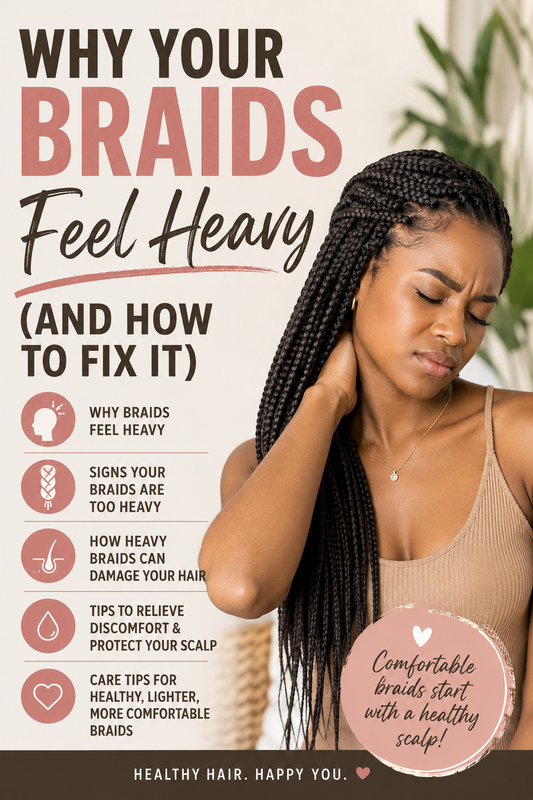
Braids are one of the best protective hairstyles for natural hair. They help reduce daily manipulation, protect your strands from breakage, and can last for weeks with proper care. However, one of the biggest complaints people have after getting fresh braids is that they feel incredibly heavy.
If your neck hurts, your scalp feels sore, or it feels like someone is constantly pulling on your hair, you're not alone. Heavy braids are extremely common, but they shouldn't be ignored.
The good news is that heavy braids can usually be fixed—or prevented entirely—with the right techniques and proper hair care.
In this guide you'll learn:
- Why braids feel heavy
- Whether heavy braids are normal
- Signs your braids are too heavy
- How heavy braids can damage your hairline
- The best ways to relieve discomfort
- How to keep your scalp healthy while wearing braids
- Tips to make future braid appointments much more comfortable
Are Braids Supposed to Feel Heavy?
Fresh braids may feel slightly different from your normal hairstyle.
However, they should not:
- Cause severe headaches
- Make your neck hurt
- Feel like they're constantly pulling
- Leave your scalp swollen
- Cause bumps around your hairline
- Prevent you from sleeping
A slight adjustment period during the first day is normal.
Extreme heaviness is not.
Why Braids Feel Heavy
Several different factors can contribute to heavy braids.
1. Too Much Braiding Hair
One of the biggest reasons braids feel heavy is simply because too much extension hair was added.
Large amounts of synthetic hair increase:
- Overall weight
- Tension on follicles
- Neck strain
- Pulling on the scalp
The longer the braid, the heavier it becomes.
2. Braids Are Too Long
Waist-length or knee-length braids may look beautiful, but they also weigh significantly more than shoulder-length styles.
Extra length means:
- More synthetic hair
- More tension
- More swinging movement
- Increased stress on roots
Sometimes shortening braid length by just a few inches dramatically reduces discomfort.
3. Braids Are Installed Too Tight
Heavy doesn't always mean weight.
Sometimes your braids feel heavy because they're extremely tight.
When roots are over-tightened:
- Every braid pulls directly on follicles.
- The scalp becomes inflamed.
- Hair follicles experience constant stress.
This creates the sensation of heaviness even if the braids themselves aren't very large.
4. Thick Braid Sections
Jumbo braids naturally weigh more.
Small sections distribute weight more evenly across the scalp.
Large sections place more force on fewer follicles.
5. Too Many Braids
Ironically, having too many braids can also create heaviness.
Hundreds of tiny braids create cumulative weight across the entire scalp.
Finding the right balance is important.
6. Water Absorption
Synthetic hair absorbs some moisture during washing.
Wet braids become significantly heavier.
That's why freshly washed braids often feel heavier than dry ones.
7. Product Buildup
Applying excessive:
- Oils
- Creams
- Gels
- Leave-ins
- Butters
can weigh braids down.
Instead of moisturizing the scalp, excess product often sits on top of the hair.
8. Scalp Inflammation
Sometimes the braids themselves aren't especially heavy.
Instead, your scalp is inflamed.
Inflammation increases nerve sensitivity, making every braid feel heavier.
Signs Your Braids Are Too Heavy
Watch for these warning signs.
Persistent Headaches
Pain lasting longer than 24–48 hours usually indicates excessive tension.
Neck Pain
Heavy braids constantly pull backward.
This can strain:
- Neck muscles
- Upper shoulders
- Upper back
Difficulty Sleeping
If you can't comfortably lie down because your braids hurt, they may be too heavy.
Red Bumps
Small bumps around your edges usually indicate irritation.
Ignoring them can lead to breakage.
Hairline Pain
Pain around your edges is never a good sign.
Hair follicles are extremely delicate.
Constant Pulling
You should not constantly feel tension throughout the day.
Healthy braids should eventually feel natural.
Can Heavy Braids Cause Hair Loss?
Unfortunately, yes.
Consistent heavy tension may contribute to traction-related hair loss.
Over time:
- Follicles weaken.
- Hair becomes thinner.
- Edges recede.
- Hairline widens.
- Growth slows.
Early prevention is much easier than regrowing lost hair.
Who Is Most at Risk?
Some people are more vulnerable.
Higher-risk groups include:
- People with fine hair
- Thin edges
- Postpartum mothers
- Individuals experiencing stress-related shedding
- Anyone with a history of traction damage
- People with chemically treated hair
These individuals benefit from lighter braid styles.
How to Fix Heavy Braids
Fortunately, several methods can reduce discomfort.
Use Warm Water
Running warm (not hot) water over your scalp may help relax tension.
Always dry braids thoroughly afterward.
Massage Your Scalp
Gentle scalp massage increases circulation and helps relax tight muscles.
Avoid pulling directly on fresh braids.
Wear Hair Down
Avoid tight ponytails during the first week.
Keeping braids loose reduces additional tension.
Reduce Product Use
Use lightweight moisturizing products instead of thick oils and heavy creams.
Your scalp breathes better with minimal buildup.
Sleep Properly
Wrap braids loosely in a satin scarf or bonnet.
Avoid tight wrapping that increases pressure.
Moisturize the Scalp
A hydrated scalp feels healthier and more comfortable.
Look for lightweight botanical moisturizers that help soothe dryness without leaving heavy residue.
Many people wearing braids also benefit from applying a lightweight scalp treatment several times per week to help keep the scalp nourished while minimizing buildup.
When Should You Remove Heavy Braids?
Remove braids immediately if you experience:
- Bleeding
- Open sores
- Severe swelling
- Hair coming out with follicles attached
- Constant headaches
- Persistent scalp pain
- Signs of traction damage
Waiting too long can increase the risk of permanent follicle damage.
How to Prevent Heavy Braids Next Time
Choose Medium-Length Styles
Shoulder-length or mid-back braids are usually much lighter.
Request Less Extension Hair
Many braiders automatically use large amounts of synthetic hair.
Ask for:
- Lightweight braids
- Less added hair
- Natural fullness
Avoid Excessive Tension
Tell your stylist immediately if braids feel painful.
Pain should never be considered normal.
Don't Skip Breaks Between Styles
Allow your scalp to recover before reinstalling braids.
Rest periods help reduce long-term stress on follicles.
Keep Your Natural Hair Healthy
Healthy hair better tolerates protective styles.
Focus on:
- Moisture
- Gentle cleansing
- Regular conditioning
- Scalp care
- Minimizing breakage
Daily Braid Care Routine
Morning:
- Light scalp moisturizer
- Smooth edges gently
- Shake braids loose
Afternoon:
- Avoid tight ponytails
- Drink plenty of water
Evening:
- Massage scalp for several minutes
- Cover with satin bonnet
- Sleep on a satin pillowcase for added protection
Consistency helps maintain both comfort and healthy hair.
Common Mistakes That Make Braids Feel Heavier
Avoid these habits:
- Applying too much oil
- Wearing heavy braid accessories
- Constantly putting braids into buns
- Leaving buildup on the scalp
- Skipping scalp cleansing
- Wearing braids longer than recommended
- Ignoring persistent pain
Small adjustments can make a significant difference.
Can Heavy Braids Affect Hair Growth?
Braids do not directly speed up hair growth, but they can support length retention by protecting the hair from daily manipulation.
When braids are excessively heavy or tight, however, they can have the opposite effect by increasing breakage and stressing the hair follicles. Healthy growth depends on maintaining a clean scalp, minimizing tension, staying hydrated, eating a balanced diet, and protecting the hairline from repeated pulling.
Frequently Asked Questions
How long should braids feel heavy?
Most mild discomfort improves within one to three days. If pain or heaviness persists beyond that, the style may be too tight or too heavy.
Is it normal to get headaches from fresh braids?
A mild headache can happen initially, but ongoing or severe headaches are not normal and may indicate excessive tension.
Can washing my braids help?
Some people find that rinsing with lukewarm water can slightly relax tight braids, but be aware that wet braids will temporarily feel heavier until they dry completely.
Should I loosen my braids myself?
Avoid pulling or cutting individual braids unless you know what you're doing. If the discomfort is severe, it's best to have the stylist loosen or remove them.
Are smaller braids lighter?
Not always. Weight depends on the amount of extension hair used, braid length, and installation technique—not just braid size.
Final Thoughts
Braids should protect your natural hair—not leave you with headaches, neck pain, or a sore scalp. While a short adjustment period is common, ongoing heaviness is often a sign that the style is too heavy, too tight, or placing excessive stress on your hair follicles.
Choosing lighter extensions, avoiding unnecessary tension, moisturizing your scalp, and giving your hair regular breaks between protective styles can make a tremendous difference in both comfort and long-term hair health.
If you're committed to maintaining healthy braids, remember that beautiful protective styles begin with healthy natural hair underneath. Keeping your scalp clean, hydrated, and nourished helps create the best environment for stronger strands and better length retention over time.
By listening to your scalp and addressing discomfort early, you can enjoy the beauty and convenience of braids without sacrificing the health of your hair.