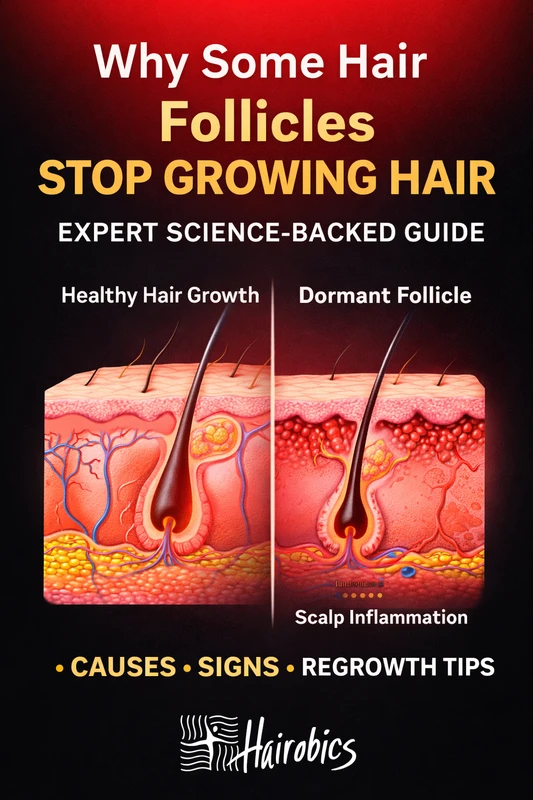
A Complete Science-Backed Guide to Hair Follicle Dormancy, Hair Loss, and Regrowth
Hair growth is one of the most fascinating biological processes in the human body. At any given moment, millions of hair follicles across your scalp are actively producing hair fibers. Yet many people eventually notice something puzzling: certain areas of hair simply stop growing.
One part of your hair may grow long and thick, while another section becomes thin, slow-growing, or completely dormant. For many people—especially those with natural hair textures—this can feel confusing and frustrating.
Understanding why some hair follicles stop producing hair is the key to preventing hair loss, restoring growth, and maintaining healthy, thick hair over time.
In this comprehensive guide, we'll explore:
• How hair follicles work
• The hair growth cycle
• The biological reasons follicles stop producing hair
• Common causes of follicle dormancy
• How to reactivate inactive follicles
• Science-based strategies to keep follicles healthy
Understanding Hair Follicles
What Is a Hair Follicle?
A hair follicle is a small organ located beneath the surface of the skin that produces hair strands.
Each follicle contains several important structures:
• Hair bulb – where hair growth begins
• Dermal papilla – supplies blood and nutrients
• Matrix cells – rapidly dividing cells that form the hair strand
• Sebaceous gland – produces oil (sebum)
• Arrector pili muscle – causes goosebumps
The health of these structures determines whether a follicle produces thick hair, thin hair, or stops producing hair altogether.
Your scalp contains roughly 100,000 hair follicles, and each one operates independently. This means some follicles can remain healthy while others slow down or stop growing.
The Hair Growth Cycle
Hair growth follows a repeating cycle consisting of four stages.
1. Anagen Phase (Growth Phase)
The anagen phase is when hair actively grows from the follicle.
This phase can last:
• 2–7 years for scalp hair
During this time:
• Hair grows approximately ½ inch per month
• Cells in the hair bulb divide rapidly
• Nutrients from the bloodstream feed the follicle
For healthy hair growth, 85–90% of follicles should be in the anagen phase.
2. Catagen Phase (Transition Phase)
The catagen phase is a short transitional stage lasting 2–3 weeks.
During this time:
• Hair growth stops
• The follicle shrinks
• The hair detaches from the dermal papilla
Only about 1% of follicles are in this stage at any given time.
3. Telogen Phase (Resting Phase)
The telogen phase lasts about 3–4 months.
During this stage:
• Hair is no longer growing
• The follicle remains dormant
• The old hair strand stays in place
About 10–15% of hair follicles are normally in this phase.
4. Exogen Phase (Shedding Phase)
This stage occurs when the old hair sheds and a new hair begins to grow.
Losing 50–100 hairs per day is completely normal.
Problems occur when follicles remain stuck in the telogen phase and fail to restart growth.
What Happens When Hair Follicles Stop Growing Hair
Hair follicles rarely "die" immediately. Instead, they usually go through a gradual process.
Common stages include:
-
Shortened growth cycles
-
Thinner hair strands
-
Slower growth rate
-
Dormant follicles
-
Permanent follicle shutdown
Understanding the causes behind this progression helps explain why hair growth stops in certain areas.
The Most Common Reasons Hair Follicles Stop Growing Hair
1. Hormonal Changes
Hormones play a powerful role in hair follicle health.
One hormone in particular—DHT (dihydrotestosterone)—can shrink hair follicles over time.
This process is known as follicular miniaturization.
Miniaturized follicles produce:
• Thinner hair
• Shorter hair strands
• Slower growth
Eventually, the follicle may stop producing visible hair.
Hormonal shifts can occur due to:
• Aging
• Pregnancy
• Menopause
• Thyroid imbalance
• Stress hormones
2. Poor Scalp Circulation
Hair follicles depend on blood flow for oxygen and nutrients.
If circulation becomes restricted, follicles may not receive enough nutrients to support growth.
Poor circulation can be caused by:
• Tight hairstyles
• Chronic scalp tension
• Inflammation
• Scalp buildup
• Sedentary lifestyle
Without proper circulation, follicles gradually weaken.
3. Chronic Scalp Inflammation
Inflammation is one of the most overlooked causes of hair loss.
Chronic scalp inflammation can damage the follicle environment and disrupt growth signals.
Common triggers include:
• Product buildup
• Seborrheic dermatitis
• Fungal infections
• Allergic reactions
• Autoimmune conditions
Inflammation can eventually lead to follicle dormancy or destruction.
4. Nutrient Deficiencies
Hair follicles require constant nutrients to sustain rapid cell division.
Important nutrients for follicle health include:
• Iron
• Biotin
• Zinc
• Vitamin D
• Protein
• Omega-3 fatty acids
When the body lacks these nutrients, hair follicles often enter the resting phase prematurely.
This condition is known as telogen effluvium.
5. Traction Alopecia
Traction alopecia occurs when repeated tension pulls on hair follicles.
This is especially common with:
• Tight braids
• Heavy extensions
• Tight ponytails
• Wigs with tension
Over time, constant pulling damages the follicle structure.
If tension continues long enough, the follicle may stop producing hair permanently.
6. Aging
Hair follicles naturally change with age.
As people get older:
• Growth cycles shorten
• Follicles shrink
• Hair becomes thinner
The number of active follicles may gradually decrease over time.
7. Genetics
Genetics determine:
• Hair density
• Growth speed
• Hair cycle length
• Follicle sensitivity to hormones
Some people naturally have follicles that stop producing hair earlier than others.
8. Scalp Buildup
Heavy product buildup can block follicles and interfere with hair growth.
Common buildup sources include:
• Oils
• Butters
• Styling gels
• Dead skin cells
• Sweat
If follicles remain clogged, growth can slow dramatically.
Why Hair Often Stops Growing at the Edges First
Many people notice hair loss around the hairline before other areas.
This happens because:
• Edge follicles are smaller and more fragile
• They experience more tension from hairstyles
• They are exposed to more friction
Repeated tension, styling, and manipulation can gradually weaken these follicles.
Can Hair Follicles Start Growing Again?
In many cases, yes.
Hair follicles can remain dormant for months or even years before restarting growth.
Follicles may reactivate if:
• Blood flow improves
• Hormone balance stabilizes
• Inflammation decreases
• Nutrient levels improve
However, follicles that become scarred or destroyed cannot regenerate.
Signs a Hair Follicle Is Still Alive
You may still have viable follicles if you notice:
• Small baby hairs
• Short regrowth in thinning areas
• Slow but continued growth
• Fine hair strands
These signs indicate follicles are active but weakened.
Signs a Follicle May Be Permanently Inactive
Follicles may be permanently inactive if:
• Skin appears shiny and smooth
• No hair regrowth occurs after years
• The area feels scarred
• There is complete follicle disappearance
This condition is known as scarring alopecia.
How to Support Healthy Hair Follicles
1. Keep the Scalp Clean
Healthy follicles require a clean environment.
Regular cleansing helps remove:
• Sweat
• Oil buildup
• Dead skin cells
• Environmental pollutants
Clean follicles are better able to support growth.
2. Improve Scalp Circulation
Scalp stimulation helps deliver nutrients to follicles.
Ways to increase circulation include:
• Scalp massages
• Inversion techniques
• Exercise
• Warm oil treatments
Improved blood flow helps support follicle activity.
3. Reduce Scalp Inflammation
Keeping the scalp calm and balanced is essential.
Helpful strategies include:
• Gentle shampoos
• Anti-inflammatory ingredients
• Avoiding harsh chemicals
Healthy scalp conditions support stronger hair growth.
4. Support Hair With Nutrient-Rich Foods
A balanced diet is essential for follicle health.
Foods that support hair growth include:
• Leafy greens
• Eggs
• Fatty fish
• Nuts and seeds
• Fruits rich in antioxidants
Nutrition provides the building blocks for hair production.
5. Avoid Excessive Tension
Protective styling should not place stress on follicles.
Healthier styling habits include:
• Loose braids
• Low tension styles
• Alternating hairstyles
• Giving the scalp breaks
Reducing tension helps protect follicles long term.
Natural Ingredients That Support Hair Follicles
Many natural ingredients help nourish the scalp and support follicles.
Popular options include:
• Castor oil – rich in fatty acids
• Peppermint oil – increases circulation
• Rosemary oil – linked to improved growth
• Tea tree oil – antimicrobial properties
• Aloe vera – soothing and hydrating
Consistent scalp care can help create an environment where follicles thrive.
Hair Growth Timeline After Follicle Recovery
Hair regrowth is a slow process.
Typical regrowth timeline:
Month 1–2
Scalp health improves.
Month 3–4
Small baby hairs appear.
Month 5–6
Noticeable thickness increases.
Month 6–12
Significant growth becomes visible.
Patience and consistency are essential.
Myths About Hair Follicles Stopping Growth
Myth 1: Hair Stops Growing After a Certain Length
Hair does not stop growing at a specific length.
Instead, hair sheds when the growth cycle ends.
Myth 2: Cutting Hair Makes It Grow Faster
Haircuts do not affect follicle activity.
Growth happens beneath the scalp.
Myth 3: Oil Alone Can Restart Hair Growth
Oils can support scalp health but cannot revive dead follicles.
However, they may help maintain healthy follicles.
The Future of Hair Follicle Science
Researchers continue exploring new ways to stimulate hair follicles.
Emerging treatments include:
• Stem cell therapy
• Platelet-rich plasma (PRP)
• Follicle cloning
• Growth factor therapies
These innovations may revolutionize hair restoration in the future.
Final Thoughts
Hair follicles are incredibly dynamic structures that respond to hormones, nutrition, scalp health, and genetics.
When follicles stop producing hair, it rarely happens overnight. Instead, it is usually the result of gradual changes in the follicle environment.
By understanding how follicles function—and what causes them to weaken—you can take steps to protect your scalp and support long-term hair growth.
Healthy hair starts with healthy follicles.
And with the right care, many dormant follicles can return to active growth.