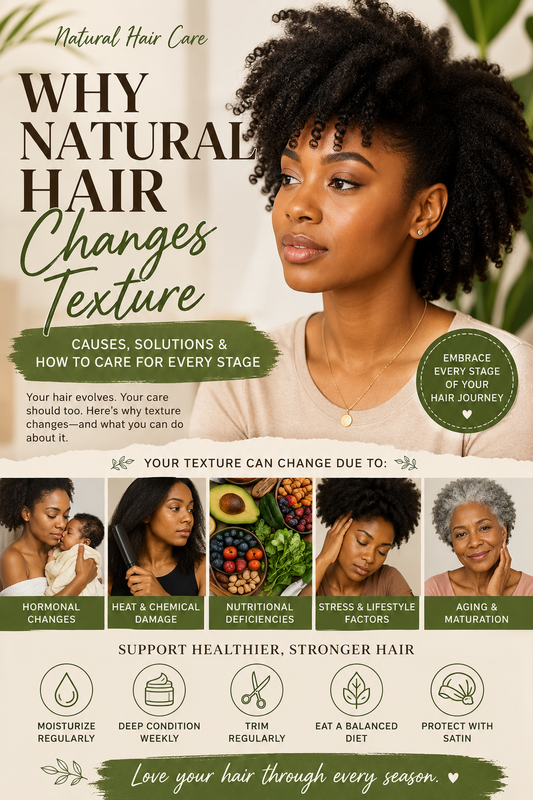
Have you ever noticed that your natural hair doesn't look or feel the same as it did a few years ago? Maybe your once-tight coils have become looser, your curls have become more defined, or certain sections of your hair seem completely different from the rest. If so, you're not imagining things.
Natural hair texture can change throughout your life. While your hair's genetic structure remains the foundation of your curl pattern, many internal and external factors can influence how your hair grows, feels, and behaves.
The good news is that texture changes are common and often manageable with the right hair care routine.
In this complete guide, you'll learn:
- Why natural hair changes texture
- The most common causes
- How age affects curls
- Hormones and hair texture
- Heat and chemical damage
- How nutrition influences hair
- Ways to restore healthier curls
- Best products and routines for maintaining natural hair
What Does Hair Texture Mean?
Hair texture refers to the thickness, feel, and natural curl pattern of your strands.
Texture includes:
- Fine hair
- Medium hair
- Coarse hair
- Straight
- Wavy
- Curly
- Coily
- Kinky
Natural hair can also have multiple textures on one head.
For example:
- Loose curls in the front
- Tight coils at the crown
- Softer curls near the nape
This is completely normal.
Is It Normal for Natural Hair Texture to Change?
Absolutely.
Hair texture is influenced by many factors besides genetics.
These include:
- Hormones
- Aging
- Heat styling
- Coloring
- Stress
- Medications
- Diet
- Environmental damage
- Hair care practices
Sometimes these changes happen gradually over years.
Other times they happen suddenly.
1. Hormonal Changes
Hormones play one of the biggest roles in natural hair texture.
Major hormonal changes include:
- Pregnancy
- Childbirth
- Menopause
- Puberty
- Birth control
- Thyroid disorders
Hormones influence the hair follicle itself.
When follicles change shape slightly, the hair growing from them can become:
- Curlier
- Straighter
- Thicker
- Finer
Many women notice dramatic curl pattern changes after pregnancy.
Pregnancy and Natural Hair
During pregnancy:
- Estrogen levels increase.
- Hair grows longer.
- Hair sheds less.
- Hair often feels thicker.
After childbirth:
Hair may:
- Shed heavily
- Feel thinner
- Become drier
- Lose definition temporarily
These changes usually stabilize over time.
Menopause Can Change Hair Texture
As estrogen decreases:
Hair often becomes:
- Finer
- Drier
- More fragile
- Less dense
Some women also notice:
- Looser curls
- Uneven curl patterns
- Reduced shine
Extra moisture becomes increasingly important during this stage.
2. Heat Damage
Heat styling is one of the biggest reasons curls permanently change.
Frequent use of:
- Flat irons
- Blow dryers
- Curling irons
- Hot combs
can weaken the hair's protein structure.
Signs include:
- Straight ends
- Limp curls
- Frizz
- Poor curl definition
Unlike temporary stretching after blow drying, true heat damage often doesn't reverse.
How Heat Alters Curl Patterns
Hair contains keratin proteins.
Excessive heat breaks these protein bonds.
When enough damage occurs:
The curl pattern can become permanently altered.
The only true solution is trimming the damaged hair while focusing on healthy new growth.
3. Chemical Treatments
Chemical processing changes hair texture dramatically.
Examples include:
- Relaxers
- Texturizers
- Permanent color
- Bleach
- Keratin treatments
These products modify the hair structure.
Repeated processing often leads to:
- Uneven curls
- Weak strands
- Breakage
- Dryness
- Loss of elasticity
4. Aging
Hair changes naturally as you age.
Hair follicles become less active over time.
Common changes include:
- Reduced oil production
- Smaller strands
- More dryness
- Increased brittleness
- Slower growth
Many people notice their curls becoming softer or less defined after age 40.
5. Stress
Stress affects your entire body—including your scalp.
Long-term stress increases cortisol.
High cortisol may contribute to:
- Excess shedding
- Slower growth
- Dry scalp
- Temporary texture changes
Managing stress supports healthier hair growth.
6. Nutritional Deficiencies
Healthy curls start from within.
Hair requires:
- Protein
- Iron
- Zinc
- Vitamin D
- Biotin
- Omega fatty acids
Poor nutrition may result in:
- Weak strands
- Thinning
- Dull appearance
- Texture changes
Balanced nutrition supports healthier follicles.
7. Product Buildup
Heavy product accumulation can make curls appear different.
Common buildup sources include:
- Heavy oils
- Waxes
- Silicones
- Butters
- Styling gels
Symptoms include:
- Flat curls
- Sticky strands
- Poor moisture absorption
- Dull appearance
Clarifying occasionally restores movement.
8. Hard Water
Mineral deposits coat the hair.
Hard water leaves behind:
- Calcium
- Magnesium
- Iron
These minerals can make curls feel:
- Rough
- Dry
- Heavy
Using a chelating shampoo occasionally may improve texture.
9. Sun Damage
UV rays weaken hair proteins.
Too much sun exposure can lead to:
- Dry curls
- Split ends
- Frizz
- Color fading
Protective hairstyles and moisturizing products help reduce damage.
10. Over-Manipulation
Constant styling can alter how hair behaves.
Examples include:
- Tight ponytails
- Frequent brushing
- Daily detangling
- Constant twisting
Over time, hair becomes weaker and loses elasticity.
Gentle handling helps preserve curl integrity.
Can Curl Patterns Become Tighter?
Yes.
Some people experience tighter curls because of:
- Hormonal shifts
- Improved moisture
- Healthier routines
- Transitioning from damaged hair
Healthier strands often shrink more because curls regain elasticity.
Can Hair Become Straighter Naturally?
Yes.
Factors include:
- Aging
- Hormonal changes
- Heat damage
- Chemical treatments
- Genetics
Sometimes new growth grows straighter than previous hair.
Multiple Hair Textures Are Normal
Many people naturally have:
- Type 3 curls
- Type 4 coils
- Mixed textures
This is especially common around:
- Edges
- Crown
- Nape
You don't need to force every section to match.
Instead, care for each area according to its needs.
Signs Your Hair Texture Is Healthy
Healthy textured hair usually has:
- Good elasticity
- Natural shine
- Softness
- Defined curls
- Minimal breakage
- Moisture retention
Healthy hair isn't always perfectly uniform.
Signs Texture Changes May Be Damage
Warning signs include:
- Straight ends
- Mushy hair
- Extreme dryness
- Breakage
- Split ends
- Loss of elasticity
These usually point toward damage rather than natural changes.
How to Restore Healthier Texture
While genetics can't be changed, healthier habits often improve the appearance and feel of your natural texture.
Moisturize Regularly
Hydrated curls:
- Stretch less
- Break less
- Feel softer
- Clump better
Look for products containing:
- Aloe vera
- Glycerin
- Marshmallow root
- Honey
- Plant oils
Deep Condition Weekly
Deep conditioning helps restore moisture balance.
Benefits include:
- Better elasticity
- Less breakage
- Softer curls
- Improved manageability
Minimize Heat
Limit direct heat.
Instead try:
- Air drying
- Hooded dryers
- Diffusers
- Stretching methods without high heat
Trim Damaged Ends
Damaged hair cannot repair itself.
Regular trims help remove:
- Split ends
- Heat damage
- Thin ends
Healthier ends improve the overall appearance of your curls.
Protect Hair at Night
Sleep protection reduces friction.
Use:
- Satin bonnet
- Satin scarf
- Satin pillowcase
This helps preserve moisture and curl definition.
Massage Your Scalp
Gentle scalp massages may help:
- Improve circulation
- Reduce tension
- Support healthy follicles
Massaging for several minutes a few times each week can be a relaxing part of your routine.
Daily Routine for Healthy Natural Hair
Morning:
- Lightly mist hair.
- Apply a leave-in conditioner if needed.
- Seal with a lightweight oil or butter.
- Style gently.
Evening:
- Moisturize dry areas.
- Pineapple curls if needed.
- Cover with satin protection.
Weekly:
- Cleanse scalp.
- Deep condition.
- Detangle carefully.
- Style with minimal tension.
Monthly:
- Clarify if buildup is present.
- Assess ends for trimming.
- Adjust products based on your hair's current needs.
Common Myths About Hair Texture
Myth: Your Texture Never Changes
False.
Hair texture can evolve due to hormones, aging, damage, and health changes.
Myth: One Curl Pattern Means Healthy Hair
False.
Healthy hair can have multiple curl patterns.
Myth: Oils Add Moisture
False.
Oils help seal moisture into the hair but do not hydrate dry strands on their own.
Myth: Heat Damage Always Grows Out Quickly
False.
Damaged sections remain damaged until trimmed away, although new growth can be healthy.
Frequently Asked Questions
Can stress permanently change hair texture?
Stress usually causes temporary changes such as shedding or reduced hair quality. Once stress levels improve and new hair grows in, texture often returns to its previous state unless other factors are involved.
Why is one side of my hair curlier?
Different follicle shapes, styling habits, sleeping positions, and heat exposure can cause one side to appear curlier than the other.
Can damaged curls recover?
If the damage is mild, moisturizing treatments and minimizing heat may improve the appearance. Severe heat or chemical damage is permanent, and trimming is usually necessary.
Does age affect curl pattern?
Yes. As you age, hormonal changes and reduced oil production can make curls appear looser, finer, or drier.
Should I change products if my texture changes?
Yes. Hair needs can evolve over time. If your hair becomes drier, finer, or more fragile, adjust your cleansing, conditioning, and styling products accordingly.
Final Thoughts
Natural hair is dynamic, and texture changes are a normal part of life. Factors such as hormones, aging, stress, nutrition, environmental exposure, and styling habits can all influence how your curls, coils, or kinks look and feel. Rather than chasing a single curl pattern, focus on maintaining healthy hair through consistent cleansing, deep conditioning, gentle handling, and moisture retention.
Listening to your hair's changing needs is the key to long-term success. A routine that worked five years ago may need adjustments today, and that's perfectly normal. By protecting your strands from excessive heat, reducing mechanical damage, eating a balanced diet, and using nourishing products designed for textured hair, you can help your natural hair remain strong, resilient, and beautiful through every stage of life.
Natural texture is unique, and embracing those changes while providing consistent care is one of the best ways to enjoy healthy, thriving hair for years to come.