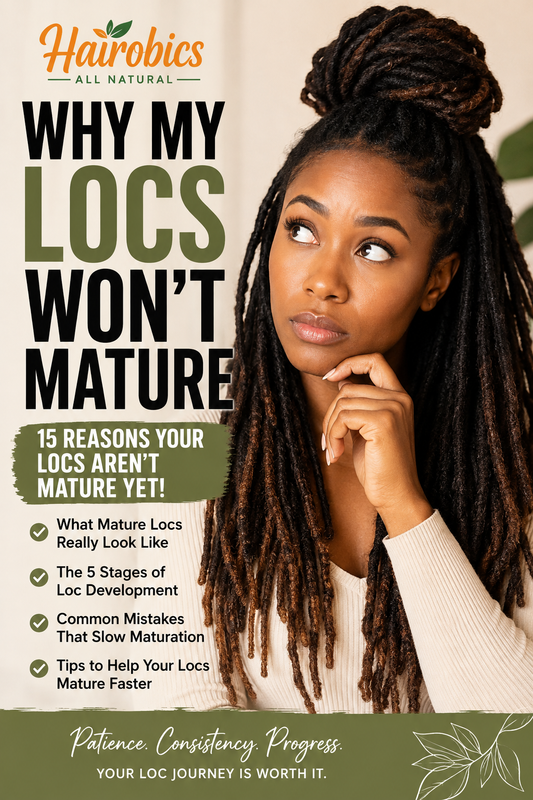
One of the most frustrating parts of a loc journey is waiting for your hair to mature. You started your locs months—or even years—ago expecting thick, rope-like dreadlocks, but instead your hair still feels soft, puffy, fuzzy, or keeps unraveling.
If you've ever wondered, "Why won't my locs mature?", you're definitely not alone.
The truth is that loc maturation isn't determined by time alone. Hair texture, maintenance habits, products, washing routines, styling, and even patience all play major roles.
The good news?
Almost every loc eventually matures if it's cared for properly.
In this complete guide, you'll learn:
- What mature locs actually look like
- The five stages of loc development
- 15 reasons locs don't mature
- How long maturation usually takes
- Ways to encourage healthy maturation naturally
- Mistakes that slow the process
Let's dive in.
What Does It Mean for Locs to Mature?
A mature loc has reached its final structure.
Instead of loose hairs wrapping around each other, the strands have permanently intertwined into a solid rope.
Mature locs usually:
- Feel firm
- Hold their shape
- Have less swelling
- Experience minimal unraveling
- Shrink less
- Are stronger
- Require less maintenance
Mature doesn't necessarily mean "old."
Some people achieve mature locs in one year.
Others need three years.
Every head of hair is different.
The Five Stages of Loc Development
Understanding the process helps explain why maturation takes time.
Stage 1: Starter Locs
Duration:
1–3 months
Characteristics:
- Soft
- Easily unravel
- Lots of frizz
- Visible parts
- Hair still moves freely
This stage requires the most patience.
Stage 2: Budding
Duration:
3–9 months
Signs include:
- Puffy sections
- Hard bumps
- Thickening
- Uneven appearance
- Increased shrinkage
Many people mistakenly think something is wrong.
Actually, budding is one of the biggest signs your locs are progressing.
Stage 3: Teen Locs
Duration:
9–18 months
Locs begin:
- Tightening
- Compacting
- Becoming heavier
- Hanging differently
This stage often feels like nothing is happening.
Inside the loc, however, thousands of hairs are continuing to intertwine.
Stage 4: Mature Locs
Duration:
12–24 months
Characteristics:
- Dense
- Firm
- Smooth
- Strong
- Less frizz
- Consistent thickness
Stage 5: Adult Locs
Duration:
2+ years
Adult locs continue improving for years.
Many people notice dramatic improvements after year three.
15 Reasons Your Locs Won't Mature
1. Your Hair Texture Naturally Takes Longer
Fine hair usually mats slower than coarse hair.
Hair types with tighter curls naturally lock faster because curls wrap around themselves more easily.
Straighter textures often require additional time.
2. You're Constantly Retwisting
Retwisting too often can actually slow maturation.
Many beginners think frequent maintenance speeds things up.
Instead, it can:
- Weaken roots
- Prevent natural knotting
- Cause thinning
- Interrupt locking
Most people only need retwists every 4–8 weeks.
3. You're Touching Your Locs Too Much
Constantly squeezing, twisting, pulling, or separating locs interrupts the locking process.
Hands naturally loosen hairs.
Leave your locs alone whenever possible.
4. You're Using Heavy Conditioners
Conditioners are designed to soften hair.
Soft hair doesn't lock efficiently.
Many locticians recommend avoiding creamy conditioners during the early stages.
5. Product Buildup Is Preventing Tight Locking
Waxes, creams, gels, and oils can coat the hair shaft.
Instead of intertwining naturally, strands slide against each other.
Signs include:
- Sticky locs
- White residue
- Heavy feeling
- Slow maturation
Clarifying occasionally helps remove buildup.
6. You're Not Washing Enough
Many beginners avoid shampoo.
Ironically, clean hair often locks better.
Water causes hair to swell.
Swollen strands tangle together more effectively.
A clean scalp also promotes healthier growth.
7. Your Hair Is Too Soft
Very moisturized hair can remain slippery.
Balance is important.
Hair should be hydrated—but not overly coated.
8. You're Frequently Wearing Wigs
Long periods under wigs may reduce natural friction.
Less movement can slow locking.
If wearing wigs, make sure your scalp remains clean and your locs aren't compressed constantly.
9. Excessive Manipulation
Constant styles including:
- Buns
- Ponytails
- Barrel twists
- Braids over locs
can interfere with natural locking if done too frequently during the early stages.
10. Your Locs Are Very Large
Thicker locs usually mature more slowly.
There's simply more hair that needs to intertwine internally.
11. Your Locs Are Extremely Small
Micro locs mature differently.
Although each loc contains less hair, there are many more locs to maintain, and maturation can appear slower.
12. You Keep Restarting Your Journey
Many people restart after:
- Frizz
- Budding
- Puffiness
- Swelling
Ironically, these are normal stages.
Restarting resets the maturation clock.
13. You're Comparing Yourself to Others
Social media often creates unrealistic expectations.
Someone else's one-year locs may look like your three-year goal because:
- Different hair texture
- Different density
- Different routine
- Different genetics
Every journey is unique.
14. Your Hair Is Damaged
Bleaching
Heat damage
Chemical relaxers
Over-processing
can reduce your hair's natural ability to intertwine.
Healthy new growth generally locks more efficiently than damaged ends.
15. You're Simply Not Giving It Enough Time
This is the biggest reason.
Many people expect mature locs within six months.
In reality:
12–24 months is normal.
Some textures require even longer.
How Long Does It Take Locs to Mature?
Average timelines:
- Tight coils: 8–14 months
- Curly textures: 12–18 months
- Loose curls: 18–24 months
- Wavy hair: 2–3 years
- Straight hair: 3–5 years
These are only averages.
Signs Your Locs ARE Actually Maturing
Sometimes progress is happening even if you don't notice.
Watch for:
- Less unraveling
- More firmness
- Increased weight
- Reduced shrinkage
- Better shape retention
- More compact appearance
- Fewer loose ends
- Less puffiness
These are excellent indicators.
Can You Make Locs Mature Faster?
You cannot force maturation.
However, you can create the ideal environment.
Wash Regularly
Clean hair locks more efficiently than dirty hair.
Avoid Heavy Products
Stick with lightweight products that don't leave residue.
Retwist Less Often
Allow your hair enough time to naturally knot between maintenance sessions.
Sleep With Satin
Protect your locs from unnecessary friction while reducing lint and breakage.
Separate Locs Carefully
Prevent neighboring locs from joining together while avoiding excessive manipulation.
Stay Consistent
Routine matters more than constantly trying new methods.
Common Myths About Mature Locs
Myth 1: Wax Makes Locs Mature Faster
Wax usually creates buildup.
It doesn't speed internal locking.
Myth 2: Never Wash Starter Locs
Clean hair can actually encourage healthy locking.
Proper washing doesn't ruin locs when done carefully.
Myth 3: Frizz Means Something Is Wrong
Frizz is one of the healthiest signs of the locking process.
Those loose hairs eventually become part of the loc.
Myth 4: Retwisting Every Week Helps
Too much manipulation often causes thinning instead of faster maturation.
Myth 5: Puffy Locs Are Bad
Puffiness usually indicates budding.
Budding means progress.
Best Routine for Healthy Loc Maturation
Morning
- Shake locs loose.
- Keep scalp hydrated if needed.
- Avoid excessive touching.
Weekly
- Wash when appropriate for your stage and scalp needs.
- Inspect roots.
- Separate locs gently if necessary.
Monthly
- Schedule maintenance only when needed.
- Clarify if buildup is present.
- Trim lint carefully if necessary.
Night
- Wear a satin bonnet, scarf, or sleep on a satin pillowcase.
- Avoid sleeping with wet locs.
Foods That Support Healthy Loc Growth
While diet won't directly mature locs faster, healthy hair growth supports a stronger loc journey.
Focus on:
- Eggs
- Salmon
- Spinach
- Sweet potatoes
- Berries
- Avocados
- Nuts
- Seeds
- Beans
- Plenty of water
Frequently Asked Questions
Why are my locs still soft after one year?
Soft locs after one year can be completely normal, especially for looser curl patterns, finer hair, or larger loc sizes. Maturation timelines vary from person to person.
Is budding the same as maturing?
No. Budding is an early stage that occurs before full maturation. It indicates that the locking process is progressing.
Why do my locs still unravel?
Starter locs often unravel due to washing, hair texture, frequent manipulation, or early-stage development. As your locs mature, unraveling becomes less common.
Can products make locs mature faster?
No product can force locs to mature. Healthy routines, clean hair, patience, and proper maintenance are much more effective than miracle products.
Should I cut off my starter locs and begin again?
Usually not. Unless there is significant damage or a problem with the installation, restarting often delays your progress because it resets the maturation process.
Final Thoughts
If your locs seem like they aren't maturing, don't lose hope. Locs develop on their own timeline, and what feels like "slow progress" is often normal. Hair texture, maintenance habits, and patience all influence how quickly your locs become firm and fully developed.
Instead of comparing your journey to someone else's, focus on healthy habits: keep your scalp clean, avoid heavy product buildup, minimize unnecessary manipulation, and protect your locs while you sleep. Over time, those soft, puffy starter locs will continue to tighten, strengthen, and transform into mature, beautiful locs.
Remember, the loc journey is a marathon—not a sprint. Consistency and patience are the real secrets to achieving healthy, mature locs that last for years.