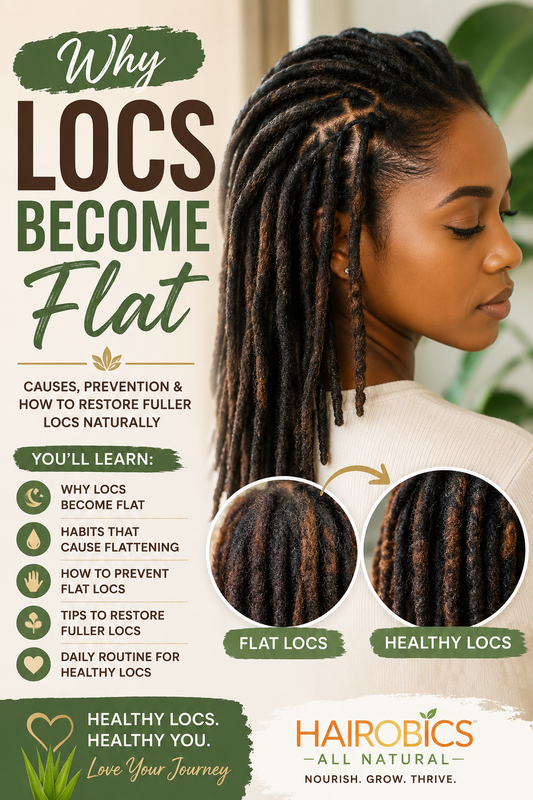
One of the most common concerns among people with locs is noticing that certain locs begin losing their round shape. Instead of appearing cylindrical and full, they become compressed, flattened, or ribbon-like. This change can happen gradually or develop after months—or even years—of wearing locs.
The good news is that flat locs usually aren't a sign that your hair is unhealthy. More often, they're the result of everyday habits, maintenance techniques, sleeping positions, moisture levels, and the natural way your hair matures.
Understanding why locs become flat is the first step toward preventing the problem and restoring volume where possible.
In this complete guide, you'll learn:
- Why locs flatten
- Which habits cause flat locs
- Whether flat locs are permanent
- How to reshape locs safely
- Daily habits that keep locs round
- The best maintenance routine for fuller-looking locs
Whether you're new to your loc journey or have had mature locs for years, these tips can help keep your locs healthy and beautiful.
What Does a Flat Loc Look Like?
Healthy locs are usually round or slightly oval.
Flat locs appear:
- Thin from one direction
- Wide from another
- Ribbon-shaped
- Compressed
- Less dense than surrounding locs
Many people notice flattening:
- Around the crown
- Along the sides
- Near the back of the head
- In areas where they sleep
Why Do Locs Become Flat?
There isn't just one cause.
Usually, several factors combine over time.
Let's examine each one.
1. Sleeping on the Same Side Every Night
This is by far one of the biggest causes.
Every night your head applies pressure to your locs for six to eight hours.
Months of repeated compression can gradually flatten them.
Common signs include:
- Flat locs on one side
- Flattened back locs
- Uneven thickness
- Compressed mature locs
Prevention
- Sleep with a satin bonnet.
- Use a satin pillowcase.
- Rotate sleeping positions.
- Pineapple longer locs before bed.
2. Palm Rolling Too Firmly
Palm rolling keeps locs neat.
But excessive pressure can squeeze them into flat shapes.
Instead of encouraging rounded growth, over-rolling compresses the hair fibers.
Healthy palm rolling should be:
- Gentle
- Brief
- Only during maintenance
Avoid rolling several times every day.
3. Tight Retwists
Overly tight retwists don't just stress your roots.
They also flatten the body of the loc.
Constant tight retwisting can lead to:
- Flat roots
- Weak spots
- Breakage
- Thinning
- Scalp tension
A looser retwist often creates healthier, fuller locs.
4. Clips Left in Too Long
Metal clips are helpful during retwists.
Leaving them attached for hours can flatten sections.
The pressure compresses damp hair as it dries.
Instead:
- Remove clips after roots have set.
- Avoid sleeping in clips.
- Don't overuse large clips.
5. Locs Drying While Compressed
Wet hair molds easily.
If locs dry while squeezed together under hats, wraps, or pillows, they may permanently dry flatter than intended.
Always allow locs to air dry completely.
6. Wearing Tight Hats Frequently
Caps and helmets place pressure on the same sections repeatedly.
This repeated compression eventually changes the loc's shape.
If you wear hats daily:
- Choose looser styles.
- Remove them when possible.
- Allow locs to breathe.
7. Ponytails That Stay Too Tight
Pulling locs tightly in one direction changes their natural form.
Repeated tension can flatten:
- Front locs
- Crown locs
- Ponytail areas
Rotate hairstyles often.
8. Immature Loc Structure
Starter locs naturally flatten while they're locking.
During the first year:
- Hair shifts
- Buds develop
- Compression occurs
- Shape changes frequently
Many flattened starter locs round out naturally over time.
Patience is important.
9. Product Buildup
Heavy residue keeps loc fibers from moving naturally.
As buildup hardens, it may cause uneven shaping.
Avoid:
- Heavy waxes
- Thick gels
- Greasy creams
Choose lightweight products designed for loc care.
10. Natural Hair Growth Pattern
Some hair naturally locks flatter.
Hair texture varies from person to person.
Some locs:
- Form perfectly round
- Become oval
- Twist naturally
- Flatten naturally
This isn't necessarily a problem.
Are Flat Locs Bad?
Not at all.
Many people have naturally flat locs.
Flat locs can still be:
- Strong
- Healthy
- Long
- Thick
The concern comes when flattening accompanies:
- Weak spots
- Splitting
- Breakage
- Thinning
Can Flat Locs Become Round Again?
Sometimes.
It depends on:
- Age of the loc
- Cause of flattening
- Hair texture
- Maintenance routine
Newer flattening is usually easier to correct than years of compression.
How to Fix Flat Locs
Separate Locs Regularly
Keep neighboring locs from drying together.
After washing:
- Gently separate each loc.
- Allow space between them.
- Let them dry individually.
Massage While Damp
After washing:
Roll the loc gently between both palms.
Don't squeeze.
The goal is to encourage a rounded shape.
Rotate Sleeping Positions
Changing pressure points prevents continuous flattening.
Use:
- Satin bonnet
- Satin scarf
- Silk pillowcase
Avoid Heavy Compression
Reduce:
- Tight hats
- Headbands
- Tight wraps
Especially while locs are damp.
Retwist Correctly
Less is often more.
Retwist:
- Every 4–8 weeks (depending on hair type and growth)
- Gently
- Without excessive tension
Keep Locs Moisturized
Dry locs become stiff.
Healthy hydration allows hair fibers to remain flexible.
Moisturize with:
- Water
- Aloe vera juice
- Lightweight botanical sprays
Don't Sleep with Wet Locs
This is one of the fastest ways to reshape locs unintentionally.
Always let them dry fully before bedtime.
Common Mistakes That Flatten Locs
- Sleeping on wet locs
- Retwisting too often
- Excessive palm rolling
- Wearing tight hats daily
- Tight ponytails
- Heavy residue
- Leaving clips overnight
- Not separating locs
Daily Routine for Fuller Locs
Morning
- Lightly mist locs.
- Shake them gently.
- Separate compressed sections.
Afternoon
- Avoid tight styles.
- Keep locs hanging freely.
Evening
- Moisturize if needed.
- Wear a satin bonnet.
- Sleep on a satin pillowcase.
Consistency makes the biggest difference.
How Long Does It Take to Improve Flat Locs?
Results vary.
Some people notice improvement in:
- A few weeks
- One to three months
- Several maintenance cycles
Older mature locs may take longer.
Foods That Support Stronger Locs
Healthy hair starts from within.
Focus on:
- Lean protein
- Eggs
- Beans
- Salmon
- Leafy greens
- Sweet potatoes
- Avocados
- Nuts
- Seeds
- Plenty of water
Healthy hair fibers are more resilient and maintain their structure better.
Frequently Asked Questions
Why are only a few of my locs flat?
Those locs may experience more pressure from sleeping, styling, or hats.
Will washing make flat locs worse?
No.
Proper washing removes buildup and allows locs to expand naturally.
Should I cut flat locs?
Usually not.
Most flat locs are healthy and don't require cutting.
Are flat locs weaker?
Not necessarily.
Only flattening accompanied by thinning or splitting indicates structural weakness.
Can palm rolling fix flat locs?
Gentle palm rolling during maintenance can encourage a rounder shape.
Overdoing it can actually worsen flattening.
Does hair texture matter?
Yes.
Some curl patterns naturally form flatter locs than others.
This variation is completely normal.
Long-Term Prevention Tips
If you want fuller, rounder locs over the years:
- Sleep with satin every night.
- Wash your locs regularly.
- Avoid heavy residue.
- Keep locs moisturized.
- Don't over-retwist.
- Rotate hairstyles.
- Minimize tight hats.
- Separate locs after washing.
- Let locs dry completely.
- Handle your locs gently.
These habits preserve both the shape and strength of your locs.
Support Your Loc Journey Naturally
Healthy locs thrive when they're clean, hydrated, and properly maintained. A consistent routine that includes gentle cleansing, regular moisturizing, and nourishing scalp care can help reduce dryness, minimize breakage, and support fuller-looking locs over time.
At Hairobics All Natural, we believe healthy hair starts with simple, plant-based care. Whether you're maintaining starter locs or mature locs, choosing lightweight, nourishing products can help keep your scalp balanced and your locs looking their best without heavy buildup.
Final Thoughts
Flat locs are a common part of many loc journeys and are often caused by repeated pressure, styling habits, maintenance techniques, or simply your natural hair texture. In most cases, they are not a sign of damage. By understanding the causes and making small adjustments—such as sleeping on satin, avoiding excessive tension, allowing locs to dry completely, and maintaining a healthy moisture balance—you can encourage stronger, healthier, and fuller-looking locs.
Remember that every set of locs is unique. Rather than chasing perfect symmetry, focus on consistent care that supports the long-term health of your hair. Healthy locs come in many shapes, and with patience and the right routine, your locs can continue to thrive for years to come.