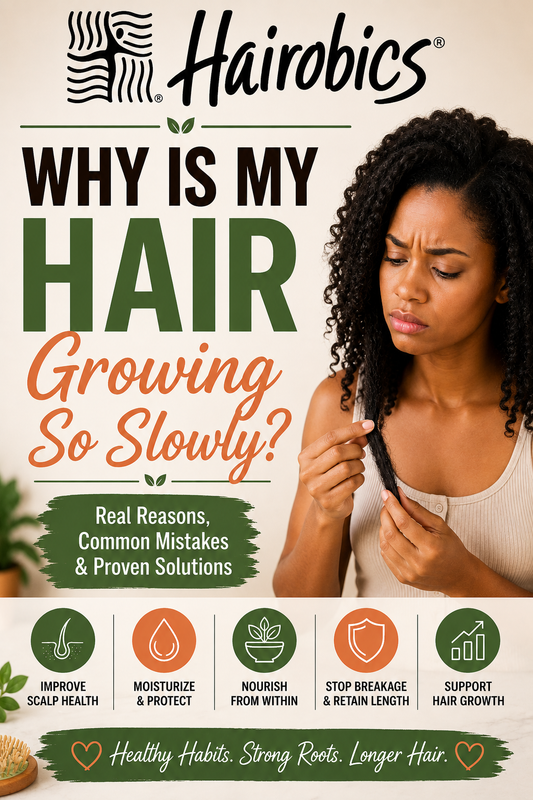
If you've been staring in the mirror wondering, "Why is my hair growing so slowly?", you're not alone. Millions of people feel like their hair has reached a certain length and simply refuses to grow longer.
The good news is that, in most cases, your hair is actually growing. The problem usually isn't slow growth—it's breakage, damage, poor scalp health, or lifestyle factors preventing you from seeing the length you're gaining.
Whether you have natural hair, curls, coils, locs, braids, relaxed hair, or straight hair, understanding what affects hair growth is the first step toward achieving longer, healthier hair.
In this complete guide, you'll learn:
- How fast hair actually grows
- The biggest reasons hair appears to grow slowly
- Hair growth myths
- Nutrition for faster growth
- Scalp care tips
- Protective styling advice
- The best daily habits for retaining length
- A realistic timeline for hair growth
How Fast Does Hair Actually Grow?
One of the biggest misconceptions is that healthy hair should grow inches every month.
In reality:
- Average growth is about ½ inch per month
- That's approximately 6 inches per year
- Some people naturally grow slightly faster
- Others grow slightly slower due to genetics
Even perfect hair care won't suddenly make hair grow several inches every month.
Instead, the goal should be:
- Healthy follicles
- Strong strands
- Less breakage
- Better length retention
Hair Growth vs. Length Retention
These are completely different things.
Hair Growth
Hair grows from the follicle underneath your scalp.
Growth depends on:
- Genetics
- Hormones
- Nutrition
- Blood circulation
- Overall health
Length Retention
Length retention is your ability to keep the hair that's already grown.
If your hair grows:
- ½ inch monthly
But breaks:
- ½ inch monthly
You'll never notice growth.
This is why preventing breakage is just as important as encouraging growth.
1. Your Hair Is Breaking Faster Than It Grows
This is the number one reason people think their hair isn't growing.
Signs include:
- Thin ends
- Split ends
- Lots of hair on clothing
- Hair snapping during detangling
- Uneven length
Common causes include:
- Dryness
- Heat damage
- Chemical damage
- Tight hairstyles
- Rough brushing
- Sleeping without protection
2. Your Scalp Isn't Healthy
Healthy hair starts at the scalp.
A poor scalp environment can reduce healthy hair production.
Watch for:
- Heavy buildup
- Excess oil
- Dandruff
- Itching
- Inflammation
- Flaking
Keeping your scalp clean allows follicles to function at their best.
3. You're Not Moisturizing Enough
Dry hair becomes brittle.
Brittle hair breaks easily.
Many textured hair types naturally struggle to retain moisture because natural scalp oils have difficulty traveling down curls and coils.
Focus on:
- Water-based hydration
- Leave-in conditioner
- Lightweight oils to seal moisture
- Consistent moisturizing schedule
4. Too Much Heat Styling
Excessive heat damages the hair cuticle.
Eventually this causes:
- Split ends
- Weak strands
- Protein loss
- Breakage
Reduce:
- Flat ironing
- Curling irons
- Blow dryers on high heat
Always use heat protectant.
5. You're Skipping Regular Trims
Although trims don't make hair grow faster, they help remove damaged ends before they split higher.
Keeping healthy ends helps preserve overall length.
6. Poor Diet
Hair is primarily made of protein.
Without proper nutrition, your body prioritizes vital organs over hair production.
Important nutrients include:
Protein
Iron
Vitamin D
Vitamin C
Zinc
Biotin
Omega-3 fatty acids
Healthy fats
Best Foods for Hair Growth
Excellent choices include:
- Salmon
- Eggs
- Greek yogurt
- Lean chicken
- Spinach
- Sweet potatoes
- Blueberries
- Avocados
- Walnuts
- Pumpkin seeds
- Lentils
- Beans
7. Stress Is Affecting Hair Growth
High stress increases cortisol.
Chronic stress may contribute to increased shedding and can shift more hairs into the resting phase of the growth cycle.
Ways to reduce stress include:
- Exercise
- Meditation
- Better sleep
- Deep breathing
- Journaling
- Walking outdoors
8. You're Washing Too Little—or Too Much
Finding the right wash schedule matters.
Too little washing can lead to:
- Product buildup
- Scalp irritation
- Clogged follicles
Too much washing with harsh shampoos can:
- Strip moisture
- Increase dryness
- Cause breakage
Choose a schedule based on your hair type, activity level, and scalp condition.
9. Tight Hairstyles
Constant tension damages follicles.
Styles that are too tight include:
- Braids
- Ponytails
- Tight buns
- Tight loc styles
- Sew-ins
Tension can contribute to traction-related hair loss around the hairline.
10. Genetics
Everyone has a genetically determined growth rate.
Some people naturally:
- Grow faster
- Grow slower
- Have longer growth cycles
- Have shorter growth cycles
Good hair care helps you reach your personal maximum potential—it can't change your genetics.
Understanding the Hair Growth Cycle
Hair grows in four stages.
Anagen (Growth)
Lasts:
2–7 years
This is when hair actively grows.
Catagen
A short transition period.
Telogen
Hair rests.
Exogen
Old hair sheds to make room for new growth.
Shedding around 50–100 hairs a day is generally considered normal.
Why Curly Hair Seems to Grow Slower
Curly hair doesn't necessarily grow slower.
It appears shorter because curls:
- Shrink
- Coil
- Bend
- Twist
Shrinkage can make several inches of growth seem much less visible.
Why 4C Hair Feels Like It Never Grows
4C hair is especially prone to:
- Dryness
- Knotting
- Breakage
- Shrinkage
With proper moisture and gentle handling, 4C hair can retain significant length over time.
Does Oiling Your Scalp Make Hair Grow Faster?
Not directly.
Hair oils don't magically speed up growth.
However, they can:
- Reduce dryness
- Support scalp comfort
- Help seal in moisture
- Improve the condition of existing hair
Massage while applying oil may temporarily increase blood flow to the scalp, but evidence that this alone dramatically boosts growth is limited.
Can Hair Products Speed Up Growth?
Most products do not change your natural growth rate.
The best products:
- Reduce breakage
- Improve moisture
- Strengthen strands
- Support a healthy scalp
This leads to better length retention.
Daily Habits That Help Hair Grow Longer
Eat enough protein
Hair needs amino acids.
Drink enough water
Hydration supports overall health and healthy hair.
Protect hair while sleeping
Use:
- Satin bonnet
- Silk scarf
- Satin pillowcase
Detangle gently
Always start from the ends.
Work upward slowly.
Limit heat
Lower heat means less damage.
Avoid tight hairstyles
Reduce tension.
Keep your scalp clean
Healthy follicles thrive on a clean scalp.
Moisturize consistently
Hydrated hair breaks less.
Hair Growth Timeline
One Month
Healthier scalp
Less dryness
Reduced shedding for some people
Three Months
Less breakage
Improved moisture
Noticeable length retention
Six Months
Several inches of retained growth are possible with consistent care.
One Year
Many people can retain much of their natural yearly growth if breakage is minimized.
Common Hair Growth Myths
Myth: Cutting hair makes it grow faster.
False.
Hair grows from follicles—not the ends.
Myth: Washing stops hair growth.
False.
A clean scalp supports healthy hair.
Myth: Oiling overnight guarantees growth.
False.
Oil conditions the scalp and hair but doesn't force follicles to grow faster.
Myth: Brushing 100 times daily helps.
False.
Excess brushing can increase breakage.
Myth: Hair stops growing at a certain length.
False.
Hair continues growing until it reaches the end of its natural growth cycle.
Hair Care Routine for Maximum Length Retention
Wash Day
- Cleanse scalp thoroughly.
- Use a moisturizing conditioner.
- Detangle gently.
- Apply a leave-in conditioner.
- Seal moisture if desired.
- Air dry or use low heat.
Midweek
- Refresh moisture with a water-based spray.
- Avoid excessive manipulation.
- Massage the scalp gently if it feels comfortable.
Night
- Loosely braid or twist hair if appropriate.
- Wear a satin bonnet or sleep on a satin pillowcase.
- Avoid sleeping with wet hair for extended periods.
When to See a Healthcare Professional
Consider speaking with a healthcare professional if you notice:
- Sudden excessive shedding
- Bald patches
- Persistent scalp pain
- Severe itching or inflammation
- Hair loss following illness that doesn't improve
- Hair thinning that continues despite good hair care
They may evaluate for underlying issues such as nutrient deficiencies, thyroid disorders, hormonal changes, or certain forms of hair loss.
Frequently Asked Questions
Why is my hair growing so slowly all of a sudden?
Changes in stress, illness, hormones, medications, nutrition, or hair care practices can affect how much growth you retain or how much shedding you experience.
How long does it take to see hair growth?
Hair grows gradually. Most people need several months of consistent care before noticeable changes in length become apparent.
Can damaged hair grow?
Yes. New hair grows from the scalp, but damaged ends can continue to break. Trimming severely damaged ends and improving your routine can help you retain new growth.
Does drinking more water make hair grow faster?
Water supports overall health and hydration, but it does not directly increase the speed of hair growth.
Can protective styles help hair grow?
Protective styles don't make hair grow faster, but when installed and maintained properly, they can reduce manipulation and breakage, helping you keep more of the hair you naturally grow.
Final Thoughts
If your hair seems to be growing slowly, remember that the issue often isn't the speed of growth—it's the ability to keep the hair you already have. By focusing on scalp health, gentle handling, consistent moisture, balanced nutrition, and minimizing breakage, you can maximize your natural growth potential and retain more length over time.
Healthy hair growth is a long-term process, not an overnight transformation. Small, consistent habits practiced week after week often lead to the biggest results. Stay patient, take progress photos every few months, and celebrate healthier, stronger hair along the way.