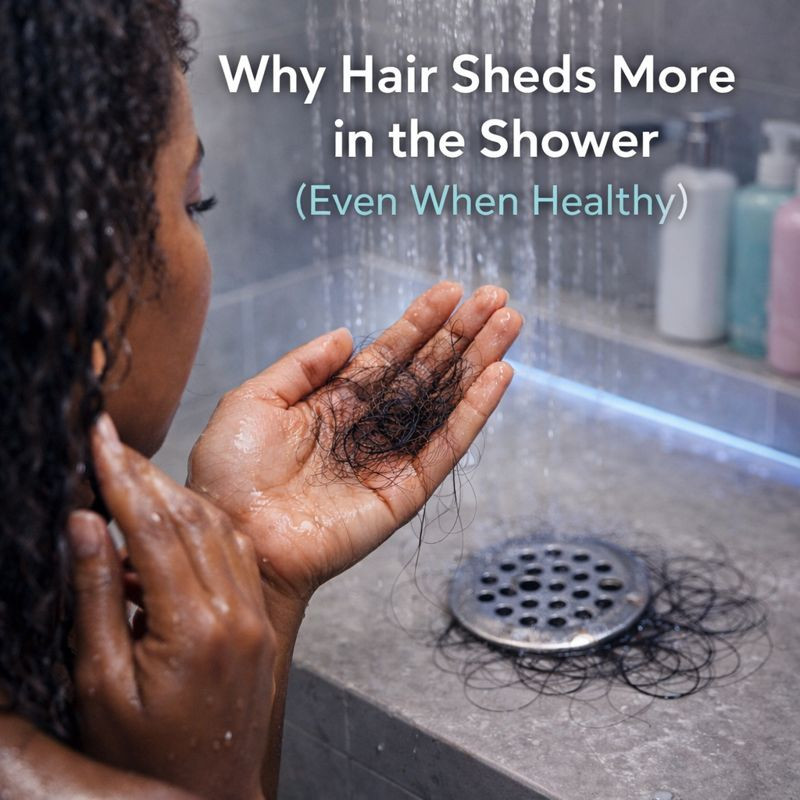
If it feels like your hair sheds way more in the shower than anywhere else, you’re not imagining it. Seeing clumps of hair in your hands or circling the drain can be alarming — even when your hair looks thick, shiny, and healthy the rest of the time.
The good news?
Most shower shedding is completely normal.
In fact, the shower is often where normal daily hair shedding finally shows itself all at once. Still, there are situations where excess shedding signals something deeper going on with your scalp, routine, or health.
This guide breaks down exactly why hair sheds more in the shower, how to tell normal shedding from a problem, and what you can do to reduce unnecessary hair loss without panic.
The Hair Growth Cycle (Why Shedding Is Normal)
To understand shower shedding, you first need to understand how hair naturally grows and falls.
Every hair on your head follows a cycle with four stages:
1. Anagen (Growth Phase)
-
Lasts 2–7 years
-
Hair actively grows from the follicle
-
About 85–90% of your hair is here at any time
2. Catagen (Transition Phase)
-
Lasts 2–3 weeks
-
Hair detaches from blood supply
-
Growth stops
3. Telogen (Resting Phase)
-
Lasts 2–4 months
-
Hair stays in place but is no longer growing
4. Exogen (Shedding Phase)
-
Hair naturally falls out
-
New hair begins growing underneath
? Healthy scalps shed 50–100 hairs per day — sometimes more depending on length, density, and texture.
Why the Shower Makes Shedding Look Worse
1. Shed Hair Builds Up All Day (Then Releases at Once)
Hair doesn’t always fall out immediately when it sheds. Many loose strands:
-
Get caught in curls or coils
-
Stay trapped in braids, buns, or ponytails
-
Remain tangled until manipulated
When you shower, water + conditioner + finger detangling finally release all those hairs at once — making it look like sudden hair loss.
➡️ You’re not losing more hair — you’re seeing multiple days of shedding at once.
2. Water Loosens Hair That Was Already Detached
Hair that has reached the shedding phase is already disconnected from the follicle. Warm water:
-
Softens the scalp
-
Opens cuticles
-
Reduces friction
This allows hairs that were already shed to slide out easily.
The shower didn’t cause the shedding — it revealed it.
3. Conditioner Makes Shed Hair More Visible
Conditioner coats the hair, causing shed strands to:
-
Stick together
-
Clump in your hands
-
Collect near the drain
Dry shed hairs fall individually and go unnoticed.
Wet, conditioned hairs gather dramatically — which can trigger panic.
4. Detangling Happens in the Shower
Many people only detangle when washing. That means:
-
Knots release multiple shed hairs at once
-
Curls unravel
-
Old shed hair finally exits
If you detangle once per week, you’ll naturally see a week’s worth of shedding in one session.
How Often You Wash Affects How Much Hair You See
Infrequent Washers
If you wash every 7–14 days:
-
Shed hair accumulates longer
-
Shower shedding appears heavier
-
Loss looks extreme (but isn’t)
Frequent Washers
If you wash 2–3 times per week:
-
Shed hair releases more gradually
-
Less dramatic clumping
-
Same total shedding — just spread out
? Same amount of hair. Different timing.
Hair Texture Matters (A Lot)
Curly, Coily, and Kinky Hair
-
Shed hair stays trapped in the curl pattern
-
Doesn’t fall freely throughout the day
-
Releases during wash day
This is why natural hair often appears to shed more — even when growth is strong.
Straight or Fine Hair
-
Shed hair slips out easily
-
Less dramatic shower shedding
-
Loss looks gradual and less alarming
Normal Shower Shedding vs. Concerning Shedding
Normal Shower Shedding Looks Like:
-
Hair comes out evenly
-
No bald spots or thinning areas
-
Hairline remains intact
-
Density looks the same over time
-
New growth visible
Concerning Shedding May Include:
-
Sudden increase lasting 6–8 weeks
-
Thinning at crown or temples
-
Excessive hair on pillow or clothes
-
Widening part
-
Scalp irritation or pain
If shedding is progressive or patchy, it’s time to look deeper.
Common Reasons Shedding Increases (Even With Healthy Hair)
1. Seasonal Shedding
Many people shed more:
-
Late summer
-
Early fall
-
Early spring
This is linked to hormonal rhythms and environmental changes.
2. Stress (Physical or Emotional)
Stress pushes hair prematurely into the shedding phase.
Triggers include:
-
Illness
-
Surgery
-
Weight loss
-
Emotional trauma
-
Sleep deprivation
Shedding usually appears 2–3 months after the stressor, not immediately.
3. Hormonal Shifts
Hormones strongly influence hair retention.
Common causes:
-
Postpartum changes
-
Birth control changes
-
Thyroid imbalances
-
Perimenopause or menopause
4. Product Buildup on the Scalp
Heavy oils, butters, and styling products can:
-
Clog follicles
-
Slow new growth
-
Increase shedding during washing
A scalp that looks fine can still be functionally blocked.
5. Hard Water Exposure
Hard water minerals:
-
Coat the hair shaft
-
Dry the scalp
-
Increase breakage and shedding during washing
Shedding vs. Breakage (Know the Difference)
Shedding:
-
Hair strand has a white bulb at the end
-
Entire strand comes out
-
Normal part of growth cycle
Breakage:
-
No bulb
-
Short pieces
-
Often caused by dryness or manipulation
If your shower loss includes short hairs, breakage may be the issue — not shedding.
Why Healthy Hair Can Still Shed Heavily
Healthy hair doesn’t mean shed-free hair.
You can have:
-
Strong strands
-
Shiny hair
-
Active growth
…and still experience normal shedding.
Growth and shedding happen simultaneously.
The real concern is whether hair is replacing itself — not whether it falls out.
How to Reduce Excessive Shower Shedding (Safely)
1. Clean the Scalp Regularly
A clean scalp supports proper shedding and regrowth.
-
Use gentle clarifying cleansers
-
Remove buildup without stripping
2. Detangle Before Washing
Pre-detangling:
-
Reduces clumping
-
Minimizes breakage
-
Makes shedding less dramatic
3. Massage the Scalp (Gently)
Scalp massage:
-
Improves circulation
-
Encourages healthy growth
-
Helps follicles release shed hair naturally
4. Don’t Panic-Style Your Hair
Overreacting leads to:
-
Excessive protective styles
-
Tight tension
-
Reduced airflow to scalp
Gentle handling beats overprotection.
5. Support Hair From the Inside
Hair shedding increases when the body is depleted.
Support with:
-
Protein
-
Iron
-
Vitamin D
-
Omega-3s
-
Adequate hydration
When to See a Professional
Consider professional help if:
-
Shedding lasts longer than 3 months
-
You notice thinning areas
-
Your scalp feels sore, itchy, or inflamed
-
Hair isn’t growing back
Early intervention prevents long-term thinning.
The Big Takeaway
Seeing hair shed in the shower is not automatically a problem.
In most cases:
-
The hair was already shed
-
The shower simply revealed it
-
Growth is still happening
Instead of counting strands, watch for patterns over time:
-
Density
-
Regrowth
-
Scalp health
Healthy hair sheds.
Unhealthy hair fails to grow back.
Once you understand the difference, the shower becomes a place for care — not fear.