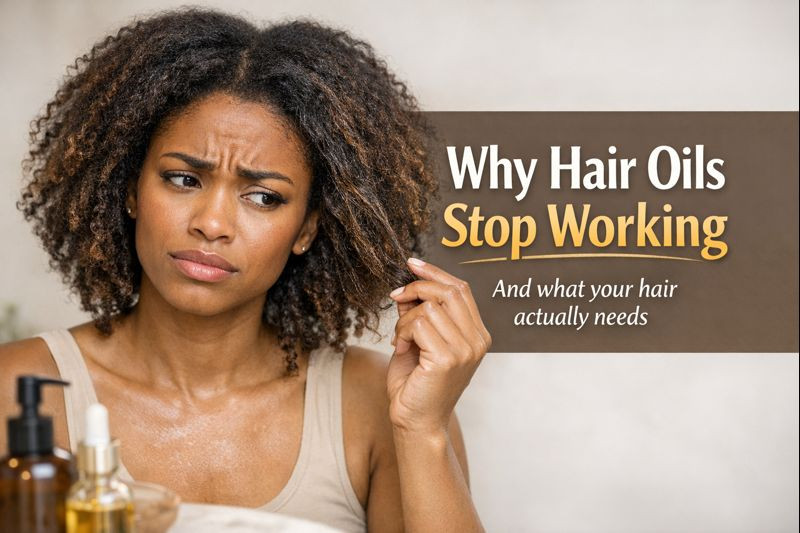
At first, hair oils feel like magic.
Your hair looks shinier. Your scalp feels calmer. Breakage slows down. Dryness disappears.
Then… weeks or months later… it’s like someone flipped a switch.
The same oil that once made your hair thrive suddenly does nothing — or worse, your hair feels dry, greasy, itchy, or brittle. You apply more oil, thinking you just need “extra moisture,” but the problem only gets worse.
So what happened?
The truth is: hair oils don’t actually “stop working.”
Your hair and scalp change, adapt, and sometimes become blocked — and oils alone can’t fix that.
This article breaks down exactly why hair oils lose effectiveness over time, the science behind it, and how to reset your routine so oils start working again.
The Big Myth: “My Hair Just Got Used to the Oil”
You’ll often hear people say:
“My hair got used to this oil.”
Hair doesn’t develop tolerance the way your body does to caffeine or medication. What actually happens is more complex — and more fixable.
When oils stop working, it’s usually because of one (or more) of these issues:
-
Oil buildup blocking moisture
-
Product layering without cleansing
-
Scalp imbalance
-
Wrong oil for your hair’s current condition
-
Lack of water-based hydration
-
Changes in porosity
-
Environmental damage (hard water, weather, styling)
Let’s break each one down.
1. Oil Buildup Is Blocking Moisture
This is the #1 reason hair oils stop working.
Hair oils are occlusives — meaning they seal the hair. They do not hydrate on their own. If oil is applied repeatedly without proper cleansing, it creates a barrier that:
-
Prevents water from entering the hair shaft
-
Traps dirt and debris
-
Makes hair feel dry even when coated in oil
Signs This Is Happening
-
Hair looks shiny but feels rough
-
Products sit on top of the hair
-
Curls won’t clump
-
Hair feels dry right after oiling
-
Scalp feels itchy or congested
At this point, adding more oil only worsens the problem.
What’s really happening:
Your hair is dehydrated, not dry — and oil can’t fix dehydration.
2. You’re Using Oil Without Water (The Silent Killer)
Oil and moisture are not the same thing — and this confusion ruins routines.
Here’s the rule:
Water moisturizes. Oil seals.
If you apply oil to dry hair without water or a water-based product first, you’re sealing nothing.
Over time, this leads to:
-
Brittle ends
-
Increased breakage
-
Loss of elasticity
-
Dull, lifeless hair
This is why oils “work” at first — your hair still has residual moisture — but stop working once that moisture is gone.
3. Your Scalp Environment Has Changed
Your scalp is living skin. It adapts.
Oils can help calm dryness or irritation initially, but long-term oil use without scalp care can:
-
Clog follicles
-
Feed yeast (especially with heavy oils)
-
Disrupt the scalp’s microbiome
-
Increase inflammation
When the scalp is off, hair oils fail — every time.
Signs of scalp imbalance:
-
Flaking that doesn’t improve with oil
-
Greasy roots + dry ends
-
Burning or tingling after oiling
-
Excessive shedding
Once follicles are congested, oil can’t penetrate — so hair growth and moisture stall.
4. The Oil You’re Using No Longer Matches Your Hair’s Needs
Hair needs change — oils don’t adapt.
What worked when your hair was:
-
Shorter
-
Less colored
-
Less heat-styled
-
Less exposed to hard water
…may not work now.
Example:
-
Light oils (jojoba, grapeseed) stop working once hair becomes damaged
-
Heavy oils (castor, olive) stop working on fine or low-density hair
-
Protein-rich oils can cause stiffness over time
When oils stop working, it’s often because your hair needs repair, hydration, or cleansing — not more oil.
5. Product Layering Is Creating a Film
Most people don’t realize how much product builds up over time.
Between:
-
Leave-ins
-
Creams
-
Gels
-
Oils
-
Butters
…you’re creating layers of residue.
This film:
-
Repels water
-
Prevents oil absorption
-
Makes hair feel coated, not nourished
That’s why oils suddenly feel useless — they can’t reach the hair anymore.
6. Porosity Changes Over Time
Hair porosity isn’t fixed.
Your hair can shift from:
-
Low → normal → high porosity
-
Healthy → damaged
-
Flexible → brittle
When porosity changes:
-
Oils either sit on top
-
Or absorb too fast and disappear
If oil “vanishes” quickly or leaves hair greasy but dry, porosity has likely changed.
Oils don’t stop working — they stop matching your hair’s structure.
7. Environmental Factors Are Overpowering Your Oil
Sometimes it’s not your routine — it’s your environment.
Common culprits:
-
Hard water mineral buildup
-
Cold, dry weather
-
Constant AC or heat
-
UV exposure
-
Pollution
Oils can’t penetrate mineral-coated hair. They just sit on top — useless.
Why Adding More Oil Makes It Worse
When oils stop working, people usually respond by:
-
Using thicker oils
-
Applying oil more often
-
Mixing multiple oils together
This creates:
-
Heavier buildup
-
More scalp congestion
-
Less moisture penetration
-
Increased breakage
More oil ≠ healthier hair.
How to Make Hair Oils Work Again (The Reset)
Here’s how to fix the problem instead of masking it.
Step 1: Clarify (This Is Non-Negotiable)
You must remove buildup.
-
Use a clarifying shampoo or scalp cleanser
-
Focus on the scalp — not just the hair
-
Follow with a deep conditioner
This resets your hair so oil can actually penetrate again.
Step 2: Reintroduce Water-Based Moisture
Before oil ever touches your hair, you need:
-
Water
-
A water-based leave-in
-
Or damp hair
If your hair isn’t hydrated first, oil will always fail.
Step 3: Oil Less — But Smarter
Oil should be:
-
Used sparingly
-
Applied to seal, not soak
-
Focused on ends or scalp (depending on purpose)
Think of oil as a finishing step, not the foundation.
Step 4: Treat the Scalp Separately From the Hair
Your scalp has different needs than your strands.
-
Use lightweight oils or serums
-
Massage gently
-
Clean regularly
Healthy follicles = oils that actually work.
Step 5: Rotate Oils Seasonally
Your hair doesn’t need the same oil year-round.
-
Lighter oils in summer
-
Slightly heavier oils in winter
-
Adjust based on styling and weather
When You Should Take a Break From Oils Completely
Sometimes the best move is no oil at all — temporarily.
Take a break if:
-
Hair feels coated no matter what
-
Scalp is itchy or flaky
-
Hair snaps easily
-
Products stop absorbing
Focus on:
-
Cleansing
-
Hydration
-
Conditioning
Then reintroduce oil slowly.
The Bottom Line
Hair oils don’t stop working because they’re “bad.”
They stop working because:
-
Hair is dehydrated
-
Scalp is congested
-
Buildup is blocking absorption
-
Needs have changed
Oil is a tool, not a solution.
When used correctly — with water, cleansing, and balance — oils can still be powerful.
When used alone, repeatedly, and without reset — they become useless.
Quick Takeaway
If your hair oils stopped working:
-
Clean your scalp and hair
-
Restore water-based moisture
-
Use oil to seal, not drown
-
Adjust oils as your hair changes
That’s how you make oils work again — for real.