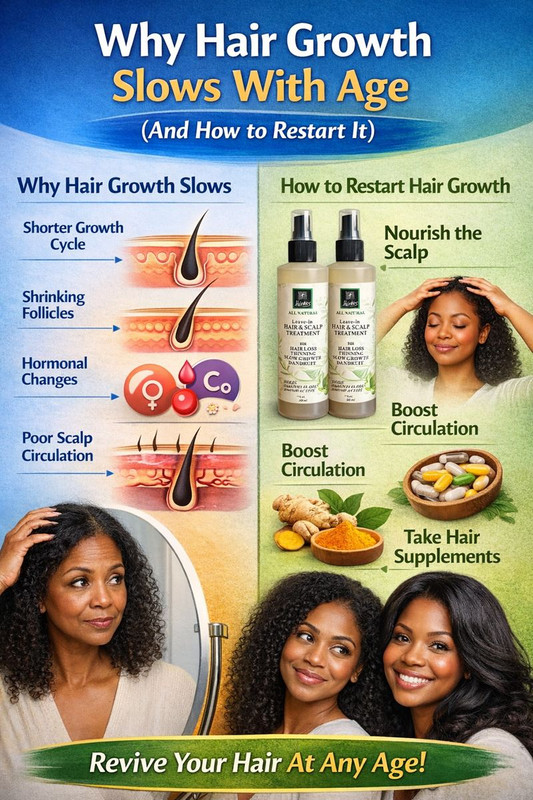
If it feels like your hair used to grow faster, thicker, and longer in your teens or 20s—and now takes forever just to hit shoulder length—you’re not imagining it. Hair growth does slow with age, but not for the reasons most people think.
It’s not just “getting older.”
It’s biology, hormones, circulation, scalp health, inflammation, lifestyle stress, and how hair follicles change over time.
The good news?
Slower growth doesn’t mean permanent loss. With the right strategy, many people can restart dormant follicles, extend the growth phase, and noticeably improve thickness—even after 30, 40, or 50.
Let’s break it all down.
How Hair Growth Actually Works
Before understanding why growth slows, you need to understand how hair grows.
Hair doesn’t grow continuously—it moves through cycles:
1. Anagen (Growth Phase)
-
Lasts 2–7 years
-
Hair actively grows from the follicle
-
Longer anagen = longer hair potential
2. Catagen (Transition Phase)
-
Lasts 2–3 weeks
-
Growth stops
-
Follicle begins shrinking
3. Telogen (Resting Phase)
-
Lasts 3–4 months
-
Hair sheds to make room for new growth
Healthy hair spends 85–90% of its time in anagen.
As we age, that percentage drops.
Why Hair Growth Slows With Age
1. The Growth Phase Gets Shorter
One of the biggest changes with age is a shortened anagen phase.
-
Hair exits the growth phase sooner
-
Strands don’t reach their previous length
-
Hair feels like it “stalls” at a certain point
This is why:
-
Your hair may grow, but never past collarbone length
-
Protective styles no longer result in length retention
-
Ends seem to thin faster than they used to
Shorter growth cycles = slower visible growth.
2. Hair Follicles Shrink Over Time
As we age, hair follicles gradually miniaturize.
Miniaturization causes:
-
Thinner strands
-
Weaker hair shafts
-
Slower growth speed
-
Less resilient regrowth after shedding
This process doesn’t happen overnight—it’s slow and cumulative, which is why many people don’t notice until years later.
3. Reduced Blood Flow to the Scalp
Hair follicles rely on blood circulation to deliver:
-
Oxygen
-
Amino acids
-
Vitamins
-
Growth signals
With age:
-
Blood vessels become less elastic
-
Scalp circulation decreases
-
Follicles receive fewer nutrients
Poor circulation = follicles entering rest mode.
This is why scalp massage and stimulation become more important as you age—not less.
4. Hormonal Shifts Disrupt Growth Signals
Hormones are powerful regulators of hair growth.
Common age-related hormonal changes include:
-
Lower estrogen (especially after 30–40)
-
Fluctuating progesterone
-
Higher relative androgen sensitivity
-
Increased cortisol (stress hormone)
These changes can:
-
Shorten the growth phase
-
Increase shedding
-
Make follicles more sensitive to inflammation
-
Slow regeneration speed
This is especially noticeable after:
-
Pregnancy
-
Stopping birth control
-
Perimenopause
-
Menopause
-
Chronic stress periods
5. Increased Scalp Inflammation
Inflammation is one of the most overlooked causes of slow hair growth.
As we age:
-
Inflammatory markers increase
-
The scalp becomes more reactive
-
Follicles experience micro-inflammation
Signs include:
-
Itchy scalp
-
Tenderness
-
Tightness
-
Burning or soreness
-
Slow regrowth after shedding
Inflamed follicles prioritize survival—not growth.
6. Accumulated Product Buildup and Follicle Congestion
Years of:
-
Heavy oils
-
Styling gels
-
Dry shampoo
-
Silicone conditioners
-
Infrequent cleansing
…can clog follicles over time.
Blocked follicles:
-
Restrict oxygen
-
Trap inflammation
-
Prevent proper growth signals
-
Slow hair emergence from the scalp
This is why scalp detoxing becomes crucial with age.
7. Nutrient Absorption Declines
Aging affects digestion and nutrient uptake.
Key nutrients for hair growth—like iron, zinc, biotin, B-vitamins, and amino acids—may:
-
Be consumed but not absorbed
-
Be diverted to vital organs instead of hair
-
Decline due to gut inflammation or stress
Hair is non-essential to survival, so your body prioritizes everything else first.
8. Mechanical Damage Compounds Over Time
Years of:
-
Tight styles
-
Heat tools
-
Chemical processing
-
Tension at the hairline
…cause cumulative follicle stress.
Eventually, follicles:
-
Become traumatized
-
Regrow hair slower
-
Produce thinner strands
-
Enter prolonged resting phases
This is especially common around edges and temples.
Signs Your Hair Growth Has Slowed
You may be experiencing age-related slowing if:
-
Hair grows but won’t get longer
-
Ends thin faster than roots grow
-
Shedding takes longer to recover from
-
Hairline regrowth is slow
-
Protective styles no longer help
-
Hair feels finer overall
-
Growth feels uneven across the scalp
Can Hair Growth Be Restarted?
Yes—but the approach must change.
Restarting hair growth is about:
-
Re-activating dormant follicles
-
Extending the growth phase
-
Reducing inflammation
-
Improving scalp circulation
-
Supporting follicles with nutrients
-
Protecting new growth from breakage
This is not about quick fixes or miracle products.
How to Restart Hair Growth as You Age
1. Prioritize Scalp Health First
Healthy hair begins at the scalp.
Key steps:
-
Cleanse regularly (not just when hair feels dirty)
-
Remove buildup without stripping
-
Soothe inflammation
-
Maintain proper moisture balance
A clean, calm scalp allows follicles to stay active longer.
2. Increase Scalp Circulation Daily
Blood flow is non-negotiable for growth.
Try:
-
Daily fingertip scalp massage (5–10 minutes)
-
Circular motions with light pressure
-
Inversion techniques
-
Massage during oil application
This signals follicles that it’s safe to grow.
3. Use Growth-Supporting Botanicals
Natural actives can stimulate follicles without irritation.
Look for ingredients that:
-
Increase circulation
-
Reduce inflammation
-
Support follicle metabolism
-
Protect the scalp barrier
Botanical growth formulas work best consistently, not occasionally.
4. Reduce Chronic Inflammation
Lower inflammation inside and outside the body.
Focus on:
-
Anti-inflammatory scalp care
-
Stress management
-
Adequate sleep
-
Reducing tight styles
-
Gentle detangling
-
Avoiding chronic scalp irritation
Inflammation keeps follicles stuck in rest mode.
5. Extend the Growth Phase
To keep hair in anagen longer:
-
Maintain moisture balance
-
Avoid excessive protein overload
-
Minimize breakage
-
Reduce friction (silk scarves, satin pillowcases)
-
Trim strategically—not excessively
Length retention is just as important as growth speed.
6. Support Hair Growth From the Inside
Hair growth needs raw materials.
Focus on:
-
Adequate protein intake
-
Iron levels (especially for women)
-
Omega-3 fatty acids
-
Zinc and B-vitamins
-
Hydration
If nutrients are lacking, growth will slow—no matter what you apply topically.
7. Be Patient With the Restart Phase
When growth restarts:
-
Shedding may temporarily increase
-
Baby hairs may appear before length
-
Texture may feel different initially
-
Growth may be uneven at first
This is normal. Follicles don’t all wake up at once.
How Long Does It Take to See Results?
Timeline varies, but typically:
-
4–6 weeks: Reduced shedding, improved scalp comfort
-
8–12 weeks: New growth, baby hairs, thicker roots
-
3–6 months: Noticeable length retention
-
6–12 months: Improved density and growth consistency
Hair growth is slow—but consistency compounds.
Why Most People Fail to Restart Hair Growth
Common mistakes include:
-
Focusing only on products, not scalp health
-
Overloading hair with oils
-
Ignoring inflammation
-
Expecting results in 2 weeks
-
Switching routines too often
-
Skipping internal support
Hair growth requires systems, not shortcuts.
The Truth About Aging and Hair Growth
Aging doesn’t mean hair can’t grow.
It means hair needs better conditions.
With the right environment:
-
Follicles can re-activate
-
Growth cycles can lengthen
-
Density can improve
-
Shedding can stabilize
-
Hair can thrive well into your 40s, 50s, and beyond
The key is working with your biology—not against it.
Final Thoughts
Hair growth slows with age because:
-
Growth cycles shorten
-
Follicles shrink
-
Circulation decreases
-
Hormones shift
-
Inflammation rises
-
Nutrient delivery declines
But slowdown does not equal stop.
By prioritizing scalp health, reducing inflammation, improving circulation, and supporting follicles consistently, many people can restart growth and regain thickness—naturally and sustainably.
Your hair isn’t broken.
It’s responding to its environment.
Fix the environment, and growth follows.