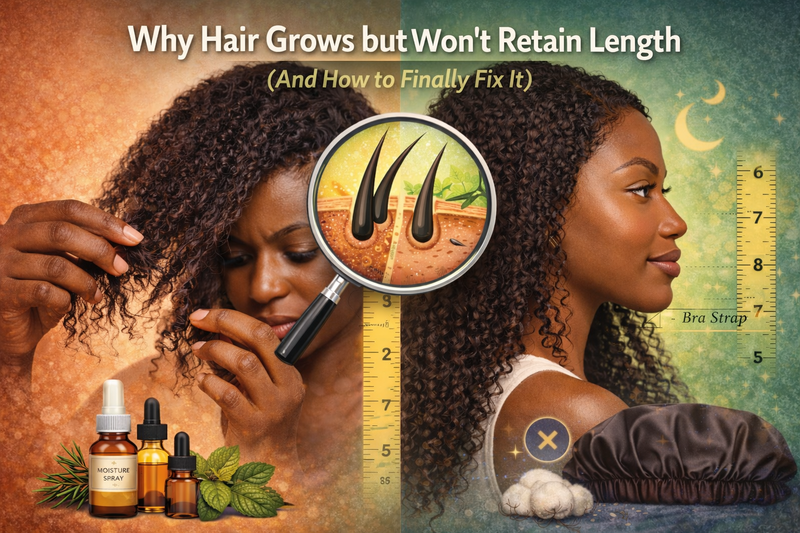
Introduction: “My Hair Is Growing… So Why Isn’t It Getting Longer?”
If you’ve ever said:
-
“My hair grows, but it never gets past this length”
-
“I see new growth, but my ends keep breaking”
-
“I’ve been natural for years, but my hair looks the same length”
You’re not alone — and you’re not crazy.
Here’s the truth: most people do not have a hair growth problem.
They have a length retention problem.
Hair growth and hair length are not the same thing. Hair can grow consistently from the scalp while breaking off at the ends just as fast — making it seem like your hair is “stuck.”
In this article, you’ll learn:
-
Why hair grows but won’t retain length
-
The most common (and sneaky) causes of breakage
-
How scalp health, moisture, and habits affect retention
-
What actually works to keep your length
-
How to build a routine that supports long-term growth
Let’s clear this up once and for all.
Hair Growth vs. Length Retention: What’s the Difference?
Hair growth happens at the scalp.
Length retention happens at the ends.
Your hair is constantly:
-
Growing from the root
-
Experiencing friction, dryness, and stress along the strand
-
Losing length through breakage and splitting
If breakage equals or exceeds growth, your hair stays the same length — no matter how fast it grows.
Average hair growth:
-
About ½ inch per month
-
Around 6 inches per year
If you’re retaining only half of that, you’ll barely notice progress.
The #1 Reason Hair Won’t Retain Length: Breakage
Breakage is enemy number one when it comes to length retention.
Common signs of breakage:
-
Short pieces of hair everywhere
-
Thinning ends
-
Uneven length
-
Hair snapping easily when moisturized
-
Hair that won’t grow past shoulders, collarbone, or bra-strap length
Breakage doesn’t always look dramatic — sometimes it’s slow, constant, and silent.
Why Hair Breaks Faster Than It Grows
1. Chronic Dryness (The Biggest Culprit)
Dry hair is fragile hair.
When hair lacks moisture:
-
The cuticle lifts
-
Strands lose elasticity
-
Hair snaps instead of bending
Textured hair (curly, coily, kinky) is naturally prone to dryness because natural oils have a harder time traveling down the hair shaft.
Without consistent moisture, length retention becomes nearly impossible.
2. Ignoring the Ends of Your Hair
Your ends are:
-
The oldest part of your hair
-
The most fragile
-
The most neglected
Many people focus on:
-
Scalp oils
-
New growth
-
Styles
…but forget to protect, seal, and moisturize their ends.
Unprotected ends eventually split, thin, and break off — erasing months of growth.
3. Excessive Manipulation
The more you touch your hair, the more opportunities there are for breakage.
Examples include:
-
Daily styling
-
Constant detangling
-
Over-brushing edges
-
Frequently changing styles
-
Playing in your hair
Hair thrives when left alone and properly moisturized.
4. Overwashing or Harsh Cleansing
Washing too often — or with harsh shampoos — strips hair of:
-
Natural oils
-
Moisture
-
Protective lipids
This leads to:
-
Increased dryness
-
Brittle strands
-
Breakage during detangling
Healthy cleansing supports retention; aggressive cleansing destroys it.
5. Protein–Moisture Imbalance
Hair needs both strength (protein) and flexibility (moisture).
Too much protein:
-
Hair feels stiff
-
Snaps easily
-
Breaks despite being “strong”
Too much moisture:
-
Hair feels mushy
-
Lacks structure
-
Stretches then breaks
Balanced hair bends, stretches, and returns without snapping.
6. Rough Detangling Practices
Detangling dry or tangled hair aggressively causes:
-
Mechanical breakage
-
Split ends
-
Excess shedding
Using the wrong tools or rushing the process is one of the fastest ways to lose length.
7. Tight Hairstyles and Constant Tension
Styles that pull on the hair — especially the edges and nape — cause:
-
Stress at the root
-
Weak strands
-
Breakage near the scalp
Even “protective” styles can become destructive if installed too tightly or worn too long.
The Role of Scalp Health in Length Retention
While retention happens at the ends, growth quality begins at the scalp.
An unhealthy scalp produces:
-
Weaker strands
-
Thinner hair
-
Hair that breaks easily before it has a chance to retain length
Scalp issues that affect retention include:
-
Inflammation
-
Buildup
-
Dryness
-
Poor circulation
Using nourishing scalp products — like Hairobics All Natural Scalp Rejuvenator Oil — supports healthier, stronger strands from the start.
Why Your Hair “Stops” at Certain Lengths
Many people experience a length plateau, where hair seems stuck.
This usually happens because:
-
Breakage increases as hair gets longer
-
Ends are exposed to more friction (clothes, shoulders, bras)
-
Moisture doesn’t reach the ends consistently
-
Protective habits decrease over time
Longer hair requires more intentional care, not less.
How to Finally Retain Length: What Actually Works
1. Moisturize Consistently (Not Occasionally)
Moisture is non-negotiable for retention.
Effective moisture routines include:
-
Water-based leave-ins
-
Lightweight moisturizing sprays
-
Sealing with natural oils
Products like Hairobics Raaw Roots Moisturizing Spray hydrate hair without buildup and are ideal for daily or frequent use.
2. Seal Your Ends
After moisturizing, seal moisture in using:
-
Natural oils
-
Lightweight butters
-
Cream-oil layering methods
This reduces moisture loss and protects ends from splitting.
3. Focus on Low-Manipulation Styles
Low-manipulation styles protect length by reducing friction.
Examples:
-
Loose braids or twists
-
Buns (not tight)
-
Wash-and-go styles with minimal handling
-
Protective styles that don’t pull
The goal is less touching, more protecting.
4. Trim Strategically — Not Excessively
Trimming doesn’t make hair grow faster, but it:
-
Removes split ends
-
Prevents splits from traveling up the strand
-
Improves overall retention
Dust or trim only when necessary — not on a strict schedule.
5. Detangle Gently and With Slip
Always detangle:
-
On damp or moisturized hair
-
In sections
-
From ends to roots
Using slip-rich products reduces friction and breakage dramatically.
6. Sleep Protection Matters More Than You Think
Cotton pillowcases steal moisture.
Protect your hair at night with:
-
Satin or silk bonnets
-
Satin pillowcases
-
Protective nighttime styles
Nighttime friction alone can undo an entire routine.
7. Support Hair Health From the Inside
Length retention is affected by:
-
Hydration
-
Nutrition
-
Stress levels
-
Sleep quality
Internal dryness and inflammation often show up as fragile hair.
How Long Does It Take to See Length Retention Results?
With consistency, most people notice:
-
Less breakage within 2–4 weeks
-
Fuller ends in 6–8 weeks
-
Visible length retention in 3–6 months
Retention is cumulative — small habits add up to big results.
Final Thoughts: Retention Is the Missing Piece
If your hair grows but won’t retain length, the solution isn’t:
-
More growth oils
-
More supplements
-
More styling
It’s better protection, moisture, and consistency.
When you:
-
Reduce breakage
-
Protect your ends
-
Support scalp health
-
Maintain balance
your hair finally gets the chance to keep what it grows.
At Hairobics All Natural, we believe length comes from nurturing the scalp, strengthening the strands, and respecting the ends — because growth is natural, but retention is intentional.