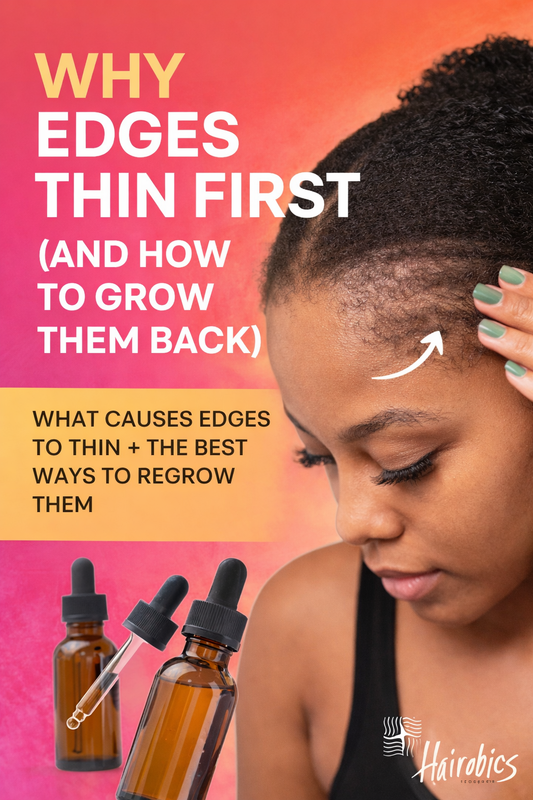
Healthy edges are one of the most delicate — and most important — parts of natural hair care. Your edges frame your face, define your hairstyles, and often signal the overall health of your hair.
Yet for many people with natural hair, edges are the first area to thin, break, or disappear.
You may notice:
-
Your hairline looking thinner over time
-
Baby hairs becoming sparse
-
Breakage around the temples
-
Bald or patchy spots along the edges
This can feel frustrating and confusing, especially if the rest of your hair looks thick and healthy.
The truth is that edges thin first for very specific biological and styling reasons. The good news is that in many cases, edges can grow back with the right care, patience, and products.
In this complete guide, we’ll cover:
-
Why edges are the most fragile part of your hair
-
The most common causes of thinning edges
-
The science behind hairline breakage
-
How traction alopecia develops
-
The best ways to regrow edges naturally
-
Daily habits that protect your hairline
-
The best ingredients for edge regrowth
-
A step-by-step routine to restore thinning edges
Let’s start by understanding why the edges are so vulnerable in the first place.
Why Edges Thin First
The hair around your hairline is biologically different from the rest of your hair.
Edges are naturally finer, softer, and more fragile than the hair in the middle of your scalp.
There are several reasons for this.
1. Edges Have Finer Hair Strands
Hair density and thickness vary across the scalp.
The hairline typically has:
-
Smaller hair follicles
-
Thinner strands
-
Slower growth cycles
This makes edges naturally more delicate.
Because the strands are thinner, they break more easily under tension.
2. The Hairline Experiences the Most Manipulation
Your edges are constantly being styled.
Common styling habits that affect edges include:
-
Edge control gels
-
Tight ponytails
-
Braids
-
Cornrows
-
Lace front wigs
-
Slick buns
-
Headbands
-
Hairline brushing
Over time, this repeated manipulation can weaken the hairline.
3. Edges Experience Constant Tension
The edges are usually the first part of the hair pulled during hairstyles.
Styles that place tension on edges include:
-
Braids
-
Weaves
-
Tight wigs
-
Ponytails
-
Loc retwists
-
Cornrows
Even mild tension repeated over time can cause thinning.
4. Edges Are More Exposed to the Environment
Unlike the rest of your hair, your edges are often exposed to:
-
Sunlight
-
Wind
-
Sweat
-
Friction
-
Pillowcases
-
Hats
This constant exposure can dry out the hairline.
Dry hair breaks more easily.
5. Edges Have a Shorter Growth Cycle
Hair grows in cycles:
-
Growth phase (anagen)
-
Transition phase (catagen)
-
Resting phase (telogen)
Hairline hairs often have a shorter growth cycle than the rest of the scalp.
That means they grow shorter and shed more often.
The Most Common Causes of Thinning Edges
Understanding the causes of thinning edges helps prevent further damage.
Traction Alopecia
One of the biggest causes of thinning edges is traction alopecia.
Traction alopecia occurs when hair is pulled repeatedly over time.
Common causes include:
-
Tight braids
-
Sew-ins
-
Tight ponytails
-
Tight buns
-
Lace wigs
-
Heavy extensions
Over time, the constant pulling damages the follicles.
If caught early, traction alopecia can be reversed.
If ignored, it can become permanent.
Tight Protective Styles
Protective styles are helpful for hair growth — but only when done correctly.
Styles that may damage edges include:
-
Box braids that are too tight
-
Cornrows pulling the hairline
-
Tight crochet styles
-
Tight faux locs
The tension placed on the hairline can slowly weaken follicles.
Excessive Edge Control Use
Edge control gels can make hairstyles look sleek and polished.
However, some gels contain ingredients that damage hair.
Common harmful ingredients include:
-
Alcohol
-
Petroleum
-
Heavy waxes
-
Drying polymers
These can lead to:
-
Dry edges
-
Breakage
-
Product buildup
Heat Damage
Heat styling tools like flat irons and curling irons can weaken the hairline.
Edges are especially vulnerable because they are thinner.
Repeated heat exposure can cause:
-
split ends
-
weakened strands
-
breakage
Chemical Damage
Chemical treatments can also damage edges.
Examples include:
-
relaxers
-
texturizers
-
hair dyes
-
bleach
The hairline is more sensitive to chemicals.
This makes edges more prone to damage.
Friction Damage
Friction is an often overlooked cause of thinning edges.
Common friction sources include:
-
cotton pillowcases
-
hats
-
scarves
-
rough fabrics
Friction causes hair to break at the hairline.
Hormonal Changes
Hormones also influence hair growth.
Hormonal changes from:
-
pregnancy
-
menopause
-
thyroid disorders
-
stress
can cause hairline thinning.
Nutritional Deficiencies
Hair health depends on proper nutrition.
Deficiencies in nutrients such as:
-
iron
-
vitamin D
-
zinc
-
biotin
-
protein
can slow hair growth and cause shedding.
Signs Your Edges Are Starting to Thin
Early detection is key.
Signs include:
-
widening temples
-
sparse baby hairs
-
uneven hairline
-
short broken hairs
-
increased shedding around edges
Addressing the problem early improves regrowth chances.
Can Edges Grow Back?
In many cases, yes.
Edges can grow back if:
-
the follicles are still alive
-
damage is not permanent
-
tension is removed early
Hair typically grows ½ inch per month.
With proper care, edges can recover in several months.
The Best Ways to Grow Edges Back
Regrowing edges requires patience and consistency.
Here are the most effective strategies.
Stop Tight Hairstyles
The first step is removing tension.
Avoid styles that pull the hairline.
Choose looser styles such as:
-
loose twists
-
low tension braids
-
wash-and-go styles
Reducing tension allows follicles to recover.
Keep Edges Moisturized
Dry edges break easily.
Moisturizing helps maintain elasticity.
Use lightweight products like:
-
leave-in conditioners
-
natural oils
-
moisturizing sprays
Hydrated hair is more resistant to breakage.
Massage the Hairline
Scalp massage increases blood flow.
Better circulation helps deliver nutrients to follicles.
Massage your edges daily with oils.
Use Hair Growth Oils
Certain natural oils support hair growth.
Examples include:
-
castor oil
-
rosemary oil
-
peppermint oil
-
coconut oil
-
jojoba oil
These oils nourish the scalp and strengthen strands.
Protect Edges at Night
Nighttime protection prevents friction damage.
Use:
-
satin bonnets
-
silk scarves
-
satin pillowcases
These reduce breakage while sleeping.
Avoid Heat on Edges
Minimize heat styling around the hairline.
Air-drying is safer.
Eat Hair-Healthy Foods
Healthy hair starts internally.
Foods that support hair growth include:
-
eggs
-
leafy greens
-
nuts
-
fish
-
berries
-
beans
A balanced diet supports follicle health.
Best Ingredients for Edge Regrowth
Certain ingredients are known to support hair growth.
Look for products containing:
Castor Oil
Castor oil is rich in fatty acids that strengthen hair.
It also supports scalp health.
Rosemary Oil
Studies show rosemary oil may stimulate hair growth.
It improves circulation to follicles.
Peppermint Oil
Peppermint oil increases blood flow to the scalp.
This may encourage hair growth.
Aloe Vera
Aloe helps soothe irritated scalps.
It also hydrates the hairline.
Biotin
Biotin strengthens keratin production.
This helps hair grow stronger.
A Daily Edge Growth Routine
Consistency is key.
Here’s a simple routine.
Morning
-
Apply a lightweight moisturizer
-
Avoid tight styles
-
Protect edges when styling
Evening
-
Massage edges with oil
-
Wrap hair in a satin scarf
Weekly
-
Deep condition hair
-
Clarify scalp if needed
Hairstyles That Protect Edges
Edge-friendly styles include:
-
loose braids
-
twist outs
-
bantu knots
-
wigs with loose hairlines
-
wash-and-go styles
Avoid styles that pull the hairline.
Mistakes That Make Edges Worse
Avoid these common mistakes:
-
brushing edges aggressively
-
overusing edge control
-
installing tight braids
-
ignoring early thinning
-
skipping scalp care
When to See a Dermatologist
If edges continue thinning despite care, consult a dermatologist.
You may be experiencing:
-
alopecia areata
-
scarring alopecia
-
hormonal hair loss
Professional treatment may be needed.
How Long Does Edge Regrowth Take?
Hair grows slowly.
Typical regrowth timelines:
3 months: baby hairs appear
6 months: visible thickening
12 months: fuller hairline
Consistency is essential.
Final Thoughts
Thinning edges are incredibly common, especially among people with natural hair.
The good news is that edges can often recover with the right care.
Remember the key steps:
-
reduce tension
-
keep edges moisturized
-
protect hairline at night
-
nourish the scalp
-
maintain healthy styling habits
With patience and consistency, your edges can grow back stronger and healthier.
Healthy edges start with healthy habits.