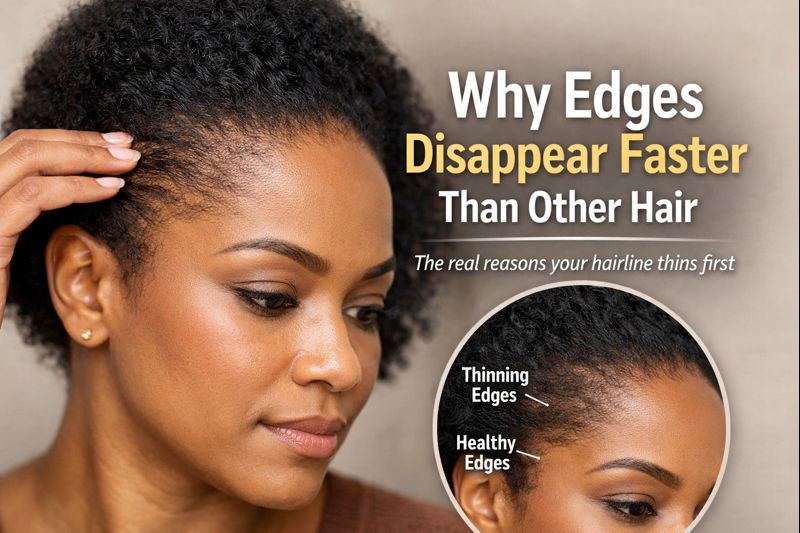
If it feels like your hair can grow everywhere except your edges, you’re not imagining it. Your edges — also called the hairline or temples — are biologically, structurally, and mechanically different from the rest of your hair. That makes them far more vulnerable to thinning, breakage, and permanent loss if they’re not treated correctly.
The good news?
Edges don’t “randomly” disappear. They retreat for specific, predictable reasons — and once you understand those reasons, you can slow, stop, and often reverse the damage.
Let’s break it all down.
What Makes Edges Different From the Rest of Your Hair?
Edges aren’t just “short hairs.” They’re a unique zone with built-in disadvantages.
1. Edges Have Finer Hair Strands
Hair along the hairline is naturally:
-
Thinner in diameter
-
Less dense
-
Shorter growth cycles
That means edges break faster, dry out quicker, and take longer to show visible growth.
While the hair on your crown or back may tolerate stress, edges hit their breaking point much sooner.
2. Edges Have a Shorter Growth Cycle
Every hair grows in cycles:
-
Anagen (growth phase)
-
Catagen (transition phase)
-
Telogen (resting/shedding phase)
Edges spend less time in the growth phase than other areas. When damage occurs, they don’t “bounce back” as fast — which is why thinning edges feel permanent even when they’re not.
The #1 Reason Edges Disappear Faster: Chronic Tension
Tension is the silent edge killer.
Traction Alopecia Explained
Traction alopecia happens when hair is pulled repeatedly over time. Unlike sudden breakage, this damage is gradual — which is why people don’t notice it until their edges are already thin.
Common tension triggers include:
-
Tight ponytails
-
Sleek buns
-
Braids and cornrows pulled too tight
-
Wigs and sew-ins with tight bands
-
Baby hair styling with firm brushes and gels
Even “not that tight” styles can cause damage if worn frequently.
Why Edges Can’t Handle Tension
Edges:
-
Anchor directly to delicate facial skin
-
Have less protective fat and tissue
-
Sit in a high-movement area (talking, sleeping, expressions)
That constant micro-pull adds up fast.
Over-Styling Baby Hairs Is Doing More Harm Than You Think
Laid edges look cute — but repeated manipulation is destructive.
The Baby Hair Myth
Most “baby hairs” aren’t baby hairs at all. They’re mature hairs with fine strands. Brushing them daily, coating them in alcohol-based gels, and slicking them down weakens them over time.
Signs of over-styled edges:
-
Edges won’t grow past a certain length
-
Hairs snap when you touch them
-
The hairline looks sparse but smooth (not patchy)
That smooth look often means breakage, not genetics.
Chemical Exposure Weakens Edges First
Edges are the first to suffer when harsh ingredients are involved.
Products That Damage Edges Over Time
-
Alcohol-heavy edge controls
-
Strong holding sprays
-
Frequent relaxers or texturizers
-
Hair dyes applied too close to the hairline
Because edges are finer, chemicals penetrate faster and strip moisture quicker — leaving them brittle and prone to snapping.
Dryness Hits Edges Harder Than Any Other Area
Edges dry out faster because:
-
They’re exposed to air and friction
-
Natural scalp oils don’t reach them easily
-
Facial cleansers strip moisture near the hairline
Dry hair breaks. Period.
If your edges feel rough, crunchy, or stiff, growth will stall no matter how many growth oils you apply.
Nighttime Friction Is an Edge Assassin
Most people protect their length but ignore their hairline.
What Happens While You Sleep
-
Cotton pillowcases absorb moisture
-
Tossing and turning creates friction
-
Edges rub against fabric repeatedly
Over time, this leads to:
-
Thinning temples
-
Uneven hairlines
-
Short, broken edge hairs that never catch up
Hormones and Health Play a Bigger Role Than You Think
Edges are extremely sensitive to internal changes.
Common Triggers
-
Postpartum hormone shifts
-
Thyroid imbalances
-
High cortisol (stress hormone)
-
Iron or vitamin D deficiency
When the body prioritizes survival, hair growth — especially at the edges — drops low on the list.
Protective Styles Can Either Save or Destroy Your Edges
Protective styles aren’t automatically protective.
Styles That Harm Edges
-
Tight braids around the hairline
-
Lace fronts glued repeatedly to edges
-
Crochet installs without leave-out care
Styles That Help
-
Loose twists
-
Low-tension wigs with proper prep
-
Styles that keep edges moisturized and untouched
Protection only works if tension and dryness are eliminated.
Why Edges Take Longer to Grow Back
Even when damage stops, regrowth takes time.
The Edge Recovery Timeline
-
0–30 days: Reduced shedding and breakage
-
30–90 days: Fine regrowth appears
-
3–6 months: Density improves
-
6–12 months: Visible fullness (if follicles aren’t scarred)
Consistency matters more than products.
How to Stop Edge Loss (Starting Today)
1. Remove Daily Tension
-
Rotate hairstyles
-
Avoid slick styles back-to-back
-
Loosen ponytails and braids
2. Moisturize Edges Separately
Edges need:
-
Lightweight hydration
-
Oils that absorb, not sit
-
Gentle massage to increase blood flow
3. Limit Edge Styling
-
Skip daily brushing
-
Use fingers instead of hard brushes
-
Avoid alcohol-based gels
4. Protect at Night
-
Satin or silk scarf
-
Edge-friendly bonnet fit
-
Satin pillowcase as backup
Can Edges Grow Back?
Yes — if follicles aren’t permanently damaged.
Signs regrowth is possible:
-
Short, fine hairs present
-
No shiny, smooth bald patches
-
Mild thinning rather than complete loss
If edges are completely smooth and shiny, professional evaluation may be needed.
The Biggest Edge Growth Mistake People Make
Expecting edges to grow like the rest of their hair.
Edges:
-
Need more moisture
-
Need less manipulation
-
Need longer recovery time
When you treat edges like fragile fabric instead of durable rope, they respond.
Final Thoughts: Edges Don’t Disappear Without a Reason
Edges thin faster because they:
-
Are finer by nature
-
Experience more tension
-
Dry out more easily
-
React faster to stress and hormones
The solution isn’t aggressive growth routines — it’s gentle consistency.
Protect them. Moisturize them. Leave them alone.
That’s how edges stay.