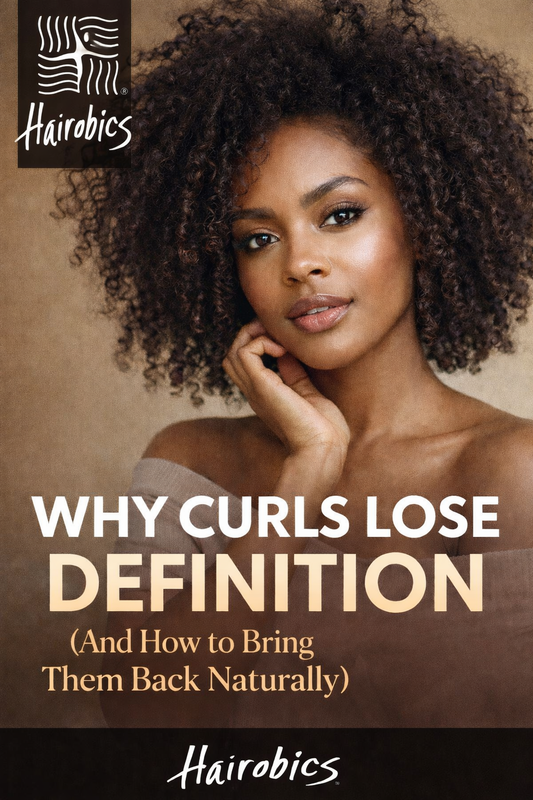
If you’ve ever looked in the mirror and wondered, “Why don’t my curls look the way they used to?” — you’re not alone.
Curl definition can change gradually or suddenly. One day your coils are popping. The next day they look stretched, frizzy, dry, or undefined. For women with natural hair — especially textured, curly, coily, and Type 3–4 hair — loss of curl definition can feel frustrating and confusing.
The good news? Curls don’t randomly disappear. There is always a reason.
In this guide, we’ll break down:
-
Why curls lose definition
-
The science behind curl pattern changes
-
How aging, hormones, stress, and weather impact curls
-
The difference between dryness and damage
-
How to restore curl definition naturally
-
A long-term curl preservation strategy
If you’re building healthy, long-term curl structure, this will help you understand what your hair is trying to tell you.
What Does “Curl Definition” Actually Mean?
Curl definition refers to how clearly your natural curl pattern forms and clumps together.
Defined curls:
-
Form consistent spirals, coils, or waves
-
Reflect light
-
Clump together in smooth sections
-
Appear hydrated and elastic
Undefined curls:
-
Look frizzy or puffy
-
Separate into thin, stringy strands
-
Lose spring or bounce
-
Feel dry or rough
Definition isn’t about perfection. It’s about structure + moisture + elasticity working together.
When one of those is missing, curl clarity fades.
The 7 Main Reasons Curls Lose Definition
1. Moisture Imbalance (The #1 Cause)
Curls thrive on moisture because curly hair has bends and curves that prevent natural scalp oils from traveling down the shaft.
When moisture drops:
-
The cuticle lifts
-
Strands separate
-
Frizz increases
-
Curl clumps fall apart
But here’s something important: Over-moisturizing can also reduce definition.
Too much water without structural support causes curls to feel:
-
Mushy
-
Limp
-
Overly soft
-
Undefined
Healthy curls need balanced hydration + structural strength.
2. Protein Weakness
Hair is made primarily of keratin protein.
When protein levels drop:
-
Curls stretch too easily
-
Pattern loosens
-
Hair won’t bounce back
-
Ends look frayed
This is common after:
-
Chemical treatments
-
Excessive heat
-
Frequent coloring
-
Postpartum shedding
If your curls feel stretchy but weak, they may need structural reinforcement — not just moisture.
3. Product Buildup
Heavy oils, silicones, gels, and butters can coat the hair shaft over time.
Buildup:
-
Blocks moisture from entering
-
Weighs curls down
-
Causes stringy sections
-
Makes curls appear flat
If your wash day results keep getting worse, buildup may be the culprit.
Signs include:
-
Hair feels coated even after washing
-
Scalp itches
-
Curls don’t respond to styling products
4. Scalp Health Changes
Healthy curls start at the root.
If your scalp becomes:
-
Inflamed
-
Overly dry
-
Oily
-
Congested
Your hair follicles may produce weaker strands, which affects how curls form.
Inflammation can disrupt growth cycles and weaken the structural integrity of the strand.
A healthy scalp = stronger curl structure.
5. Hormonal Shifts
Hormones play a major role in curl pattern.
Curls often change:
-
After pregnancy
-
After stopping birth control
-
During menopause
-
During high stress
Estrogen supports hair growth. Cortisol (stress hormone) can shrink hair follicles and disrupt growth cycles.
Hormonal changes don’t just affect growth — they can alter texture.
6. Heat Damage
Even minimal heat over time can stretch curl bonds.
Heat weakens hydrogen bonds inside the strand. Once broken repeatedly:
-
Curl memory fades
-
Pattern loosens
-
Ends lose spiral structure
Flat irons and blow dryers are the biggest culprits, but even high-heat diffusing can contribute.
7. Aging
As we age:
-
Sebum production decreases
-
Hair diameter changes
-
Growth slows
-
Elasticity drops
This makes curls appear:
-
Drier
-
Thinner
-
Less defined
The curl pattern may not disappear — but it may require more support than it did in your 20s.
Environmental Causes of Curl Loss
Humidity
Humidity causes hydrogen bonds in hair to absorb excess moisture from the air. This leads to swelling and frizz.
Dry Air (Winter)
Low humidity pulls moisture out of hair, causing stiffness and breakage.
Hard Water
Mineral deposits:
-
Coat strands
-
Cause dullness
-
Reduce product absorption
-
Make curls limp
If your curls behave differently after moving cities, water quality may be the issue.
The Science Behind Curl Pattern
Hair shape is determined by the follicle.
Round follicle → straight hair
Oval follicle → wavy hair
Flat/elliptical follicle → curly/coily hair
Curl definition depends on:
-
Hydrogen bonds
-
Disulfide bonds
-
Moisture levels
-
Cuticle alignment
When bonds weaken or cuticles lift, curl clarity fades.
Restoring definition means restoring:
-
Bond integrity
-
Cuticle smoothness
-
Moisture balance
How to Restore Curl Definition Naturally
Now let’s talk solutions.
Step 1: Reset With a Clarifying Wash
Start fresh.
Use a gentle clarifying shampoo to remove buildup. This allows moisture to penetrate properly.
Focus on:
-
Scalp massage
-
Thorough rinse
-
Follow with a hydrating conditioner
Step 2: Rebalance Moisture + Strength
Alternate:
-
Deep moisture treatments
-
Light protein support treatments
If curls feel:
-
Limp → add light protein
-
Stiff → add moisture
-
Both → balance them weekly
Consistency is key.
Step 3: Support the Scalp
Healthy curls start at the root.
Massage your scalp 3–4 times per week to:
-
Increase blood circulation
-
Reduce tension
-
Encourage healthier strands
Look for botanical oils that nourish without suffocating follicles.
Step 4: Use Lightweight Styling Products
Heavy butters can blur definition.
Instead:
-
Use water-based leave-ins
-
Apply curl creams sparingly
-
Use gels for clumping
-
Avoid layering too many products
Technique matters more than quantity.
Step 5: Master Curl Clumping
After washing:
-
Apply product on soaking wet hair
-
Use praying hands method
-
Gently scrunch upward
-
Let curls air dry or diffuse on low heat
Touching hair too much while drying breaks clumps apart.
Step 6: Protect at Night
Cotton pillows steal moisture.
Switch to:
-
Satin pillowcases
-
Silk bonnets
-
Loose pineapple method
Night protection preserves curl grouping.
Why Some Curls Never “Bounce Back”
In some cases, definition loss is permanent.
This may happen after:
-
Severe heat damage
-
Repeated chemical relaxers
-
Long-term follicle miniaturization
-
Chronic inflammation
In these cases, focus shifts from restoration to rebuilding healthy new growth.
Healthy new growth = future definition.
The Long-Term Curl Preservation Strategy
For sustainable definition:
Weekly
-
Cleanse scalp
-
Condition deeply
-
Apply lightweight styling
Monthly
-
Clarify
-
Trim damaged ends
-
Evaluate product buildup
Quarterly
-
Assess protein/moisture balance
-
Replace old styling tools
-
Revisit scalp care routine
Definition is not a one-day fix. It’s a system.
Lifestyle Factors That Affect Curl Definition
Curls reflect internal health.
Sleep
Poor sleep increases cortisol → weakens follicles.
Diet
Low iron, protein, or omega-3 intake can thin strands.
Hydration
Dehydration reduces elasticity.
Stress
Chronic stress shortens growth phase and impacts strand strength.
Curl definition isn’t just cosmetic — it’s biological.
Signs Your Curls Are Recovering
You’ll notice:
-
More natural clumping
-
Increased shine
-
Stronger elasticity
-
Less frizz
-
Reduced breakage
Progress takes 4–8 weeks of consistency.
The Biggest Mistakes That Blur Curls
-
Over-manipulation
-
Excessive product layering
-
Skipping clarifying washes
-
Heat styling weekly
-
Tight protective styles
-
Ignoring scalp inflammation
Curls thrive on balance and patience.
How Hairobics Supports Curl Definition
At Hairobics All Natural, we focus on:
-
Scalp nourishment
-
Lightweight hydration
-
Botanical strengthening ingredients
-
Long-term follicle support
When the scalp is supported and strands are balanced, curl definition becomes easier to maintain.
Healthy roots produce stronger strands. Stronger strands hold curl memory better.
Final Thoughts: Curls Don’t Disappear Without a Reason
If your curls look different, your hair is communicating something.
Loss of definition is usually caused by:
-
Moisture imbalance
-
Protein weakness
-
Product buildup
-
Hormonal shifts
-
Scalp inflammation
-
Environmental stress
The key isn’t panic. It’s assessment + consistency.
Curls are resilient.
With the right care routine, most curl patterns can regain structure, shine, and bounce.
Your curls haven’t failed you.
They’re just asking for balance.