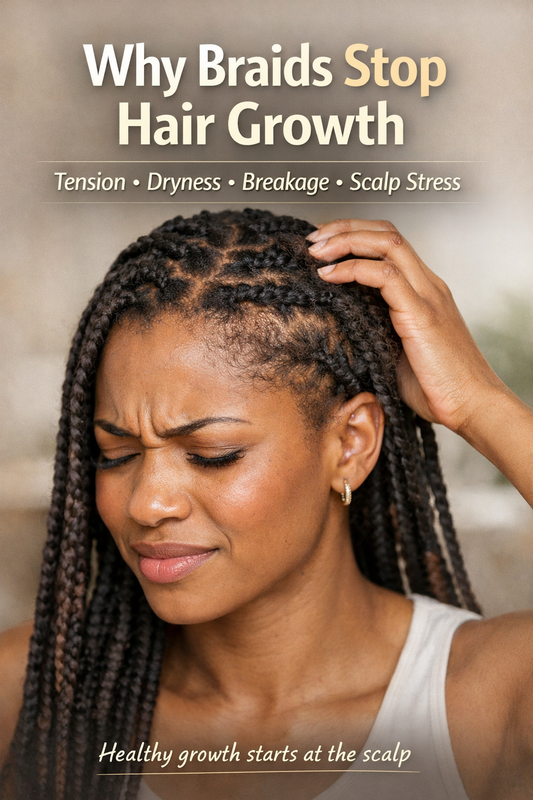
Introduction: Are Braids Really Helping Your Hair Grow?
Braids are one of the most popular hairstyles in the world — especially for natural, curly, coily, and textured hair. They’re often marketed as “protective styles” that help hair grow longer, stronger, and healthier.
But here’s the confusing reality many people experience:
-
Hair grows fine without braids
-
Braids are installed
-
Hair starts shedding, thinning, or breaking
-
Length seems stalled or even shorter after takedown
So what’s really going on?
The truth is braids do not grow hair — and when done incorrectly or worn too often, they can actually slow growth, cause breakage, and damage follicles.
In this article, you’ll learn:
-
Why braids seem to stop hair growth
-
The difference between growth and retention
-
How braids can damage the scalp and strands
-
Common braid mistakes that sabotage progress
-
How to wear braids safely without losing length
Let’s break it all down.
Do Braids Actually Stop Hair Growth?
Hair growth happens inside the scalp, not in the hairstyle.
So technically, braids do not stop hair from growing. However, they can:
-
Increase breakage
-
Damage follicles
-
Cause inflammation
-
Reduce blood flow
-
Interfere with moisture balance
When breakage equals or exceeds growth, it looks like hair has stopped growing — even though the scalp is still producing new hair.
This is where most people get misled.
Growth vs. Length Retention: The Real Issue
Hair grows at an average rate of:
-
½ inch per month
-
6 inches per year
If you grow 6 inches a year but lose 5 inches to breakage, you’ll barely see progress.
Braids often affect length retention, not growth itself.
The #1 Reason Braids Stop Hair Progress: Tension
Tight Braids Stress the Hair Follicle
When braids are installed too tightly, they create constant tension at the root. This leads to:
-
Scalp inflammation
-
Reduced blood circulation
-
Follicle fatigue
-
Weak hair strands
Over time, this stress can result in:
-
Thinning edges
-
Breakage at the root
-
Traction alopecia
If your scalp hurts after installation, damage is already happening.
Traction Alopecia: The Silent Growth Killer
Traction alopecia is hair loss caused by repeated pulling on the hair follicles.
Braids that are:
-
Too tight
-
Too heavy
-
Installed too frequently
-
Worn for long periods
can permanently damage follicles — especially around the edges and nape.
Once follicles are scarred, regrowth becomes difficult or impossible.
Braids Can Dry Out Hair (Yes, Really)
Braids often hide dryness, making people think their hair is protected when it’s actually dehydrated.
Why Braids Cause Dryness:
-
Hair is harder to access
-
Moisture routines get skipped
-
Products don’t reach the strands properly
-
Natural oils can’t travel down the hair shaft
Dry hair becomes brittle — and brittle hair breaks.
Product Buildup Under Braids
Many people overload their scalp with:
-
Thick oils
-
Heavy creams
-
Greasy sprays
Under braids, this leads to:
-
Clogged follicles
-
Itchiness
-
Inflammation
-
Flaking
-
Slower growth
An unhealthy scalp cannot support healthy hair growth.
Braids Add Weight to the Hair Shaft
Braids — especially long or jumbo styles — add extra weight to your hair.
This weight:
-
Pulls on follicles
-
Weakens the root
-
Causes shedding at takedown
Synthetic hair makes this worse, especially when installed tightly.
Overlapping Braids = Repeated Stress
Many people braid their hair back-to-back with no break in between.
This means:
-
The same follicles are constantly under tension
-
The scalp never fully recovers
-
Inflammation becomes chronic
Hair needs rest periods just like muscles do.
Improper Prep Before Braiding
Braids are only protective if the hair underneath is healthy.
Common prep mistakes include:
-
Braiding dry hair
-
Skipping deep conditioning
-
Not detangling thoroughly
-
Braiding over split ends
Braiding unhealthy hair locks damage in — it doesn’t fix it.
Why Hair Breaks During Braid Takedown
Many people lose more hair during removal than during installation.
Causes include:
-
Hair matting inside braids
-
Shed hair not being released
-
Rushing the takedown process
-
Removing braids on dry hair
This breakage erases months of growth in hours.
How Long Is Too Long to Wear Braids?
Most stylists agree:
-
6–8 weeks max is ideal for most braid styles
Beyond that:
-
New growth tangles with shed hair
-
Hair becomes dry and fragile
-
Breakage risk increases dramatically
Edges and fine hair may need even shorter durations.
Braids and Scalp Inflammation
Tight braids, buildup, and dryness can cause scalp inflammation, which:
-
Reduces blood flow
-
Weakens follicles
-
Disrupts growth cycles
Inflamed scalps produce weaker hair that breaks more easily.
Using lightweight, anti-inflammatory scalp oils — like Hairobics All Natural Scalp Rejuvenator Oil — can help soothe irritation and support healthy follicles while wearing braids.
When Braids Can Help Hair Growth
Braids can support hair progress when done correctly.
Healthy braids:
-
Reduce daily manipulation
-
Protect ends from friction
-
Allow moisture retention
-
Give hair a break from styling
The key is how they’re installed, worn, and maintained.
How to Wear Braids Without Stopping Hair Growth
1. Never Braid Too Tight
If it hurts, it’s harmful. Period.
2. Moisturize the Hair Underneath
Use lightweight, water-based sprays regularly to hydrate hair and scalp.
3. Keep the Scalp Clean
Cleanse gently every 2–3 weeks to prevent buildup.
4. Limit Braid Duration
Remove braids within 6–8 weeks.
5. Take Breaks Between Styles
Give your scalp at least 1–2 weeks of rest.
6. Protect Your Edges
Avoid braiding edges tightly — or leave them out entirely.
7. Be Gentle During Takedown
Remove braids slowly on moisturized hair.
Protective Styling vs. Protective Habits
Braids are not protective by default.
Protective habits matter more than protective styles.
These habits include:
-
Moisture consistency
-
Scalp care
-
Gentle handling
-
Low tension
-
Proper prep and takedown
Without these, braids can become destructive.
Signs Your Braids Are Hurting Your Hair
Watch out for:
-
Persistent scalp pain
-
Red bumps or inflammation
-
Excessive itching
-
Thinning edges
-
Breakage after takedown
-
Short hairs around the hairline
These are warnings — not normal side effects.
Final Thoughts: Braids Don’t Stop Growth — Bad Braiding Does
Braids don’t stop hair from growing.
Poor installation, tension, dryness, and neglect do.
When braids are:
-
Too tight
-
Too heavy
-
Too frequent
-
Poorly maintained
they sabotage the very growth people expect them to support.
With the right approach — gentle tension, moisture, scalp care, and rest — braids can still be part of a healthy hair routine.
At Hairobics All Natural, we believe real growth comes from:
-
Healthy scalps
-
Moisturized strands
-
Low stress on follicles
because hair grows best when it’s cared for — not pulled.