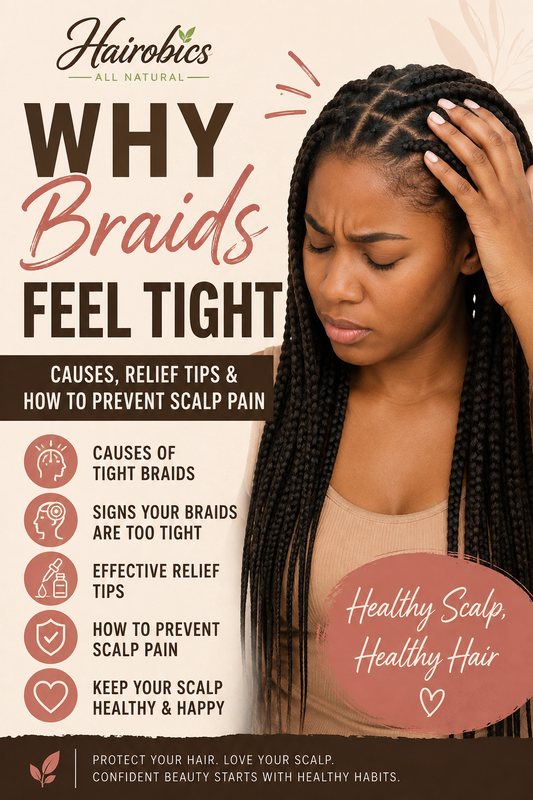
Braids are one of the most popular protective hairstyles for natural hair. Whether you're wearing box braids, knotless braids, cornrows, twists, or feed-in braids, they can help reduce daily manipulation while protecting your hair from environmental damage. However, one common complaint many people have after getting their hair braided is that their scalp feels painfully tight.
If you've ever wondered "Why do my braids feel so tight?", you're not alone. Tight braids are incredibly common, especially during the first few days after installation. While some mild tension is expected, excessive tightness can lead to discomfort, headaches, inflammation, hair breakage, and even permanent hair loss if ignored.
In this complete guide, you'll learn why braids feel tight, how long the discomfort typically lasts, effective ways to relieve scalp pain, and how to prevent tight braids in the future.
Why Do Braids Feel Tight?
The primary reason braids feel tight is tension placed on the hair follicles.
During braiding, small sections of hair are stretched while synthetic or human hair is added. Every braid pulls slightly on the scalp.
If the braider grips too firmly or adds too much extension hair, that tension increases dramatically.
Your scalp contains thousands of tiny nerve endings that detect pulling. When these nerves are overstimulated, you experience:
- Pain
- Tenderness
- Tightness
- Burning
- Headaches
- Sensitivity
Think of it like constantly pulling on a rubber band. Eventually the tension becomes uncomfortable.
Is It Normal for Braids to Feel Tight?
Yes—but only to a point.
Mild tightness during the first 24–72 hours is fairly common.
However, your braids should never:
- Cause unbearable pain
- Produce bleeding
- Create bumps filled with pus
- Pull your eyebrows upward
- Prevent you from sleeping
- Cause constant headaches
These are signs the braids are too tight.
Signs Your Braids Are Too Tight
Watch for these warning signs:
Tiny bumps around the hairline
These bumps are inflamed follicles caused by excessive tension.
Severe scalp pain
Pain that continues for several days isn't normal.
Redness
Inflammation is your body's response to injury.
White bumps
Sometimes follicles become irritated and swollen.
Hair breaking
If hairs snap near the scalp, the tension is excessive.
Headaches
Tight braids can create tension headaches from constant pulling.
Difficulty moving your scalp
Your scalp should still feel flexible.
Why Braiders Sometimes Braid Too Tight
Several factors contribute.
They want the style to last longer
Some stylists believe tighter braids equal longer-lasting hairstyles.
Unfortunately, tighter isn't always better.
They grip too firmly
Some braiders naturally use more hand pressure than others.
Small braid sections
Tiny braids require more tension to maintain shape.
Heavy extensions
Large amounts of extension hair increase the weight pulling on each follicle.
Thick synthetic hair
Some brands of braiding hair are heavier than others.
Trying to create "neat" edges
The hairline is extremely delicate.
Excessive pulling around the edges is one of the biggest causes of traction alopecia.
Why Knotless Braids Usually Hurt Less
Knotless braids begin with your natural hair before extension hair is gradually added.
This reduces:
- Initial tension
- Weight
- Pulling
- Pressure
Many people find knotless braids significantly more comfortable than traditional box braids.
Why Cornrows Can Feel Tighter
Cornrows are braided directly against the scalp.
Since every braid is anchored tightly across the head, tension is distributed continuously.
This often creates:
- Forehead tightness
- Neck soreness
- Scalp tenderness
Can Tight Braids Cause Hair Loss?
Yes.
One of the biggest risks is traction alopecia.
Traction alopecia occurs when repeated pulling damages hair follicles.
Early signs include:
- Thinning edges
- Receding hairline
- Broken baby hairs
- Wider parts
- Reduced hair density
If caught early, hair often regrows.
Long-term damage can become permanent.
Why Your Scalp Burns
Burning sensations usually indicate inflammation.
Your follicles become irritated from:
- Constant pulling
- Tight braid tension
- Swelling
- Reduced circulation
Burning should improve within a few days.
Persistent burning should not be ignored.
Why Tight Braids Cause Headaches
Your scalp muscles are connected to muscles in the forehead, temples, and neck.
Constant pulling creates muscle tension that radiates into headaches.
Many people notice headaches disappearing shortly after loosening the braids.
How Long Should Tight Braids Hurt?
Most mild discomfort improves within:
- 24 hours
- 48 hours
- 72 hours
If severe pain continues longer than three to five days, the braids may need to be loosened or removed.
How to Relieve Tight Braids
Use a Warm Compress
Warmth relaxes muscles and increases circulation.
Apply a warm (not hot) towel for 10–15 minutes.
Massage Around the Braids
Avoid pulling on the braids themselves.
Instead, gently massage the scalp between braid rows.
Wear Hair Down
Avoid buns or ponytails during the first week.
Adding extra tension increases discomfort.
Apply a Lightweight Scalp Oil
A nourishing oil can help reduce dryness and make the scalp feel more comfortable.
Choose lightweight oils such as:
- Jojoba oil
- Grapeseed oil
- Argan oil
Avoid applying excessive amounts, which can cause buildup.
Use a Scalp Mist
Hydrating sprays containing aloe vera or glycerin can soothe dryness and itching.
Take an Anti-Inflammatory (If Appropriate)
If your healthcare provider says it's safe, an over-the-counter anti-inflammatory medicine may help reduce pain and swelling.
Sleep on Satin
A satin bonnet or pillowcase reduces friction while preventing additional pulling overnight.
What Not to Do
Avoid these common mistakes:
- Pulling on individual braids
- Scratching aggressively
- Wearing tight ponytails
- Ignoring severe pain
- Leaving damaging braids installed for weeks
How to Prevent Tight Braids Next Time
Speak Up During Installation
If your braids hurt immediately, tell your stylist.
A skilled braider can adjust the tension before finishing.
Choose Knotless Braids
These styles are generally gentler on the scalp.
Request Medium Tension
Ask for a secure hold—not the tightest possible braid.
Avoid Excessive Extension Hair
More hair equals more weight.
Medium-density braids often protect the scalp better than extremely thick ones.
Protect Your Edges
Ask your stylist to braid the hairline more loosely.
Best Hairstyles If Your Scalp Is Sensitive
If you have a tender scalp, consider:
- Knotless box braids
- Loose twists
- Halo braids
- Flat twists
- Crochet styles
- Loose feed-in braids
- Protective buns
- Wig protective styles
These options generally create less tension than tightly installed traditional braids.
Frequently Asked Questions
Why do my braids hurt more at night?
Lying on the braids places pressure on already-sensitive follicles. A satin pillowcase and gentle positioning can reduce discomfort.
Can I wash tight braids?
Yes. A gentle scalp cleanse can reduce sweat and buildup, but washing will not necessarily loosen overly tight braids.
Should I remove painful braids?
If the pain is severe, if you notice bumps, bleeding, or increasing hair loss, removing the braids is the safest option.
Can tight braids damage edges?
Yes. The edges are especially fragile and are commonly affected by prolonged tension.
Will my scalp adjust?
Mild tightness often improves within a few days as the braids settle. Severe pain should not simply be endured.
Final Thoughts
Braids should protect your hair—not harm it. While a little tightness can be expected after a fresh install, intense pain, headaches, or scalp inflammation are signs that the style may be too tight. Listening to your scalp, choosing experienced braiders, and communicating about tension during your appointment can help you enjoy beautiful braids without sacrificing the health of your hair or scalp.
Healthy protective styling is about balancing neatness with comfort. By recognizing the warning signs of excessive tension and taking action early, you can reduce the risk of breakage, protect your edges, and keep your hair thriving beneath your favorite braided styles.
Conclusion
Understanding why braids feel tight empowers you to make healthier styling choices. Mild tension may fade within a few days, but persistent pain is never something to ignore. Prioritize scalp comfort, moisturize regularly, avoid unnecessary tension, and give your hair breaks between protective styles. With the right techniques and proper aftercare, braids can remain one of the safest and most effective ways to protect natural hair while supporting long-term growth and scalp health.