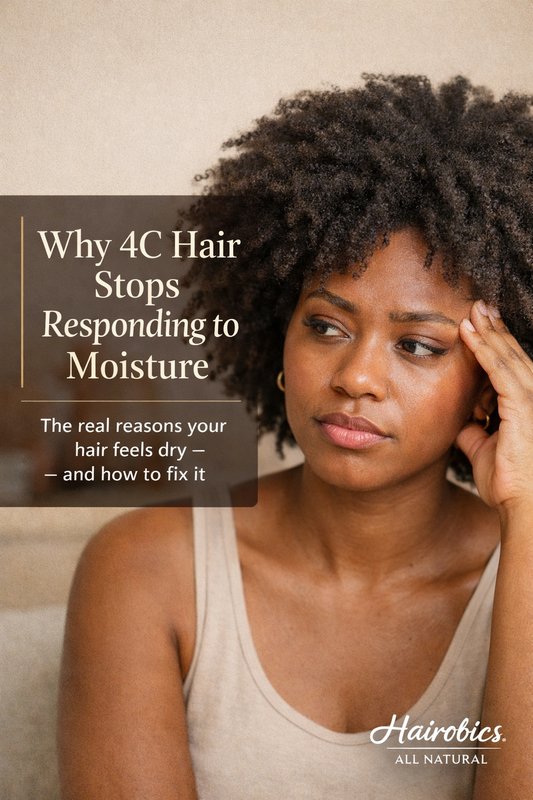
If you have 4C hair, you’ve probably said this at least once:
“I just moisturized my hair… why does it already feel dry?”
You spritz with water.
You seal with oil.
You deep condition.
You even try the latest viral product.
And still—your hair feels hard, dull, brittle, or unresponsive.
The truth is: 4C hair doesn’t stop responding to moisture randomly. It happens for specific, fixable reasons. Once you understand why your hair seems immune to moisture, you can finally reverse the dryness and get your softness, elasticity, and growth back.
Let’s break it all the way down.
What Moisture Actually Means for 4C Hair
Before fixing the problem, we need to clear up a major misconception.
Moisture Is Water — Not Oil
Moisture = water content inside the hair strand
Oil = a sealant that locks moisture in
4C hair thrives on hydration first, sealing second. When hair “stops responding to moisture,” it usually means one of two things:
-
Water is not penetrating the hair shaft
-
Water is escaping the hair too quickly
Both problems are common with tightly coiled 4C hair — but both are fixable.
1. Product Buildup Is Blocking Moisture
The Silent Moisture Killer
If your hair feels:
-
Waxy
-
Coated
-
Greasy but dry
-
Soft for 10 minutes, then crunchy
You’re likely dealing with product buildup.
Heavy butters, pomades, edge controls, gels, and oils can form a film around the hair strand. Once that layer builds up, water literally cannot get in.
Think of it like trying to moisturize skin while wearing plastic gloves.
Signs of Buildup
-
Hair doesn’t absorb water in the shower
-
Products sit on top of hair
-
Hair looks dull instead of shiny
-
Curl definition disappears
How to Fix It
-
Clarify every 3–4 weeks
-
Use a gentle sulfate or botanical clarifying shampoo
-
Follow immediately with a deep conditioner
? Pro tip: After clarifying, your hair should feel lighter and absorb water almost instantly.
2. You’re Overusing Oils and Butters
Oils are amazing — but only in the right amount.
The Problem With Too Much Oil
Oils do not hydrate hair. When used excessively:
-
They repel water
-
They block moisture penetration
-
They cause long-term dryness
Many people with 4C hair oil their scalp and hair daily, which slowly trains the hair to reject water.
The Solution
-
Use oils after water-based products
-
Choose lightweight oils (jojoba, grapeseed, argan)
-
Focus oils on sealing, not moisturizing
? Moisture routine rule: Liquid → Cream → Oil, not oil first.
3. Your Hair Cuticle Is Chronically Raised
When the cuticle stays open, moisture escapes fast.
What Raises the Cuticle?
-
Hot water
-
Heat styling
-
Harsh shampoos
-
Frequent manipulation
-
Rough towel drying
Raised cuticles cause hair to feel dry even when moisturized because hydration evaporates quickly.
How to Smooth the Cuticle
-
Rinse with cool or lukewarm water
-
Use pH-balanced conditioners
-
Apply leave-ins to soaking-wet hair
-
Seal moisture immediately
Healthy cuticles = moisture retention.
4. Protein Overload Is Making Hair Hard
Yes — too much protein can make 4C hair reject moisture.
Signs of Protein Overload
-
Hair feels stiff or straw-like
-
Hair snaps easily
-
Deep conditioners don’t soften hair
-
Hair feels worse after treatments
Protein strengthens hair, but excess protein causes rigidity, leaving no room for flexibility or hydration.
Fix Protein Overload
-
Pause protein treatments for 2–4 weeks
-
Focus on humectants like glycerin and aloe
-
Use moisturizing deep conditioners only
? Balance is key: strong hair that can’t bend will break.
5. You’re Not Moisturizing on Wet Hair
This is one of the biggest mistakes with 4C hair.
Why Damp Hair Matters
Water opens the cuticle and allows hydration to enter the cortex. Applying products on dry hair means:
-
Surface coating
-
No internal hydration
-
Temporary softness only
Correct Moisturizing Method
-
Apply leave-in on soaking-wet or damp hair
-
Work in sections
-
Smooth product downward
-
Seal immediately
Your hair should feel soft before oil is added.
6. Low Porosity Hair Is Rejecting Moisture
Many people with 4C hair also have low porosity hair, meaning the cuticle layers are tightly packed.
Low Porosity Signs
-
Water beads up on hair
-
Products sit on top
-
Hair takes forever to dry
-
Moisture disappears quickly
How to Moisturize Low Porosity 4C Hair
-
Use warm water or steam
-
Apply products during shower or after
-
Use lightweight, water-based leave-ins
-
Avoid heavy butters
Heat opens the cuticle just enough to allow moisture inside.
7. You’re Not Sealing Moisture Properly
Hydration without sealing = evaporation.
Common Sealing Mistakes
-
Skipping oil entirely
-
Using the wrong oil
-
Waiting too long to seal
-
Over-sealing with heavy grease
Best Oils for 4C Hair
-
Jojoba (mimics scalp sebum)
-
Castor oil (great for ends)
-
Avocado oil (deep penetration)
-
Grapeseed oil (lightweight)
Seal within 5 minutes of moisturizing for best results.
8. Environmental Factors Are Drying Your Hair Out
Even the perfect routine can fail if you ignore the environment.
Moisture Enemies
-
Cold weather
-
Dry indoor heat
-
Wind exposure
-
Hard water
Protective Solutions
-
Wear satin-lined hats
-
Use protective styles
-
Sleep with satin bonnet or pillowcase
-
Refresh hair midweek with water-based mist
9. Your Hair Needs Consistency — Not More Products
4C hair thrives on routine, not product hopping.
Constantly switching products prevents your hair from stabilizing moisture levels.
What 4C Hair Loves
-
Predictable wash days
-
Consistent leave-in
-
Minimal manipulation
-
Gentle detangling
Stick to a routine for at least 4–6 weeks before judging results.
10. Damage Has Compromised Your Hair’s Ability to Hold Moisture
Chemical damage, heat damage, and mechanical damage all affect moisture retention.
Signs of Moisture-Related Damage
-
Split ends
-
Single-strand knots
-
Thinning ends
-
Uneven texture
What Helps
-
Regular trims
-
Low-manipulation styles
-
Protective styling
-
Deep conditioning weekly
Sometimes moisture issues aren’t about products — they’re about hair health.
The Ultimate Moisture Routine for 4C Hair
Here’s a simple, effective routine that works:
Weekly
-
Cleanse with gentle shampoo
-
Deep condition 20–30 minutes
Wash Day
-
Apply leave-in on soaking-wet hair
-
Seal with lightweight oil
-
Style in sections
Midweek
-
Refresh with water-based mist
-
Seal ends only
Monthly
-
Clarify
-
Trim if needed
Consistency beats everything.
Final Thoughts: 4C Hair Isn’t “Dry” — It’s Misunderstood
4C hair doesn’t stop responding to moisture because it’s “difficult” or “problematic.”
It stops responding because:
-
Moisture isn’t entering
-
Moisture isn’t staying
-
The routine isn’t aligned with the hair’s needs
Once you remove buildup, balance protein, hydrate correctly, and seal properly, 4C hair becomes soft, elastic, shiny, and resilient.
Moisture isn’t magic — it’s science.
And when you work with your hair instead of fighting it, everything changes.