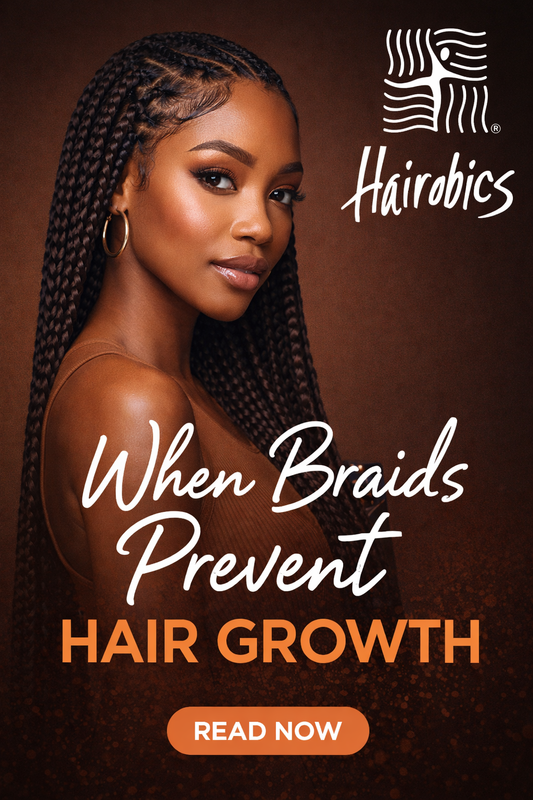
Braids are one of the most trusted protective styles in natural hair culture. From box braids to knotless braids, cornrows to crochet styles, millions of women rely on braids to retain length, reduce daily manipulation, and simplify their routine.
But what happens when your braids aren’t helping your hair grow?
If you’ve ever taken down braids after weeks (or months) and felt disappointed with your length… or noticed thinning edges, shedding, dryness, or breakage — this article is for you.
Let’s break down the truth about when braids prevent hair growth, why it happens, and how to fix it so your next protective style actually protects your progress.
What “Hair Growth” Really Means
Before we dive in, we need to clear up something important:
Hair growth happens at the scalp.
Hair retention happens at the ends.
Your scalp produces hair regardless of whether it’s braided or not (unless there’s inflammation, hormonal issues, or medical conditions involved). The real question is:
Are you keeping the length you grow?
When people say braids prevent hair growth, what they usually mean is:
-
Their hair didn’t retain length
-
Their edges thinned
-
Their hair broke off
-
Their scalp felt irritated or inflamed
-
They experienced excessive shedding
Braids don’t usually stop the follicle from producing hair. But they absolutely can create conditions that lead to breakage, scalp damage, and stalled retention.
Let’s explore how.
1. Tight Braids Cause Traction Alopecia
One of the biggest reasons braids prevent visible growth is traction alopecia.
Traction alopecia happens when hair is repeatedly pulled too tightly from the follicle. Over time, this damages the follicle and weakens the hairline.
Signs Your Braids Are Too Tight:
-
Immediate headache after installation
-
Small bumps along the hairline
-
Redness or shiny scalp
-
Tenderness for more than 48 hours
-
Thinning edges after removal
When braids are installed too tight, the constant tension inflames the follicle. Chronic inflammation reduces healthy blood flow and can eventually cause permanent thinning if repeated long enough.
Solution:
-
If your braids hurt, they are too tight.
-
Ask for looser tension at the hairline.
-
Avoid micro-braids if your hair is fine or fragile.
-
Give your edges 2–4 weeks rest between styles.
Your edges are not meant to be pulled for months at a time.
2. Leaving Braids In Too Long
Braids are protective — but only for a season.
Keeping braids in for 10–12 weeks can backfire.
Here’s why:
-
Natural shed hairs (50–100 per day) get trapped in the braid.
-
Dirt and buildup accumulate at the root.
-
The hair becomes dry and matted.
-
New growth and old hair tangle together.
When you finally take them down, it looks like “massive hair loss.” Sometimes it’s just accumulated shed hair. But sometimes it’s breakage caused by dryness and neglect.
Ideal Time Frame:
-
4–6 weeks for small braids
-
6–8 weeks maximum for larger styles
After 8 weeks, risk outweighs reward.
3. Skipping Scalp Care During Braids
Your scalp doesn’t stop functioning just because your hair is braided.
In fact, it needs more attention.
Without proper moisture and cleansing:
-
Sebum builds up
-
Dead skin accumulates
-
Itchiness increases
-
Inflammation rises
Chronic scalp inflammation can weaken follicles and slow optimal growth cycles.
If your scalp feels:
-
Constantly itchy
-
Tight
-
Burning
-
Extremely dry
Your braids may be preventing healthy growth conditions.
What To Do Instead:
-
Cleanse scalp every 1–2 weeks with diluted shampoo or scalp rinse.
-
Use lightweight oils to soothe (not heavy grease).
-
Massage scalp gently to stimulate circulation.
A healthy scalp equals consistent growth.
4. Heavy Extensions Weigh Hair Downq
Extra-long braids look beautiful. But extremely heavy extensions can strain your follicles.
The longer and thicker the extension hair:
-
The heavier the pull on your roots
-
The more tension at the scalp
-
The higher the risk of thinning
Fine hair types are especially vulnerable.
If your braids feel heavy when you tilt your head back or cause neck strain, your follicles are under stress.
Smart Protective Styling:
-
Choose medium density.
-
Avoid ultra-thick synthetic hair.
-
Opt for lightweight braiding hair.
-
Don’t add unnecessary bulk.
Your follicles should not be carrying weight like a gym workout.
5. Neglecting Moisture While Braided
Braids reduce manipulation — but they also reduce access.
Many people forget to moisturize their hair underneath extensions.
Over time:
-
The hair shaft dries out.
-
Cuticles lift.
-
Breakage increases.
-
Ends become fragile.
Dry hair breaks easily during takedown. That lost length makes it seem like braids stopped growth.
Moisture Plan for Braids:
-
Light water-based spray 2–3 times weekly.
-
Seal lightly with oil.
-
Focus on roots and length, not just scalp.
Protective styles protect best when moisture is maintained.
6. Poor Takedown Practices
You can grow inches during braids — and lose it all in one careless takedown session.
Common mistakes:
-
Cutting too high
-
Rushing through knots
-
Not detangling in sections
-
Skipping deep conditioning after removal
The demarcation line (where new growth meets old hair) is fragile. If pulled aggressively, breakage happens instantly.
Best Takedown Strategy:
-
Cut well below your natural hair.
-
Unravel gently from bottom up.
-
Finger detangle before combing.
-
Deep condition immediately.
Your takedown process determines whether you keep your growth.
7. Re-Braiding Without a Break
Constant braiding cycles prevent your scalp from resetting.
Braids → immediate reinstall → braids again.
Your follicles need:
-
Oxygen
-
Massage
-
Rest from tension
Without rest periods, low-level inflammation can build up over time.
Healthy Cycle:
-
Braids for 6 weeks
-
2–4 week break
-
Nourish scalp
-
Then reinstall
Think of it like strength training — muscles need recovery. So do follicles.
8. Underlying Scalp Inflammation
Sometimes braids expose an issue that was already present:
-
Seborrheic dermatitis
-
Psoriasis
-
Fungal imbalance
-
Chronic dryness
If braids make your scalp:
-
Extremely flaky
-
Painful
-
Oily yet itchy
-
Inflamed
The style isn’t the root problem — your scalp health is.
Braids trap heat and moisture, which can worsen existing conditions.
If symptoms persist, consult a dermatologist.
9. Not Protecting Edges at Night
Even braided hair needs nighttime protection.
Friction from cotton pillows:
-
Weakens edges
-
Causes frizz
-
Dries out exposed hairline
Use:
-
Satin bonnet
-
Silk scarf
-
Satin pillowcase
Length retention doesn’t stop when you sleep.
10. Misunderstanding “Protective” Styling
Protective styles reduce manipulation — they don’t guarantee growth.
If the style:
-
Causes tension
-
Increases dryness
-
Prevents scalp cleansing
-
Is worn too long
-
Is installed repeatedly without rest
It becomes a retention blocker instead of a protective style.
True protection includes:
-
Moisture
-
Gentle tension
-
Healthy scalp care
-
Proper timing
-
Smart takedown
How To Make Braids Actually Help Hair Growth
If you love braids (and many do), here’s how to use them strategically:
1. Start With a Healthy Scalp
Cleanse and lightly oil before installation.
2. Avoid Tight Tension
Especially around edges.
3. Moisturize Weekly
Water-based mist + light sealant.
4. Cleanse Gently
Diluted shampoo or scalp rinse every 1–2 weeks.
5. Limit Wear Time
Max 6–8 weeks.
6. Rest Between Styles
Minimum 2 weeks.
7. Nourish After Removal
Deep condition + trim if needed.
When done properly, braids can absolutely help retain length.
When Braids May Not Be Right for You
Braids may not be ideal if you have:
-
Extremely fine strands
-
Severe traction damage
-
Active scalp inflammation
-
Recent postpartum shedding
-
Very fragile edges
In these cases, low-manipulation loose styles may work better.
The Bottom Line
Braids do not automatically prevent hair growth.
But poor installation, tension, dryness, neglect, and overuse absolutely can prevent retention — which feels like no growth at all.
If you’ve been stuck at the same length for years despite protective styling, it may be time to evaluate:
-
Tension
-
Moisture routine
-
Wear time
-
Scalp health
-
Takedown process
Protective styling should protect your progress — not quietly sabotage it.