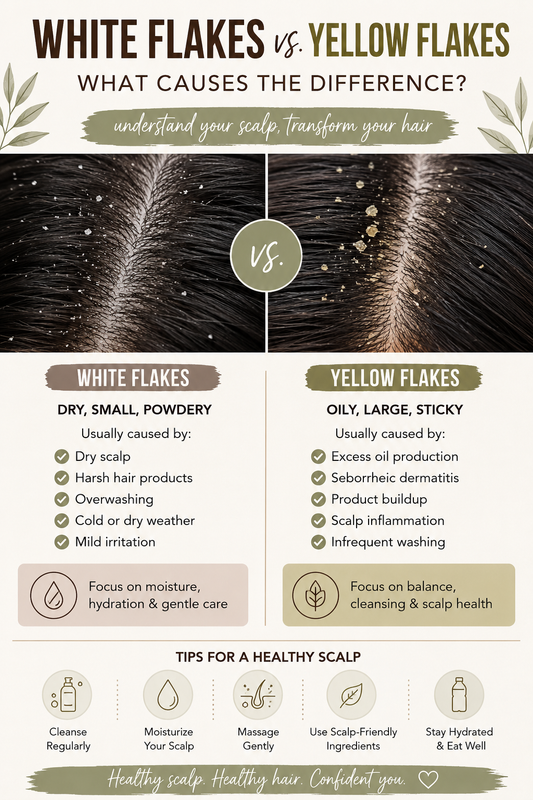
White or yellow flakes on your scalp can be frustrating, embarrassing, and sometimes even alarming. Many people assume all flakes are simply dandruff, but the color of your scalp flakes can actually reveal a lot about what's happening on your scalp. White flakes and yellow flakes often have different causes, different symptoms, and different treatment approaches.
Understanding the difference can help you choose the right products, improve scalp health, and support stronger hair growth over time.
In this comprehensive guide, we'll explain:
- What white flakes are
- What yellow flakes are
- Common causes of each
- How scalp health affects hair growth
- When flakes may signal a more serious condition
- Natural ways to improve scalp health
- Best practices for preventing flakes
Why Flakes Appear on the Scalp
Your scalp constantly sheds dead skin cells.
Under normal circumstances, these cells are microscopic and invisible. However, when scalp turnover speeds up or excessive oil accumulates, dead skin begins clumping together and becomes visible as flakes.
Several factors can contribute:
- Dry scalp
- Product buildup
- Fungal overgrowth
- Excess oil production
- Inflammation
- Skin conditions
- Environmental stress
- Poor scalp hygiene
The color and texture of the flakes often provide clues about the underlying cause.
What Are White Flakes?
White flakes are usually dry, lightweight pieces of dead skin that fall from the scalp.
They often resemble:
- Small white specks
- Powder-like particles
- Dry skin flakes
- Snow-like shedding
White flakes typically indicate dryness rather than excess oil.
Common Causes of White Flakes
1. Dry Scalp
Dry scalp is one of the most common causes of white flakes.
When the scalp lacks sufficient moisture:
- Skin becomes irritated
- Tiny cracks develop
- Dead skin sheds rapidly
- White flakes appear
Common triggers include:
- Cold weather
- Indoor heating
- Harsh shampoos
- Excessive washing
- Dehydration
Signs of dry scalp:
- Small white flakes
- Tight feeling scalp
- Mild itching
- Little or no oiliness
2. Overwashing Hair
Washing too frequently strips natural oils from the scalp.
Without adequate oil protection:
- Moisture evaporates faster
- Skin becomes dry
- Flaking increases
This is especially common in people with:
- Natural hair
- Curly hair
- Coily hair
- Locs
3. Product Ingredients
Certain ingredients can trigger dryness:
- Sulfates
- Alcohol-based products
- Harsh cleansers
- Strong fragrances
These ingredients may disrupt the scalp barrier and cause visible white flakes.
4. Weather Changes
Many people experience seasonal scalp flaking.
Winter often causes:
- Lower humidity
- Increased dryness
- More white flakes
The scalp behaves similarly to skin on the face and hands.
5. Mild Irritation
Sometimes white flakes develop from scalp irritation caused by:
- Hair dyes
- Chemical treatments
- Tight hairstyles
- New products
The scalp responds by shedding skin cells more rapidly.
What Are Yellow Flakes?
Yellow flakes are typically larger, oilier, and stickier than white flakes.
They often appear:
- Yellow
- Cream-colored
- Waxy
- Greasy
Unlike white flakes, yellow flakes usually involve excess oil production.
Common Causes of Yellow Flakes
1. Seborrheic Dermatitis
Seborrheic dermatitis is one of the most common causes of yellow flakes.
This condition develops when:
- Oil production increases
- Natural scalp yeast multiplies
- Inflammation develops
Symptoms often include:
- Yellow flakes
- Greasy scalp
- Redness
- Itching
- Irritation
The flakes may stick to hair strands and scalp rather than falling freely.
2. Excess Sebum Production
Sebum is the natural oil produced by scalp glands.
When too much oil accumulates:
- Dead skin sticks together
- Larger flakes form
- Yellowish scales develop
Factors contributing to oily scalp include:
- Hormonal changes
- Stress
- Genetics
- Product buildup
3. Product Buildup
Heavy products can mix with:
- Sweat
- Oils
- Dead skin cells
The result often looks like yellow or cream-colored flakes.
Common culprits:
- Heavy pomades
- Thick gels
- Excess oils
- Styling creams
4. Scalp Inflammation
Inflammation accelerates skin turnover.
As skin cells shed more rapidly, they combine with scalp oils and create larger yellow flakes.
Inflammation may result from:
- Skin disorders
- Allergic reactions
- Chronic irritation
5. Infrequent Washing
Waiting too long between washes can allow:
- Oils to accumulate
- Dead skin to build up
- Flakes to thicken
This often leads to yellowish scaling rather than dry white flakes.
White Flakes vs. Yellow Flakes: Quick Comparison
| Feature | White Flakes | Yellow Flakes |
|---|---|---|
| Texture | Dry | Oily |
| Size | Small | Larger |
| Appearance | Powdery | Waxy |
| Cause | Dryness | Excess oil |
| Itching | Mild | Moderate to severe |
| Scalp Feel | Tight | Greasy |
| Common Condition | Dry scalp | Seborrheic dermatitis |
Can Both Types Occur Together?
Yes.
Many people experience both white and yellow flakes simultaneously.
For example:
- Dry scalp may produce white flakes.
- Product buildup creates yellow flakes.
- Seborrheic dermatitis may cause both.
This is why identifying the root cause matters.
Do Flakes Cause Hair Loss?
Flakes themselves do not directly cause hair loss.
However, the underlying conditions that produce flakes can contribute to shedding.
Examples include:
- Chronic inflammation
- Excessive scratching
- Follicle irritation
- Scalp infections
- Severe seborrheic dermatitis
Healthy follicles thrive best on a healthy scalp.
How Scratching Makes Things Worse
Itchy scalps often lead to scratching.
Repeated scratching can:
- Damage the scalp barrier
- Cause scabs
- Increase inflammation
- Weaken follicles
- Trigger breakage
Instead of scratching, focus on addressing the underlying cause.
Natural Hair and Flakes
People with natural hair often face unique scalp challenges.
Because oils travel more slowly down curly and coily hair strands, the scalp can become dry even when hair feels oily.
Common factors include:
- Protective styles
- Braids
- Locs
- Infrequent washing
- Product layering
Maintaining scalp balance becomes especially important.
Best Ingredients for White Flakes
If dryness is the issue, look for ingredients that hydrate and soothe.
Examples:
Aloe Vera
Helps:
- Calm irritation
- Add moisture
- Reduce dryness
Jojoba Oil
Closely resembles natural scalp oils.
Benefits include:
- Moisture retention
- Reduced flaking
- Improved scalp comfort
Glycerin
A humectant that attracts moisture.
Panthenol
Supports scalp hydration and barrier function.
Best Ingredients for Yellow Flakes
When excess oil is involved, focus on scalp balancing.
Tea Tree Oil
May help:
- Reduce scalp buildup
- Support a cleaner scalp environment
- Soothe irritation
Rosemary Oil
Supports overall scalp health.
Peppermint Oil
Provides a refreshing sensation and helps maintain scalp cleanliness.
Salicylic Acid
Can help loosen stubborn scales and buildup.
How Product Buildup Mimics Dandruff
Many people mistake product buildup for dandruff.
Signs of buildup include:
- Yellow flakes
- Sticky scalp
- Hair feeling coated
- Reduced moisture absorption
Common buildup sources:
- Butters
- Waxes
- Heavy oils
- Pomades
Regular cleansing helps prevent accumulation.
How Often Should You Wash?
The ideal schedule varies.
Dry Scalp
Generally benefits from:
- Gentle cleansing
- Moisturizing products
- Avoiding excessive washing
Oily Scalp
May benefit from:
- More frequent cleansing
- Clarifying treatments
- Lightweight products
The goal is balance, not over-cleansing.
The Link Between Stress and Flakes
Stress affects more than mental health.
It can influence:
- Oil production
- Inflammation
- Skin turnover
- Scalp sensitivity
Many people notice flare-ups during stressful periods.
Managing stress may help improve scalp conditions.
Dietary Factors That Affect Scalp Health
Nutrition influences skin and scalp function.
Important nutrients include:
Omega-3 Fatty Acids
Support healthy skin barriers.
Zinc
Helps regulate scalp function.
Vitamin D
Supports overall skin health.
Protein
Essential for strong hair growth.
Water
Hydration affects scalp moisture levels.
When White Flakes May Signal Something More Serious
Consult a healthcare professional if you experience:
- Severe itching
- Bleeding
- Thick scales
- Persistent redness
- Worsening symptoms
Conditions sometimes mistaken for simple dryness include:
- Psoriasis
- Eczema
- Seborrheic dermatitis
- Fungal infections
When Yellow Flakes Need Medical Attention
Seek professional guidance if you notice:
- Thick yellow crusts
- Painful scalp
- Excessive inflammation
- Persistent symptoms despite treatment
Early intervention can prevent worsening scalp issues.
Scalp Care Routine for Preventing Flakes
Step 1: Cleanse Regularly
Use a gentle shampoo appropriate for your scalp type.
Step 2: Remove Buildup
Periodically clarify if you use heavy styling products.
Step 3: Moisturize
Keep the scalp hydrated without overloading it with oils.
Step 4: Massage the Scalp
Gentle massage may improve circulation and distribute natural oils.
Step 5: Avoid Over-Manipulation
Constant scratching and picking can worsen flaking.
Supporting Healthy Hair Growth
A healthy scalp creates a better environment for hair growth.
Focus on:
- Consistent scalp care
- Proper hydration
- Balanced nutrition
- Reduced inflammation
- Gentle hair practices
Products like Hairobics Raaw Roots Moisturizer Spray can help support scalp hydration and comfort while keeping protective styles, braids, locs, and natural hair moisturized.
Frequently Asked Questions
Are white flakes always dandruff?
No. White flakes are often caused by dry scalp rather than dandruff.
Are yellow flakes worse?
Not necessarily, but they often indicate excess oil or inflammation.
Can oils remove flakes?
Some oils may help moisturize a dry scalp, but excessive oil can worsen yellow flakes.
Can dandruff stop hair growth?
Dandruff itself does not stop hair growth, but severe inflammation can contribute to shedding.
Can braids cause flakes?
Yes. Dryness, buildup, and infrequent cleansing can all contribute to flaking while wearing braids.
Final Thoughts
The difference between white flakes and yellow flakes comes down largely to moisture versus oil. White flakes are usually associated with dryness, dehydration, and irritation, while yellow flakes are more commonly linked to excess oil, buildup, and inflammatory scalp conditions such as seborrheic dermatitis.
Understanding the type of flakes you're experiencing is the first step toward choosing the right scalp care routine. By maintaining a clean, balanced, and moisturized scalp, you can reduce flaking, improve comfort, and create the ideal environment for healthier, stronger hair growth.
A healthy scalp is the foundation of healthy hair, and paying attention to what your flakes are telling you can help you achieve both.