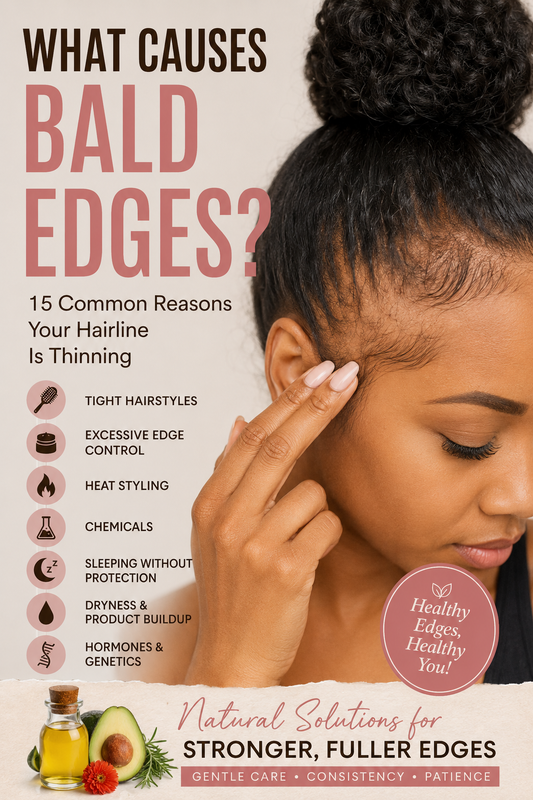
Your edges are one of the most delicate parts of your hair. Whether you wear your hair natural, in braids, locs, wigs, sew-ins, or silk presses, your hairline experiences more stress than almost any other area of your scalp.
If you've noticed your edges becoming thinner, patchy, or even completely bald, you're not alone.
Many people assume their edges simply "won't grow," but in reality, bald edges are usually the result of damage that develops over time.
The good news?
In many cases, your hairline can improve if you identify what's causing the problem early and make healthier hair care choices.
This complete guide explains:
- Why edges disappear
- The most common causes of bald edges
- Which habits silently damage your hairline
- How to protect fragile edges
- Natural ways to support healthier hair growth
- The best daily routine for maintaining fuller-looking edges
Why Are Edges More Fragile Than the Rest of Your Hair?
Your hairline contains some of the smallest and finest hairs on your head.
These hairs have:
- Smaller follicles
- Less density
- Shorter growth cycles
- Greater exposure to friction
- More manipulation during styling
Because of this, they break much faster than hair elsewhere.
Even small amounts of repeated tension can eventually damage the follicle.
What Are Bald Edges?
Bald edges refer to thinning or missing hair around the front and sides of the hairline.
You may notice:
- Sparse baby hairs
- Widening temples
- Patchy areas
- Receding hairline
- Smooth bald spots
- Hair that never seems to grow past a certain length
The earlier you recognize these signs, the easier it may be to address contributing factors.
1. Tight Hairstyles (The #1 Cause)
This is by far the most common cause of bald edges.
Styles that constantly pull your hairline include:
- Tight braids
- Knotless braids installed too tightly
- Cornrows
- Ponytails
- Tight buns
- Slick-back styles
- Sew-ins
- Tight loc retwists
When tension is applied day after day, the follicle experiences ongoing stress.
Eventually the follicle weakens.
If the tension continues long enough, permanent damage may occur.
This condition is called traction alopecia.
Early Signs of Traction Alopecia
Watch for:
- Tender scalp
- Tiny bumps
- Redness
- Hairline soreness
- Broken hairs
- Increasing forehead size
- Thin temples
These warning signs should never be ignored.
2. Excessive Edge Control Products
Many edge controls contain ingredients that create an extremely strong hold.
Unfortunately, constantly slicking edges:
- Requires repeated brushing
- Encourages daily manipulation
- Makes hair stiff
- Increases breakage during removal
Some people brush their edges multiple times every day.
This constant friction slowly weakens fragile hairs.
3. Aggressive Brushing
Using hard edge brushes repeatedly can:
- Break delicate hairs
- Irritate follicles
- Pull hairs out before they're ready
Instead:
- Use soft brushes
- Avoid excessive brushing
- Style gently
Less manipulation usually leads to healthier edges.
4. Sleeping Without Protection
Cotton pillowcases absorb moisture and create friction.
Each night your edges rub against the fabric hundreds of times.
Over months or years this contributes to:
- Breakage
- Dryness
- Split ends
- Hairline thinning
Sleeping with:
- Satin bonnets
- Silk scarves
- Satin pillowcases
helps reduce unnecessary friction.
5. Chemical Relaxers
Relaxers permanently change your hair structure.
Repeated applications near the hairline may cause:
- Chemical burns
- Scalp irritation
- Hair weakening
- Breakage
Overlapping relaxers make the problem even worse.
6. Heat Styling
Frequent use of:
- Flat irons
- Hot combs
- Blow dryers
can dry out the smallest hairs first.
Because edge hairs are thinner, they often become damaged before the rest of your hair.
7. Dry Hair
Dry hair snaps much easier.
Without adequate moisture, edges become:
- Brittle
- Rough
- Weak
- Easily broken
Maintaining moisture is one of the simplest ways to help reduce breakage.
8. Product Buildup
Heavy waxes, gels, and creams can accumulate around follicles.
Over time buildup may:
- Irritate the scalp
- Make cleansing less effective
- Leave hair feeling weighed down
Regular cleansing helps maintain a healthier scalp environment.
9. Hormonal Changes
Hormones play an important role in hair growth.
Changes during:
- Pregnancy
- Menopause
- Thyroid disorders
- Polycystic ovary syndrome (PCOS)
may contribute to increased shedding or thinning, including around the hairline.
If thinning develops suddenly or is accompanied by other symptoms, it's a good idea to speak with a healthcare professional.
10. Nutritional Deficiencies
Hair requires nutrients to grow normally.
Low levels of nutrients such as iron, vitamin D, protein, or zinc may contribute to hair shedding in some people.
Eating a balanced diet supports overall hair health.
11. Chronic Stress
Stress can push more hairs into the resting phase of the growth cycle.
Several months later, increased shedding may become noticeable.
Managing stress through sleep, exercise, and relaxation techniques can support overall well-being and healthy hair.
12. Scalp Inflammation
An unhealthy scalp can interfere with normal hair growth.
Inflammation may result from:
- Irritation
- Allergic reactions
- Certain skin conditions
- Excessive scratching
Healthy hair begins with a healthy scalp.
13. Frequent Wig Use
Wigs themselves don't necessarily cause bald edges.
Problems occur when:
- Wig combs dig into edges
- Glue is repeatedly applied
- Adhesives are removed aggressively
- Wig caps create constant friction
Choosing protective installation methods and giving your hairline breaks can help.
14. Genetics
Some people naturally have finer hairlines than others.
Genetics influence:
- Hair density
- Follicle size
- Hair growth patterns
While genetics cannot be changed, gentle care can help minimize avoidable damage.
15. Aging
As we age:
- Hair growth slows
- Follicles may shrink
- Individual hairs become finer
This gradual process can make the edges appear thinner over time.
Can Bald Edges Grow Back?
It depends on the cause.
If the follicles remain healthy and the damage is not permanent, edges may gradually become fuller once the source of stress is removed.
If follicles have been permanently scarred—such as in advanced traction alopecia—regrowth may be limited.
Early intervention gives you the best chance of improvement.
Daily Routine for Healthier Edges
A consistent routine can help protect delicate hairline hairs.
Morning
- Lightly moisturize the hairline.
- Avoid excessive brushing.
- Skip overly tight hairstyles.
During the Day
- Limit touching or pulling your edges.
- Keep tension low.
- Stay hydrated.
Evening
- Gently massage the scalp.
- Protect hair with a satin bonnet or scarf.
- Sleep on a satin pillowcase if possible.
Natural Ingredients That Support Healthy-Looking Hair
Many people include botanical ingredients in their hair care routines, such as:
- Jamaican Black Castor Oil
- Rosemary Oil
- Peppermint Oil
- Aloe Vera
- Jojoba Oil
- Coconut Oil
- Avocado Oil
- Grapeseed Oil
- Tea Tree Oil (for scalp care)
These ingredients can help moisturize the scalp and hair. Individual results vary, and they are not guaranteed treatments for hair loss.
Why Consistency Matters
Healthy hair grows slowly.
Most hair grows around half an inch per month on average.
That means healthier habits often take weeks or months before noticeable changes appear.
Avoid switching routines every few days.
Consistency is key.
Hair Habits That Protect Your Edges
Choose hairstyles that don't pull tightly.
Take breaks between protective styles.
Use soft accessories.
Moisturize regularly.
Cleanse your scalp consistently.
Avoid excessive heat.
Limit harsh chemicals.
Sleep with satin protection.
Handle wet hair gently.
Be patient with your progress.
Supporting Your Hair Care Routine with Hairobics Hair & Scalp Booster
If you're looking to complement a healthy hair care routine, Hairobics Hair & Scalp Booster is formulated with natural ingredients selected to help moisturize the scalp and nourish the hair. When used consistently alongside gentle styling practices, it can be part of a routine focused on maintaining healthier-looking edges and reducing breakage caused by dryness.
For best results:
- Massage a small amount into the hairline daily.
- Pair it with low-tension hairstyles.
- Keep your scalp clean and moisturized.
- Protect your hair while sleeping with satin.
Remember, no topical product can guarantee hair regrowth, especially if hair follicles have been permanently damaged, but maintaining a healthy scalp and minimizing breakage can support the appearance of fuller, healthier hair over time.
Frequently Asked Questions
What is the biggest cause of bald edges?
The most common cause is prolonged tension from tight hairstyles such as braids, ponytails, cornrows, and slick-back styles, which can lead to traction alopecia.
Can bald edges grow back naturally?
If the follicles are still healthy and the damage is not permanent, reducing tension and following a gentle hair care routine may allow hair to gradually return. Permanent follicle damage is less likely to recover.
How long does it take for edges to grow back?
Hair grows slowly, and visible improvement may take several months depending on the underlying cause, overall hair health, and consistency of your routine.
Are wigs bad for your edges?
Wigs themselves are not necessarily harmful. However, repeated use of tight wig combs, adhesives, or aggressive glue removal can contribute to edge thinning.
Does brushing your edges every day cause breakage?
Frequent brushing, especially with stiff brushes or while using strong-hold edge control products, can increase mechanical breakage in delicate edge hairs.
Should I oil my edges every day?
Light application of moisturizing oils or scalp treatments may help reduce dryness for some people, but avoid heavy buildup. Choose products that fit your hair type and cleanse regularly.
Final Thoughts
Bald edges rarely happen overnight. In most cases, they develop gradually through repeated tension, friction, dryness, excessive styling, or underlying health factors. Paying attention to early warning signs—such as tenderness, breakage, or thinning around the temples—can help you make changes before the damage becomes more severe.
Protecting your edges starts with gentle styling, proper moisture, reduced manipulation, and a healthy scalp care routine. Combined with patience and consistency, these habits can help you maintain stronger, healthier-looking edges and support your overall hair health for years to come.