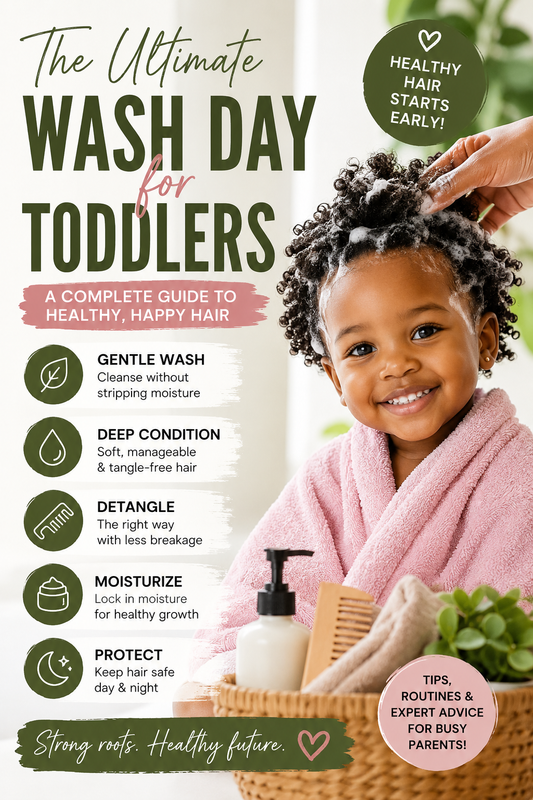
Wash day with a toddler can feel like a full workout. Between the squirming, tears, singing, snack breaks, and endless questions, washing your little one's hair isn't always easy. But wash day doesn't have to be stressful.
With the right routine, products, patience, and preparation, wash day can become a positive bonding experience that keeps your toddler's hair healthy, soft, moisturized, and growing beautifully.
Whether your child has coils, curls, kinky hair, waves, or developing locs, this guide will teach you everything you need to know about creating a successful toddler wash day routine.
Why Wash Day Matters
Healthy hair starts with a healthy scalp.
Toddlers sweat while playing, collect dirt, food, lint, sunscreen, and outdoor debris throughout the week. Even if their hair looks clean, buildup can accumulate quickly.
Regular washing helps:
- Remove dirt
- Eliminate sweat
- Reduce itchiness
- Prevent product buildup
- Improve scalp health
- Reduce tangles
- Make moisturizing easier
- Encourage healthy hair retention
Clean hair absorbs moisture much better than dirty hair.
How Often Should You Wash a Toddler's Hair?
There isn't one schedule that works for every child.
Every 7 Days
Perfect for:
- Active toddlers
- Thick natural hair
- Kids using styling products
- Outdoor play every day
Every 10–14 Days
Good for:
- Protective styles
- Dry hair
- Cooler weather
- Less product use
More Frequently If:
- Hair smells sweaty
- Scalp is itchy
- Visible buildup appears
- Swimming often
- Sand or dirt gets in hair
Signs It's Time for Wash Day
Look for these clues:
- Hair feels sticky
- Scalp appears dull
- Hair won't absorb moisturizer
- Increased tangles
- Itchy scalp
- Flakes from buildup
- Hair loses shine
- Products stop working
Preparing Before Wash Day
Preparation makes everything easier.
Gather everything first.
You'll need:
- Gentle shampoo
- Moisturizing conditioner
- Wide-tooth comb
- Spray bottle
- Soft towel
- Hair clips
- Satin towel or T-shirt
- Favorite cartoon
- Healthy snacks
- Toys
Keeping everything within reach shortens wash day considerably.
Make Wash Day Fun
Toddlers cooperate more when they're entertained.
Ideas include:
- Favorite TV show
- Singing together
- Bubble bath
- Storytelling
- Special wash-day toy
- Reward stickers
- Dance breaks
- Counting games
The goal is creating positive memories.
Start with Finger Detangling
Never rush into combing dry hair.
Instead:
Separate hair into sections.
Use your fingers to gently remove:
- Shed hairs
- Large knots
- Twists
- Tangles
This reduces breakage dramatically.
Wet Hair Slowly
Avoid shocking toddlers with cold water.
Instead:
Use warm—not hot—water.
Let water run gently from front to back.
Cup water in your hands if needed.
A detachable shower head makes this much easier.
Choosing the Right Shampoo
Toddlers need gentle cleansers.
Avoid harsh shampoos containing:
- Sulfates
- Strong alcohols
- Heavy artificial fragrances
Look for shampoos with:
- Aloe vera
- Coconut-derived cleansers
- Chamomile
- Oat extract
- Shea butter
- Glycerin
Gentle shampoos clean without stripping natural oils.
How to Shampoo Properly
Focus on the scalp.
Use fingertips—not fingernails.
Massage gently in circular motions.
Lift dirt from the scalp instead of scrubbing aggressively.
Let the shampoo rinse through the hair.
Usually one wash is enough.
A second wash helps if heavy buildup exists.
Rinse Thoroughly
Leftover shampoo can cause:
- Itching
- Dryness
- Flakes
- Product buildup
Rinse until water runs completely clear.
Never Skip Conditioner
Conditioner restores moisture after cleansing.
Benefits include:
- Softer curls
- Easier detangling
- Less breakage
- Reduced frizz
- Better moisture retention
Apply generously from roots to ends.
Detangle While Conditioning
Hair is most manageable while coated with conditioner.
Work in sections.
Start from:
Ends
↓
Middle
↓
Roots
Never pull from the scalp downward.
This creates unnecessary pain.
Best Detangling Tools
Excellent options include:
- Wide-tooth comb
- Flexible detangling brush
- Fingers
Many parents combine all three.
Be Patient
Rushing causes:
- Crying
- Breakage
- Knots
- Negative associations
Take breaks if necessary.
Toddlers have short attention spans.
Rinse with Cool Water
A cooler rinse may help smooth the hair cuticle and leave hair feeling softer.
No need for ice-cold water.
Just slightly cooler than the wash temperature.
Dry Hair Gently
Never rub hair aggressively.
Instead:
Pat dry using:
- Microfiber towel
- Cotton T-shirt
These reduce frizz and breakage.
Moisturize Immediately
Moisture should be applied while hair is still slightly damp.
This locks hydration inside the strands.
The LCO Method
Many parents love:
Liquid
↓
Cream
↓
Oil
This helps moisture last longer.
The LOC Method
Others prefer:
Liquid
↓
Oil
↓
Cream
Experiment to discover which routine works best for your toddler's hair.
Protective Hairstyles After Wash Day
Easy styles include:
- Two-strand twists
- Puff ponytails
- Flat twists
- Braids with natural hair only
- Chunky twists
- Mini puffs
Avoid excessive tension.
Hairstyles to Avoid
Skip styles that:
- Pull edges tightly
- Cause headaches
- Leave bumps
- Require heavy extensions
- Stay in too long
Healthy hair begins with healthy follicles.
Moisturizing Between Wash Days
Refresh hair with water-based moisturizers.
Focus on:
- Ends
- Dry areas
- Hairline
Seal moisture afterward if needed.
Nighttime Hair Protection
Protecting hair overnight prevents:
- Dryness
- Knots
- Breakage
Use:
- Satin bonnet (if tolerated)
- Satin pillowcase
- Satin crib sheet for toddlers transitioning to beds
Common Toddler Wash Day Mistakes
Washing Too Often
Overwashing can leave some children's hair feeling dry.
Waiting Too Long
Too much buildup makes detangling harder.
Skipping Conditioner
Conditioner is essential for softness and manageability.
Using Adult Products
Adult formulas may be too harsh.
Detangling Dry Hair
Always add water or conditioner first.
Tight Hairstyles
These can stress delicate hairlines.
Seasonal Wash Day Adjustments
Summer
- Wash more frequently
- Remove sweat
- Refresh after swimming
Winter
- Focus on moisture
- Wash slightly less often if appropriate
- Deep condition regularly
Dealing with Dry Hair
If hair feels dry:
- Increase conditioning
- Moisturize more often
- Reduce heat
- Protect hair overnight
- Trim damaged ends when needed
Helping Hair Grow Healthy
Healthy growth is about retaining the hair that naturally grows.
Support retention by:
- Gentle detangling
- Consistent moisture
- Healthy scalp care
- Protective styling
- Balanced nutrition
- Adequate sleep
- Hydration
Nutrition Supports Healthy Hair
Offer a balanced diet with foods rich in:
- Protein
- Iron
- Zinc
- Vitamin A
- Vitamin C
- Omega-3 fats
Hair health reflects overall health.
Wash Day Checklist
✔ Shampoo
✔ Condition
✔ Detangle
✔ Rinse
✔ Moisturize
✔ Seal moisture
✔ Protective style
✔ Satin protection at bedtime
Frequently Asked Questions
Can I wash my toddler's hair every week?
Yes. For many toddlers, washing every 7–10 days works well, though the ideal schedule depends on activity level, scalp condition, and hair type.
Should toddlers deep condition?
Occasionally using a moisturizing treatment can help if hair is especially dry or tangled.
Is daily oiling necessary?
No. Heavy oil use every day may lead to buildup. Focus on moisture first, then use oil sparingly if needed.
How long should wash day take?
Most routines take 30–60 minutes, depending on hair length, density, and style.
Why does my toddler cry during wash day?
Common reasons include water in the eyes, pulling during detangling, boredom, or sensitivity. Gentle handling, distractions, and shorter sessions can help.
Should I trim toddler hair?
Only if there are damaged or split ends, or if shaping is desired. Healthy hair care habits are more important than frequent trimming.
Tips for a Tear-Free Wash Day
- Keep sessions calm and unhurried.
- Use warm water.
- Detangle in small sections.
- Let your toddler hold a favorite toy.
- Offer praise throughout the routine.
- Avoid pulling on knots.
- Finish with a comfortable protective style.
Over time, many toddlers become more comfortable when wash day follows a predictable routine.
Final Thoughts
Wash day for toddlers is about more than clean hair—it's an opportunity to build healthy habits, confidence, and positive memories. A consistent routine with gentle cleansing, thorough conditioning, careful detangling, and regular moisturizing can help keep your child's curls, coils, or waves healthy and manageable.
Remember that every toddler's hair is unique. Pay attention to how your child's hair responds, adjust your routine as needed, and focus on consistency rather than perfection. With patience and the right approach, wash day can become a rewarding part of your family's self-care routine that supports strong, healthy hair for years to come.