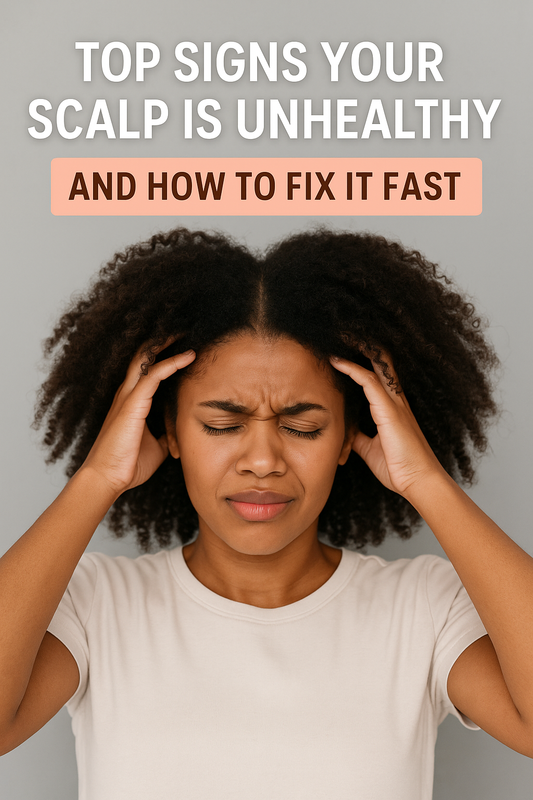
A healthy scalp is the foundation of healthy natural hair. You can use the best oils, deep conditioners, and protective styles — but if your scalp is struggling, your hair will struggle too. Most people focus on the hair itself, when the real secret to growth, thickness, and retention starts right at the roots.
If you’ve been dealing with dryness, breakage, slow growth, flakes, or irritation, your scalp may be trying to tell you something. The scalp is skin — and just like the skin on your face, it reacts when something is off.
This in-depth guide covers the top signs of an unhealthy scalp, what causes them, and how to restore your scalp back to balance so your hair can thrive.
Let’s get into it.
Why Scalp Health Matters More Than You Think
A healthy scalp:
-
Supports strong follicles
-
Produces healthy new growth
-
Maintains proper moisture balance
-
Prevents unnecessary shedding
-
Reduces breakage
-
Keeps pH balanced
-
Protects against inflammation
An unhealthy scalp does the opposite — weakening your hair from the root and sabotaging your growth cycle.
Think of it like planting a garden:
? Healthy soil = healthy plants
? Unhealthy soil = weak, brittle plants
Your scalp is your hair’s soil.
Top Signs Your Scalp Is Unhealthy
Below are the clearest indicators that your scalp needs help.
1. Excessive Itching
A little itch now and then is normal, but constant itching is a warning sign.
Possible Causes
-
Product buildup
-
Dryness
-
Allergic reactions
-
Dandruff
-
Fungal overgrowth
-
Overuse of gels, sprays, or waxes
If you feel the need to scratch daily — especially with your nails — your scalp barrier is compromised.
How to Fix It
-
Clarify your scalp every 2–3 weeks
-
Switch to lightweight oils
-
Avoid heavy product layering
-
Make sure your braids aren’t too tight
-
Massage with anti-fungal oils (tea tree, rosemary)
2. Flakes or White Buildup
Flakes can look like dandruff, but all flakes are not caused by dandruff. Sometimes it’s just dryness or leftover products.
Dry Flakes
-
White
-
Powdery
-
Fall off easily
Oily Flakes
-
Yellowish
-
Sticky
-
Clump together
Common Causes
-
Dryness
-
Seborrheic dermatitis
-
Product buildup
-
Hard water
-
Excess oils blocking pores
How to Fix It
-
Use a clarifying shampoo
-
Rinse with apple cider vinegar
-
Shampoo the scalp (not just the hair)
-
Avoid heavy butters on the scalp
3. Tenderness or Soreness
Does your scalp hurt when you touch it? That’s not normal.
Scalp tenderness normally means inflammation.
Causes
-
Braids installed too tight
-
Ponytails that pull
-
Tension alopecia
-
Infections
-
Buildup causing follicle swelling
How to Fix It
-
Remove tight hairstyles
-
Use anti-inflammatory oils (peppermint, rosemary)
-
Massage your scalp gently
-
Switch to protective styles with low tension
-
Allow your scalp to rest for 7–10 days
4. Excessive Shedding
Shedding is normal — around 50–100 hairs per day.
But large clumps? Not normal.
Signs of Unhealthy Shedding
-
Hair coming out in handfuls
-
Thinning edges
-
Visible scalp patches
-
Sudden increase in loose strands
Causes
-
Stress
-
Hormonal fluctuations
-
Poor scalp circulation
-
Inflammation
-
Postpartum
-
Poor diet
-
Tight braids causing tension
How to Fix It
-
Improve scalp circulation with daily massage
-
Reduce tension hairstyles
-
Address stress & sleep
-
Ensure you’re getting enough iron, vitamin D, and protein
5. Greasy or Oily Scalp
Not all grease is bad — but excess oil signals an imbalance.
Possible Causes
-
Hormonal imbalance
-
Overuse of oils
-
Heavy products applied to the scalp
-
Washing too infrequently
-
Clogged pores forcing oil upward
How to Fix It
-
Wash your scalp weekly or biweekly
-
Avoid oiling the scalp daily
-
Switch to lighter oils (jojoba, grapeseed)
-
Use a sulfate-free clarifying shampoo
6. Dry, Tight, or Burning Sensation
A healthy scalp should feel neutral — not tight, dry, or irritated.
Causes
-
Harsh shampoos
-
Hot water
-
Weather changes
-
Excessive sun exposure
-
Lack of moisture
-
Overuse of blow dryers
How to Fix It
-
Switch to gentle, hydrating cleansers
-
Reduce heat usage
-
Use aloe vera or rosewater to soothe
-
Moisturize scalp lightly with jojoba oil
7. Bad Odor or “Funky” Smell
A clean scalp shouldn’t have a persistent smell.
Causes
-
Sweat buildup
-
Heavy oils blocking pores
-
Bacterial or fungal overgrowth
-
Not washing braids long enough
-
Wearing wigs without cleaning underneath
How to Fix It
-
Cleanse your scalp thoroughly
-
Use a diluted tea tree rinse
-
Remove buildup from under braids or wigs
-
Let your scalp breathe (no wrap 24/7)
8. Slow Hair Growth
If your hair used to grow quickly but now doesn’t seem to move at all, your scalp health may be declining.
Causes
-
Poor circulation
-
Inflammation
-
Clogged pores
-
Buildup
-
Hormonal shifts
-
Nutrient deficiencies
How to Fix It
-
Increase scalp massage
-
Use peppermint or rosemary oil
-
Clarify regularly
-
Improve diet
-
Reduce tension styles
9. Visible Redness or Sores
If you see redness, bumps, cuts, or sores on the scalp, it’s a sign of irritation or infection.
Causes
-
Scratching with nails
-
Tight braids
-
Allergic reactions
-
Fungus or bacteria
-
Harsh products
-
Friction from wigs or weaves
How to Fix It
-
Stop scratching
-
Cleanse scalp gently
-
Use aloe vera to soothe
-
Apply diluted tea tree or witch hazel
-
Avoid hairstyles that cause friction
10. Hard, Waxy, or Sticky Buildup
This is very common for people who use:
-
Gels
-
Edge control
-
Butters
-
Shine sprays
-
Wax-based stylers
Signs
-
Hair feels coated
-
Scalp looks dull
-
You see white waxy material at the roots
-
Shampoo doesn’t lather well
How to Fix It
-
Use a clarifying shampoo
-
Add ACV rinses to your routine
-
Stop using heavy waxes on your scalp
-
Wash every 7–14 days
11. Lack of Moisture Absorption
If your scalp drinks up product immediately (or doesn’t absorb anything at all), something is off.
Possible Causes
-
Scalp dehydration
-
Damaged scalp barrier
-
Improper pH balance
-
Using only oils with no water-based moisture
How to Fix It
-
Use lightweight hydration sprays
-
Use water-based moisturizers before oils
-
Avoid drying alcohols
12. Frequent Breakage at the Roots
Breakage doesn’t just happen at the ends — unhealthy scalp conditions can weaken the hair at the base.
Causes
-
Follicle inflammation
-
Excessive dryness
-
Tension
-
Harsh chemical exposure
-
Poor circulation
How to Fix It
-
Strengthen scalp barrier
-
Keep roots hydrated
-
Use low-tension protective styles
-
Avoid chemical treatments during flare-ups
What Causes an Unhealthy Scalp?
Understanding the root of the problem helps you choose the right treatment.
1. Product Buildup
Heavy products smother the scalp.
2. Over-Oiling
Too much oil clogs pores.
3. Harsh Cleansing
Shampoos with sulfates or stripping agents disrupt pH.
4. Not Cleansing Enough
Sweat + dirt + oils = irritation.
5. Tight Hairstyles
Tension weakens follicles and causes inflammation.
6. Fungal or Bacterial Issues
These cause flakes, odor, or extreme itching.
7. Hormonal Shifts
Postpartum, menopause, thyroid issues — all impact the scalp.
8. Poor Diet
Low iron or vitamin D can affect scalp health.
9. Stress
Stress disrupts the hair growth cycle.
How to Restore Your Scalp Back to Health
Here’s the blueprint for a healthier scalp:
1. Cleanse Regularly and Correctly
Wash your scalp every 7–14 days.
Use:
-
Sulfate-free shampoos
-
Scalp cleansers
-
Clarifying washes (monthly)
Avoid:
-
Harsh sulfates
-
Wax-based products
-
Washing with extra hot water
2. Moisturize + Seal Properly
A healthy scalp needs balanced hydration — not too oily, not too dry.
Hydrate with:
-
Aloe vera
-
Rosewater
-
Lightweight hydrating sprays
Seal with:
-
Jojoba oil
-
Grapeseed oil
-
Argan oil
3. Reduce Tension and Pressure
Protective styles should protect — not damage.
Choose:
-
Knotless braids
-
Loose ponytails
-
Low-tension twists
Avoid:
-
Tight cornrows
-
Heavy braids
-
Tight wigs and sew-ins
4. Improve Blood Circulation
Healthy follicles need good circulation.
Try:
-
Scalp massage (3–5 minutes daily)
-
Peppermint or rosemary oil
-
Steaming treatments
-
Inversion method (occasional)
5. Balance Your Diet
Your scalp thrives with nutrients.
Key nutrients for scalp health:
-
Iron
-
Zinc
-
Omega-3 fatty acids
-
Vitamin D
-
Vitamin C
-
Protein
6. Keep Your Scalp pH Balanced
Healthy scalp pH = 4.5 – 5.5.
Avoid:
-
Strong perfumes
-
Harsh chemicals
-
Overuse of heavy oils
Use:
-
ACV rinses (diluted)
-
Aloe vera gels
7. Protect Your Scalp From Heat and Sun
The scalp can burn just like skin.
Use:
-
Heat protectant
-
Hats
-
SPF sprays (if needed)
Conclusion: A Healthy Scalp = Longer, Stronger, Thicker Hair
Your scalp controls:
✔️ Growth
✔️ Strength
✔️ Moisture
✔️ Shedding
✔️ Breakage
✔️ Shine
So if your scalp isn’t healthy, your hair never reaches its full potential.
By paying attention to the signs — itching, flakes, redness, odor, buildup, dryness, shedding — and restoring balance through proper cleansing, moisture, tension management, and circulation, you can transform your hair from the root outward.
Strong scalp. Strong hair.
Healthy roots. Healthy growth.