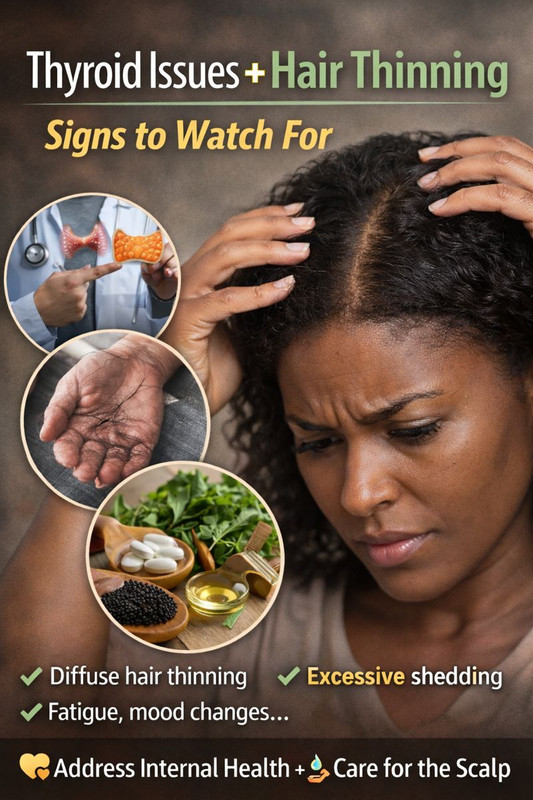
Hair thinning can feel confusing and frustrating—especially when it seems to happen suddenly, spreads evenly across the scalp, or doesn’t respond to your usual hair care routine. For many people, the cause isn’t genetics or styling damage at all. It’s something deeper happening inside the body.
One of the most overlooked causes of unexplained hair thinning is thyroid imbalance.
Your thyroid plays a major role in regulating hormones, metabolism, energy levels—and yes, hair growth. When it’s underactive or overactive, hair is often one of the first places the body shows distress.
In this article, we’ll break down:
-
How the thyroid affects hair growth
-
Early warning signs of thyroid-related hair thinning
-
The difference between thyroid hair loss and other types
-
What your scalp may be telling you
-
Supportive, natural ways to care for thinning hair
What Is the Thyroid and Why Does It Affect Hair?
The thyroid is a small, butterfly-shaped gland located at the base of your neck. Despite its size, it has a massive job: regulating how your body uses energy.
It controls:
-
Metabolism
-
Hormone balance
-
Body temperature
-
Cell regeneration
-
Hair, skin, and nail growth
Hair follicles are among the most metabolically active cells in the body. That means when thyroid hormone levels are off—even slightly—hair growth can slow, weaken, or stop prematurely.
How Hair Normally Grows (And Where Thyroid Issues Disrupt It)
Hair grows in a cycle with three main phases:
-
Anagen (growth phase) – lasts 2–7 years
-
Catagen (transition phase) – lasts a few weeks
-
Telogen (resting/shedding phase) – lasts about 3 months
Thyroid imbalance can:
-
Shorten the growth phase
-
Push more hairs into the shedding phase
-
Slow follicle regeneration
The result? Diffuse thinning, increased shedding, and hair that struggles to grow back.
Types of Thyroid Disorders Linked to Hair Thinning
Hypothyroidism (Underactive Thyroid)
This is the most common thyroid condition linked to hair loss.
Hair-related symptoms include:
-
Diffuse thinning across the scalp
-
Dry, brittle hair
-
Slow hair growth
-
Increased shedding when washing or brushing
-
Thinning eyebrows (especially outer edges)
The scalp often feels:
-
Dry
-
Tight
-
Sensitive
Hyperthyroidism (Overactive Thyroid)
Less common, but still impactful.
Hair-related symptoms include:
-
Fine, soft, fragile hair
-
Excessive shedding
-
Hair that breaks easily
-
Difficulty retaining length
In this case, hair loss often happens faster and feels more sudden.
Key Signs Your Hair Thinning May Be Thyroid-Related
Not all hair thinning is thyroid-related—but certain patterns are strong indicators.
1. Diffuse Thinning (Not Just One Spot)
Thyroid-related hair loss typically:
-
Happens evenly across the scalp
-
Doesn’t follow a receding hairline pattern
-
Makes ponytails feel thinner overall
This is different from genetic hair loss, which usually affects specific areas.
2. Excessive Shedding Without Breakage
If you’re losing full strands with the bulb attached, that points to internal causes rather than mechanical damage.
You may notice:
-
Hair everywhere after washing
-
Clumps in the shower drain
-
Increased shedding with minimal styling
3. Hair Thinning Plus Other Symptoms
Hair rarely acts alone.
Common thyroid-related symptoms include:
-
Fatigue
-
Weight changes
-
Cold or heat sensitivity
-
Dry skin
-
Brain fog
-
Mood changes
-
Irregular menstrual cycles
If hair thinning appears alongside these signs, thyroid imbalance is worth investigating.
4. Hair That Won’t Respond to Products or Treatments
When the root cause is internal, external products alone won’t fix it.
You may notice:
-
Moisture doesn’t “stick”
-
Hair breaks despite gentle care
-
Growth seems stalled
This doesn’t mean hair care is useless—it means it needs to support the scalp, not replace medical care.
What Thyroid-Related Hair Thinning Looks Like on the Scalp
Your scalp often reveals more than your strands.
Common scalp signs include:
-
Dryness that returns quickly
-
Increased sensitivity
-
Poor circulation (cool scalp)
-
Flakes without dandruff
-
Slower healing
Healthy follicles need blood flow, oxygen, and nutrients—thyroid imbalance disrupts all three.
Is Thyroid Hair Loss Permanent?
In most cases, no.
Thyroid-related hair thinning is usually reversible, but it takes time.
Key factors include:
-
Early diagnosis
-
Hormone stabilization
-
Reduced inflammation
-
Gentle, consistent scalp care
Hair regrowth often begins 3–6 months after thyroid levels stabilize, but scalp health during this time is critical.
Why Stress Makes Thyroid Hair Thinning Worse
Stress doesn’t just affect your mood—it impacts your hormones.
Chronic stress can:
-
Suppress thyroid function
-
Increase inflammation
-
Push more hair into shedding phase
This is why many people notice hair thinning during:
-
Major life changes
-
Postpartum periods
-
Burnout
-
Illness
Supporting your nervous system is just as important as supporting your scalp.
Supporting Hair Health While Addressing Thyroid Issues
Medical treatment comes first—but hair and scalp care still matter.
The goal is to:
-
Protect fragile strands
-
Reduce scalp inflammation
-
Improve circulation
-
Create an environment for regrowth
Gentle Scalp Care Tips for Thyroid-Related Hair Thinning
1. Avoid Overwashing
Overwashing strips natural oils and worsens dryness.
Best practice:
-
Wash 1–3 times per week
-
Use sulfate-free, gentle cleansers
2. Focus on Scalp Hydration
Dry scalp = stressed follicles.
Look for:
-
Water-based hydration
-
Aloe vera
-
Light botanical extracts
Hydration supports elasticity and comfort.
3. Use Lightweight Oils to Seal Moisture
Heavy greases can clog follicles.
Better options:
-
Jojoba oil
-
Grapeseed oil
-
Castor oil (sparingly)
-
Moringa oil
Massage gently to boost circulation.
4. Be Extremely Gentle With Styling
Hair is more fragile during thyroid imbalance.
Avoid:
-
Tight styles
-
Excess heat
-
Aggressive brushing
-
Heavy extensions
Protective, low-tension styles are best.
Nutrition That Supports Thyroid and Hair Health
Hair growth depends on internal nourishment.
Key nutrients include:
-
Iron
-
Zinc
-
Selenium
-
Iodine (balanced, not excessive)
-
Omega-3 fatty acids
-
Protein
Always consult a healthcare provider before supplementing, especially with thyroid conditions.
When to See a Doctor
You should consider thyroid testing if:
-
Hair thinning is sudden or unexplained
-
Shedding is excessive and persistent
-
Hair thinning comes with fatigue or weight changes
-
Family history of thyroid disease exists
A simple blood test can provide clarity—and peace of mind.
Why Patience Is Essential With Thyroid-Related Hair Thinning
Hair regrowth is not immediate.
Timeline expectations:
-
Hormone stabilization: weeks to months
-
Reduced shedding: 2–3 months
-
Visible regrowth: 3–6 months
-
Full density improvement: 9–12 months
During this time, consistent scalp care helps protect new growth.
Final Thoughts: Listen to Your Hair—It’s Talking to You
Hair thinning isn’t always about age, genetics, or products.
Sometimes, it’s your body asking for attention.
When thyroid issues are involved, hair becomes a messenger—one that responds best to:
-
Medical guidance
-
Stress management
-
Gentle scalp-first care
-
Patience and consistency
Healthy hair starts internally, but it thrives externally when the scalp is treated with intention.
If you’re noticing unexplained thinning, trust your instincts, ask questions, and support your scalp while your body heals.