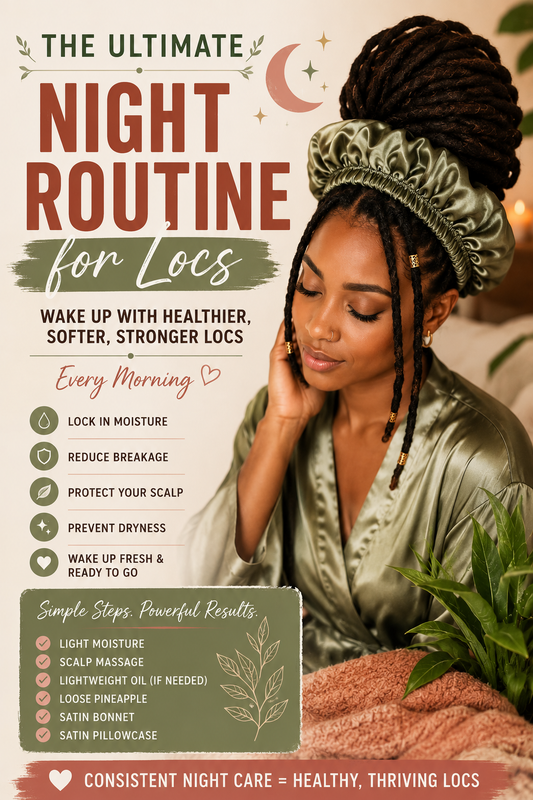
Night Routine for Locs: Why It Matters More Than You Think
Healthy locs are built around consistency—not expensive products. While many people focus on wash days and retwists, what you do before bed has a major impact on your locs' strength, moisture, shine, and long-term growth.
Every night, your hair spends six to ten hours rubbing against your pillow. Cotton pillowcases absorb moisture, create friction, and slowly weaken your hair. Over time, this can lead to:
- Dry locs
- Frizz
- Weak roots
- Split ends
- Lint buildup
- Increased breakage
- Scalp irritation
- Dull-looking locs
A proper night routine helps your locs recover while you sleep.
Whether you have starter locs, mature locs, sisterlocks, freeform locs, or traditional locs, following the right nighttime routine can dramatically improve the overall health and appearance of your hair.
Benefits of a Night Routine for Locs
Creating a bedtime routine provides several long-term benefits:
- Helps retain moisture overnight
- Reduces friction and breakage
- Prevents lint buildup
- Keeps locs cleaner
- Protects retwists
- Reduces scalp dryness
- Minimizes frizz
- Encourages healthy hair retention
- Helps maintain shine
- Supports stronger roots
Healthy locs grow because they stay on your head longer—not because they suddenly grow faster overnight.
Step 1: Inspect Your Locs Before Bed
Take one minute to check your hair.
Look for:
- Dry ends
- Product buildup
- Loose hairs
- Scalp irritation
- Tight areas
- Excessive lint
Early detection prevents bigger problems later.
Step 2: Lightly Moisturize Your Locs
One of the biggest mistakes people make is going to bed with dry locs.
Hair naturally loses moisture throughout the day.
Before bed, lightly refresh your locs with a lightweight moisturizing spray.
Look for ingredients like:
- Aloe vera
- Distilled water
- Glycerin
- Rose water
- Botanical extracts
Avoid soaking your locs.
They should feel refreshed—not wet.
A quality moisturizer like Hairobics Raaw Roots Moisturizing Spray is ideal because it hydrates without leaving heavy buildup.
Step 3: Massage Your Scalp
Healthy locs begin with a healthy scalp.
Spend two to five minutes gently massaging your scalp.
Benefits include:
- Improved circulation
- Reduced scalp tension
- Even distribution of natural oils
- Relaxation before sleep
Use only your fingertips.
Never scratch with your nails.
Step 4: Apply a Lightweight Scalp Oil (If Needed)
If your scalp feels dry, apply a small amount of nourishing oil.
Great choices include:
- Jamaican Black Castor Oil
- Jojoba oil
- Grapeseed oil
- Peppermint-infused oils
- Rosemary-infused oils
Massage gently.
Avoid over-oiling.
Too much oil attracts dust and creates buildup.
Step 5: Protect Your Ends
The oldest part of your hair is the ends.
They're also the weakest.
Dry ends eventually become brittle.
Keeping them moisturized helps preserve your loc length.
Focus moisture on:
- Ends
- Older locs
- Areas exposed to the sun
Step 6: Put Long Locs Into a Loose Pineapple
If your locs are shoulder length or longer, gather them loosely at the top of your head.
This reduces:
- Tangling
- Flattening
- Friction
- Frizz
Avoid tight ponytails.
The goal is protection—not tension.
Step 7: Wear a Satin or Silk Bonnet
This may be the most important step.
Cotton removes moisture.
Satin preserves it.
Benefits include:
- Less breakage
- Less lint
- Better moisture retention
- Reduced frizz
- Longer-lasting styles
Choose:
- Satin bonnet
- Silk bonnet
- Satin scarf
- Satin sleep cap
Step 8: Sleep on a Satin Pillowcase
Even if your bonnet slips off, your hair remains protected.
A satin pillowcase reduces:
- Moisture loss
- Friction
- Hair breakage
- Lint
Think of it as backup protection.
Step 9: Keep Your Bedroom Comfortable
Extreme heat can dry out hair.
Running fans or heaters all night may also reduce moisture.
If possible:
- Maintain moderate room temperature.
- Use a humidifier if indoor air is very dry.
- Stay hydrated throughout the day.
Healthy hair reflects overall hydration.
Step 10: Avoid Sleeping With Wet Locs
Never go to bed with soaking wet locs.
Doing so increases the risk of:
- Mildew odors
- Bacteria
- Scalp irritation
- Slow drying
- Weak hair
Always allow locs to dry completely after washing.
If necessary, use a hooded dryer or diffuser on a low setting.
Weekly Night Treatments
Once or twice each week, give your locs extra attention.
Try:
- Deep scalp massage
- Hot oil treatment
- Overnight scalp nourishment
- Moisture refresh
- End protection
Consistency matters more than frequency.
Ingredients That Help Overnight
Look for products containing:
- Aloe Vera
- Rosemary
- Peppermint
- Jamaican Black Castor Oil
- Vitamin E
- Coconut Oil
- Grapeseed Oil
- Avocado Oil
- Tea Tree Oil
- Lavender
These ingredients support moisture and scalp comfort without excessive buildup when used correctly.
Common Nighttime Mistakes
Sleeping Without Protection
Cotton dries out hair.
Always use satin or silk.
Over-Oiling
More oil does not equal more moisture.
Too much oil attracts lint.
Tight Hairstyles
Avoid:
- Tight ponytails
- Tight buns
- Tight wraps
Your scalp should relax overnight.
Ignoring Your Scalp
Healthy locs begin at the scalp.
Spend a few minutes caring for it.
Sleeping With Product Buildup
Heavy creams collect lint.
Use lightweight products instead.
Night Routine for Starter Locs
Starter locs require extra care.
Keep your routine simple:
- Light moisture
- Gentle scalp massage
- Satin bonnet
- Satin pillowcase
- No heavy oils
- No excessive manipulation
Starter locs mature with patience.
Night Routine for Mature Locs
Mature locs benefit from:
- Moisture refresh
- Lightweight oils when needed
- Loose pineapple
- Satin bonnet
- Clean pillowcase
- Weekly scalp treatment
How Long Does It Take to See Results?
Many people notice:
After one night:
- Softer locs
- Less frizz
After two weeks:
- Better moisture retention
- Healthier scalp
After one month:
- Reduced breakage
- Shinier locs
- Stronger roots
After three months:
- Improved length retention
- Healthier-looking locs
- Easier maintenance
Frequently Asked Questions
Should I oil my locs every night?
No. Oil only when your scalp needs it. Over-oiling can contribute to buildup.
Can I sleep with my locs down?
Short locs often can. Longer locs benefit from being loosely gathered to reduce friction.
Is satin better than silk?
Both work well. Satin is often more affordable and still provides excellent protection.
Can I spray my locs every night?
A light mist is fine if your locs are dry. Avoid soaking them before bed.
Do pillowcases really matter?
Yes. Satin pillowcases help reduce friction and moisture loss, especially if your bonnet slips off during the night.
Sample 10-Minute Night Routine
- Check your scalp and locs.
- Mist lightly with a moisturizing spray.
- Massage your scalp for 2–5 minutes.
- Apply a few drops of oil if your scalp feels dry.
- Gather long locs loosely if needed.
- Put on a satin bonnet or scarf.
- Sleep on a satin pillowcase.
This simple routine can make a noticeable difference over time.
Final Thoughts
A consistent night routine is one of the easiest ways to improve the health and appearance of your locs. Small habits—like moisturizing lightly, protecting your hair with satin, avoiding excessive oil, and giving your scalp a few minutes of attention—can lead to stronger, softer, and more resilient locs over time.
If you're looking for a lightweight way to keep your locs hydrated overnight, Hairobics Raaw Roots Moisturizing Spray is an excellent addition to your evening routine. Pair it with a healthy scalp care routine and gentle nighttime protection, and you'll wake up with locs that look and feel their best.