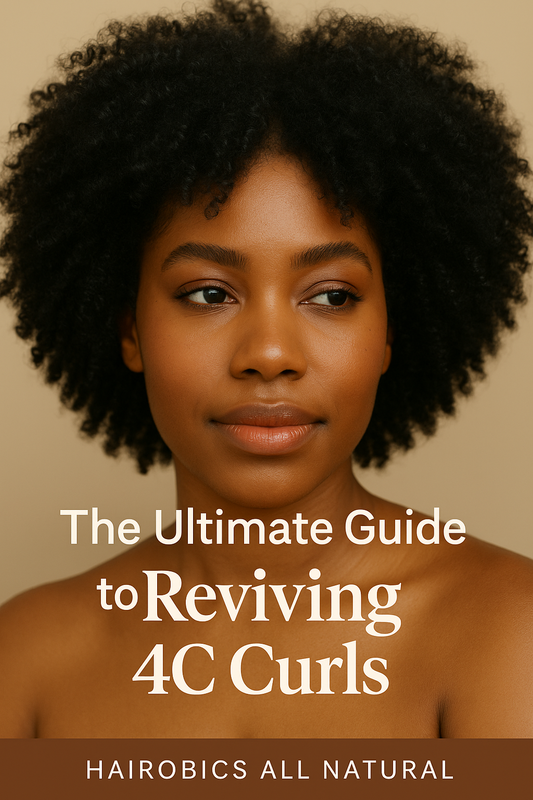
How to Restore Moisture, Definition, and Growth to 4C Natural Hair
4C hair is powerful, versatile, and incredibly beautiful—but let’s be honest, it’s also the most misunderstood hair type. If your 4C curls feel dry, brittle, or refuse to “pop,” you’re not alone. Many women struggle with reviving their 4C hair after heat damage, protective styling, stress, postpartum changes, or years of improper care.
The good news? 4C curls are not broken—they’re just thirsty and misunderstood.
With the right routine, ingredients, and techniques, you can restore moisture, softness, curl definition, and length retention.
This ultimate guide breaks down exactly how to revive 4C curls step by step, no gimmicks, no unrealistic standards—just proven natural hair care strategies that work.
What Makes 4C Hair Unique?
4C hair is characterized by:
-
Tight, dense coils with minimal visible curl pattern
-
High shrinkage (up to 75%)
-
Fine strands but high density
-
A tendency toward dryness and breakage
Because 4C curls have more bends and curves, natural oils from the scalp struggle to travel down the hair shaft, making moisture retention the biggest challenge.
Key takeaway:
4C hair isn’t fragile—it just needs intentional care.
Signs Your 4C Curls Need Reviving
If you’re experiencing any of the following, your curls are calling for help:
-
Constant dryness even after moisturizing
-
Breakage during detangling
-
Dull, lifeless appearance
-
Lack of curl response to water
-
Excessive shedding
-
Hair that feels rough or stiff
Reviving 4C hair isn’t about forcing curls to look like other textures—it’s about restoring health, elasticity, and hydration.
Step 1: Start with a Clean, Healthy Scalp
Healthy curls start at the scalp.
Why Scalp Health Matters for 4C Hair
-
Clogged follicles slow growth
-
Product buildup blocks moisture
-
Dry scalp causes itching and flakes
How Often Should You Wash 4C Hair?
Most women with 4C hair thrive on weekly or bi-weekly cleansing.
Best Practices:
-
Use a sulfate-free shampoo
-
Focus on massaging the scalp, not roughing up the hair
-
Rinse thoroughly
✨ Pro Tip:
Massaging the scalp increases blood circulation, which supports hair growth.
Hairobics Tip:
Using a natural, plant-based cleanser followed by a nourishing oil like Hairobics Scalp Rejuvenator Oil helps reset the scalp without stripping moisture.
Step 2: Deep Condition Like It’s Your Job
Deep conditioning is non-negotiable for reviving 4C curls.
Why 4C Hair Needs Deep Conditioning
-
Replenishes lost moisture
-
Improves elasticity
-
Reduces breakage
-
Softens coils for easier detangling
How Often?
-
Weekly for dry or damaged hair
-
Every 2 weeks for healthy hair
Look for Ingredients Like:
-
Shea butter
-
Aloe vera
-
Honey
-
Coconut oil
-
Castor oil
-
Avocado oil
Apply your deep conditioner in sections, cover with a plastic cap, and let it sit for 20–30 minutes.
Step 3: Master the Moisture + Seal Method
Moisture retention is the #1 challenge for 4C hair.
The Golden Rule:
Water first. Oils seal—not moisturize.
The LOC or LCO Method Explained:
-
L – Liquid (water or leave-in)
-
O – Oil (to seal moisture)
-
C – Cream (for added softness)
OR
-
L – Liquid
-
C – Cream
-
O – Oil
Test both to see which your hair prefers.
? Best Oils for 4C Hair:
-
Jamaican Black Castor Oil
-
Jojoba oil
-
Olive oil
-
Grapeseed oil
Hairobics users love layering moisture with the Raaw Roots Moisturizing Spray followed by a sealing oil to keep curls hydrated all day.
Step 4: Detangle with Care (Not Force)
4C hair breaks most often during detangling.
Best Detangling Practices:
-
Detangle on damp, conditioned hair
-
Work in small sections
-
Use fingers first, then a wide-tooth comb
-
Start from the ends and work upward
? Avoid detangling dry hair—it’s a fast track to breakage.
Step 5: Protective Styling—The Right Way
Protective styles can help revive 4C curls—or destroy them if done incorrectly.
Healthy Protective Styles:
-
Two-strand twists
-
Flat twists
-
Braids (not too tight)
-
Mini twists
-
Low buns
Avoid:
-
Tight edges
-
Heavy extensions pulling on roots
-
Leaving styles in too long (over 6–8 weeks)
Moisturize your hair while in protective styles using a lightweight spray and scalp oil.
Step 6: Reduce Heat & Mechanical Damage
Heat damage is one of the biggest curl killers for 4C hair.
If You Must Use Heat:
-
Always use a heat protectant
-
Keep temperatures low
-
Limit heat to special occasions
Also reduce:
-
Tight ponytails
-
Excessive brushing
-
Rough towel drying (use a T-shirt instead)
Step 7: Trim to Thrive
Holding onto damaged ends only makes revival harder.
Why Trimming Helps:
-
Removes split ends
-
Prevents breakage from traveling up the strand
-
Improves overall hair appearance
Trim every 3–4 months, or as needed.
Step 8: Feed Your Hair from the Inside
Reviving 4C curls isn’t just topical—it’s internal too.
Nutrients That Support Hair Health:
-
Water (hydrate daily!)
-
Protein
-
Iron
-
Biotin
-
Omega-3 fatty acids
-
Vitamin D
A balanced diet + hydration = stronger, more resilient curls.
Step 9: Be Patient—4C Hair Thrives with Consistency
4C hair responds best to routine, not trends.
You won’t see overnight miracles, but within 30–90 days of consistent care, most women notice:
-
Softer hair
-
Better moisture retention
-
Less breakage
-
Improved curl response
-
Healthier growth
Common Myths About 4C Hair (Debunked)
Myth: 4C hair doesn’t grow
✅ Truth: It grows just as fast—it just shrinks more
Myth: 4C hair can’t be soft
✅ Truth: Proper moisture makes 4C hair incredibly soft
Myth: You need tons of products
✅ Truth: You need the right products and consistency
Final Thoughts: Your 4C Curls Are Not the Problem
Your hair isn’t difficult.
It isn’t broken.
It doesn’t need to be “fixed.”
It just needs moisture, patience, and respect.
When you give 4C hair what it truly needs, it rewards you with strength, versatility, and undeniable beauty.
If you’re looking to simplify your routine with clean, plant-based products designed for textured hair, Hairobics All Natural was created with your curls in mind.
✨ Healthy curls aren’t about changing your texture—they’re about restoring it.