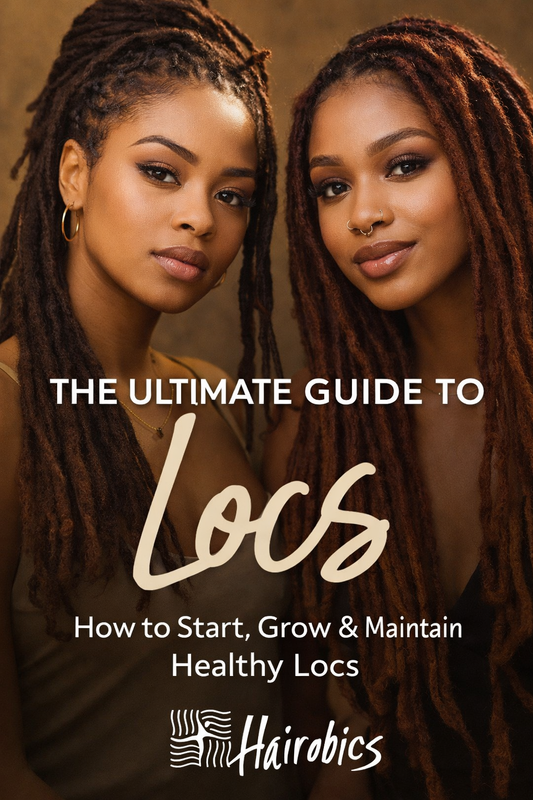
Locs—often called dreadlocks—are one of the most powerful and meaningful hairstyles in the natural hair world. They are not just a hairstyle; they are a lifestyle, a cultural symbol, and a long-term commitment to natural hair growth and health.
For many people, starting locs represents freedom from constant manipulation, chemical treatments, and excessive styling. Locs allow natural hair to thrive while developing into a beautiful, unique style that evolves over time.
However, despite their beauty and cultural significance, many people still have questions about locs:
-
How do you start locs?
-
How long do locs take to grow?
-
Do locs make your hair grow faster?
-
How do you maintain healthy locs?
-
What products help locs thrive?
This ultimate guide will walk you through everything you need to know about locs, including how they form, how to start them, how to maintain them, and how to grow long, healthy locs.
What Are Locs?
Locs are a hairstyle formed by matting and twisting natural hair into rope-like strands.
Over time, the hair strands bind together, creating permanent sections that grow longer as the hair grows from the scalp.
Unlike loose natural hair, locs retain shed hair within the strand, which is why they gradually become thicker and stronger over time.
The Science Behind Loc Formation
Hair naturally wants to coil and tangle—especially textured hair.
When hair is left alone or twisted into sections, the strands begin to:
-
Coil together
-
Tangle
-
Mat
-
Compress into a solid strand
This process creates locs.
Hair types with tighter curls (such as 4A, 4B, and 4C hair) tend to loc faster because their curl patterns encourage the hair strands to intertwine.
The Cultural History of Locs
Locs have existed for thousands of years and appear in many cultures around the world.
Historical evidence shows loc-like hairstyles in:
-
Ancient Egypt
-
Hindu ascetics in India
-
Maasai warriors in East Africa
-
Rastafarian culture in Jamaica
Within the Black community, locs became widely recognized through the Rastafari movement, which viewed locs as a symbol of spiritual strength and natural living.
Today, locs represent:
-
Natural beauty
-
Cultural pride
-
Personal freedom
-
Hair health and growth
The Different Types of Locs
Not all locs are the same. There are several different styles depending on how they are started and maintained.
Traditional Locs
Traditional locs are the most common style.
They are created by sectioning hair into medium-sized parts and twisting or palm rolling them until they mature.
Traditional locs:
-
Are versatile
-
Can be styled easily
-
Grow thick and strong over time
Sisterlocks
Sisterlocks are a specialized loc system that uses tiny sections of hair and a unique interlocking technique.
These locs are:
-
Very small
-
Lightweight
-
Extremely versatile
However, they require professional installation and can be expensive.
Microlocs
Microlocs are similar to sisterlocks but slightly larger.
They provide the same styling flexibility but are more affordable and easier to maintain.
Freeform Locs
Freeform locs are created by allowing hair to naturally lock without manipulation.
This means no twisting or sectioning.
The hair simply locs on its own.
Freeform locs are often celebrated for their:
-
Natural appearance
-
Unique shapes
-
Cultural authenticity
Semi-Freeform Locs
Semi-freeform locs are a mix between traditional and freeform locs.
You may occasionally separate sections but allow the hair to naturally form locs over time.
How to Start Locs
Starting locs is one of the most exciting parts of the journey.
There are several methods people use to begin their loc journey.
Two-Strand Twist Starter Locs
Two-strand twists are one of the most popular ways to start locs.
Hair is twisted into sections, and over time the twists begin to loc together.
Benefits:
-
Easy to start
-
Neat appearance
-
Ideal for beginners
Comb Coil Starter Locs
Comb coils are created by twisting small sections of hair around a comb.
This method works best for short hair.
Comb coils create a very uniform loc pattern.
Braid Starter Locs
Starter braids are another option.
Hair is braided into sections, and the braid gradually transforms into locs.
This method helps prevent unraveling.
Instant Locs
Instant locs are created by crocheting the hair into locs immediately.
This method skips the early stages of the loc journey.
However, some people prefer the natural maturation process instead.
The 5 Stages of Loc Development
Locs evolve over time through several stages.
Understanding these stages helps people avoid frustration during the journey.
Stage 1: Starter Stage
Duration: 1–3 months
Hair is freshly twisted or coiled.
Locs may unravel easily.
The focus during this stage is protecting the sections.
Stage 2: Budding Stage
Duration: 3–6 months
Hair begins forming knots and buds.
Locs start thickening.
Frizz increases during this stage.
This is completely normal.
Stage 3: Teen Stage
Duration: 6–12 months
Locs begin to look more defined.
They may still appear puffy or uneven.
Many people feel frustrated during this stage, but it is temporary.
Stage 4: Mature Stage
Duration: 12–18 months
Locs become dense and fully formed.
The strands are stronger and more uniform.
Stage 5: Rooted Stage
Duration: 18+ months
Locs are fully mature.
They continue growing longer while maintaining their shape.
How Long Do Locs Take to Grow?
Hair typically grows about half an inch per month.
That means locs grow roughly 6 inches per year.
However, shrinkage can make locs appear shorter.
Factors that affect loc growth include:
-
Genetics
-
Hair care routine
-
Scalp health
-
Diet
-
Stress levels
How to Maintain Healthy Locs
Maintaining locs is actually simpler than caring for loose natural hair.
However, consistency is key.
Keep Your Scalp Clean
One of the biggest myths about locs is that they should not be washed often.
In reality, clean hair grows better.
Washing your locs every 2–3 weeks helps maintain scalp health.
Look for gentle natural shampoos that remove buildup without stripping moisture.
Moisturize Your Locs
Even though locs are tightly packed, they still need moisture.
Use lightweight sprays and natural oils to keep locs hydrated.
Hydrated locs are:
-
Softer
-
Stronger
-
Less prone to breakage
Protect Your Locs at Night
Sleeping without protection can cause dryness and breakage.
Use:
-
Satin scarves
-
Silk bonnets
-
Satin pillowcases
These fabrics help retain moisture and reduce friction.
Avoid Product Buildup
Heavy creams and waxes can build up inside locs.
This buildup can be difficult to remove.
Instead, use lightweight natural products that absorb easily.
Common Loc Mistakes to Avoid
Many people damage their locs unintentionally.
Avoid these mistakes.
Over-Retwisting
Retwisting too often can weaken the roots and cause thinning.
Most people only need retwists every 4–6 weeks.
Using Too Much Product
Locs absorb product easily.
Too much product leads to buildup.
Not Moisturizing
Dry locs become brittle and prone to breakage.
Ignoring the Scalp
Healthy locs begin with a healthy scalp.
Regular scalp care is essential.
How to Grow Longer Locs Faster
Healthy hair growth begins at the scalp.
Focus on habits that support growth.
Improve Your Diet
Hair is made of protein.
Eating foods rich in:
-
Protein
-
Iron
-
Zinc
-
Vitamins
helps support hair growth.
Massage Your Scalp
Scalp massages increase blood flow to the hair follicles.
More blood flow means more nutrients reaching the hair.
Reduce Stress
Stress can cause hair shedding.
Managing stress supports healthy hair growth.
Protect Your Ends
The ends of locs are the oldest part of the hair.
Protecting them prevents breakage.
Popular Loc Styles
Locs are incredibly versatile.
You can style them in many ways.
Popular loc styles include:
-
Loc buns
-
Loc ponytails
-
Loc braids
-
Barrel twists
-
Half-up loc styles
-
Loc updos
These styles allow people to change their look while maintaining healthy locs.
Can Locs Damage Your Hair?
Locs themselves do not damage hair.
However, improper care can cause problems such as:
-
Traction alopecia
-
Thinning roots
-
Breakage
Healthy loc practices prevent these issues.
Are Locs Permanent?
Locs can be permanent, but they are not irreversible.
Some people choose to comb out their locs after several years.
However, this process can take many hours.
Many people prefer to cut them instead.
The Benefits of Having Locs
Locs offer many advantages.
They are:
Low maintenance
Protective
Versatile
Beautiful
A symbol of cultural pride
Many people find that locs simplify their hair care routine while promoting healthy hair growth.
Final Thoughts
Locs are more than just a hairstyle—they are a journey.
Starting locs requires patience, but the rewards are incredible. Over time, locs grow longer, stronger, and more beautiful as they mature.
With the right care routine, healthy products, and consistent maintenance, locs can thrive for decades.
If you are considering starting locs, remember that every loc journey is unique.
Embrace the process, enjoy the transformation, and allow your hair to grow naturally into its most powerful form.