If you've been wondering why your hair seems stuck at the same length month after month, you're not alone. Many people believe their hair simply isn't growing, but the truth is that hair is almost always growing. The real issue is often breakage, dryness, poor scalp health, or inconsistent hair care practices.
A well-structured weekly hair routine can dramatically improve hair retention, scalp health, moisture balance, and overall growth. Whether you have natural hair, curly hair, coily hair, locs, braids, or relaxed hair, establishing a consistent routine can help you maximize your growth potential.
The perfect weekly hair routine isn't about using dozens of products. It's about creating healthy habits that support stronger strands, a healthier scalp, and less breakage over time.
In this guide, you'll learn exactly what to do every day of the week to create the ideal hair growth routine.
Why a Weekly Hair Routine Matters
Hair grows approximately half an inch per month on average. While genetics determine your growth rate, your routine determines how much of that growth you actually keep.
Without a consistent routine, many people experience:
- Excessive shedding
- Dryness
- Split ends
- Breakage
- Thinning edges
- Itchy scalp
- Dull hair
- Lack of length retention
A weekly routine creates consistency, and consistency is one of the biggest factors behind long, healthy hair.
Benefits include:
- Improved moisture retention
- Reduced breakage
- Better scalp circulation
- Stronger strands
- Healthier follicles
- More manageable hair
- Increased length retention
Understanding Hair Growth
Before building your routine, it's important to understand how hair grows.
Hair growth occurs in three primary phases:
Anagen Phase
The active growth phase.
This phase lasts anywhere from 2 to 7 years and determines how long your hair can grow.
Catagen Phase
The transition phase.
Hair growth slows and follicles shrink.
Telogen Phase
The resting phase.
Hair eventually sheds and a new strand begins growing.
Your goal isn't necessarily to make hair grow faster. Your goal is to keep more hair during these natural cycles.
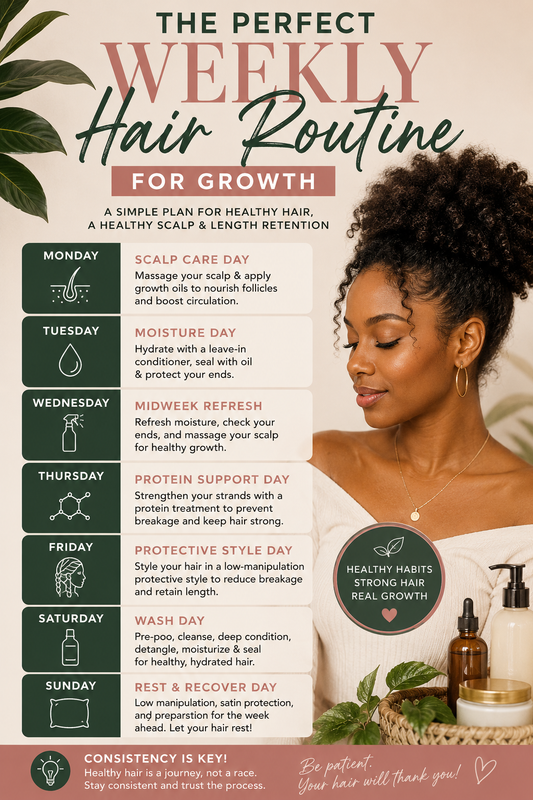
Monday: Scalp Care Day
Healthy hair starts with a healthy scalp.
Think of your scalp as soil in a garden. Healthy soil produces healthy plants.
Morning
Inspect your scalp for:
- Dryness
- Flaking
- Irritation
- Product buildup
Scalp Massage
Spend 5 minutes massaging your scalp.
Benefits include:
- Improved blood circulation
- Better nutrient delivery
- Relaxation
- Healthier follicles
Use your fingertips—not your nails.
Apply Growth Oils
Natural oils may help support scalp health.
Popular choices include:
- Jamaican Black Castor Oil
- Rosemary Oil
- Peppermint Oil
- Tea Tree Oil
- Moringa Oil
Massage gently into thinning areas and edges.
Tuesday: Moisture Day
Dry hair breaks.
Moisturized hair bends and stretches without snapping.
Hydrate Hair
Use a lightweight leave-in conditioner or moisturizing spray.
Focus on:
- Ends
- Mid-lengths
- Hairline
Seal Moisture
After moisturizing, seal with:
- Castor oil
- Jojoba oil
- Avocado oil
- Grapeseed oil
This locks moisture inside the hair shaft.
Protective Styling
Wear low-manipulation styles such as:
- Twists
- Buns
- Loose braids
- Pineapple styles
The less manipulation, the better.
Wednesday: Midweek Refresh
Many people ignore their hair midweek.
This is when dryness often begins.
Refresh Moisture
Lightly mist hair with water or a moisturizing spray.
Check Ends
Examine your ends for:
- Knots
- Splits
- Tangles
Healthy ends are crucial for length retention.
Scalp Massage
Another 5-minute massage boosts circulation.
Consistency matters more than intensity.
Thursday: Protein Support Day
Hair is made primarily of keratin protein.
Without adequate protein, hair becomes weak and prone to breakage.
Signs You Need Protein
- Mushy hair
- Excessive shedding
- Stretchy strands
- Weak curls
Protein Treatments
Use protein products every 2–4 weeks depending on your hair needs.
Examples include:
- Hydrolyzed keratin
- Rice protein
- Silk protein
- Wheat protein
Avoid overusing protein, as too much can cause brittleness.
Friday: Protective Styling Day
Protective styles reduce manipulation and help retain growth.
Popular options include:
- Two-strand twists
- Flat twists
- Bantu knots
- Braids
- Wigs
- Loc styles
Avoid Tension
Styles should never:
- Hurt
- Pull edges
- Cause bumps
- Leave redness
Protective styles should protect—not damage.
Saturday: Wash Day
Wash day is one of the most important parts of a growth routine.
Step 1: Pre-Poo
Apply oil or conditioner before washing.
Benefits:
- Less breakage
- Easier detangling
- Better moisture retention
Step 2: Cleanse
Use a gentle sulfate-free shampoo.
Focus on cleansing:
- Scalp
- Buildup
- Sweat
- Excess oils
Healthy follicles thrive in a clean environment.
Step 3: Deep Condition
Deep conditioning restores moisture.
Look for ingredients like:
- Aloe Vera
- Honey
- Shea Butter
- Coconut Oil
- Marshmallow Root
Leave on for 20–30 minutes.
Step 4: Detangle Carefully
Use:
- Wide-tooth comb
- Fingers
- Detangling brush
Always start from the ends.
Step 5: Moisturize and Seal
After washing:
- Leave-in conditioner
- Cream
- Oil
This is often called the LOC method.
Sunday: Recovery and Protection
Sunday is about preserving all the work you've done.
Low Manipulation
Avoid excessive styling.
Allow hair to rest.
Satin Protection
Sleep with:
- Satin bonnet
- Satin scarf
- Satin pillowcase
Cotton removes moisture and causes friction.
Prepare for the Week
Set out:
- Moisturizer
- Oils
- Hair accessories
Planning ahead increases consistency.
Weekly Hair Growth Routine for Natural Hair
Natural hair thrives on moisture and gentle handling.
Weekly Schedule
Monday:
Scalp massage
Tuesday:
Moisturize and seal
Wednesday:
Refresh and hydrate
Thursday:
Protein check
Friday:
Protective style
Saturday:
Wash and deep condition
Sunday:
Rest and protect
Weekly Hair Growth Routine for Curly Hair
Curly hair requires hydration.
Focus on:
- Water-based moisturizers
- Leave-ins
- Deep conditioners
- Reduced heat usage
Refresh curls throughout the week without excessive manipulation.
Weekly Hair Growth Routine for Locs
Locs require scalp care and cleanliness.
Prioritize:
- Scalp massages
- Lightweight oils
- Moisturizing sprays
- Regular cleansing
Avoid heavy product buildup.
Weekly Hair Growth Routine for Braids
Braids can promote growth if maintained properly.
Key Tips
- Moisturize scalp regularly
- Avoid excessive tension
- Clean scalp every 1–2 weeks
- Sleep with satin protection
Never keep braids in too long.
Foods That Support Hair Growth
Your routine extends beyond products.
Hair follicles need nutrients.
Protein Sources
- Eggs
- Fish
- Chicken
- Greek yogurt
Iron Sources
- Spinach
- Beans
- Lentils
Healthy Fats
- Avocados
- Nuts
- Seeds
Vitamins
- Vitamin A
- Vitamin C
- Vitamin D
- Biotin
- Zinc
Healthy hair starts internally.
Habits That Slow Hair Growth
Avoid these common mistakes:
Overwashing
Can strip natural oils.
Excessive Heat
Causes damage and breakage.
Tight Hairstyles
Leads to traction alopecia.
Skipping Deep Conditioning
Creates chronic dryness.
Rough Detangling
Causes unnecessary breakage.
Lack of Consistency
One of the biggest growth killers.
Signs Your Routine Is Working
Look for:
- Less shedding
- Stronger strands
- Softer texture
- Increased moisture retention
- Fuller edges
- Better scalp health
- More length retention
Growth often becomes noticeable after 3–6 months of consistency.
How Long Before You See Results?
Hair growth improvements take time.
Typical timeline:
Month 1
Healthier scalp
Month 2
Less breakage
Month 3
Improved moisture retention
Month 4
Visible thickness improvements
Month 6
Noticeable length retention
Month 12
Significant overall transformation
Patience and consistency are key.
Frequently Asked Questions
How often should I wash my hair for growth?
Most people benefit from washing every 1–2 weeks depending on scalp needs.
Do oils make hair grow faster?
Oils support scalp health and reduce breakage but do not directly increase growth rate.
Should I moisturize every day?
Not necessarily. Moisturize based on your hair's needs.
Are protective styles good for growth?
Yes, when installed and maintained properly.
Does trimming help hair grow?
Trims do not increase growth but help prevent split ends from causing breakage.
Final Thoughts
The perfect weekly hair routine for growth isn't complicated. The secret is consistency. Healthy hair growth comes from maintaining a clean scalp, keeping hair moisturized, reducing breakage, eating nutrient-rich foods, and protecting your hair every day.
Whether you have natural hair, curls, locs, braids, or relaxed hair, following a structured weekly routine can dramatically improve your length retention and overall hair health.
Stay consistent, trust the process, and remember that healthy hair growth is a marathon—not a sprint. Over time, these simple habits can help you achieve stronger, thicker, longer hair and the confidence that comes with it.