Everyone wants longer hair.
Millions of people search online every month for hair growth tips, miracle oils, supplements, and products that promise rapid results. Social media is filled with before-and-after photos, overnight transformation claims, and influencers sharing their "secret" methods.
Yet despite all this information, many people still struggle to grow their hair.
If you've ever said:
- "My hair won't grow."
- "I've tried everything."
- "My hair is stuck at the same length."
- "Nothing works for me."
You're not alone.
But what if the biggest hair growth secret isn't a product, vitamin, or expensive treatment?
What if the real secret is something most people completely overlook?
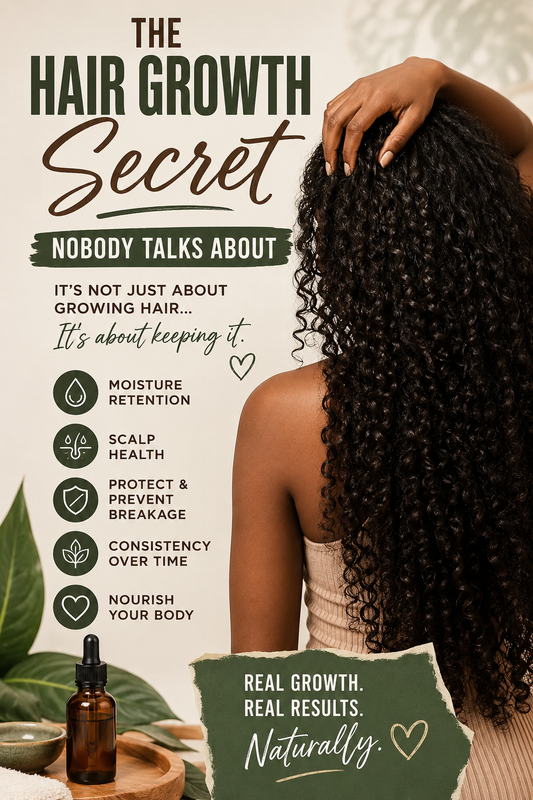
Today we're uncovering the hair growth secret nobody talks about—and it could completely change how you approach your hair journey.
The Biggest Hair Growth Secret: Hair Growth Isn't the Problem
This may surprise you, but for most people, hair growth itself is not the problem.
In fact, the average person grows approximately:
- ½ inch of hair per month
- 6 inches per year
Even people who believe their hair isn't growing are usually producing new hair from their scalp every day.
The real issue is something called:
Length Retention
Length retention refers to your ability to keep the hair you grow.
Think about it like filling a bucket with water.
If water enters the bucket but leaks out through holes, the bucket never fills.
The same thing happens with hair.
Your scalp may be growing hair consistently, but if you're experiencing:
- Breakage
- Split ends
- Excessive shedding
- Dryness
- Damage
You're losing length as quickly as you're gaining it.
This is why so many people stay at the same length for years.
Why Most Hair Growth Advice Fails
Most hair advice focuses on speeding up growth.
People obsess over:
- Oils
- Supplements
- Vitamins
- Hair masks
- Growth serums
But very few focus on keeping the hair they already grow.
Imagine growing six inches every year but breaking off six inches every year.
Your net growth would be zero.
This is exactly what happens to many people.
They spend hundreds of dollars chasing faster growth while ignoring the damage preventing retention.
The Science of Hair Growth
To understand the secret, you need to understand how hair grows.
Hair follicles go through three major phases:
Anagen Phase
This is the active growth stage.
Hair continuously grows from the follicle.
This phase can last:
- 2–7 years
- Sometimes longer depending on genetics
The longer your anagen phase, the longer your potential hair length.
Catagen Phase
This is a short transitional phase.
Hair growth slows and the follicle shrinks.
Telogen Phase
This is the resting phase.
Eventually, the hair sheds and a new strand begins growing.
This cycle repeats continuously throughout your life.
Most people have thousands of follicles operating in different stages simultaneously.
The Hidden Enemy of Hair Growth
The biggest enemy of long hair isn't slow growth.
It's breakage.
Hair can break due to:
- Dryness
- Heat damage
- Tight hairstyles
- Rough detangling
- Chemical treatments
- Lack of moisture
- Protein imbalance
When breakage exceeds growth, hair appears stagnant.
This creates the illusion that your hair isn't growing.
In reality, it's breaking faster than it can accumulate length.
Why Black Hair Often Struggles With Length Retention
Natural hair, curly hair, coily hair, and locs have unique challenges.
The tighter the curl pattern, the more difficult it becomes for natural scalp oils to travel down the hair shaft.
This often results in:
- Dry ends
- Increased tangling
- Fragility
- Breakage
This doesn't mean Black hair grows slower.
It simply means retention requires more attention.
Once retention improves, many people are amazed by how quickly their length appears.
The Real Secret: Consistency Beats Everything
Here's another truth nobody talks about.
Consistency matters more than products.
Many people constantly switch:
- Oils
- Shampoos
- Conditioners
- Growth supplements
Every few weeks they try something new.
Hair growth isn't instant.
Hair responds to consistent care over months—not days.
The people with the best results typically follow simple routines consistently.
Not complicated routines.
Consistent routines.
Scalp Health Is More Important Than Hair Products
Healthy hair begins with a healthy scalp.
Your scalp is living tissue.
Hair follicles depend on it for nutrients and support.
When the scalp is unhealthy, issues may develop:
- Itching
- Inflammation
- Flaking
- Excessive shedding
- Slow growth
Healthy scalp habits include:
- Regular cleansing
- Gentle massage
- Hydration
- Balanced oil production
Ignoring scalp health is like planting seeds in poor soil.
The Moisture Retention Secret
Many people think adding moisture and retaining moisture are the same thing.
They are not.
Applying products is easy.
Keeping moisture inside the hair is the challenge.
Hair loses moisture through:
- Dry air
- Heat
- Friction
- Environmental stress
To retain moisture:
- Hydrate with water-based products.
- Seal moisture with oils or creams.
- Protect hair from friction.
This simple approach can dramatically reduce breakage.
Why Protective Styles Work
Protective styles are often misunderstood.
Braids, twists, wigs, and locs do not magically make hair grow faster.
Instead, they reduce opportunities for breakage.
Protective styles help by:
- Limiting manipulation
- Protecting ends
- Reducing tangles
- Preserving moisture
When done correctly, they improve retention.
When done too tightly, they can cause damage.
The key is balance.
Sleep: The Forgotten Hair Growth Booster
Most hair growth articles rarely discuss sleep.
Yet sleep affects nearly every system involved in hair health.
During sleep, your body:
- Repairs tissues
- Regulates hormones
- Supports cell regeneration
Chronic sleep deprivation can contribute to:
- Stress
- Increased shedding
- Poor scalp health
Aim for:
- 7–9 hours nightly
- Consistent sleep schedules
Your hair will thank you.
Stress and Hair Growth
Stress is one of the most overlooked causes of hair issues.
High stress levels can trigger excessive shedding.
Many people notice hair thinning after:
- Major life changes
- Illness
- Financial stress
- Emotional trauma
Managing stress can support healthier growth cycles.
Helpful strategies include:
- Exercise
- Meditation
- Prayer
- Deep breathing
- Walking outdoors
Healthy hair starts with a healthy body.
Nutrition Matters More Than Most Products
Hair is made primarily of protein.
Without proper nutrition, optimal growth becomes difficult.
Key nutrients include:
Protein
Supports hair structure.
Sources include:
- Chicken
- Fish
- Eggs
- Beans
- Lentils
Iron
Supports oxygen delivery to follicles.
Sources include:
- Spinach
- Red meat
- Beans
Zinc
Supports follicle function.
Vitamin D
Supports healthy growth cycles.
Omega-3 Fatty Acids
Help nourish the scalp.
A nutrient-deficient diet often shows up in the hair.
Stop Obsessing Over Growth Oils
This might be controversial.
Many people believe oils are responsible for hair growth.
The truth?
Most oils do not directly increase hair growth speed.
What oils often do is:
- Reduce breakage
- Improve lubrication
- Seal moisture
- Support scalp comfort
That's still valuable.
But expecting any oil to add inches overnight leads to disappointment.
Why Your Ends Determine Your Length
Your oldest hair is your ends.
Ends are most vulnerable because they've experienced:
- Years of manipulation
- Weather exposure
- Friction
- Washing
- Styling
Healthy ends are essential for length retention.
Protect them by:
- Moisturizing regularly
- Avoiding excessive heat
- Trimming damaged sections when necessary
Ignoring damaged ends often leads to further splitting and breakage.
The Power of Low Manipulation
Every time you touch your hair, you create an opportunity for damage.
Excessive manipulation can cause:
- Breakage
- Tangling
- Split ends
Low-manipulation styles allow hair to thrive.
Examples include:
- Twists
- Buns
- Braids
- Locs
The less unnecessary handling, the greater your chances of retaining length.
The Hair Growth Timeline Nobody Tells You
Most people expect dramatic results in weeks.
Real hair growth doesn't work that way.
Approximate timeline:
1 Month
Minimal visible length changes.
3 Months
Noticeable improvement in texture and health.
6 Months
Visible growth and retention progress.
12 Months
Significant length changes possible.
Hair growth is a long-term process.
Patience is required.
The Secret Habit of People With Long Hair
People with long, healthy hair often share one habit:
They avoid hair emergencies.
Instead of fixing damage later, they prevent damage from happening.
They:
- Moisturize consistently
- Protect their ends
- Cleanse regularly
- Manage stress
- Maintain healthy lifestyles
Prevention always beats repair.
Building a Hair Growth Routine That Actually Works
A simple routine often produces the best results.
Weekly
- Cleanse scalp
- Condition thoroughly
- Apply leave-in moisturizer
Daily
- Hydrate as needed
- Protect hair while sleeping
Monthly
- Assess ends
- Deep condition
- Evaluate progress
Simple routines are easier to maintain long term.
Common Hair Growth Mistakes
Avoid these common errors:
Product Hopping
Constantly switching products prevents consistency.
Over-Manipulation
Too much styling creates breakage.
Ignoring Scalp Health
A healthy scalp supports healthy hair.
Excessive Heat
Heat damage weakens strands.
Tight Hairstyles
Tension can damage follicles.
Neglecting Nutrition
Hair reflects internal health.
The Truth About Hair Growth Products
Hair products can help.
But products alone cannot overcome:
- Poor nutrition
- Chronic stress
- Severe breakage
- Inconsistent routines
Products should support healthy habits—not replace them.
Why Patience Is Your Greatest Hair Growth Tool
Hair growth is a marathon, not a sprint.
People who achieve impressive results usually stay committed for months and years.
Success comes from:
- Consistency
- Patience
- Healthy habits
- Proper retention
Not overnight miracles.
Final Thoughts: The Hair Growth Secret Nobody Talks About
So what is the hair growth secret nobody talks about?
It's this:
Most people don't need faster growth—they need better length retention.
Your hair is probably growing right now.
The challenge is protecting what grows.
When you focus on:
- Scalp health
- Moisture retention
- Reduced breakage
- Consistent routines
- Healthy lifestyle habits
You create the conditions for longer, stronger, healthier hair.
Stop chasing miracle solutions.
Start protecting the hair you're already growing.
That's the real secret.
And once you understand it, everything about your hair journey changes.