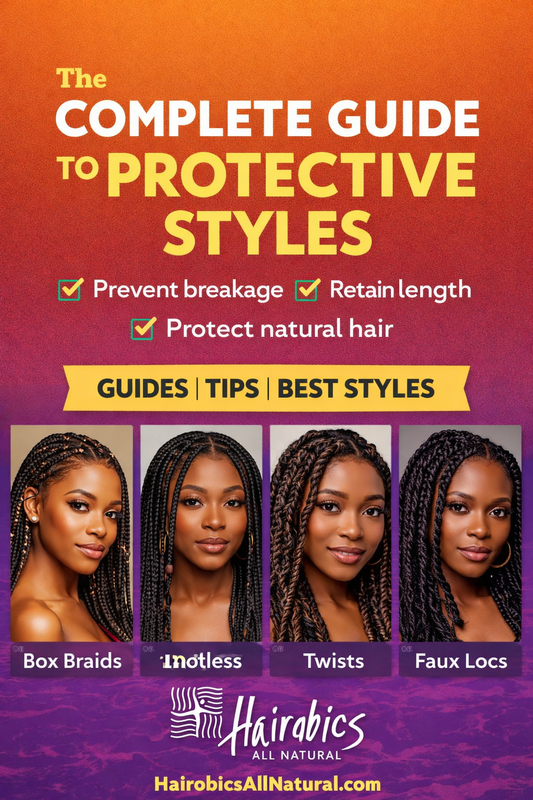
Protective styling is one of the most powerful tools for maintaining healthy natural hair, preventing breakage, and retaining length. For people with natural, curly, coily, and textured hair—especially Type 3 and Type 4 hair—protective styles can be the difference between constant breakage and long, thriving hair.
In this complete guide to protective styles, you'll learn:
-
What protective styles are
-
Why they help natural hair grow
-
The best protective styles for different hair types
-
How to install them safely
-
How long to keep them in
-
Common mistakes that cause breakage
-
The best maintenance routine for healthy hair growth
If you're trying to grow longer, thicker, healthier hair, protective styling should absolutely be part of your routine.
What Are Protective Styles?
Protective styles are hairstyles designed to protect the ends of your hair from damage, dryness, friction, and manipulation.
The ends of your hair are the oldest and weakest part of the strand, making them more prone to:
-
Breakage
-
Splitting
-
Dryness
-
Tangling
-
Friction damage
Protective styles tuck the ends away, reducing exposure to:
-
Daily styling
-
Weather damage
-
Clothing friction
-
Over-manipulation
This helps the hair retain length while it grows.
Hair typically grows about ½ inch per month, but many people never see that growth because the hair breaks at the ends before length can accumulate.
Protective styles help solve that problem.
Why Protective Styles Are Essential for Natural Hair
Natural hair tends to be more fragile because of its curly and coily structure.
Each curl creates a bend in the hair shaft, which makes it easier for the strand to weaken or break.
Protective styles help by:
1. Reducing Manipulation
Daily styling can weaken hair strands. Protective styles minimize touching, combing, and brushing.
2. Protecting the Ends
Tucked ends prevent splitting and breakage.
3. Preserving Moisture
Natural hair dries out quickly. Protective styles help maintain hydration.
4. Encouraging Length Retention
Hair can grow consistently without constant breakage.
5. Saving Time
Many protective styles last weeks, reducing daily styling effort.
The Science Behind Length Retention
Hair growth and hair length are two different things.
Your hair may grow at a normal rate, but if it breaks frequently, it never appears longer.
Protective styles focus on length retention, which means:
Hair Growth – Breakage = Visible Length
If breakage decreases, length retention increases.
This is why protective styles are so powerful for natural hair growth journeys.
The Best Protective Styles for Natural Hair
Box Braids
Box braids are one of the most popular protective styles in the world.
They involve sectioning the hair into squares and braiding with extensions.
Benefits
-
Low daily maintenance
-
Long-lasting (4–8 weeks)
-
Great for length retention
-
Versatile styling options
Downsides
-
Can cause tension if installed too tightly
-
Heavy braids can stress the scalp
Knotless Braids
Knotless braids are a gentler alternative to box braids.
Instead of starting with a tight knot, extensions are gradually fed into the braid.
Benefits
-
Less tension on scalp
-
More natural look
-
Lightweight
-
Less breakage risk
They are one of the best protective styles for fragile hairlines.
Twists (Senegalese, Passion, or Two-Strand)
Twists are softer and lighter than braids.
They are created by wrapping two strands of hair together.
Benefits
-
Lightweight
-
Less tension
-
Natural look
-
Easy to install
Popular Twist Styles
-
Senegalese twists
-
Passion twists
-
Havana twists
-
Two-strand twists
Cornrows
Cornrows are braids that lie flat against the scalp.
They can be styled in:
-
Straight rows
-
Curved patterns
-
Zigzag designs
Benefits
-
Extremely low maintenance
-
Works well under wigs
-
Long-lasting
Cornrows are one of the oldest protective styles in African history.
Faux Locs
Faux locs mimic the appearance of dreadlocks without permanently locking the hair.
Benefits
-
Stylish and trendy
-
Long-lasting (4–8 weeks)
-
Great for low manipulation
However, they can be heavy depending on the installation method.
How Long Should Protective Styles Stay In?
One of the biggest mistakes people make is leaving protective styles in too long.
Recommended timeframes:
| Style | Duration |
|---|---|
| Cornrows | 2–4 weeks |
| Box braids | 4–6 weeks |
| Knotless braids | 4–6 weeks |
| Twists | 4–6 weeks |
| Faux locs | 4–8 weeks |
Keeping styles too long can cause:
-
Matting
-
Breakage
-
Scalp buildup
How to Prep Hair Before a Protective Style
Healthy hair underneath equals successful protective styling.
Step 1: Deep Cleanse
Start with a clarifying shampoo to remove buildup.
A clean scalp supports healthy growth.
Step 2: Deep Condition
Moisture is critical before installation.
Look for ingredients like:
-
Aloe vera
-
Shea butter
-
Coconut oil
-
Castor oil
Step 3: Detangle Thoroughly
Proper detangling prevents knots during styling.
Use:
-
Wide tooth comb
-
Detangling brush
-
Finger detangling
Step 4: Moisturize and Seal
Before installing braids or twists, apply:
-
Leave-in conditioner
-
Hair oil
-
Cream moisturizer
This keeps hair hydrated during the style.
How to Maintain Protective Styles
Protective styles still require care.
Ignoring your hair for weeks can cause damage.
1. Moisturize the Scalp
Use lightweight oils like:
-
Jojoba oil
-
Castor oil
-
Coconut oil
2. Wash Your Hair
Yes, you should still wash protective styles.
Aim for every 2–3 weeks.
Focus on the scalp.
3. Protect Hair While Sleeping
Sleep with:
-
Satin bonnet
-
Silk scarf
-
Satin pillowcase
This reduces friction.
4. Avoid Over-Styling
Constantly pulling braids into tight ponytails can damage the hairline.
Low tension styling is best.
Common Protective Styling Mistakes
Many people damage their hair with protective styles because of poor practices.
Installing Too Tight
This can cause:
-
Hairline thinning
-
Traction alopecia
-
Scalp pain
Leaving Styles Too Long
Old braids lead to:
-
Severe tangling
-
Hair matting
Skipping Moisture
Dry hair breaks easily.
Always moisturize during protective styles.
Using Heavy Extensions
Excess weight stresses the scalp.
Choose lighter options when possible.
Protective Styles for Hair Growth
Protective styles alone do not grow hair.
They simply create the conditions for healthy growth.
To maximize results, combine protective styles with:
-
Healthy diet
-
Scalp care
-
Hydration
-
Regular trims
Hair grows best when the scalp is healthy.
Best Products for Protective Styles
To keep hair healthy under protective styles, use products that:
-
Hydrate the scalp
-
Strengthen strands
-
Reduce breakage
Look for ingredients like:
-
Castor oil
-
Peppermint oil
-
Aloe vera
-
Vitamin E
These ingredients promote scalp health and hair strength.
Protective Styles for Different Hair Types
Type 3 Hair (Curly)
Best styles:
-
Twists
-
Braids
-
Loose protective buns
Type 4 Hair (Coily)
Best styles:
-
Box braids
-
Cornrows
-
Faux locs
-
Twists
Type 4 hair benefits greatly from protective styling.
Protective Styling and Hairline Health
The hairline is the most fragile area of the scalp.
To protect it:
-
Avoid tight edges
-
Choose knotless braids
-
Take breaks between styles
Healthy edges require gentle handling.
Protective Styles for Kids
Protective styles are also great for children.
Best options include:
-
Two-strand twists
-
Cornrows
-
Braided puffs
Avoid heavy extensions for kids.
How Often Should You Use Protective Styles?
Protective styles should not be worn continuously year-round.
Hair needs breaks.
Recommended cycle:
Protective style → Rest period → New style
Give hair 1–2 weeks of rest between styles.
Signs Your Protective Style Is Damaging Your Hair
Watch for warning signs like:
-
Scalp pain
-
Excess shedding
-
Hairline thinning
-
Red bumps
If these occur, remove the style immediately.
Protective Styles and Cultural Significance
Protective styles have deep roots in African culture.
Historically they represented:
-
Tribe
-
Social status
-
Age
-
Identity
Styles like cornrows date back thousands of years.
Today they remain an important expression of heritage and beauty.
Final Thoughts: Protective Styles Are Powerful Tools
Protective styling is one of the most effective ways to maintain healthy natural hair.
When done correctly, it can:
-
Reduce breakage
-
Retain length
-
Protect fragile strands
-
Simplify hair care
The key is proper preparation, maintenance, and avoiding excessive tension.
Healthy hair thrives when it is protected, moisturized, and handled gently.
Start Your Healthy Hair Journey
If you're looking to support healthy hair growth, hydration, and scalp health, using high-quality natural products can make a huge difference.
Explore premium natural hair care solutions designed specifically for textured hair at:
Your hair deserves care that helps it grow stronger, longer, and healthier every day.